Greetings. In our last lesson, we concluded our analysis of the Congress Ministries (1937-1939), a period that decisively reshaped Muslim political thought. The experience of Congress rule, perceived by many Muslims as a precursor to a future "Hindu Raj," culminated in the Muslim League's symbolic "Day of Deliverance." This event marked the final collapse of trust and the end of any realistic prospect for a united front against British rule.
Today, we will examine the direct and monumental consequence of that political rupture: the Lahore Resolution of 1940. This lesson addresses a core topic frequently tested in CSS examinations, requiring a nuanced understanding of its context, text, and far-reaching implications. We will move beyond a simple description to dissect the resolution's background, analyze the precise wording and its famous ambiguities, and evaluate its profound political significance in transforming the demand for Pakistan from a vague idea into the central, non-negotiable goal of the Muslim League.
The Context: From Grievance to a Formal Demand
The Lahore Resolution was not an abrupt or isolated event. It was the logical culmination of both long-term ideological shifts and immediate political catalysts.
1. The Immediate Impetus: The Congress Raj Experience
As we established in the previous lesson, the 27 months of Congress rule were instrumental in galvanizing Muslim opinion. Policies concerning the Bande Mataram anthem, the Wardha education scheme, and the promotion of Hindi were interpreted as a systemic assault on Muslim cultural and religious identity. This experience gave credence to the Muslim League's argument that in a united, democratic India, the Muslim minority would be permanently subjugated by the Hindu majority. The "Day of Deliverance" was not just a celebration; it was a declaration that the path of cooperation had ended.
2. The Ideological Bedrock: The Two-Nation Theory
The idea that Hindus and Muslims were two distinct nations had been evolving for decades, but it was in the lead-up to 1940 that Quaid-e-Azam Muhammad Ali Jinnah began to articulate it as a formal political doctrine. He argued that the problem in India was not inter-communal but international—a conflict between two nations.
The Resolution: Pakistan’s constitutional blueprint - Sp Supplements - DAWN.COM
This article from Dawn provides an excellent legal and international perspective on the Quaid's justification for the resolution.
Read the initial paragraphs to understand the two narratives of the resolution: the popular ideological one and the more technical legal one. Focus on the Quaid's speech of March 22, 1940, where he framed the issue as one of national self-determination. Pay close attention to his argument that Muslims were not merely a minority but a nation deserving its own homeland, a principle rooted in emerging international law.
3. The Philosophical Precursor: Iqbal's Vision
A decade earlier, Allama Iqbal, in his presidential address to the Muslim League at Allahabad in 1930, had provided the intellectual and philosophical foundation for a separate Muslim state. While various thinkers had floated similar ideas before, Iqbal was the first to present it from the platform of a major political party, arguing for the amalgamation of Punjab, North-West Frontier Province, Sindh, and Balochistan into a single state for north-western Indian Muslims. His vision gave the later political demand its intellectual legitimacy.
The Lahore Session: March 22-24, 1940
The 27th annual session of the All-India Muslim League convened in Lahore at Minto Park (now Iqbal Park). It was a moment of immense historical significance, attended by leaders and delegates from across the subcontinent.

The proceedings began on March 22 with Quaid-e-Azam's powerful presidential address. This speech is essential as it laid out the entire rationale for the resolution that would follow.
A political analysis of the 1940 resolution
This article from The News provides a detailed account of the session and the Quaid's address.
Read the section describing the first session. Focus on the key arguments from the Quaid's speech, particularly his explanation of the fundamental differences between Hinduism and Islam as distinct social orders. Note his definitive statement: "Muslims are a nation" and therefore must have their own homeland.
On March 23, 1940, the historic resolution, drafted by a subjects committee, was formally moved in the open session. It was presented by A. K. Fazlul Huq, the then-Premier of Bengal, a symbolic choice that highlighted the unity of demand from both the western and eastern Muslim-majority zones. It was seconded by Chaudhry Khaliquzzaman from the United Provinces and supported by a host of leaders from every province, including Maulana Zafar Ali Khan (Punjab), Sardar Aurangzeb Khan (NWFP), Sir Abdullah Haroon (Sindh), and Qazi Isa (Balochistan), demonstrating a pan-Indian Muslim consensus.
Deconstructing the Text: Precision and Ambiguity
The resolution was passed on March 24, but it is celebrated on March 23, the day it was presented. Let's analyze the critical text, which became the constitutional blueprint for the Pakistan Movement.
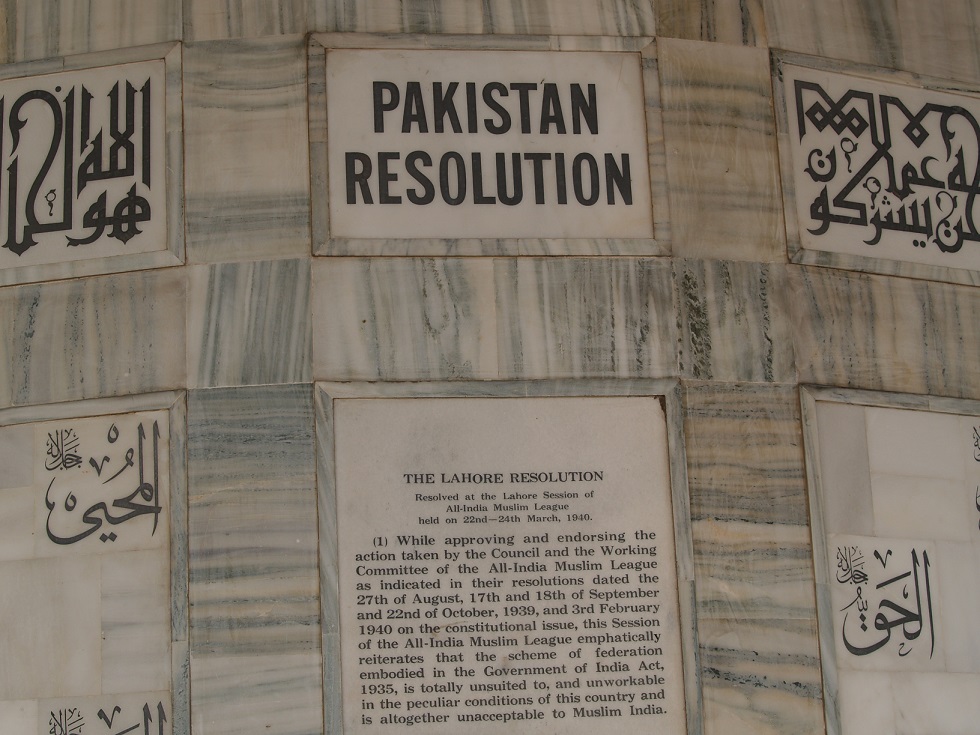
The core of the resolution stated:
"Resolved that it is the considered view of this Session of the All-India Muslim League that no constitutional plan would be workable in this country or acceptable to the Muslims unless it is designed on the following basic principles, viz., that geographically contiguous units are demarcated into regions which should be so constituted, with such territorial readjustments as may be necessary, that the areas in which the Muslims are numerically in a majority as in the North-Western and Eastern Zones of India should be grouped to constitute 'Independent States' in which the constituent units shall be autonomous and sovereign."
For your CSS exam, a critical analysis of this text is vital. Three major points of discussion and debate emerged from this wording:
-
"States" or "State"? The use of the plural "Independent States" is the most debated aspect. Did the League envision two separate countries, one in the west and one in the east? Opponents of the Pakistan Movement and later, proponents of provincial autonomy, have pointed to this wording. However, the Muslim League leadership consistently clarified this. During his 1944 talks with Gandhi, Jinnah explicitly stated the constituent units would form "units of Pakistan." The ambiguity was formally resolved at the Muslim League Legislators' Convention in Delhi in April 1946, which amended the demand to "a sovereign independent State."
-
Where is the word "Pakistan"? The resolution itself does not contain the word "Pakistan." The name, originally coined by Choudhry Rahmat Ali for a different scheme, was ironically popularized by the Hindu press, which mockingly dubbed the Lahore Resolution the "Pakistan Resolution." The League leadership, recognizing its popular appeal, quickly embraced the name.
-
"Autonomous and Sovereign" Units: The phrase that the "constituent units shall be autonomous and sovereign" carried significant weight. It suggested a high degree of decentralization and provincial power. This part of the text has remained a central reference point in Pakistan's constitutional history for debates on federalism and provincial rights.
Pakistan Resolution | Chapter 1| Lecture 5 | Pakistan Studies | Federal Board | CSS |PMS|Pak Affairs
This video provides a concise analysis of these ambiguities, which are crucial for a critical evaluation.
Please watch the section covering the analysis of the resolution's text. The presenter clearly points out the key ambiguities to note: the absence of the word 'Pakistan', the demand for 'states' (plural), the undefined boundaries, and how the Indian media's labeling led to the name 'Pakistan Resolution'.
The Political Significance: A Point of No Return
The Lahore Resolution was a watershed moment that fundamentally altered the political landscape of British India.
-
A Tangible Goal: It transformed the abstract idea of Muslim nationhood into a clear and tangible political objective. For the first time, the Muslim masses had a concrete goal to rally around: a homeland. This galvanized the Pakistan Movement, providing it with a powerful and easily understood slogan.
-
Unification of Muslim Politics: The resolution solidified the Muslim League's position as the sole representative organization of the Muslims of India. The overwhelming victory in the 1945-46 elections, where the League captured nearly all Muslim seats, was a direct referendum on the demand made in Lahore.
-
The End of a United India: With this resolution, the possibility of a single, independent, united India became virtually impossible. All subsequent negotiations with the British and the Congress, such as the Cripps Mission (1942) and the Cabinet Mission Plan (1946), would be predicated on finding a way to accommodate this demand for partition.
-
A Shift in Strategy: The demand was a strategic masterstroke. By shifting the discourse from minority rights within India to national self-determination, Jinnah elevated the Muslim cause to an international level, making it a question of nationhood rather than a domestic communal issue.
Lahore Resolution 1940 | Lecture 13
This lecture offers a valuable perspective on the resolution's strategic nature.
First, note the argument that the resolution was not a rigid, non-negotiable ultimatum but a "proposal resolution." This framing is useful for understanding the political maneuvering of the time. Then, watch the summary of the core demands, which reiterates the key principles: no constitution without League consent, independent states in the east and west, and crucially, provisions for minorities.
Conclusion
The Lahore Resolution of 1940 was the definitive turning point in the struggle for Pakistan. It was the product of decades of evolving Muslim identity politics, brought to a head by the catalytic experience of Congress rule. By formally demanding "Independent States," the All-India Muslim League, under the leadership of Quaid-e-Azam Muhammad Ali Jinnah, laid down a political marker from which it would not retreat. While the text contained ambiguities that were later clarified, its message was unequivocal: the Muslims of India were a nation and demanded the right to self-determination in their own homeland.
Key Takeaways:
- Context is Key: The resolution was a direct response to the perceived threat of Hindu majority rule, as exemplified by the 1937-39 Congress Ministries.
- Ideological Foundation: It was the political manifestation of the Two-Nation Theory, building on the intellectual groundwork of figures like Allama Iqbal.
- Textual Nuances: The use of "States" (plural) and the absence of the word "Pakistan" are critical analytical points, as is the emphasis on autonomous and sovereign units.
- Political Game-Changer: The resolution provided a clear goal, unified Muslim politics under the League's banner, and made the partition of India the central question of the subcontinent's future.
In our next lesson, we will examine the tumultuous years that followed, focusing on the failure of key political negotiations like the Shimla Conference and the Cabinet Mission Plan. We will see how the unbridgeable gap between the Congress's vision of a united India and the League's demand, now solidified by the Lahore Resolution, made the creation of Pakistan inevitable.