Greetings. In our previous lesson, we evaluated the Economic Cooperation Organization (ECO), concluding that while it has shown promise in physical connectivity, its broader economic integration remains hampered by structural and geopolitical issues. This sets the stage for examining a regional body with a different origin and a more potent strategic weight.
Today, we turn to the Shanghai Cooperation Organisation (SCO), a major Eurasian political, economic, and security alliance. This lesson is designed to help you assess the role and strategic importance of the SCO for Pakistan's security and economic interests. For your CSS examination, a deep understanding of the SCO is indispensable. It is not only a key part of the syllabus but also represents Pakistan's most significant multilateral engagement, providing a powerful lens through which to analyze the country's pivot to geo-economics and its evolving foreign policy alignments. We will trace its evolution from a security-focused group to a comprehensive regional powerhouse and critically analyze what Pakistan gains—and the challenges it faces—from its membership.
From Border Security to a Eurasian Powerhouse: The Genesis of SCO
The SCO's story does not begin as a grand economic project, but as a pragmatic solution to post-Cold War security dilemmas in Central Asia.
CSS 2024:Shanghai Cooperation Org(SCO): Importance,Expansion and PAKISTAN I Ahmed Ali Naqvi I Ep.104
This video by Ahmed Ali Naqvi provides a concise overview of the SCO's origins and its evolving mandate. It is particularly useful for understanding the initial security imperatives that drove its formation.
Watch the segments that explain the formation of the Shanghai Five in 1996 and its primary objective to combat terrorism and separatism along the borders of China and the newly independent Central Asian states. Then, observe how the organization's scope expanded beyond security to include political and socio-economic collaboration. Finally, note the analysis of the SCO as a regional mechanism to counter external influence and provide "regional solutions to regional problems."
As the video explains, the organization's forerunner was the Shanghai Five, established in 1996, comprising China, Russia, Kazakhstan, Kyrgyzstan, and Tajikistan. Its initial, narrow purpose was to demilitarize borders and collectively address what became known as the "three evils": terrorism, extremism, and separatism. This security-centric focus was a direct response to the instability emanating from Afghanistan and the internal security threats faced by member states.
In 2001, with the inclusion of Uzbekistan, the group was formally reconstituted as the Shanghai Cooperation Organisation (SCO). This moment marked the beginning of its transformation from a border-management mechanism into a broader regional organization.
To understand the principles that guide this diverse group, let's examine its foundational charter and structure.
[PDF] Pakistan's Membership in Shanghai Cooperation Organisation ...
This academic paper by Farhat Akram Mughal provides a detailed examination of the SCO's history, principles, and institutional framework.
First, read the section that describes the SCO's vast demographic and resource base, along with the guiding principles of the "Shanghai Spirit". Then, study the organizational structure, paying close attention to the two permanent bodies: the SCO Secretariat in Beijing, which handles administrative and policy work, and the Executive Committee of the Regional Anti-Terrorist Structure (RATS) in Tashkent, the operational hub for security cooperation.
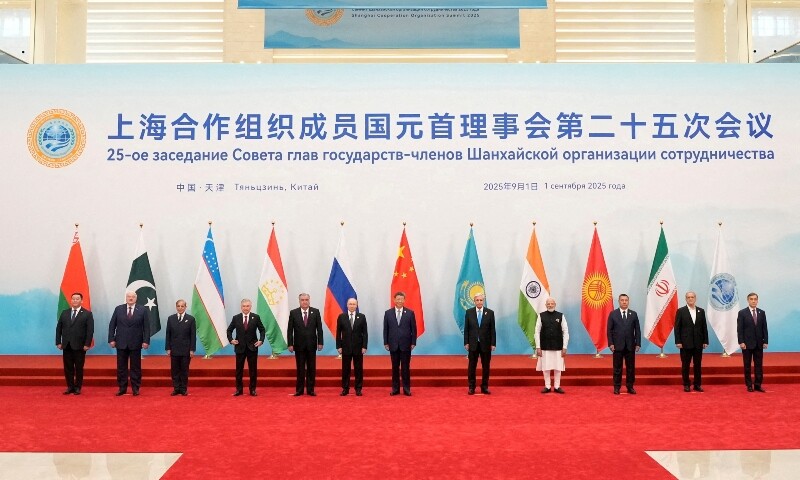
The SCO's geopolitical significance was dramatically amplified in 2017 when it underwent its first major expansion in 16 years, admitting Pakistan and India as full members. Later, Iran (2023) and Belarus (2024) also joined, solidifying the SCO's status as the world's largest regional organization, covering over 40% of the global population and accounting for a significant share of global GDP and energy reserves.
Pakistan's Strategic Rationale for Joining the SCO
Pakistan's journey to full membership was not an incidental foreign policy decision but a calculated strategic move driven by profound shifts in the regional and global landscape.
[PDF] Pakistan's Membership in Shanghai Cooperation Organisation ...
This section of the paper offers a compelling narrative of Pakistan's motivations for seeking SCO membership.
Read the detailed analysis under the heading "Pakistan and Shanghai Cooperation Organisation". Focus on the combination of "domestic and regional compulsion" that pushed Pakistan towards the SCO. Key factors include the growing mistrust with the United States during the War on Terror, the strategic imbalance created by the 2005 US-India civil nuclear deal, and the imperative to find credible regional allies to counter Indian narratives of Pakistan's diplomatic isolation.
The key drivers behind Pakistan's decision can be summarized as:
- Countering Diplomatic Isolation: In the face of a concerted campaign by India to portray Pakistan as an isolated state sponsoring terrorism, joining the SCO—a bloc that includes China and Russia—was a powerful rebuttal.
- A Search for Reliable Partners: The fluctuating, transactional nature of the US-Pakistan relationship created a strong incentive to build more stable, region-centric alliances.
- Shared Security Concerns: As a frontline state in the War on Terror, Pakistan faced the direct spillover of instability from Afghanistan. The SCO, with its RATS framework, offered the ideal platform for intelligence sharing and coordinated action against shared threats.
- The Geo-Economic Pivot: Aligning with its long-term vision to transform from a geopolitical battleground to a geo-economic hub, Pakistan saw the SCO as a vehicle to enhance connectivity with energy-rich Central Asian Republics (CARs).
Assessing the SCO's Importance for Pakistan
For Pakistan, the strategic value of the SCO is twofold, addressing its most pressing security needs while opening new avenues for economic prosperity. This dual role is central to any high-level analysis of the organization.
1. The Security Dimension: An Anchor of Regional Stability
The SCO's original mandate remains its bedrock. For Pakistan, the security benefits are tangible and multi-layered.
- Counter-Terrorism through RATS: The Regional Anti-Terrorist Structure is the SCO's most institutionalized and effective mechanism. It provides a formal framework for member states to share intelligence on terrorist groups, coordinate border controls, and conduct joint counter-terrorism exercises. Having suffered tens of thousands of casualties, Pakistan leverages this platform to gain regional support against threats from groups like the Tehrik-i-Taliban Pakistan (TTP) and to delegitimize separatist movements. The successful hosting of the 23rd SCO meeting in Islamabad in 2024, despite internal security challenges, was a testament to the importance Pakistan places on this cooperation.

-
A Platform for Afghan Stability: The perpetual instability in Afghanistan is a primary national security concern for Pakistan. The SCO-Afghanistan Contact Group serves as a crucial forum for regional powers—including Russia, China, and the CARs—to forge a consensus on the future of Afghanistan. This collective approach is indispensable for managing the fallout from foreign troop withdrawals and preventing the country from once again becoming a haven for transnational terrorism.
-
Managing Rivalry with India: The SCO provides a structured, multilateral setting where Pakistani and Indian leaders and military officials must interact. While it does not resolve bilateral disputes, it enforces a code of conduct (the "Shanghai Spirit") that discourages the use of the platform for bilateral score-settling. This facilitates de-escalation and creates space for confidence-building measures, such as the historic participation of both armies in joint military drills.
2. The Economic Dimension: A Gateway to Eurasian Integration
While security forms its foundation, the SCO's economic dimension is its most dynamic and promising frontier.
Pakistan’s Chance to Turn Security into Economic Strength - Stratheia
This 2025 analysis from Stratheia masterfully connects the SCO's security agenda with its economic potential, providing a contemporary and sophisticated argument for your exam answers.
Begin by reading the introduction, which frames the discussion around the Tianjin summit. Pay close attention to the core argument: terrorism's economic impact. Then, explore the opportunities presented by the SCO Development Strategy, including trade diversification and reduced dependence on Western finance. Finally, grasp the conclusion's powerful message: Pakistan must leverage this moment to turn its geography into an economic asset.
The economic opportunities for Pakistan within the SCO are immense:
-
Connectivity and CPEC Synergy: Pakistan's unique geographical location, coupled with the China-Pakistan Economic Corridor (CPEC), positions it as the most viable trade and energy corridor for connecting the landlocked CARs to the Arabian Sea via Gwadar Port. By aligning CPEC with the broader SCO connectivity agenda, Pakistan can become an indispensable transit hub for the entire Eurasian heartland.
-
Energy Security: The SCO brings Pakistan into a club that includes some of the world's largest energy producers (Russia, Iran, Kazakhstan). This opens up possibilities for long-term energy contracts, transnational pipelines (such as the Turkmenistan-Afghanistan-Pakistan-India or TAPI pipeline), and investment in Pakistan's own energy sector, directly addressing a chronic bottleneck to its industrial growth.
-
Trade and Investment Diversification: The SCO market is vast and growing. By working towards an SCO Free Trade Area and promoting transactions in local currencies, Pakistan can reduce its vulnerability to global economic shocks and its reliance on the US dollar and Western financial institutions. The platform provides unparalleled access to non-traditional markets for Pakistani exports and attracts investment from powerful economies like China and Russia.
Conclusion: A Strategic Imperative
The Shanghai Cooperation Organisation is far more than just another regional forum for Pakistan; it is a strategic imperative. It serves as a critical anchor in a turbulent region, offering a robust security framework to combat shared threats while simultaneously providing a pathway to economic integration and prosperity.
Key Takeaways:
- Dual-Pronged Importance: The SCO's value for Pakistan lies in its unique combination of a hard security focus (counter-terrorism via RATS) and a burgeoning geo-economic agenda (connectivity, energy, and trade).
- A Counterweight to Isolation: SCO membership has decisively ended any narrative of Pakistan's diplomatic isolation, embedding it firmly within a powerful Eurasian bloc.
- From Geopolitics to Geo-economics: The SCO is the primary vehicle for Pakistan to realize its strategic pivot, leveraging its location and infrastructure (CPEC/Gwadar) to become a central node in regional trade and energy flows.
- Security and Prosperity are Intertwined: The core analytical insight is that within the SCO, security is the enabler of economic development. A stable region is a prosperous region, and the SCO provides the cooperative framework to achieve both.
In our next and final lesson of this module, we will synthesize our understanding of SAARC, ECO, and the SCO. We will undertake a comparative analysis to evaluate their respective strengths, weaknesses, and overall effectiveness from Pakistan's strategic perspective, equipping you to tackle the most complex comparative questions on regional cooperation.