Introduction
In our recent lessons, we have dissected two of Pakistan's most defining national challenges: the water crisis, driven by climatic and administrative factors, and the energy crisis, rooted in costly contracts and systemic inefficiencies. We noted that large-scale infrastructure projects, particularly dams, are consistently proposed as the primary state-led solution to both problems. This lesson builds directly on that foundation by critically evaluating these mega-projects, a topic frequently tested in the CSS examinations.
Today, our objective is to assess the strategic and economic viability of major water and energy infrastructure projects. We will use the Diamer-Bhasha Dam as our principal case study, analyzing its promised benefits against its substantial costs and challenges. By comparing it with other significant projects like the Mohmand and Dasu dams, you will develop a nuanced, evidence-based framework for evaluating the role of such undertakings in Pakistan's national development.
The Strategic Rationale for Mega-Dams
For decades, Pakistan's strategic planners have viewed the construction of large dams on the Indus River System as a national imperative. This conviction stems from the potential of these projects to address several existential challenges simultaneously.
- Water Security: As a water-stressed country with one of the world's lowest water storage capacities, augmenting reservoir capacity is paramount. Dams are designed to capture monsoon and glacial melt runoff, which would otherwise flow into the sea, and store it for use during dry seasons for agriculture and urban consumption.
- Energy Security: Hydropower is an indigenous, clean, and, once the initial investment is paid off, an incredibly cheap source of electricity. By expanding hydropower capacity, Pakistan aims to reduce its dependence on expensive, price-volatile imported fossil fuels, which, as we saw in the last lesson, are a primary driver of the circular debt and high tariffs.
- Flood Control: The devastating floods of 2010 and 2022 underscored the vulnerability of the country's downstream plains. Large reservoirs can absorb peak floodwaters, regulating their release and mitigating the catastrophic damage to lives, infrastructure, and agriculture.
- Geopolitical Leverage: Perhaps most critically, developing water infrastructure on its own territory enhances Pakistan's strategic autonomy. India's upstream position on the eastern rivers and its construction of dams on the western rivers (Chenab and Jhelum) create a significant vulnerability. By building its own large storage facilities, Pakistan can create a buffer against potential water-flow manipulations, thereby reducing India's geopolitical leverage.
To understand this geopolitical dimension more clearly, let's examine the strategic logic that drove the construction of the Mohmand Dam.
The $2.2 Billion Dam That's Shifting Power in South Asia | Pakistan's Energy Revolution.
This video provides an excellent analysis of the strategic imperative behind Pakistan's dam-building, using the Mohmand Dam as an example. It clearly explains the vulnerability created by India's upstream position and how projects on different river systems can mitigate that risk.
First, watch the segment that explains Pakistan's structural vulnerability due to India's control over the Indus basin's water flow. This sets up the core strategic problem. Next, watch the analysis of India's anxiety about the Mohmand Dam. The key takeaway here is the dam's location on the Swat/Kabul river system, which originates in Afghanistan, not Indian-controlled territory. This gives Pakistan a water resource that is independent of Indian actions, creating strategic redundancy and reducing its vulnerability.
The case of Mohmand Dam illustrates a crucial principle: mega-projects are not just about economics; they are instruments of national security and strategic policy. The Diamer-Bhasha Dam is arguably the most ambitious of these projects.
Case Study: The Diamer-Bhasha Dam
The Diamer-Bhasha Dam is envisioned as a cornerstone of Pakistan's water and energy future. Its scale and multi-purpose design are intended to deliver transformative benefits.
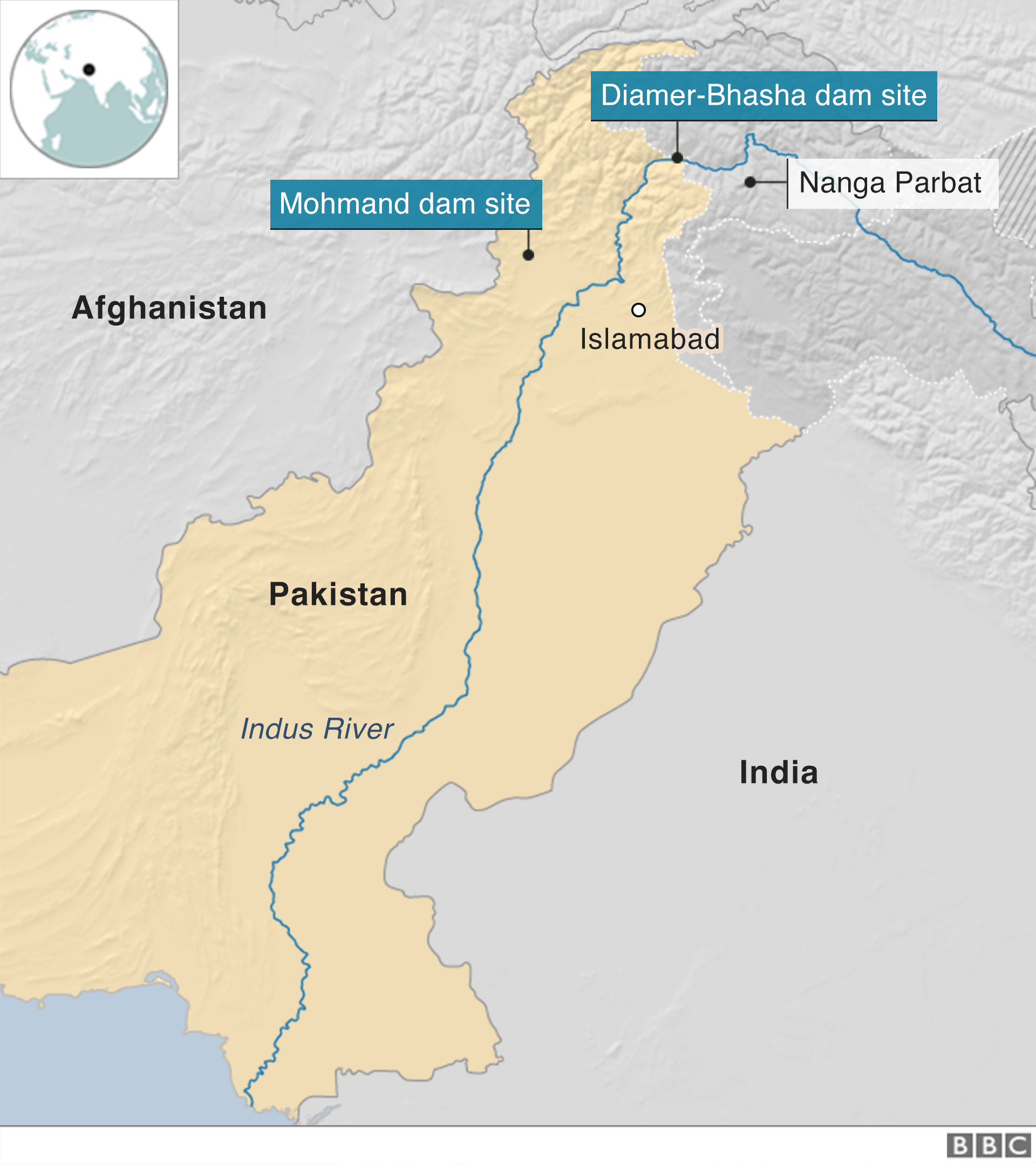
For a comprehensive technical overview of the project's goals, let's turn to a paper from the Pakistan Engineering Congress.
[PDF] AN OVERVIEW OF DIAMER BASHA DAM PROJECT
This paper provides the official specifications and projected benefits of the dam. It is an excellent source for the facts and figures needed to build a strong analytical argument.
Begin by reading the Abstract to get a summary of the project's purpose and scale. Then, read the section on the "Benefits of the project" (page 144-145). Pay close attention to the specific figures for energy generation (4,500 MW, 18,100 GWh annually) and water storage (8.1 MAF).
As the paper details, the project's promise is immense:
- A massive increase in national water storage capacity.
- The generation of a vast amount of clean, renewable energy.
- Significant flood mitigation for the entire Indus basin.
- Socio-economic development in the remote region of Gilgit-Baltistan through job creation and infrastructure improvement.

The project is currently under construction, having achieved a major milestone in 2023-24 with the successful diversion of the Indus River, allowing for work on the main dam foundation to begin. However, despite its powerful strategic rationale and the progress on the ground, the project faces profound questions regarding its economic viability and inherent risks.
A Critical Assessment of Viability
A robust CSS analysis requires looking beyond the official narrative and critically examining the project's costs and challenges. In recent years, and particularly in the current economic climate, the economic viability of Diamer-Bhasha has come under intense scrutiny.
The Economic Conundrum
The primary challenge is the staggering cost. While proponents emphasize the long-term benefits of "cheap" hydropower, the upfront investment and associated financing costs are enormous. A recent news report from Dawn highlights a dramatic shift in government thinking on this issue.
Govt scraps 10,000MW projects to curb costs - Business - DAWN.COM
This article is crucial as it provides a powerful counter-argument to the project's economic narrative. It reflects the real-world trade-offs policymakers face between strategic goals and fiscal realities.
Read the opening paragraphs, which state the government's decision to reject expensive upcoming power projects, specifically naming the power generation component of Diamer-Bhasha. Then, read the subsection "Impact on Diamer-Bhasha dam". Note the specific reasons cited by the Power Minister: the project is not viable on a "least-cost" basis, and the combined generation and transmission costs would raise the national power tariff by an estimated Rs 5 per unit.
This report brings several critical points into sharp focus:
- Unaffordable Cost: The government itself has questioned whether consumers can afford the electricity from Diamer-Bhasha. A Rs 5/unit increase would be a massive shock to an already overburdened population, directly contradicting the goal of providing "cheap" energy and exacerbating the affordability crisis we discussed previously.
- Transmission Infrastructure: The analysis often overlooks the billions of dollars required for high-voltage transmission lines to evacuate power from this remote location to the load centers in Punjab and Sindh. This is a significant hidden cost.
- The "Least-Cost" Principle: Modern energy planning prioritizes the cheapest available options. As we saw in the last lesson, solar and wind power are now the least-cost sources of new generation. From a purely economic standpoint, a multi-billion dollar mega-project with a decade-long construction timeline struggles to compete.
This has led to a major policy debate: should the project proceed as a multi-purpose venture, or should it be re-scoped as a water storage and flood control project only, with the power generation component shelved? The government's apparent decision to scrap the power component suggests that fiscal reality is forcing a re-evaluation of this flagship project.
Strategic and Technical Challenges
Beyond the financing, the project faces a host of inherent risks, as acknowledged even in the engineering community.
[PDF] AN OVERVIEW OF DIAMER BASHA DAM PROJECT
This section of the engineering paper provides a candid assessment of the risks involved. Understanding these challenges is key to a balanced evaluation.
Please read the entire section "Challenges and mitigation strategies" on pages 153-155. Focus on the list of challenges identified: Geological Complexity: High seismicity in the region. Environmental Impact: Displacement of communities and ecosystem disruption. Social and Political Issues: Land acquisition and resettlement. Logistical Challenges: Reliance on the fragile Karakoram Highway (KKH). Security Challenges: The sensitivity of the region.
Each of these challenges carries significant weight. The location in a seismically active and politically sensitive area (Gilgit-Baltistan) adds layers of risk that are not present in projects in other parts of the country. The logistics of transporting millions of tons of material via the KKH are a monumental undertaking in themselves.
Comparative Perspective: Mohmand and Dasu Dams
To place Diamer-Bhasha in context, it is useful to briefly compare it to other ongoing mega-projects.
-
Mohmand Dam (800 MW): As discussed, the Mohmand Dam has a very clear strategic benefit due to its location on the Swat River, making it independent of Indian water control. It is also a multi-purpose project providing irrigation, flood control, and drinking water. With a price tag of around $2.2 billion, it is significantly smaller and perhaps more financially manageable than Diamer-Bhasha.
-
Dasu Dam (4,320 MW): The Dasu project presents another model. Located downstream from Diamer-Bhasha, it is primarily a "run-of-the-river" project, meaning it has a very small reservoir and is almost exclusively focused on power generation.
Pakistan’s $4.2 Billion Mega Dam Will Change Everything!
This video provides a good overview of the Dasu Dam, highlighting its focus on power generation and its financing model.
First, watch the segment explaining the project's purpose as a solution to the electricity deficit. Note its large generation capacity. Then, review the section on cost and funding. The key point here is the significant financial backing from the World Bank, which suggests that international financial institutions may view this more focused, power-centric project as a more bankable investment than the more complex, multi-purpose Diamer-Bhasha.
The comparison shows that there is no single model for mega-projects. Dasu represents a more focused, commercially-oriented approach to hydropower, while Mohmand represents a more strategically-driven, multi-purpose approach at a smaller scale. Diamer-Bhasha's challenge lies in its attempt to achieve every objective at the largest possible scale, which brings its economic viability into question.
Conclusion
The assessment of major infrastructure projects like the Diamer-Bhasha Dam requires a sophisticated, multi-faceted analysis—the kind expected in a CSS exam. These projects are not simple "good" or "bad" propositions. They represent a complex trade-off between long-term strategic goals and immediate economic realities.
Key Takeaways:
- Strategic Imperative: Large dams are seen as essential for Pakistan's water security, energy independence, flood control, and for enhancing strategic autonomy in the face of upstream water control by India.
- Diamer-Bhasha's Promise: The project offers immense potential benefits, promising to store 8.1 MAF of water and generate 4,500 MW of clean energy.
- The Viability Question: The central challenge is economic. The colossal upfront cost, coupled with the expense of new transmission lines, threatens to produce electricity that is unaffordable for consumers, potentially raising national tariffs by Rs 5 per unit.
- Policy Shift: The government's reported decision to reconsider the power generation component of Diamer-Bhasha signals a major policy pivot, where the "least-cost" principle may be gaining precedence over grand strategic visions, especially in a constrained economic environment.
- Inherent Risks: The project also carries significant geological, environmental, social, and logistical risks that complicate its implementation.
Ultimately, while the strategic case for augmenting water storage remains powerful, the economic case for using multi-billion-dollar dams as a primary means of new electricity generation is weakening in the face of cheaper alternatives like solar and wind. The future of Pakistan's infrastructure strategy may lie in unbundling these goals: pursuing storage projects for water security while meeting new energy needs through a more diversified and cost-effective portfolio of renewable sources.
Preview of the Next Lesson:
Having explored the management of Pakistan's physical resources—water and energy—we will now turn our attention to its human geography. Our next lesson will address the learning outcome: "Explain the basis of national unity and integrity in Pakistan despite its multi-ethnic and multi-cultural social fabric." We will analyze the complex interplay of religion, language, culture, and state policy that has shaped national identity and cohesion.