In our last lesson, we focused on Pakistan's eastern border, analyzing the significant shift in India's policy towards Kashmir under the Modi government and the resulting diplomatic impasse. Today, we turn our attention to Pakistan's western frontier, which has been an equally, if not more, defining element of its national security and foreign policy for over four decades. The situation in Afghanistan, particularly since 1979, has had profound and lasting consequences for Pakistan, a topic that appears frequently in CSS examinations, including a question in the 2024 paper on Afghanistan's impact on its neighbors.
This lesson aims to fulfill the learning outcome: Analyze the comprehensive impact of the situation in Afghanistan since 1979 on Pakistan's security, society, and foreign policy. We will proceed chronologically, breaking down this complex history into distinct phases to understand how decisions made during the Cold War continue to generate blowback today. We will explore the intertwined impacts on Pakistan's security apparatus, its social fabric, and its diplomatic posture, moving from the Soviet invasion to the current challenges posed by the Taliban's second term in power.
A Forty-Year Entanglement: The Four Phases of Pakistan's Afghan Policy
To grasp the full scope of Afghanistan's impact, it's essential to periodize the relationship. A recent analysis by Pakistan's National School of Public Policy provides a useful framework, which we will use to structure our discussion.
[PDF] ROUNDTABLE DISCUSSION - National School of Public Policy
This 2026 report from a high-level government think tank offers a detailed historical and contemporary analysis of Pakistan-Afghanistan relations. It will be our core resource for this lesson.
Begin by reading the section "Background of Pakistan-Afghanistan Relations". Familiarize yourself with the four-phase characterization of the relationship: Early Tensions (1947–1978) The Soviet-Afghan War (1979–1988) Civil War, Taliban, and Post-9/11 (1989–2021) The Taliban's Return (2021–Present) Focus on understanding the key events that define each phase, from the Saur Revolution to the Geneva Accords and the Taliban's resurgence. This will provide the chronological backbone for our analysis.
Phase I & II (1979–1989): The Soviet Invasion and the Making of a Frontline State
The modern chapter of this story begins in December 1979 with the Soviet invasion of Afghanistan. This event transformed the regional balance of power and presented Pakistan, under General Zia-ul-Haq, with both a grave threat and a strategic opportunity. Fearing a two-front security dilemma with a hostile India on the east and a Soviet-backed Afghanistan on the west, Pakistan chose to become a "Frontline State" in the Cold War's final major conflict.
Supported by the United States and Saudi Arabia, Pakistan became the primary conduit for arming, training, and funding the Afghan Mujahideen resistance against the Soviets. This policy was rooted in the doctrine of "strategic depth"—the idea that a friendly, pro-Pakistan government in Kabul would provide a secure western flank and a safe rear base in case of a major conflict with India.
The comprehensive impacts of this decade-long policy were transformative:
- Security Impact: The decision to support the Mujahideen led to a massive proliferation of arms across Pakistan, giving rise to the so-called "Kalashnikov culture." The covert war also fueled a booming narcotics trade, as drug money was used to finance parts of the resistance. While the policy achieved its primary goal—the Soviet withdrawal in 1989—it sowed the seeds of future militancy and societal violence.
- Societal Impact: The war triggered one of the largest refugee movements of the 20th century. Over three million Afghans sought refuge in Pakistan, primarily in Khyber Pakhtunkhwa and Balochistan. While initially welcomed, this influx placed enormous strain on local resources, infrastructure, and social cohesion, creating long-term demographic and economic challenges that persist to this day.
- Foreign Policy Impact: Pakistan's status as a frontline state elevated its international standing and cemented its alliance with the United States. However, it also marked the beginning of a deep and direct intervention in Afghanistan's internal affairs, a policy that would prove difficult to reverse and would later generate significant blowback.
Phase III (1989–2021): Civil War, Taliban 1.0, and the "War on Terror"
The Soviet withdrawal did not bring peace. Instead, Afghanistan descended into a brutal civil war as the victorious Mujahideen factions turned on each other. From this chaos, a new force emerged in 1994: the Taliban. Pakistan, seeking stability on its border and a reliably friendly regime in Kabul, was among the first and few countries to support and later recognize the Taliban government when it captured Kabul in 1996.
This period of relative alignment was shattered by the attacks of September 11, 2001. Pakistan, now under General Pervez Musharraf, made another pivotal decision: to join the US-led "War on Terror" and abandon its support for the Taliban regime. This alignment created a deep and damaging paradox.
- The Security Blowback: Pakistan's alliance with the US against the Taliban directly spawned its most formidable internal security threat: the Tehrik-i-Taliban Pakistan (TTP). Formed in 2007 by militants who considered Pakistan's government an apostate ally of the West, the TTP unleashed a wave of terrorism that killed tens of thousands of Pakistani civilians and soldiers. For much of this period, Pakistan was accused by both Kabul and Washington of playing a "double game"—publicly fighting terrorism while covertly maintaining ties with the Afghan Taliban leadership who had taken refuge in Pakistan.
- The Diplomatic Quagmire: Relations with the post-2001 US-backed Afghan governments under Hamid Karzai and Ashraf Ghani were fraught with mistrust. Kabul consistently accused Islamabad of providing safe havens to the Afghan Taliban, while Islamabad pointed to its own sacrifices in the War on Terror and the TTP threat emanating from Afghanistan.
This two-decade period was immensely costly. Pakistan suffered devastating economic and human losses from terrorism, while its international reputation was tarnished by accusations of duplicity.
Phase IV (2021–Present): The Taliban's Return and the Failure of Strategic Depth
The dramatic collapse of the Afghan government and the Taliban's swift return to power in August 2021 was initially seen by some in Pakistan's establishment as a strategic victory. The "Delhi-leaning" government in Kabul was gone, and the long-sought "friendly" regime was back.
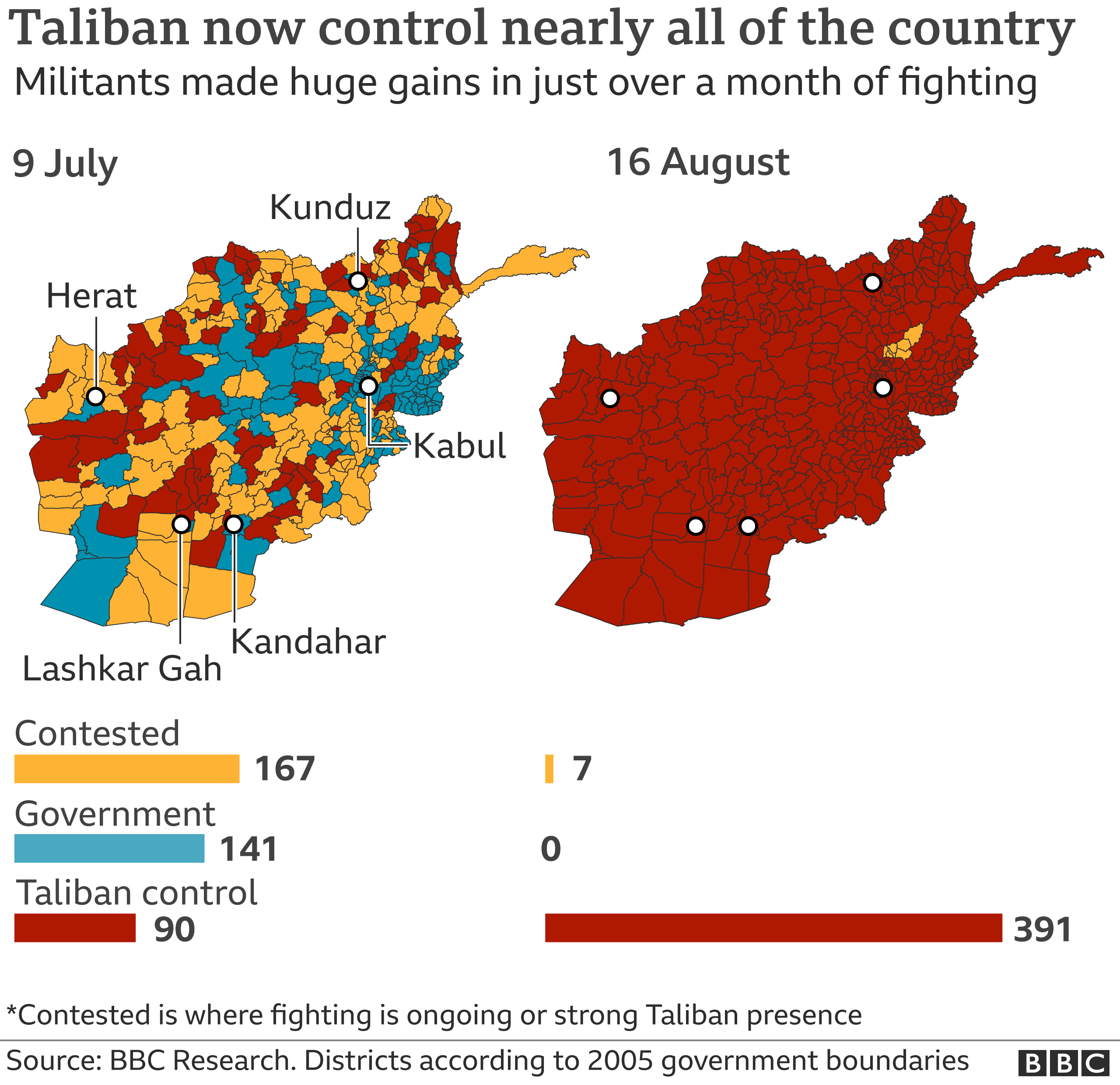
This initial optimism quickly evaporated. The core assumption of Pakistan's decades-long Afghan policy—that a Taliban-led Afghanistan would secure Pakistan's western border—proved to be a catastrophic miscalculation.
To understand the current crisis, let's examine a contemporary analysis from Dawn, published in 2025.
RETHINKING THE TALIBAN DOCTRINE - Newspaper - DAWN.COM
This article critically assesses the consequences of the Taliban's return for Pakistan, arguing that the "strategic win" has turned into a major security crisis.
Please read the following sections: Start from the beginning of the article, reading the introduction that describes the vanished optimism. Next, read the section "Across the Border, Violence Rises Again" to understand the scale of the resurgent militant threat. Continue with the sections "Resurgence of Militant Groups" and "Permissive Environment" in Afghanistan. Note the UN's assessment of the TTP's strength and the support it receives. Finally, read the section "Between Brotherhood and Blowback". This is crucial for understanding why the Afghan Taliban are unwilling to act against the TTP, citing ideological, historical, and cultural bonds.
As the readings make clear, the post-2021 reality has been a nightmare for Pakistan's security.
- Security Impact: The TTP, emboldened and operating from a "permissive environment" with access to abandoned US weaponry, has launched a renewed and more sophisticated insurgency against the Pakistani state. The Afghan Taliban, despite Pakistan's persistent demands, refuse to take decisive action against the TTP, whom they see as ideological brethren. This has led to a surge in terrorist attacks and frequent cross-border skirmishes, forcing Pakistan to carry out airstrikes inside Afghanistan—a direct consequence of a failed policy.
- Societal and Economic Impact: The unstable border has fueled a massive informal economy, including the smuggling of goods and US dollars from Pakistan into Afghanistan, exacerbating Pakistan's economic crisis. In response to the security threat, Pakistan initiated the controversial deportation of over a million undocumented Afghans, creating a humanitarian crisis and deepening animosity.
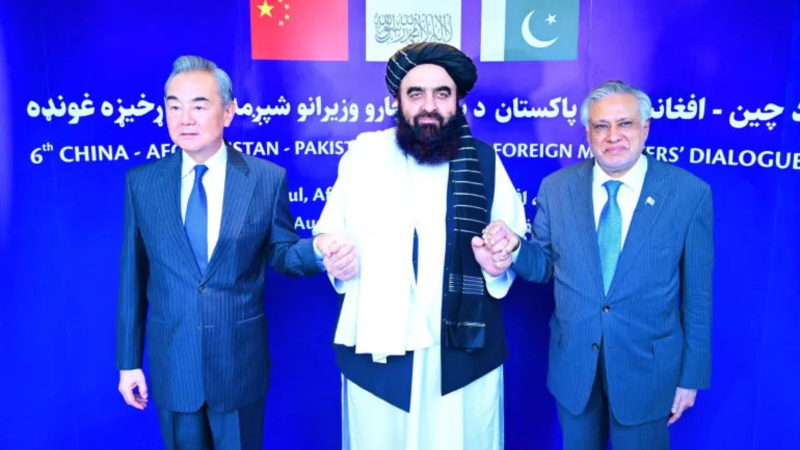
- Foreign Policy Impact: Pakistan is now in a paradoxical situation. It must diplomatically engage with a regime that it does not formally recognize but which harbors groups actively attacking it. This has forced Pakistan to seek regional solutions, often with the facilitation of China, to manage the security and economic fallout.
A Comprehensive Analysis: The Interwoven Impacts
The four-decade entanglement with Afghanistan has left no aspect of Pakistan untouched. The following video provides a concise overview of how these security, economic, and social issues are interconnected.
Afghanistan–Pakistan Conflict Explained | Learn English With Podcast
This podcast-style video, "Afghanistan–Pakistan Conflict Explained," offers a clear, structured breakdown of the key drivers of tension.
Watch the following segments to synthesize the comprehensive impact: Historical Roots: This section provides an excellent summary of the entire timeline from 1979 to 2021, reinforcing the historical phases we've discussed. The TTP Factor: This part explains precisely why the TTP is the most sensitive issue and how it creates a cycle of pressure and expectation between the two governments. Economic & Political Pressures: This segment analyzes how domestic economic struggles in both countries magnify security concerns and complicate border management. The Human Dimension: This final part focuses on the impact on Afghan refugees and border communities, adding a crucial humanitarian perspective.
To achieve a truly advanced, CSS-level analysis, it is vital to understand the nuanced perspectives of policymakers and experts. The NSPP roundtable discussion offers invaluable insights from leading figures in Pakistan's security and diplomatic establishments.
[PDF] ROUNDTABLE DISCUSSION - National School of Public Policy
This is the most critical reading for developing a sophisticated argument. It provides direct access to the thinking of top Pakistani experts.
First, briefly review the section "Challenges Ahead" to see how the experts frame the problem. Then, delve into the "Discussion by the Panellists." You do not need to read every word, but focus on the core arguments of each speaker: Lt. Gen. (R) Bilal Akbar: Focus on his analysis of the security threat, including the TTP-TTA collusion and India's role. Mr. Mansoor Ahmad Khan: Pay attention to his diplomatic perspective on the historical mistrust and the "third scenario" of Taliban rule. Mr. Aamir Ghauri: Absorb his powerful argument on the shared human tragedy and the failure of media narratives. Dr. Aamer Raza: Note his scholarly explanation of why anti-Pakistan sentiment is so deep and the ideological tensions complicating a TTP crackdown. Synthesizing these varied perspectives will allow you to construct a multidimensional analysis that examines the issue from security, diplomatic, humanitarian, and ideological angles.
Conclusion
The four-decade-long situation in Afghanistan has acted as a crucible for Pakistan, forging key aspects of its national identity and strategic posture. What began as a Cold War gambit for "strategic depth" has morphed into a complex legacy of unintended consequences that continue to unfold.
Key Takeaways:
- A Legacy of Blowback: Pakistan's policy of intervention, first against the Soviets and later in support of the Taliban, has directly resulted in severe security blowback, most notably the rise of the TTP and the spread of a culture of violence and radicalism.
- Profound Societal Transformation: The conflict created one of the world's largest and most protracted refugee populations on Pakistani soil, fundamentally altering the demography and economy of its border regions.
- A Paradoxical Foreign Policy: Pakistan's relationship with Afghanistan remains its most complex foreign policy challenge. It is forced to engage diplomatically with a regime that provides sanctuary to groups attacking it, exposing the failure of its long-standing strategic assumptions.
- Interwoven Crises: The impacts are not separate but deeply interconnected. Security instability disrupts trade and fuels economic crises. Economic pressures and security fears drive harsh refugee policies, creating humanitarian crises and deepening public resentment on both sides of the border.
In our next lesson, we will continue our examination of Pakistan's core security framework by turning to another critical and often contentious topic: evaluating Pakistan's nuclear program, including its strategic rationale, safety architecture, and key international concerns. This will build on our understanding of the conventional and sub-conventional threats Pakistan faces on both its eastern and western fronts.