Introduction
Welcome to our next lesson in the CTO POC framework for data ethics. In our previous session, we established that Transparency is the ongoing duty to be clear about your research methods and purpose. It's about communicating what you are doing with data. Today, we address O for Openness, a related but distinct concept.
While transparency is about telling people about your work, openness is about making the data itself available for others to inspect, reuse, and verify. This distinction is crucial. A researcher can be transparent by publishing a detailed report about their methodology but keep the underlying data closed. Conversely, someone could release an open dataset with very little transparent documentation about how it was collected.
This lesson directly addresses the learning outcome: distinguishing between open and closed data practices. We will explore why some data, like aggregated bra sizing trends, can and should be shared openly, while other data, such as the details of a polyamorous relationship, must remain restricted to protect the individuals involved.
The Spectrum of Data Access
It's helpful to think of data access not as a binary choice between "open" and "closed," but as a spectrum. A dataset isn't simply public or private; there are many degrees of sharing in between.
To understand this spectrum, let's start with a practical guide that outlines these different levels of data dissemination.
The Data Dissemination Spectrum
The report 'The Data Dissemination Spectrum' from the MaRS Discovery District provides clear, practical definitions for the main points along this spectrum.
Please read the sections 'OVERVIEW' on page 4 and 'THE DATA DISSEMINATION SPECTRUM' on page 7. Focus on the definitions provided by the Open Data Institute (ODI) for closed, shared, and open data.
As the report explains, we can define the main categories as follows:
- Closed Data: Can only be accessed by its subject, owner, or holder. It is characterized by restrictions that limit its distribution.
- Shared Data (or Restricted/Controlled): This is the middle ground. The data is shared, but with conditions. Access might be limited to:
- Named access: Shared only with specific, named individuals or organizations.
- Attribute-based access: Available to groups who meet certain criteria (e.g., bona fide researchers, employees of a specific institution).
- Public access with conditions: Available to anyone, but under terms and conditions that are not fully "open" (e.g., requiring registration, agreeing to a specific use license).
- Open Data: Can be freely accessed, used, modified, and shared by anyone, for any purpose.
The critical decision for a data practitioner is determining where on this spectrum a particular dataset should lie. This decision hinges on balancing the public benefit of sharing against the ethical imperative to protect individuals.
Why Data Is Kept Closed or Restricted: Privacy and Identifiability
The primary reason for restricting access to data is to protect the privacy of the individuals it describes. This is especially true when dealing with Individual Participant Data (IPD)—the raw, granular data collected from each person.
Let's watch a short video clip that introduces this fundamental tension between personal data and open data.
The Ethics of Data - Personal Data & Privacy
This clip from the BBC cleanly separates the concept of personal data, which is tied to privacy, from open data, which is often anonymized and aggregated.
Please watch the first 34 seconds of the video, paying attention to how the speakers define the difference between personal and open data.
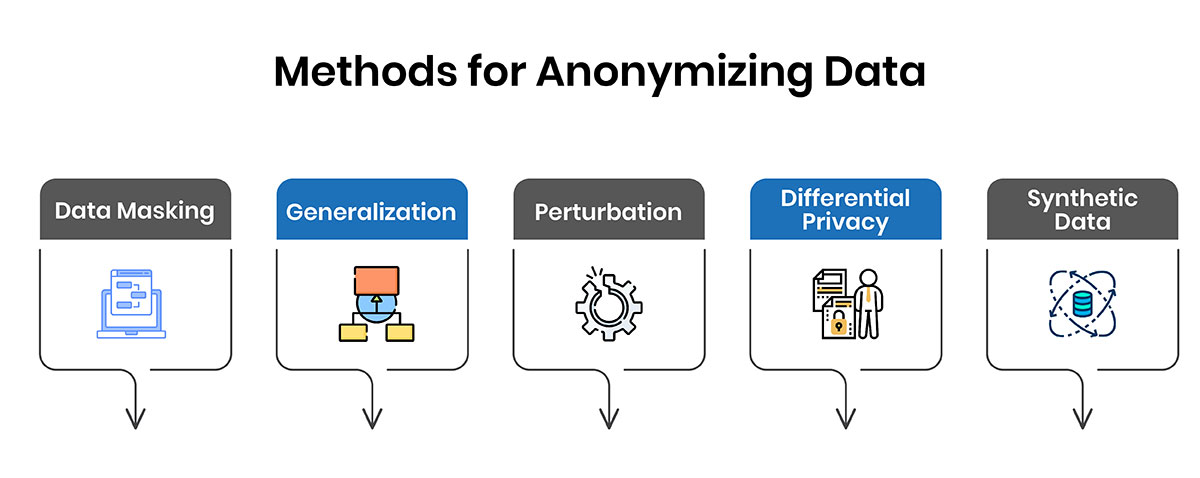
The core issue is re-identification risk. Even when direct identifiers like names and addresses are removed (a process called de-identification or anonymization), the unique combination of other details in a dataset can sometimes be used to pinpoint an individual. The more sensitive the data, the greater the potential harm from re-identification.
This is where the distinction between IPD and aggregate data becomes essential.
Openness in Big Data and Data Repositories - PMC
The paper 'Openness in Big Data and Data Repositories' delves into this distinction and explains why it is central to making decisions about data access.
Please read the subsection 'Degrees of Openness' and the following two subsections, 'Privacy and Confidentiality' and 'Access Restrictions and Transparent Governance'. Focus on the difference between Individual Participant Data (IPD) and aggregate data, and how re-identification risk influences the need for access restrictions.
Let's apply this to your areas of interest.
Application: When Data Must Be Restricted
-
Polyamorous Relationship Research: Imagine you have collected detailed interview transcripts from a study on single-female, multiple-male relationship dynamics. This is highly sensitive IPD. Even if you replace all names with pseudonyms, the specific stories, timelines, and relationship structures could easily identify the participants to others in their community. The risk of emotional harm and social stigma from re-identification is immense.
- Conclusion: This raw IPD must be kept closed or, at best, shared under a highly restricted access model where vetted researchers sign strict non-disclosure and non-identification agreements.
-
Bra Design Research: In a previous lesson, we discussed collecting 3D body scans for a custom-fit algorithm. Like a fingerprint, a person's detailed torso geometry is unique. This is also sensitive IPD. Releasing this data could lead to re-identification and constitutes a major privacy violation.
- Conclusion: The individual 3D scans must be kept closed or under restricted access.
The Power of Openness: Aggregate Data and Public Benefit
While raw, individual data often needs to be protected, the insights derived from it can be shared openly to create value. This is typically done by sharing aggregate data—statistical summaries where individual identities are lost in the crowd.
Application: When Data Can Be Open
-
Bra Design Research: You cannot share the individual 3D scans. However, you can and should share the findings. You could publish an open dataset containing aggregate statistics derived from the 500 scans, such as:
- Mean and standard deviation for bust, underbust, and waist circumference by age group.
- A frequency distribution of different breast shapes (e.g., "30% of participants had an 'omega' shape").
- Correlations, such as "a 1cm increase in shoulder-to-bust-point distance is correlated with a 0.8cm increase in required strap length."
- Conclusion: This aggregate data is open. It poses no re-identification risk but provides immense value to other designers, researchers, and the public by advancing the understanding of bra fit.
-
Polyamorous Relationship Research: You cannot share the interview transcripts. But you can share the aggregate findings. You could publish an article stating:
- "75% of relationships in our study reported using a shared digital calendar for scheduling."
- "Compersion was described as a 'learned skill rather than an innate emotion' by a majority of participants."
- Conclusion: These thematic summaries are a form of aggregate data that can be shared openly. They advance knowledge in social science without compromising the privacy of the individuals who contributed their stories.
Finding the Balance: Models for Responsible Sharing
For a statistician training other statisticians, the most interesting area is often the middle ground: how can we responsibly share IPD for reproducibility and further research without undue risk? The "Restricted Access" model is the key.
This involves depositing de-identified IPD in a secure data repository governed by a Data Access Committee (DAC). Other researchers can apply for access, but they are carefully vetted and must legally agree to protect the data and not attempt re-identification.
Openness in Big Data and Data Repositories - PMC
Let's return to the 'Openness in Big Data' paper, which presents a case study evaluating several options for data sharing. This provides an excellent summary of the trade-offs involved.
Please read the sections starting from '3. Identify actions that could be taken...' through to '5. Select the option that has the strongest ethical weight...'. This walks through the ethical pros and cons of Open Access, Case-by-Case Sharing, Restricted Access, and sharing Aggregate Data Only, ultimately recommending a balanced approach.
This framework gives you a clear model for your students. The default for sensitive data is not full openness, but a careful balancing act that prioritizes participant protection while still enabling scientific progress. The guiding principle is often expressed as: "as open as possible, as closed as necessary."
Conclusion
In this lesson, we have dissected the concept of Openness and placed it on a spectrum from fully closed to fully open. You are now equipped to distinguish between these practices and justify why a given dataset should be open, restricted, or closed.
Key Takeaways:
- Data access exists on a spectrum: Closed, Shared/Restricted, and Open.
- The decision of where to place data on this spectrum is a trade-off between public benefit and participant privacy.
- Individual Participant Data (IPD), especially when sensitive (e.g., detailed body measurements, personal interviews), carries a high re-identification risk and must be kept closed or restricted.
- Aggregate Data (statistical summaries and trends) can and should be shared openly to advance knowledge and innovation.
- The Restricted Access model, managed by a Data Access Committee, provides a responsible middle ground for sharing IPD with vetted researchers.
Preview of the Next Lesson:
We have established that the need to keep data closed or restricted is driven by the principle of privacy. In our next lesson, we will tackle P for Privacy head-on. We will move beyond simply identifying the risk and explore the specific definitions of data privacy, the common ways it is breached, and the technical and procedural safeguards used to protect it.