Introduction
Welcome back. In our journey through the SMART framework, we've established how to formulate questions that are Specific, Measurable, and Achievable. We confirmed that while our two working research questions are ambitious, they are plausibly achievable with careful planning and resources.
Here are our questions again for reference:
- Bra Design: "For women with an omega breast shape, does using a Breast Root Trace (BRT) to select the underwire size lead to a lower self-reported incidence of underarm wire-poking compared to selecting the wire based on the standard full-bust-minus-under-bust sizing formula?"
- Relationship Dynamics: "In established, non-hierarchical polyamorous triads consisting of one female and two male partners, is there a positive correlation between the monthly frequency of scheduled, one-on-one 'date nights' and the male partners' individual satisfaction scores on the 'communication' and 'intimacy' items of the Marital Satisfaction Scale?"
These questions are well-defined and we have a plan to answer them. But this brings us to a crucial, and perhaps the most important, question of all: So what?
This lesson focuses on the 'R' in SMART: Relevant. A research question is relevant if its answer matters to a broader objective. Today, we will explore how to ensure your students can distinguish between a technically sound question and one that truly advances a goal, whether that's designing a better product or contributing valuable knowledge to a field of study.
Defining Relevance: The "So What?" Test
A question might be specific, measurable, and achievable, but if its answer provides no useful insight, it's a waste of resources. Relevance is the bridge between your specific query and a larger purpose.
To assess relevance, we ask two fundamental questions:
- Practical Relevance: Does answering this question help solve a specific problem, improve a process, or inform a decision within a project or organization?
- Academic/Social Relevance: Does this question address a gap in existing knowledge or contribute to a current and important social or academic conversation?
A strongly relevant question often satisfies both criteria. Let's start by looking at a practical guide that frames relevance in terms of alignment with broader goals.
[PDF] SMART Goals: A How to Guide
The document 'SMART Goals: A How to Guide' provides a clear, practical definition of relevance. Although its examples are from a business context, the underlying principle of alignment is universal.
Please read the initial definition of 'R Relevant' on the first page. Then, read the more detailed paragraph for 'R – Relevant' on page 6. Focus on the core idea: a goal 'should be something that’s in alignment with the overall business/department objectives.'
This guide emphasizes that relevance is about ensuring your work fits into a bigger picture. Let's apply this "alignment" principle to our two research contexts.
Application 1: Relevance in Bra Design
Let's revisit our bra design question. On the surface, it's about underwires and poking. But what is the broader objective for a lingerie designer? It's likely a combination of:
- Improving customer comfort and satisfaction.
- Solving persistent fit issues for underserved body types.
- Innovating to create a competitive advantage in the market.
- Reducing returns and increasing brand loyalty.
Our research question—"Does the BRT method reduce wire-poking for omega shapes?"—is highly relevant because a "yes" answer directly serves all these objectives. It provides a data-driven path to creating a better product that solves a real problem for a specific customer segment. The knowledge gained isn't just an interesting fact; it's an actionable insight for design and marketing.
Consider the physical reality of this question.
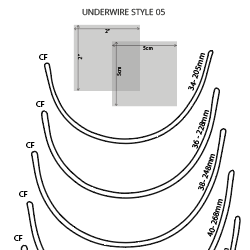
The question isn't about the wires themselves in isolation. It's about whether a new process can improve the selection of these wires to achieve the broader goal of a better-fitting bra. A question like, "What is the most common metal alloy used in underwires?" might be specific and measurable, but it lacks relevance to the primary goal of improving comfort unless you can link the alloy to flexibility or skin reactions.
Application 2: Relevance in Relationship Dynamics
Now, let's turn to our polyamory research question. The broader objectives for a social researcher in this area might be:
- To understand the mechanics of relationship maintenance in non-monogamous structures.
- To challenge or verify common assumptions about what makes relationships succeed.
- To contribute empirical data to a field where much of the literature is anecdotal or theoretical.
- To provide evidence-based insights that could be useful for therapists, educators, or individuals navigating these relationships.
Our question—"Is there a link between 'date nights' and satisfaction in 1F/2M triads?"—is relevant because it tests a specific, well-known relationship maintenance behavior ("quality time") in a novel and under-studied context.
The academic resource below frames relevance in a way that is perfectly suited for this type of inquiry.
Writing Strong Research Questions | Criteria & Examples - Scribbr
The article 'Writing Strong Research Questions' from Scribbr discusses relevance from an academic viewpoint. It will help us connect our question to the broader goal of contributing to knowledge.
Please read the two rows under the sub-heading 'Relevant and original'. Note the criteria: 'Addresses a relevant problem' and 'Contributes to a timely social or academic debate'.
This perspective highlights that relevance can come from addressing a "gap in the existing knowledge." There is a significant gap in the quantitative study of specific polyamorous configurations. Our question helps fill that gap. It also contributes to a timely social debate about the nature of relationships and commitment.
The answer, whether positive, negative, or null, is valuable.
- A positive correlation would suggest that established relationship advice holds true in this context.
- A null or negative correlation would be even more interesting, suggesting that satisfaction in these dynamics may be driven by different factors than in dyadic relationships, sparking a whole new line of relevant research questions.
Looking at the diversity of these structures shows why such specific, relevant questions are necessary.
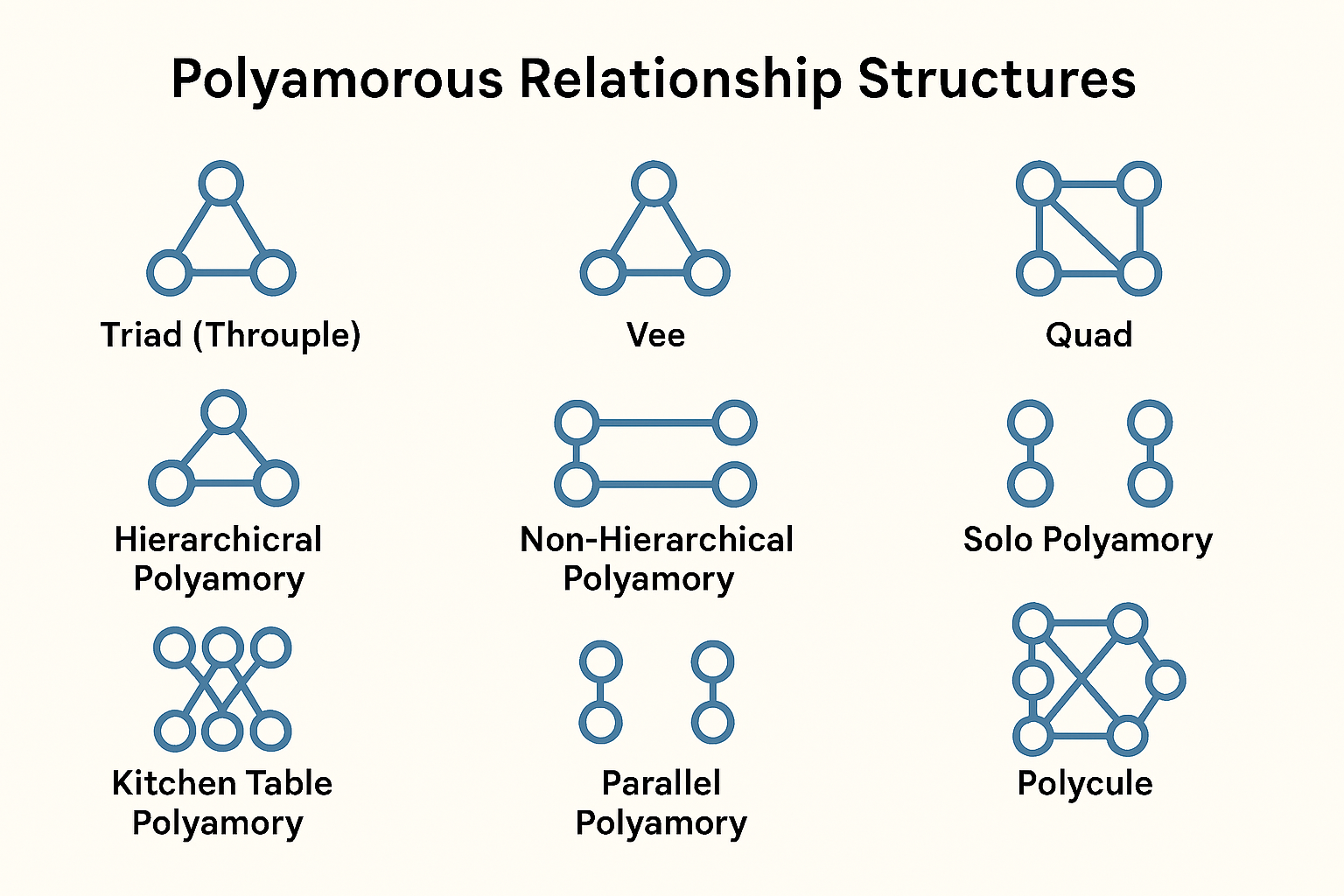
By asking a relevant question about one specific structure, we generate rigorous knowledge that can later be compared to findings from other structures, like Quads or polycules, building a more comprehensive understanding of the field.
Exercise: The Irrelevant Question
To solidify this concept for your students, have them practice the "So what?" test. Consider the following question related to bra design:
"What is the average shipping time for a size 36C bra from our warehouse to customers in California?"
Let's evaluate this question:
- Specific? Yes. (36C, California).
- Measurable? Yes. (Average time in days).
- Achievable? Yes. (Shipping data is likely available).
- Relevant? This is where it fails.
By itself, this question is irrelevant to the goal of designing better bras. It's a logistics question, not a design one. It doesn't inform decisions about fabrics, fit, or comfort.
To make it relevant to a broader business objective, you would need to connect it to something that matters, like customer satisfaction. A more relevant question would be:
"Does a shipping time of over 5 days for a size 36C bra to California correlate with a higher rate of product returns and lower customer satisfaction scores for that region?"
Now, the question is directly relevant to a key business objective: improving customer experience and reducing costs.
Conclusion
We have now examined the 'R' in SMART, understanding that relevance is the critical link between a specific query and a meaningful goal. It’s the answer to the question, "Why are we doing this?"
Key Takeaways:
- Relevance Connects to Purpose: A relevant research question directly aligns with a broader objective, whether it's a practical goal (like improving a product) or an academic one (like filling a knowledge gap).
- Master the "So What?" Test: Always ask what the practical or theoretical implications of the answer would be. If the answer doesn't lead to an action, a decision, or a new understanding, the question may lack relevance.
- Context is Everything: The relevance of a question depends entirely on the overarching goal. A logistics question is irrelevant to a design team, but highly relevant to an operations team.
Preview of the Next Lesson:
We have now built questions that are Specific, Measurable, Achievable, and Relevant. There is one final piece to the puzzle. In our next lesson, we will cover the 'T' for Time-Bound, where we'll discuss how to place realistic time constraints on your research questions to create a concrete and actionable plan.