Welcome back. In our previous lesson, we established the "why" and "what" of stress testing, defining it as a crucial method for evaluating a plan's resilience against major, unexpected disruptions. You now have the theoretical framework for moving beyond simple optimization and building robust, adaptive strategies.
Today, we transition from theory to application. Our objective is to identify three plausible 'shock' events for the tour scenario (e.g., shortened tour, unplanned visitor). This exercise is not about abstract risk management; it's the first practical step in fortifying your meticulously designed plan against real-world volatility. By naming specific threats, we can later build targeted contingency plans, transforming your design from a static blueprint into a dynamic, resilient system.
What Constitutes a "Shock"?
Before we can identify shocks, we must be precise about what we're looking for. A "shock" is not a minor inconvenience like a delayed meal, nor is it a completely unimaginable "black swan" event like an alien invasion. We are looking for what risk strategists call "grey swans" or "grey rhinos"—events that are low-probability but imaginable, or high-probability but ignored.
The following reading from the National Academies Press provides a clear taxonomy of these events. This will help you calibrate your thinking to focus on the correct category of disruptions.
Chapter 6 Defining and Identifying Shock Events
This chapter offers a formal definition of shock events, which will provide a strong foundation for our task.
Please read the first subsection, Defining Shock Events. Pay close attention to the distinctions between black swans, grey swans, and grey rhinos. The key insight is that our goal is to convert potential "black swan surprises" into "known unknowns" that we can plan for.
As the text highlights, a shock is an event whose "likelihood, timing, and magnitude are hard to predict" but which has "significant or profound" impacts. Our task is to engage in what the 9/11 Commission report called a failure of imagination, but in reverse. We will deliberately imagine these high-impact possibilities so they don't catch the system off guard.
A Framework for Identifying Plausible Shocks
Randomly trying to imagine everything that could go wrong is inefficient. As an efficiency expert, you know the value of a structured process. A similar logic to Failure Modes and Effects Analysis (FMEA), a tool you may have encountered in your Operations Research studies, can be applied here. We need to systematically consider different domains where failures could originate.
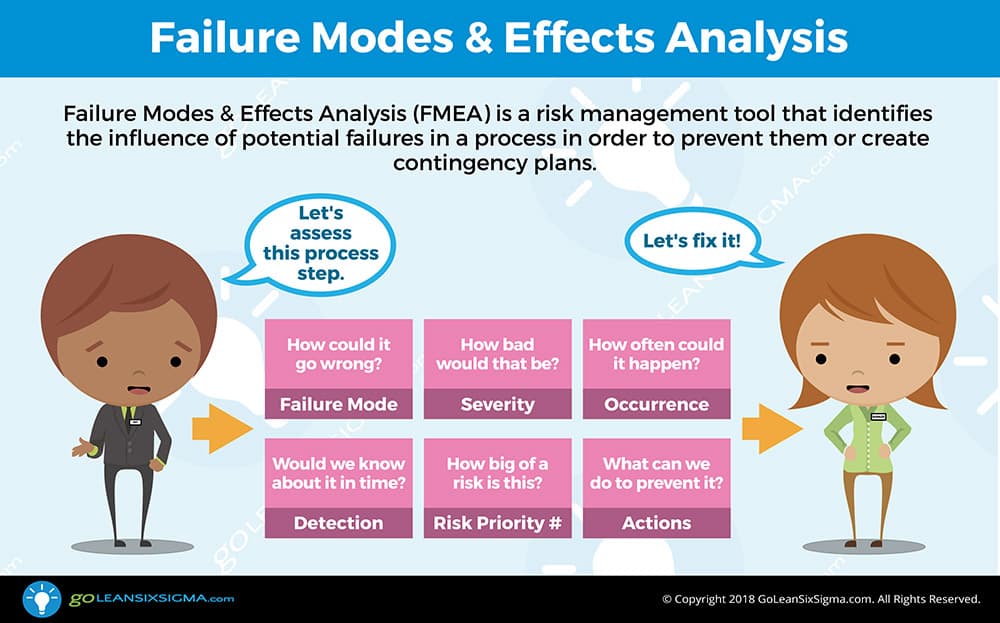
To structure our brainstorming, we can adapt a standard business continuity framework. Instead of thinking about a generic business, we'll apply the categories to the specific "assets" and "partners" of the tour scenario: the husband, wife, bull, their relationships, and the environment.
This video from AlertMedia, while business-focused, provides an excellent structure for this kind of risk assessment.
Business Continuity Planning: Strategies to Minimize Business Disruptions
This video on Business Continuity Planning breaks down risk assessment into manageable categories. We will borrow this logic for our more personal scenario.
First, watch the segment that introduces the risk assessment process. Then, pay close attention to the "Pro tip" section, which details how to consider impacts on specific groups and assets from people to brand.
Let's adapt that framework to the tour scenario. We can brainstorm potential shocks by considering the following impact areas:
- People: Events directly impacting the physical or emotional state of the husband, wife, or bull (e.g., sudden illness, a personal crisis unrelated to the arrangement).
- Relationship Dynamics: Events that directly strain the trust or emotional equilibrium between the parties (e.g., a misunderstanding escalates into a serious argument; a spike of intense, unexpected jealousy).
- Environment & Logistics: Events that disrupt the physical setting and timeline (e.g., a power outage for 24 hours, a plumbing emergency making the primary space unusable).
- Discretion & Security: Events that threaten to expose the arrangement (e.g., a nosy neighbor becomes suspicious, a shared calendar is accidentally seen by a family member).
Filtering Shocks by Impact and Plausibility
This brainstorming can generate a long list of possibilities. The next step is to filter them down to the most critical few. A plan cannot and should not account for every conceivable disruption. We must prioritize.
For this, we can use a core technique from scenario planning: ranking potential events by their impact and uncertainty (or in our case, plausibility). We are looking for events in the top-right quadrant: high impact and plausible enough to be worth preparing for.
Scenario Planning 101: How Operations Teams Can ...
This article provides a concise method for prioritizing uncertainties, which is exactly what we need to filter our list of potential shocks.
Focus on Step 3 in the process. The key is to assess drivers on two dimensions: how uncertain they are and how much impact they would have. This prevents us from focusing on either minor, common issues or wildly improbable disasters.
Applying this filter, let's consider a few examples:
- Shock candidate: A critical argument between the wife and bull.
- Plausibility: High. Interpersonal dynamics are complex.
- Impact: Very High. This could derail the entire experience and damage the trust mechanism. This is a strong candidate for a shock scenario.
- Shock candidate: A regional power grid failure lasting one week.
- Plausibility: Low.
- Impact: High, but perhaps manageable. Lower priority than interpersonal shocks.
- Shock candidate: The husband's business trip is suddenly cut short by several days.
- Plausibility: Medium to High. Business plans change frequently.
- Impact: Very High. This fundamentally breaks the timeline, the container of privacy, and the emotional arc of the plan. This is a very strong candidate.
Identifying the Top Three Shock Events for the Tour
Using this structured approach—brainstorming across domains and filtering by impact and plausibility—we can now confidently identify three distinct, plausible, and high-impact shock events for the tour scenario. Each of these attacks the plan's integrity from a different angle.
-
Shock 1: The Shortened Tour. The husband's work obligations change, and he must return home 3-4 days earlier than planned.
- Primary Impact: This is a temporal shock. It catastrophically compresses the planned experience arc, potentially cutting it off before the "culmination" phase. It forces an abrupt end to the wife-bull dynamic and a premature start to the reunion and recalibration phase, creating immense logistical and emotional pressure.
-
Shock 2: The Unplanned Visitor. A close relative (e.g., a parent or sibling of the husband or wife) announces they will be stopping by for an overnight or multi-day visit in the middle of the tour.
- Primary Impact: This is a discretion and environmental shock. It instantly collapses the private container essential for the arrangement. The core activities become impossible, and the focus must pivot entirely to "performance" and maintaining secrecy, placing extreme stress on both the wife and the bull.
-
Shock 3: The Bull's Sudden Unavailability. The bull experiences a legitimate personal or family emergency (e.g., a sick parent) and is unexpectedly unavailable for a continuous 48-72 hour period.
- Primary Impact: This is a core mechanism shock. It directly interrupts the "unmet sexual needs" fulfillment mechanism. More importantly, it tests the emotional regulation of the wife (handling disappointment and solitude) and the trust between all three parties, who must navigate the disruption without letting it degrade the experience or the relationship.
Conclusion
In this lesson, you have moved from the abstract concept of stress testing to the concrete identification of threats. By using a systematic framework, you have defined three specific, plausible, and high-impact shock events that represent credible threats to the success of the tour scenario.
Key Takeaways:
- Shock Identification is Systematic: Rather than random worrying, we use frameworks to brainstorm potential disruptions across key domains (People, Relationships, Environment, Discretion).
- Prioritization is Key: We filter potential shocks by assessing their plausibility and their potential impact on the plan's core objectives, focusing our energy on the most significant threats.
- Three Core Threats Identified: You have defined three distinct shocks for the tour scenario: the Shortened Tour (temporal), the Unplanned Visitor (discretion), and the Unavailable Bull (mechanism).
You have now built the foundation for resilience. In our next lesson, we will apply this same rigorous process to the photoshoot, identifying three plausible 'shock' events for that scenario. Once we have mapped the key threats for both of your projects, we will begin the exciting work of designing the adaptive protocols and contingency plans to neutralize them.