In our previous lesson, we conducted a "controversy pre-mortem" for the boudoir photoshoot, identifying three significant risks that could undermine its success: sexual objectification, cultural disrespect, and the charge of inauthentic empowerment. As an efficiency expert, you know that identifying potential system failures is only the first step. The next, more critical step is to proactively engineer countermeasures.
Today, your objective is to design proactive messaging points that reframe the narrative around empowerment and artistic choice for each controversy risk. Instead of preparing defensive reactions, we will construct a robust, pre-emptive narrative that inoculates the campaign against this backlash. This is a core task in systems design: you are not just planning the photoshoot's operations, but also engineering its public perception to ensure the desired outcome.
We will move beyond simply telling a story (a single event) and instead build a narrative—a broader, shared belief system that provides the context for the images. This narrative will be our primary tool for risk mitigation.
The Logic of Narrative Reframing
Before diving into specific messages, it's crucial to understand the mechanism we are employing. We're moving from a position of letting the audience interpret raw images to proactively framing those images within a specific, intentional context.
The video below from The Futur channel distinguishes between an individual story and a shared narrative. Our goal is to create the dominant narrative that the audience uses to interpret the story of the photoshoot.
Narrative Branding: Stories That Sell
This video provides a powerful framework for understanding how narratives shape perception and value. It distinguishes between a concrete story and an abstract, shared narrative, which is exactly what we need to build.
First, watch the section from Story vs. Narrative, where Michael Margolis explains that a narrative is an abstract, shared belief (like the American Dream), while stories are the individual ornaments that hang on that tree. We are building the "Christmas tree" for this campaign. Next, familiarize yourself with the three-part framework for building a narrative, explained from the SFB method: people have to See It (the context for change), Feel It (the central character's journey), and Believe It (the evidence). We will use this logic to structure our messaging.
With this framework in mind, let's design the messaging points to counter each specific risk.
1. Countering "Sexual Objectification" with a Narrative of Agency
The first risk is that the photoshoot will be seen as reducing the model to a passive object for the male gaze. Our counter-narrative must shift the focus from her body as an object to her mind and will as the subject driving the action. The entire photoshoot is an act of her agency.
The language of ethical boudoir photography provides the perfect vocabulary for this.
How Boudoir Art Photography Empowers Women Through Creative ...
This article from Lover's Art is a masterclass in the language of empowerment through photography. It gives us the precise terminology to reframe the shoot from an act of being seen to an act of self-expression.
Focus on the concepts presented in these key sections: In "Key Characteristics," note the emphasis on collaboration and narrative. In "Psychological Mechanisms at Work," absorb the idea of narrative agency—the power to rewrite one's own story. Under "Reclaiming the Body," understand how images shift perception through contextual reframing and storytelling. Finally, in "Common Misconceptions," pay close attention to the rebuttals for the myths that boudoir reduces agency and that it must be revealing to be empowering.
Armed with this language, here are the proactive messaging points designed to establish a Narrative of Agency and Subjectivity:
- Core Message: "This isn't about being looked at; it's about how she chooses to see herself. Every shot is a reflection of her narrative agency."
- Application: Use this in captions, behind-the-scenes commentary, or an artist's statement. It immediately frames the model as the author of the images, not the subject of a gaze.
- Process-Oriented Message: "The power of this series comes from collaboration. The concept, the poses, the degree of reveal—every decision was an expression of her creative vision and comfort. This is her story, told on her terms."
- Application: This message highlights the process as evidence of her control. It's an operational detail from your plan that becomes a key part of the public narrative, directly countering the idea of exploitation.
- Action-Oriented Message: "We are capturing a moment of active self-definition, not passive beauty. The focus is on her strength, her confidence, and her decision to occupy this space unapologetically."
- Application: This provides a lens through which to interpret her poses. Even a vulnerable pose can be reframed as a deliberate, strong choice when contextualized this way.
2. Countering "Cultural Disrespect" with a Narrative of Reinterpretation
The second risk, using the saree, is perhaps the most volatile. The counter-narrative cannot be defensive; it must be a confident, artistic reinterpretation that honors the garment's complexity. We will frame the transformation not as discarding culture, but as exploring the layers of modern identity. The Indian lingerie brand Zivame provides a real-world case study in how to navigate these exact cultural taboos.
Brand Saga: Zivame's marketing shift away from the hush- ...
This article from Social Samosa is your playbook. It details how Zivame successfully destigmatized conversations around lingerie in India through education, inclusive messaging, and taboo-breaking campaigns.
Read the introduction to understand their mission. Then, review the "Fit is my Right" campaign in the section on building the brand to see how they took the conversation to the public. Finally, and most importantly, study the 'Museum of Boobs' campaign, which shows how a creative, respectful, and informative approach can challenge deep-rooted taboos.
Zivame's success proves that it's possible to have this conversation if it's framed correctly. Our messaging will adopt a similar tone of respectful exploration.
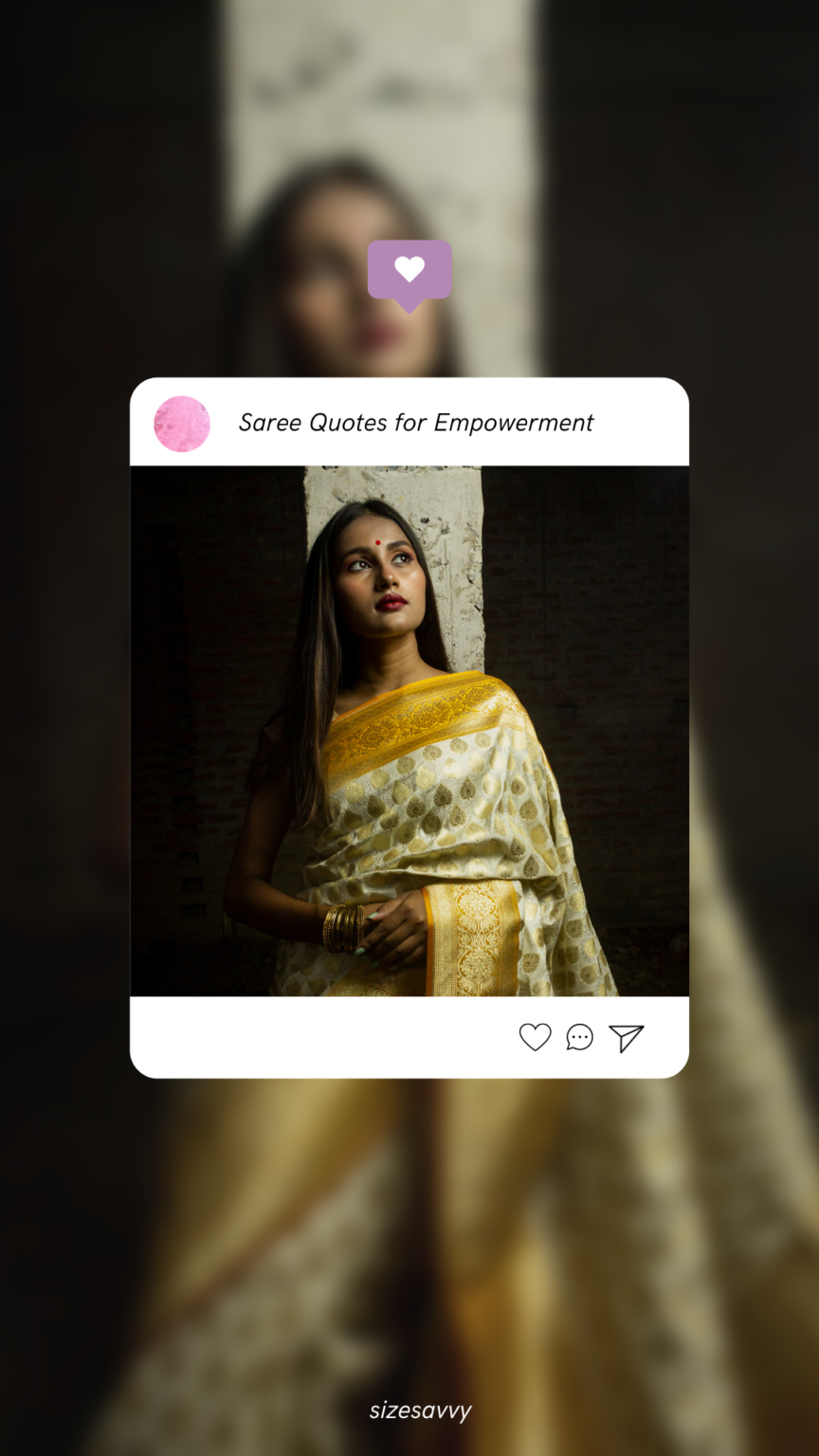
Here are the proactive messaging points designed to establish a Narrative of Cultural Reinterpretation and Liberation:
- Core Message: "This series explores the beautiful complexity of modern identity. The saree represents heritage, grace, and a public persona. The lingerie represents a private, powerful sensuality. One does not erase the other; they coexist within the same woman."
- Application: This is the central thesis. It reframes the "undressing" not as a negation, but as a revelation of a hidden, equally valid layer of self. It turns a potential controversy into the artistic statement.
- Historical Context Message: "The story of the saree itself is one of transformation and rebellion against imposed norms. This artistic work continues that tradition, questioning which layers are cultural and which are personal, and celebrating a woman's right to define that for herself."
- Application: This leverages the insights from the "Threads of Liberation" paper (from our last lesson) to show intellectual and cultural depth. It demonstrates that the choice was deliberate and informed, not a gimmick.
- Inspirational Message: "Inspired by the way brands like Zivame have opened up conversations about women's bodies and choices in India, this project uses art to ask an important question: How does a woman honor her heritage while also honoring her own authentic desires?"
- Application: This grounds the project in a successful, real-world context, borrowing legitimacy and showing an awareness of the cultural landscape. It positions the photoshoot as part of a progressive movement, not a thoughtless act of appropriation.
3. Countering "Inauthentic Empowerment" with a Narrative of Authenticity
The final risk is the charge of "commodity feminism"—that you're just using empowerment rhetoric to sell a bra. The counter-narrative must make it clear that the power originates from the person, not the product. The product is merely a tool she chooses; the story is authentically hers.
Here, we deploy the principle from the "Narrative Branding" video: character trumps credentials (or in this case, character trumps product).
Narrative Branding: Stories That Sell
Let's revisit the "Narrative Branding" video for a specific, powerful insight.
Watch the segment from character trumps credentials. The key idea is that audiences connect with authentic, flawed, real characters more than polished, fake perfection. Our messaging must center the model's authentic character and journey.
The messaging must be rooted in her specific, authentic transformation, which you identified as a core causal mechanism for her success in the boudoir competition.
Here are the proactive messaging points designed to establish a Narrative of Authentic Process and Character:
- Core Message: "Empowerment isn't a feature of the bra; it's a quality of the woman wearing it. This lingerie doesn't grant her confidence—it's the armor she chooses to wear to express the confidence she has cultivated."
- Application: This directly preempts the commodity feminism critique by explicitly separating the source of power (the person) from the tool (the product).
- Character-Driven Message: "The 'surprise' in these images isn't just about a change of clothes. It's about witnessing the authentic transformation of a woman who is known for her modesty choosing to embrace and reveal her boldness. The power is in the truth of her specific story."
- Application: This connects the campaign directly back to the causal analysis of the boudoir win. It makes the narrative specific and non-generic, which is the hallmark of authenticity.
- Mission Statement: "Our goal isn't to sell empowerment in a box. It's to partner with a woman to tell her authentic story of self-discovery, and to create a product that serves as a tangible reminder of her own power and artistic choice."
- Application: This frames the brand as a facilitator of the model's journey, not the hero of it. It’s humble, supportive, and puts the focus back on the individual's process.
Conclusion
You have now moved from a reactive to a proactive stance. By designing these messaging points, you have constructed a resilient narrative framework to protect the photoshoot from its most significant external risks.
Key Takeaways:
- Against Objectification, Lead with Agency: Frame every aspect of the shoot as a deliberate choice made by the model. She is the author, not the object.
- Against Cultural Disrespect, Lead with Reinterpretation: Frame the use of the saree as a thoughtful exploration of a modern woman's layered identity, not a cheapening of tradition.
- Against Inauthenticity, Lead with Character: Frame the empowerment as originating from the model's authentic personal journey, with the product being a tool she chooses, not the source of her power.
This is the essence of applying your expertise as an efficiency expert to a creative project. You've analyzed system vulnerabilities and engineered a robust communication strategy to ensure the operation achieves its maximum positive impact without succumbing to predictable points of failure.
In our next lesson, we will pivot back to the cuckold-hotwife tour scenario. Having engineered the experience itself, we will now focus on the critical cool-down phase by designing the post-tour debrief and check-in protocols required to process the experience and restore the couple's relationship equilibrium.