Welcome back. In our last lesson, we navigated the complexities of an emotional shock by applying a structured distress protocol to manage a jealousy spike. You learned to interrupt a negative emotional cycle through a sequence of self-regulation, evidence-based thinking, and strategic communication. This established a critical principle: a pre-designed protocol is superior to panicked, in-the-moment reactions.
Today, we shift our focus from emotional shocks to logistical ones. The tour plan, like any operational schedule, is subject to real-world variability. Your goal for this lesson is to design an adaptive scheduling protocol to handle short-term bull unavailability, specifically a single missed day.
Instead of managing internal emotional states, we will manage external events. Your expertise in Operations Research will be invaluable here, as we'll treat this problem as a classic case of managing a constrained system under uncertainty. We will use a powerful framework from the Theory of Constraints to build a protocol that is not just reactive, but resilient and goal-oriented.
Framing the Problem: From a Simple Schedule to a Production System
First, let's classify the scheduling challenge we're facing using standard Operations Research terminology. Your background in this area provides a precise language for defining the problem.
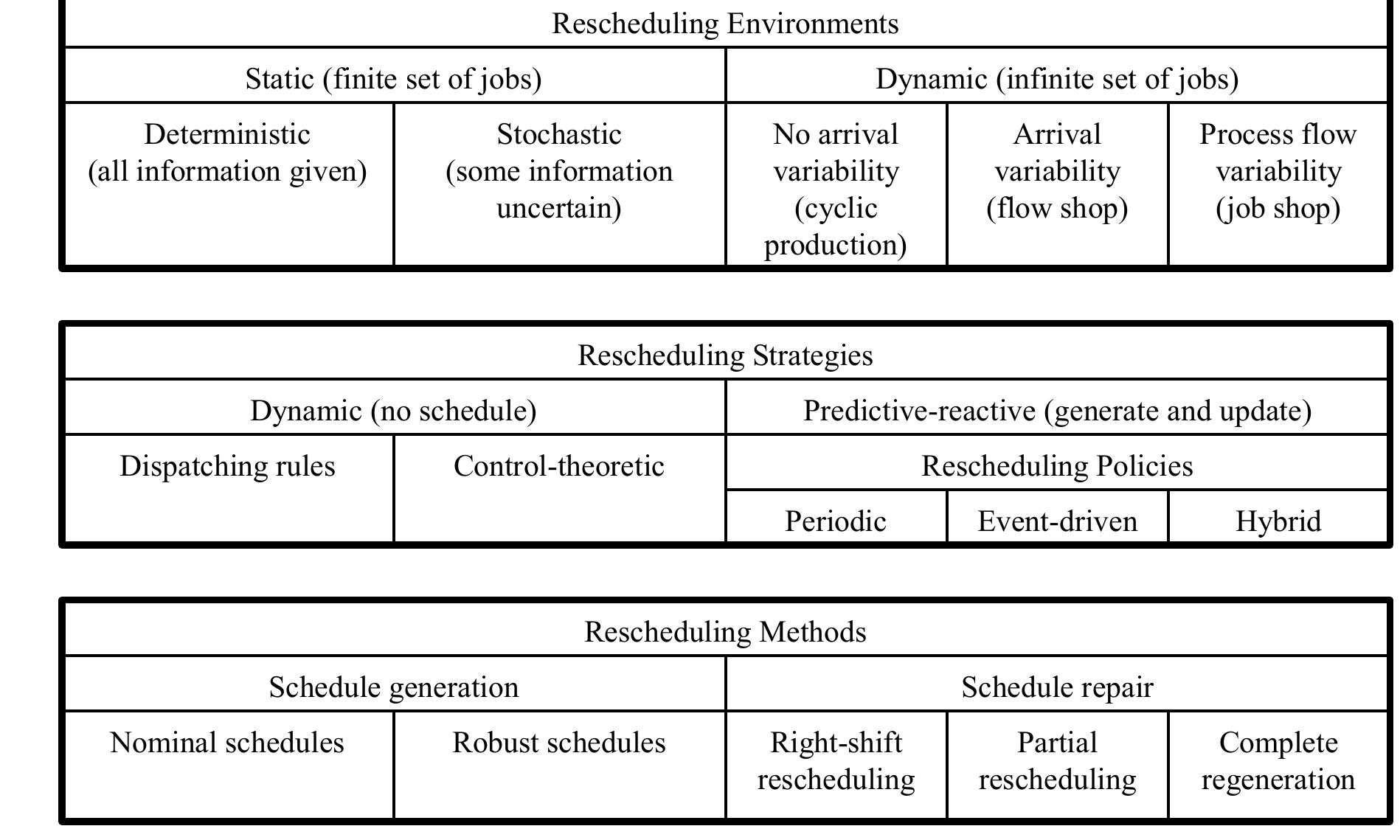
Looking at the table above, our tour scenario fits the following profile:
- Environment: We operate in a Stochastic environment, not a deterministic one. We have a plan, but perfect adherence is not guaranteed; events like illness or emergencies are sources of uncertainty.
- Strategy: Our approach must be Predictive-Reactive. We generate a nominal schedule (the predictive part) but must have policies in place to update it when disruptions occur (the reactive part). The disruption of the bull's unavailability is the "event" that triggers our policy.
- Method: For a single missed day, we won't perform a "complete regeneration" of the entire tour schedule. Instead, our protocol will be a form of Schedule Repair.
To design this repair method effectively, we will model the tour as a production system, a concept central to queueing theory and operations management.

Let's define our system's components:
- Throughput: The primary goal of the system. In our case, this is the successful progression along the "experience arc" you designed, culminating in the wife's sexual and emotional satisfaction and the reinforcement of the couple's trust. This is what we are trying to maximize and protect.
- The Constraint (The Drum): The bull. In any system, one resource limits the overall output. The bull's availability, energy, and presence for high-quality intimate encounters is the bottleneck that dictates the maximum possible throughput of the "experience arc."
- The Buffer: In manufacturing, a buffer is a stock of inventory placed before a constraint to ensure it never starves for work. In our human system, the buffer is not physical inventory; it is a bank of pre-planned, time-allocated alternative activities designed to protect the system's throughput (the experience arc) if the constraint (the bull) is temporarily unavailable.
The Drum-Buffer-Rope (DBR) Framework
The concepts of the Drum and Buffer come from the Drum-Buffer-Rope (DBR) methodology, a scheduling application of the Theory of Constraints. This framework is perfectly suited to our task.
Drum Buffer Rope (DBR): Maximize Throughput & Lead ...
This article provides an excellent, non-mathematical introduction to the DBR framework. It will solidify the concepts of Drum, Buffer, and Rope as a system for managing constraints.
Please read the introduction and the first two main sections. Focus on the definitions of The Drum, The Buffer, and The Rope. Then, review the section on identifying and managing constraints. This will ground our protocol in established OR principles.
As the reading explains, the entire system's schedule (the "Rope") is subordinated to the constraint's (the "Drum's") pace. Our goal is to ensure the Drum is always able to work on the most important tasks and is protected from disruptions by the Buffer. Today's task is to design that buffer and the protocol for using it.
The Adaptive Protocol for a Single Missed Day
Let's run a simulation. It is the morning of Day 4 of the 7-day tour. An intimate encounter is scheduled for the evening.
- Disruption: The bull calls the wife and says, "I am so sorry, but a minor family emergency has come up that I must deal with. I won't be able to come over today. I will be fully available and focused for you tomorrow."
The "Drum" is down. The adaptive scheduling protocol is now activated. The response is structured and calm, not chaotic.
Step 1: Human-Layer Response (Acknowledge & Reassure)
Before any logistical calculations, the human element is primary. The system's stability depends on goodwill.
- Action: The wife's immediate response is supportive and understanding. Something like: "Of course, don't worry about it at all. I hope everything is okay. Family comes first. Let's touch base later to confirm for tomorrow."
- Rationale: This response reduces pressure on the bull, reinforces the trust-based nature of the arrangement, and prevents the disruption from creating emotional friction.
Step 2: Buffer Management (Assess & Activate)
Now, the wife shifts to a cool-headed logistical assessment. She consults the pre-designed "Buffer Menu" of alternative activities. This is where the concept of buffer zones becomes critical.
Drum Buffer Rope (DBR): Maximize Throughput & Lead ...
This section explains the practical application of buffer management, including the use of zones to trigger specific actions. We will adapt this concept for our protocol.
Read the subsection Buffer Management Strategies. Pay close attention to the idea that buffers are divided into three zones: green, yellow, and red.
We can define our zones as follows:
- Green Zone: All activities proceeding as planned.
- Yellow Zone: A minor disruption has occurred (e.g., a single missed day). The protocol is to substitute the planned activity with a buffer activity to protect the experience arc.
- Red Zone: A major disruption has occurred (e.g., multiple missed days). The protocol is to escalate and potentially re-plan the remainder of the tour.
Our simulation (one missed day) places us firmly in the Yellow Zone.
- Action: The wife activates the Yellow Zone protocol. She reviews the Buffer Menu and selects an activity to substitute for the intimate encounter. This menu was curated in Module 4 to align with the tour's overall emotional arc.
Sample "Buffer Menu" for the Tour:
- Sensory Immersion Night: Execute the curated plan for an at-home spa experience, using the massage oils, music playlists, and sensory accessories kit. This maintains a feeling of sensual indulgence.
- Solo Lingerie Showcase: The wife uses the time to try on one of the new lingerie sets from the curated wardrobe, taking photos to share with the husband. This keeps the focus on her sensuality and connects her to the husband.
- Dedicated Reconnection Call: The scheduled brief check-in with the husband is upgraded to a long, intimate, non-logistical video call, focusing entirely on their connection.
- Anticipation-Building Day: The wife spends the time planning a special surprise for the bull's return the next day, shifting the energy from loss to anticipation.
The choice depends on her mood and energy, but any choice is superior to an unstructured day that feels like a failure. For our simulation, let's say she chooses Option 1: Sensory Immersion Night.
Step 3: Communicate & Re-plan
With a new plan in place, the next step is to update the other nodes in the system: the husband and the bull.
- Action (Wife to Husband): During the evening check-in, the wife frames the situation as a successful adaptation. "Quick update: [Bull] had a small family thing come up today, so we're pushing our plan to tomorrow. I'm having a lovely, relaxing spa night at home instead. It's actually perfect. Talk to you in the morning!" This projects confidence and control, preventing the husband's anxiety.
- Action (Wife to Bull): A simple text later in the day: "Hope all is well. Just confirming we're on for tomorrow as planned." This re-establishes the schedule with minimal overhead.
Step 4: Execute & Log
The wife executes the "Sensory Immersion Night" plan. Critically, the day is not a loss; it has been repurposed to serve the system's larger goal of a special, contained experience.
- Action: After the day is over, she makes a quick private note for the post-tour debrief: "Day 4: Bull unavailable. Activated Yellow Zone protocol, chose spa night. Felt relaxing and maintained the 'special' feeling. Buffer activity was effective."
- Rationale: This log provides data. Like in the previous lesson, this data will be used in the post-tour RADAR meeting to refine the system. Was the menu of options good? Does another option need to be added? This is the continuous improvement loop.
Conclusion
You have now designed a robust adaptive protocol to handle a common logistical shock. By applying principles from your Operations Research background, you've transformed a potential crisis into a managed, non-event. The schedule is not a fragile script to be followed blindly; it is a resilient system designed to absorb variability.
Key Takeaways:
- Logistical Shocks are Signals, Not Failures: An unexpected disruption is a signal to activate a protocol. It is not a failure of the plan.
- Frame the System with OR Concepts: Viewing the tour as a production system with a Drum (constraint), Buffer (contingency plans), and Throughput (experience arc) provides a powerful and familiar analytical lens.
- A Buffer is a Menu of Alternatives: In a human system, a buffer is not inventory. It is a curated menu of pre-planned, goal-aligned activities that can be substituted to protect the overall objective when a disruption occurs.
- Use Zoned Responses: A tiered response system (Green, Yellow, Red) prevents overreaction. A minor disruption triggers a minor adjustment (substitute), not a complete system overhaul.
- The Protocol Sequence is Key: The adaptive response follows a clear sequence: Acknowledge -> Assess & Activate -> Communicate -> Execute & Log. This ensures a calm, efficient, and data-driven response.
In our next lesson, we will escalate the challenge. You will design an adaptive plan to handle a prolonged bull unavailability (multiple missed days). This will move us into the "Red Zone" and require a more significant form of schedule repair to salvage the tour's objectives.