Welcome back. In our last lesson, you drafted the husband’s pre-departure briefing to the bull, a critical step in setting the stage for the tour scenario. That briefing established the "caretaker" frame and communicated the high-level boundaries. Now, we will design one of the most vital components mentioned in that briefing: the real-time safety system.
This lesson directly addresses the learning outcome: Design a real-time distress protocol for the wife, including safe words, escalation procedures, and abort triggers. Think of this not just as a set of rules, but as designing a robust, multi-layered control system for a complex human dynamic. For an efficiency expert, this is a core task: creating a protocol that is clear, reliable, and provides unambiguous signals to ensure the system (the relationship dynamic) operates within safe and desired parameters at all times.
1. The Foundation: Consent, Communication, and Calibration
Before designing the mechanics, we must establish the guiding principles. A distress protocol isn't a sign of anticipated failure; it's the very foundation of trust that makes ambitious exploration possible. It empowers the wife with absolute control, ensuring her enthusiastic consent is present at every stage.
The "Playing with Eros" article provides a superb framework for this, built on four principles.
Playing with Eros: Consent, Calibration and Safety for Erotic ...
This article from Nordic Larp offers a clear, structured approach to safety in intense role-play, which is directly applicable here. It lays out the philosophical groundwork for our practical design.
First, read the introduction and the section on the Four C's—Consent, Communication, Calibration, and Checking-In. This establishes why these protocols are not restrictive, but permissive. Then, continue to the discussion of consent being continual and the critical principle of The Door is Always Open. This final principle forms the basis for our ultimate abort trigger.
The core takeaway is that consent is not a one-time agreement but a continuous, moment-to-moment process. The protocol we design must provide the tools for the wife to manage this process in real-time.
2. A Multi-Tiered System: The Traffic Light Protocol
To create a system that is both nuanced and simple to use under pressure, we will adopt the widely-used "traffic light" model. This provides a tiered response system, allowing for fine-tuning (calibration) as well as hard stops.
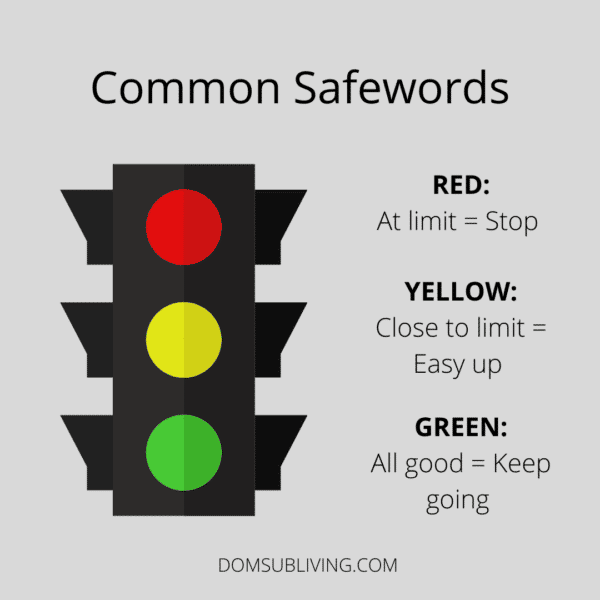
This system is not just about stopping; it's about steering. It gives the wife a way to provide continuous feedback, optimizing the experience for her pleasure.
5 Things You Need to Know About Safewords
The video "5 Things You Need to Know About Safewords" from Loving BDSM provides a clear, practical explanation of this system.
Watch the segment on the color system. The speakers explain the meaning of red, yellow, and green, and importantly, they stress that you must pre-negotiate what each color specifically means for the people involved.
Let's define the tiers for our protocol:
- Green: "All good, keep going." This is the default state and can also be used as verbal encouragement. The bull's responsibility is to maintain the current course and intensity.
- Yellow: "Caution, ease up, or slow down." This is the primary escalation/de-escalation procedure. It is not a stop command but a request for adjustment. The wife might use this if the intensity is approaching her limit, if she feels a moment of discomfort, or if she simply wants to change the pace. The bull's required response is to immediately reduce intensity, slow down, and verbally check in (e.g., "Okay, yellow. Checking in. How are you doing?").
- Red: "Stop." This is the primary safe word. It means all intimate activity stops immediately, without question or negotiation. This is a hard stop for the current scene or activity, allowing for a complete reset.
3. The "Hard Stop": Defining Safewords and Abort Triggers
While "Red" is an excellent, universally understood safeword, it's crucial to have a comprehensive system for hard stops and complete aborts.
A. Choosing the Safeword ("Red")
The "Red" command must be unambiguous. The primary reason for choosing a dedicated safeword is to distinguish it from in-character protests (e.g., "no, please, stop") that can be part of the erotic play.
Safe Words: Complete Guide to BDSM Safety Communication
The "BeMoreKinky" guide on safe words provides an exhaustive look at their function and best practices.
Read the introduction, What is a safeword?, to understand its core purpose. Then, review the sections on its practical use and the explanation of the traffic light system. Pay attention to why words like "pineapple" or "unicorn" are chosen—they are impossible to confuse with role-play.
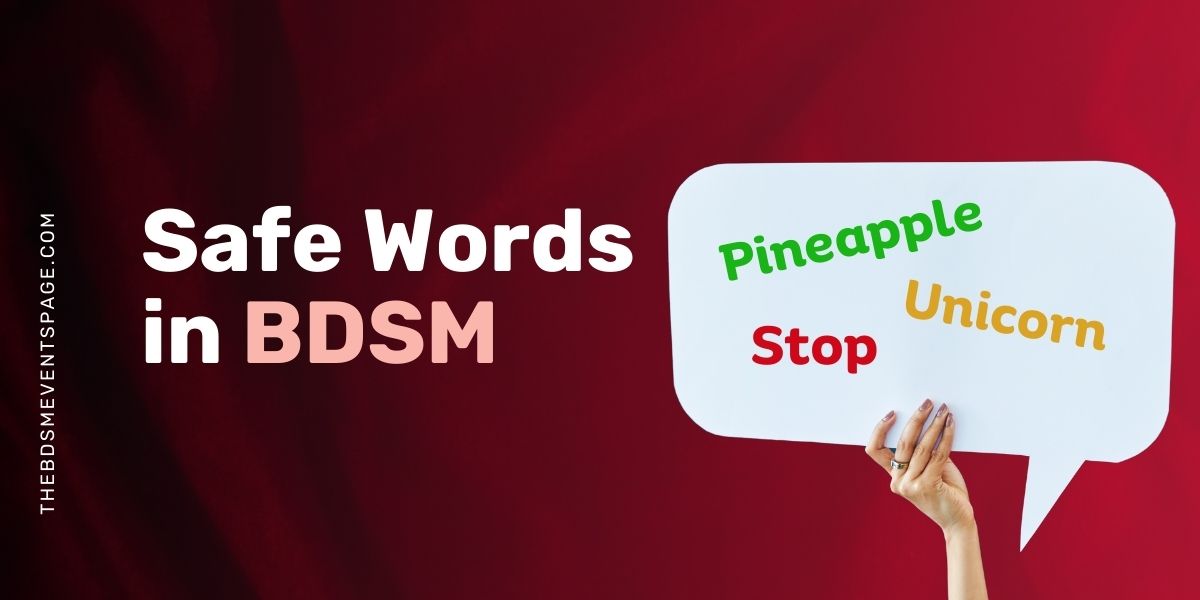
For our protocol, "Red" will be the primary verbal safeword. It's easy to remember and shout.
B. Contingency Planning: Non-Verbal Abort Triggers
An efficiency expert knows that any good system has redundancies. What if the wife is unable to speak? We must design non-verbal abort triggers.
Safe Words: Complete Guide to BDSM Safety Communication
The same guide offers an excellent section on these exact contingencies.
Focus on the section Non-Verbal Communication Methods. This provides a menu of practical, non-verbal signals that can be used when speaking isn't an option.
From this, we can select several options to include in our protocol:
- Tap-Out: Tapping twice, forcefully and intentionally, on the bull's body or a nearby surface (bed, floor). The double-tap distinguishes it from accidental contact.
- Dropped Object: The wife holds a set of keys or a small metal object. If she drops it, the sound serves as the stop signal. This is a passive signal that works even if she is unable to make a deliberate movement.
- Specific Sound: If gagged or otherwise unable to articulate words, a pre-agreed sound, like humming the "Happy Birthday" tune twice, can serve as a clear, unmistakable signal.
These non-verbal signals have the same authority as saying "Red." They trigger an immediate hard stop.
4. The Complete Distress Protocol: A Structured Summary
Here is the complete, multi-layered protocol. This is the system that the husband, wife, and bull must all understand and agree to before the tour.
| Tier | Signal | Wife's Intent | Bull's Required Response |
|---|---|---|---|
| 0: Normal Play | "Green" (or positive non-verbal cues) | "I'm good, continue." | Continue with current activity. |
| 1: Calibration | "Yellow" | "Ease up, slow down, I'm approaching a limit." | Immediately decrease intensity. Verbally check in: "Yellow. Got it. Checking in." |
| 2: Hard Stop | "Red" (or other chosen safeword like "Pineapple") | "Stop this activity now. I've hit a hard limit." | Immediately cease all physical contact and intimate activity. Provide space. Check in verbally once she indicates readiness to talk. |
| 3: Non-Verbal Hard Stop | - Double Tap-Out - Dropped Object - Specific Sound/Hum |
Same as "Red," but used when unable to speak. | Same as "Red." The bull must remain vigilant for these signals, especially when the wife is non-verbal. |
| 4: Full Abort | Clear statement like "I need this to be over for today." | "I am withdrawing consent from the entire encounter for now." | Respect the decision fully. Stop all attempts to resume play. Revert to a platonic, friendly caretaker role. |
It is critical to add that the bull's responsibility is not passive. As the videos and articles emphasize, he must not simply wait for a safeword. He must be an active participant in maintaining safety by:
- Observing body language: Is she tense? Is her breathing changing?
- Initiating check-ins: Periodically asking, "How are you doing?" or "Give me a color."
- Trusting his own instincts: If he feels something is wrong, even without a clear signal, he has the responsibility to pause and check in.
Finally, all three parties must agree that using this protocol, especially "Yellow" or "Red," is a sign of a successful and responsible interaction, not a failure. It is the system working as designed to ensure safety and build trust.
Conclusion
In this lesson, you have designed a comprehensive, real-time distress protocol. This system moves beyond a simple safeword to a multi-tiered framework for calibration, hard stops, and emergency aborts, complete with verbal and non-verbal contingencies.
Key Takeaways:
- A distress protocol is a tool for empowerment and trust-building, not a plan for failure.
- The traffic light system (Green, Yellow, Red) provides a simple, powerful structure for nuanced communication.
- Contingency planning with non-verbal signals (tap-outs, dropped objects) is essential for a robust safety system.
- Responsibility is shared: the wife is empowered to use the signals, and the bull is obligated to be vigilant and responsive.
You have now established the rules for pre-briefing, in-scene conduct, and real-time safety. The final piece of the human systems puzzle is managing the aftermath. In our next lesson, we will focus on designing the post-tour debrief and check-in protocols for all three parties to process the experience and restore relationship equilibrium. This ensures the system can be safely shut down and reset, reinforcing the stability of the primary relationship.