Welcome. This course begins with the New Testament passages themselves before turning to resurrection, judgment, Revelation, disputed timelines, and the practical meaning of readiness. For this first lesson, allow about 40 minutes to read Mark 1:14–15 and Acts 1:6–11 slowly, study the short resources below, and then return to the passages.
The central distinction is between a kingdom that has begun and a kingdom that has not yet reached its full completion. Mark records Jesus announcing that God’s kingdom has come near. Acts places the risen Jesus’ promised return alongside the work he gives his followers in the meantime. Reading the two together provides a foundation for thinking about Christ’s return without beginning with a timetable.
Jesus announces the kingdom
Mark opens Jesus’ public ministry with a compact announcement. After John the Baptist’s arrest, Jesus comes to Galilee proclaiming God’s good news: “The time is fulfilled,” “the kingdom of God has come near,” and people should repent and believe (Mark 1:14–15).
Here, kingdom means God’s reign, not simply a territory with borders. Jesus’ announcement says that something decisive is happening now: the awaited time has arrived, and people are called to respond. Yet “has come near” does not, by itself, say that every consequence of God’s reign is already visible or complete. John has been arrested, for example; opposition has not vanished from Mark’s story.
Commentary on Mark 1:14-20 - Working Preacher from Luther Seminary
Read Working Preacher’s commentary from Luther Seminary for its careful treatment of how the kingdom can be present in Jesus’ ministry while still awaiting fulfillment.
In the commentary on Mark 1:14–20, find the paragraph beginning “The reliance on traditional material is evident in the rest of 1:15.” Read the kingdom discussion, focusing on the distinction between God’s reign becoming active in Jesus’ ministry and its possible future completion. Then read the following paragraph, from “The announcement that ‘the time’” through its reference to fulfillment in Luke. Finally, in the paragraph beginning “Interestingly, Isaiah 60:22,” read the prophetic context. Notice how the language of good news and God’s reign draws on earlier hopes, without requiring you to master every cross-reference.
The commentary helps name a tension in Mark’s wording. If God’s reign becomes active wherever Jesus ministers, the kingdom is not only a future event. If opposing powers have not yet ended their rule, it is not fully realized either. Christians often call this the “already, but not yet” character of the kingdom. It is a way of relating New Testament passages, not a phrase Jesus uses in these verses.
Mark 1:14–15 does not explicitly describe a second coming. Its contribution to this lesson is the starting point: Jesus announces that the hoped-for reign of God is arriving with his ministry. Acts will add the promise that the risen Jesus will return.
The risen Jesus redirects the disciples’ attention
Acts begins after Jesus’ resurrection. Its opening verses say that he spoke to his followers about the kingdom of God (Acts 1:3). In Acts 1:6, they ask whether he will now restore the kingdom to Israel. Their expectation concerns the kingdom, but so does their question about its timing.
Jesus’ answer has two parts. First, the times are not theirs to know; the Father has set them by his own authority (Acts 1:7). Second, the Holy Spirit will empower them to be his witnesses, beginning in Jerusalem and extending to the ends of the earth (Acts 1:8). Then Jesus is taken from their sight. Two figures tell the watching disciples that “this Jesus” will come again (Acts 1:9–11).
Book of Acts Summary: A Complete Animated Overview (Part 1)
Watch BibleProject’s “Book of Acts Summary: A Complete Animated Overview (Part 1)” for a visual introduction to the kingdom, the Spirit, the ascension, and the promise of return.
Watch the opening to see how Acts continues the story of Jesus and introduces his teaching about the kingdom. In Spirit and ascension, focus on the witnesses’ task and the promise that Jesus will return. Finish with the wider mission, which shows why Acts 1:8 matters to the book’s unfolding story. The video’s connection between the cloud and Daniel 7 is an interpretation worth noting; Acts 1:6–11 itself does not explain that connection.
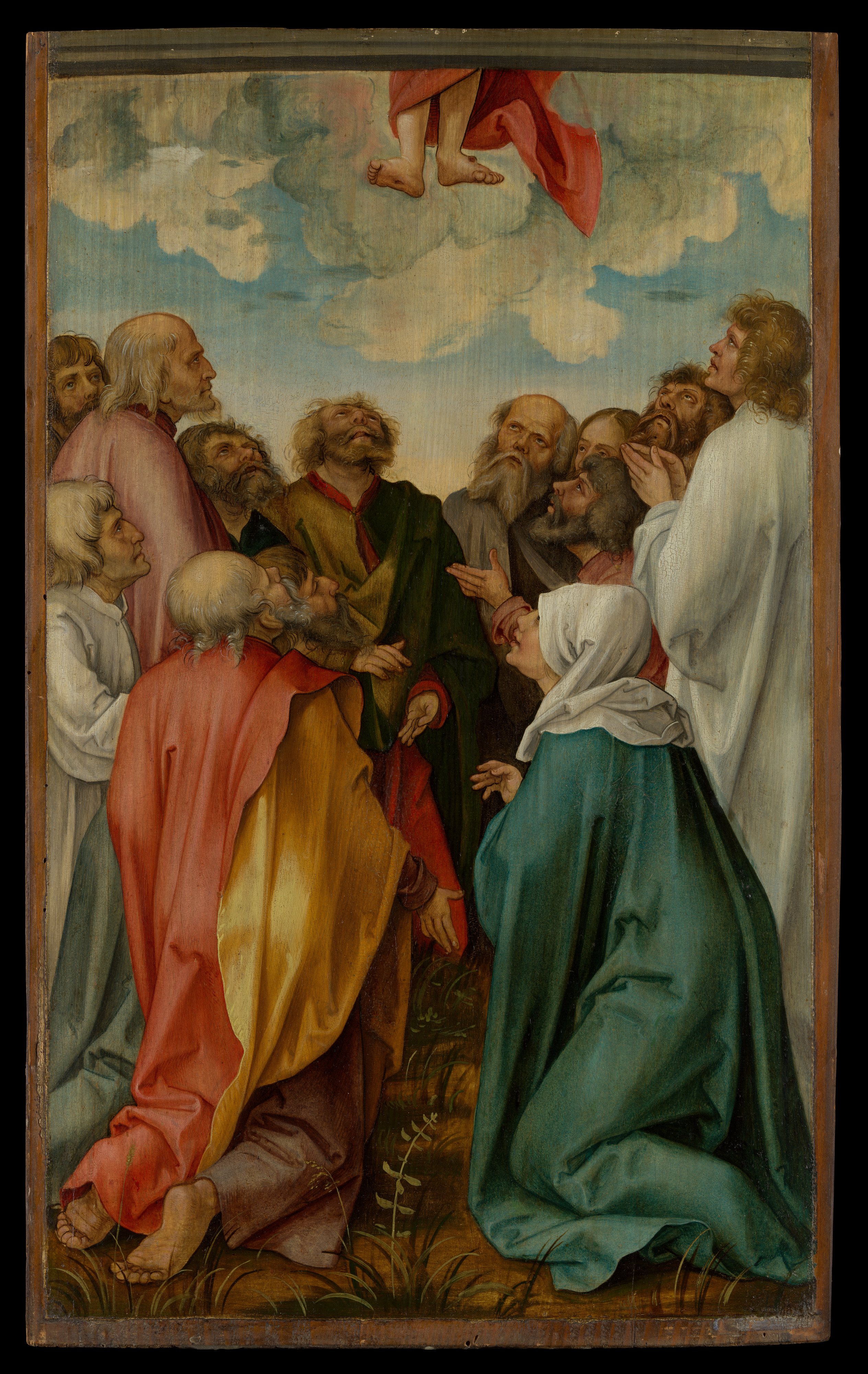
Jesus does not answer the disciples by supplying a date. Nor does he simply say that their interest in God’s kingdom is mistaken. He redirects them from knowing the time to receiving the Spirit and bearing witness. The figures’ promise in verse 11 leaves a future return in view. The disciples therefore stand between Jesus’ resurrection and ascension, which have happened, and his return, which has not.
Holding “already” and “not yet” together
The two passages have different emphases. Mark describes Jesus’ announcement at the beginning of his ministry; Acts describes the commission given after his resurrection. Their connection becomes clearer when each is allowed to say precisely what it says.
| Passage | What is already happening | What remains open |
|---|---|---|
| Mark 1:14–15 | Jesus announces that the decisive time has arrived and God’s kingdom has come near. | The verses do not claim that God’s reign is fully manifest everywhere. |
| Acts 1:6–8 | The risen Jesus speaks of the kingdom and gives his followers a Spirit-empowered task. | The Father’s timing is not disclosed to them. |
| Acts 1:9–11 | Jesus has ascended from the disciples’ sight. | The figures promise that he will come again. |
An important distinction follows. Acts 1:11 explicitly promises Jesus’ return; Mark 1:14–15 does not. The claim that his return will bring God’s reign to completion is a theological synthesis of these passages within the wider New Testament hope. It should not be presented as though Mark 1:15 alone spells out every stage.
The short reading below offers one Christian formulation of that synthesis. It comes from a Reformed devotional source, so treat its definition of the kingdom and its account of how the kingdom grows as an interpretation rather than as wording found directly in Mark or Acts.
The Kingdom of God | Reformed Bible Studies & Devotionals at Ligonier.org
Read Ligonier Ministries’ “The Kingdom of God” to see how one Reformed account connects Jesus’ first coming, his future return, and the church’s present witness.
In the opening discussion, before the “Coram Deo” heading, read the kingdom account. Focus particularly on its distinction between the kingdom’s inauguration during Jesus’ first coming and its consummation at his return. Continue with the short paragraph immediately before “Coram Deo,” from the witness paragraph. Relate its emphasis on witness to Acts 1:8 while keeping in view that Acts promises the Spirit’s power, not a schedule for completion.
The words inauguration and consummation can be useful shorthand: the kingdom’s arrival begins with Jesus, while its full realization remains future. But the shorthand must not obscure the passages’ different claims. In particular, Acts 1:6–11 does not give a detailed sequence of end-time events. It gives a limit on human knowledge of timing, a present calling to witness, and a promise of return.
This also makes sense of why the disciples are not told to remain staring upward. Their expectation of Jesus’ return is not cancelled; it is joined to a task in the present. Mark’s call to repent and believe likewise concerns a response now, not merely preparation for an event whose date could be calculated.
Conclusion
Mark 1:14–15 presents the kingdom as arriving with Jesus’ ministry. Acts 1:6–11 places the risen Jesus’ promised return in the future while directing his followers toward Spirit-empowered witness rather than knowledge of the timetable. Together they support the basic “already, but not yet” framework, provided we distinguish what each text explicitly states from the broader interpretation that connects them.
Next, the course turns to apocalyptic imagery in Mark and Revelation. That will help you read descriptions associated with Christ’s return without assuming that every image functions as a literal, step-by-step forecast.