Hello and welcome back to our course on C threads!
In the previous lessons, we built the foundation for our thread-safe hash table. We designed the data structure with per-bucket locking and implemented thread-safe insert and lookup operations. You learned that even read-only operations like lookup need protection to prevent data races and use-after-free errors.
Today, we will implement the final and most complex of the core operations: HashTable_Delete. Deleting a node from a shared linked list requires careful pointer manipulation, and doing it concurrently introduces significant challenges. Our goal is to implement a robust delete function that safely removes an element without corrupting the data structure for other threads.
The Single-Threaded Delete Algorithm
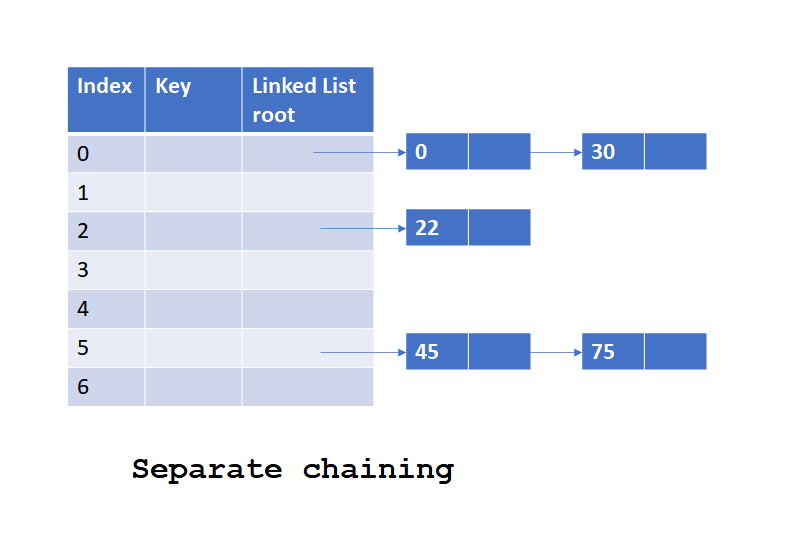
Before we tackle the concurrency aspects, let's first solidify our understanding of the standard, single-threaded algorithm for deleting a node from a hash table's collision chain (a linked list).
The logic involves two main cases:
- Deleting the head of the list: If the node to be deleted is the first one in the bucket, we must update the bucket's head pointer to point to the next node.
- Deleting from the middle or end: If the node is elsewhere in the list, we need to "skip over" it by changing the
nextpointer of the previous node to point to thenextpointer of the node we are deleting. This requires keeping track of the previous node as we traverse the list.
The following video provides an excellent walkthrough of this C implementation.
To understand the core linked-list manipulation for deletion, please watch this segment from Jacob Sorber's video, 'A better hash table (in C)'. He implements a non-thread-safe delete function from scratch.
Watch the section from 23:46 to 26:22. Focus on how he uses a previous pointer to handle both deletion cases (head vs. middle) and how the node is unlinked from the list before being freed.
This single-threaded logic forms the heart of our operation. Now, let's make it thread-safe.
Implementing a Thread-Safe delete Operation
As with insert and lookup, we must protect the operation with the appropriate per-bucket lock. The entire process—from finding the node to unlinking it from the list—is a critical section. If we don't hold the lock for the entire duration, we risk severe bugs:
- Another thread could be looking up the node we are deleting, leading to a use-after-free error.
- Another thread could be inserting a new node at the head while we are modifying the same head pointer, leading to a lost update.
- Two threads could attempt to delete adjacent nodes simultaneously, leading to list corruption.
Therefore, the thread-safe algorithm is:
- Calculate the bucket index for the given key.
- Acquire the lock for that specific bucket.
- Traverse the list using
currentandpreviouspointers to find the target node. - If the node is found, unlink it by updating either the bucket's
headpointer orprevious->next. - Release the lock.
- Free the memory associated with the now-unlinked node.
The "Unlock-then-Free" Pattern
Pay close attention to steps 5 and 6. We release the lock before freeing the memory. This might seem counterintuitive, but it's a key optimization pattern in concurrent programming.
-
Is it safe? Yes. The critical part is unlinking the node from the list. Once
table->buckets[index]orprevious->nextis updated (inside the critical section), no other thread traversing the hash table can ever reach this node again. The only remaining pointer to the node is in our localcurrentvariable. It is now private to our thread, so we can safely free it without a lock. -
Why is it better? The
free()function can sometimes be a blocking or time-consuming call, as it may need to interact with the memory manager's internal data structures. By movingfree()outside the critical section, we minimize the amount of time the lock is held. This reduces lock contention and allows other threads waiting for that bucket's lock to proceed sooner, improving overall application throughput.
Let's integrate this pattern into a full implementation.
// A thread-safe HashTable_Delete implementation
// The function returns the value of the deleted item, or -1 if not found.
int HashTable_Delete(HashTable* table, const char* key) {
    unsigned int index = hash(key) % TABLE_SIZE;
    Node* prev = NULL;
    Node* current = NULL;
    int value = -1; // Value of the node to be deleted

    // 1. Acquire the lock
    pthread_mutex_lock(&table->locks[index]);

    // 2. Find the node to delete
    current = table->buckets[index];
    while (current != NULL) {
        if (strcmp(current->key, key) == 0) {
            break; // Found the node
        }
        prev = current;
        current = current->next;
    }

    // 3. If found, unlink it from the list
    if (current != NULL) {
        if (prev == NULL) {
            // It's the head of the list
            table->buckets[index] = current->next;
        } else {
            // It's in the middle or at the end
            prev->next = current->next;
        }
        // Save the data we need before freeing the node
        value = current->value;
    }

    // 4. Release the lock
    pthread_mutex_unlock(&table->locks[index]);

    // 5. Free the memory (if a node was unlinked)
    if (current != NULL) {
        free(current->key); // We must free the duplicated key
        free(current);      // And the node itself
    }

    return value;
}
This implementation correctly and efficiently removes an element from our concurrent hash table.
Test your understanding!
A colleague argues that the "unlock-then-free" pattern is risky. They propose this alternative:
// Alternative implementation
// ... (lock and find the node as before) ...
if (current != NULL) {
    if (prev == NULL) {
        table->buckets[index] = current->next;
    } else {
        prev->next = current->next;
    }
    // Free memory BEFORE unlocking
    free(current->key);
    free(current);
}
pthread_mutex_unlock(&table->locks[index]);
// ...
From a performance standpoint, what is the primary disadvantage of this alternative compared to the "unlock-then-free" pattern?
Show answer
The primary disadvantage is increased lock contention. While this alternative is functionally correct (it's safe), it holds the mutex for a longer duration because the call to free() is inside the critical section.
If free() is slow (e.g., due to memory fragmentation or contention within the memory allocator itself), any other thread trying to access the same bucket will be blocked for that additional time. By unlocking before freeing, we minimize the lock's hold time to only cover the essential pointer manipulations, allowing other threads to get work done sooner and improving the overall concurrency of the data structure.
Conclusion
Congratulations! You have now implemented all three fundamental operations—insert, lookup, and delete—for a thread-safe hash table using a fine-grained, per-bucket locking strategy.
Key Takeaways:
- Deleting from a shared linked list is a critical section that must be protected by a lock to prevent list corruption and use-after-free errors.
- The deletion logic must handle two cases: removing the head of the list and removing a node from the middle/end.
- The "unlock-then-free" pattern is a common and important optimization. It is safe because the node is completely unlinked from the shared data structure before the lock is released, making the subsequent
freeoperation a local action. This pattern minimizes lock hold time and improves concurrency.
Preview of the Next Lesson:
Our current hash table works beautifully, but it has one major limitation: its size is fixed. What happens if we insert so many items that the collision chains become very long, degrading performance to that of a simple linked list? The answer is to resize the table. However, a resize operation potentially needs to move every single element to a new bucket. How can we do this safely when multiple threads are active? This will require us to analyze when a global lock might be necessary, which will be the focus of our next lesson.