Introduction
Welcome to our next lesson. In our previous session, we explored Dinacharya for Yuvaavastha (adulthood), identifying it as the Pitta-dominant stage where daily routines serve as a therapeutic tool to manage stress and maintain peak function. We learned to counteract the Vata and Pitta aggravating influences of modern life through specific adaptations of daily practices.
Now, we advance to the final chapter of the life cycle, Vriddhavastha, or old age. This stage presents a unique set of physiological challenges and requires a distinct approach to daily living. Our objective for this lesson is to: Design specific Dinacharya protocols for Vriddhavastha (old age), adapting practices for age-related physiological changes.
We will analyze the profound shift in Doshic balance that defines old age, investigate the corresponding physiological decline from both Ayurvedic and modern perspectives, and construct Dinacharya protocols aimed at nourishing, sustaining, and preserving quality of life.
1. Understanding Vriddhavastha: The Vata-Dominant Stage of Life
Ayurveda defines Vriddhavastha as the period of life beginning around the age of 60. This stage is fundamentally characterized by the natural predominance of Vata Dosha. To understand the principles of geriatric care, let's first explore the defining features of this life stage.
Importance of Ayurvedic Dinacharya in Geriatric Care
The review article 'Importance of Ayurvedic Dinacharya in Geriatric Care' provides a clear definition of Vriddhavastha and its characteristics based on classical texts.
Please read the section 'Review of the Study', focusing on the paragraphs under 'Ageing' and 'Character of Stages of Life'. Pay close attention to the description of 'Old age' and the table detailing the gradual decline of bodily functions.
As the resource highlights, Vriddhavastha is marked by a progressive diminution, or Kshaya, of all bodily tissues (Dhatus), sensory acuity (Indriyas), strength (Bala), and cognitive faculties (Buddhi, Medha). This process is driven by the inherent qualities of Vata Dosha:
- Ruksha (Dry): Leads to dryness of the skin (Twak Rukshata), colon (Malavashtambha), and joints (stiffness).
- Laghu (Light): Contributes to the loss of tissue mass, such as muscle wasting (Mamsa Kshaya) and bone density loss (Asthi Kshaya).
- Chala (Mobile): Manifests as tremors, unsteadiness, and mental restlessness or anxiety.
- Shita (Cold): Results in poor circulation and a reduced ability to maintain body temperature.
- Khara (Rough): Causes roughness and cracking of the skin and a degenerative quality in tissues.
This natural aging process is termed Kalaja Jara. The goal of Ayurvedic geriatrics (Jara Chikitsa) and Swasthawritta is not to reverse this process, but to slow its progression and manage its manifestations, ensuring a graceful and functional later life.
2. Physiological Changes in Aging: Integrating Ayurvedic and Modern Views
The Ayurvedic concept of Vata-driven degeneration aligns remarkably well with the modern biomedical understanding of aging. The increase in Vata Dosha can be seen as the Ayurvedic explanation for the systemic changes observed across the body's organ systems.
Take a moment to study the following image, which summarizes the key physiological changes associated with aging from a modern perspective.
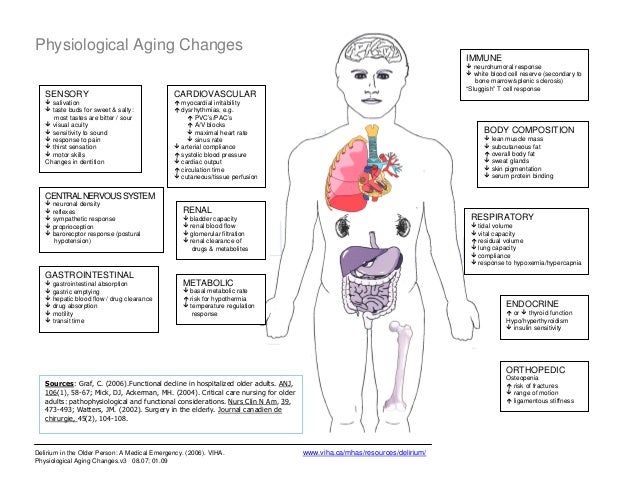
Now, let's correlate these modern findings with the Ayurvedic framework you know well:
| Modern Observation | Ayurvedic Interpretation |
|---|---|
| Decreased GI Motility, Constipation | Vishamagni and Mandagni due to Vata influence; Apana Vayu Vaigunya (impaired function of Apana Vayu). |
| Sarcopenia (Muscle Loss) | Mamsa Dhatu Kshaya. The light (Laghu) and catabolic nature of Vata leads to tissue depletion. |
| Osteoporosis (Bone Density Loss) | Asthi Dhatu Kshaya. There is a direct relationship (Ashraya-Ashrayi Bhava) between Vata and Asthi Dhatu. Vata increase depletes bone tissue. |
| Decreased Skin Elasticity, Dryness | Increase of Ruksha Guna of Vata; Rasa Dhatu Kshaya leading to poor skin nourishment. |
| Cognitive Decline, Slower Reaction Time | Vata Vriddhi in the Majja Dhatu and Manovaha Srotas, impairing nerve function and mental clarity. |
| Decreased Sensory Acuity (Vision, Hearing) | Indriya Daurbalya (weakness of sense organs) due to Vata affecting the sensory channels. |
This integration shows that Vata Shamana (pacification of Vata) is the central therapeutic strategy for promoting health in the elderly.
3. Adapting Dinacharya for Vriddhavastha
The primary goal of Dinacharya in old age shifts from maintenance to active nourishment (Poshana), pacification (Shamana), and stabilization (Sthairya). The routine must be gentle, consistent, and specifically designed to counteract the effects of high Vata.
The following recommendations are based on practices proven effective in managing common geriatric conditions.
An Ayurvedic Outlook on Health Status of Elderly Population
A survey study titled 'An Ayurvedic Outlook on Health Status of Elderly Population' directly investigated common geriatric problems and proposed a specific Dinacharya module to alleviate them. This provides us with clinically relevant interventions.
First, review the 'DISCUSSION' section to familiarize yourself with the common ailments observed, such as Nidranasha, Malavashtambha, and joint pain. Then, carefully study the subsequent section, 'Various ailments associated with old age... can be alleviated/controlled by adopting a Dinacharya module', which details the specific practices recommended for each condition.
Drawing from this research and classical principles, let's construct a comprehensive geriatric Dinacharya.
Morning Routine (Pratahkalina Charya)
-
Ushapana (Warm Water Intake):
- Adaptation: Upon waking, slowly drink a glass of warm or hot water (Ushnajalapana).
- Rationale: The warmth counteracts Vata's cold quality, stimulates peristalsis to relieve Malavashtambha (constipation), and helps kindle a weak Agni.
-
Abhyanga (Oil Massage):
- Adaptation: This is the single most important practice. A gentle, full-body self-massage with warm, Vata-pacifying oil (e.g., Dhanwantaram Thailam, Mahanarayana Tailam, or plain sesame oil) should be done daily before bathing. The massage should be a soothing application (Samvahana) rather than a deep-pressure one.
- Rationale: Abhyanga is the ultimate Vata-hara therapy. It lubricates dry skin (Twak Rukshata), nourishes muscles and joints (Sandhishoola), calms the nervous system, and promotes strength.
- Special Focus:
- Shirobhyanga (Head Massage): Calms the mind and helps with sleep.
- Padabhyanga (Foot Massage): Crucial for Nidranasha (insomnia). As the texts state, it is also Chakshushya (beneficial for vision).
-
Vyayama (Gentle Exercise):
- Adaptation: Exercise must be done only to a fraction of one's capacity (Balaardha is very minimal here). Focus on gentle, joint-mobilizing movements.
- Rationale: Prevents stiffness and maintains mobility.
- Examples: Slow walking, gentle stretching sequences like Pawanmuktasana series, or restorative Yoga. Avoid anything strenuous or high-impact.
-
Snana (Bathing):
- Adaptation: Always use warm water (Ushnajala Snana).
- Rationale: Cold water would severely aggravate Vata, causing stiffness and pain. Warm water is soothing and cleansing after Abhyanga.
Sensory and Oral Care
-
Pratimarsha Nasya:
- Adaptation: Instill 2 drops of warm sesame oil, ghee, or Anu Tailam into each nostril daily.
- Rationale: The nose is the gateway to the head (Nasa hi Shiraso Dwaram). Nasya lubricates the delicate nasal tissues, pacifies Vata in the head, promotes mental clarity, improves sleep, and helps preserve the function of the sense organs, addressing issues like Drushtikshaya (failing vision) and Karnabadhirya (hearing loss).
-
Gandusha/Kavala (Gargling/Oil Pulling):
- Adaptation: Swish warm sesame oil or a suitable herbal decoction in the mouth for 5-10 minutes.
- Rationale: Strengthens teeth and gums, which are often weak in old age. It also maintains taste perception, which is vital for maintaining appetite (Annabhilasha) and ensuring proper nutrition.
Dietary and Evening Routine
-
Ahara (Diet):
- Adaptation: Meals should be warm, moist (soups, stews), well-cooked, and easily digestible. Use digestive spices like ginger, cumin, and black pepper. Maintain strict meal timings to regulate Agni. Include nourishing substances like ghee and milk.
- Rationale: Directly addresses the Vishamagni or Mandagni common in Vriddhavastha, preventing gas, bloating, and constipation while ensuring adequate nourishment (Poshana).
-
Ratricharya (Night Routine):
- Adaptation: Eat a light, early dinner. Avoid stimulating activities or screens before bed. A session of Padabhyanga is highly recommended.
- Rationale: Promotes restful sleep, which is often disturbed (Nidranasha) due to Vata imbalance. A calm evening routine helps ground the mobile quality of Vata.
Test your understanding!
A 72-year-old patient reports feeling cold all the time, having stiff, painful knees, extremely dry skin, and chronic constipation. From the Dinacharya practices we've just discussed, which two would you prioritize as the most impactful for providing immediate and systemic relief, and why?
Show answer
The two most impactful and high-priority practices would be:
- Daily Abhyanga (Warm Oil Massage): This single practice systemically addresses the root cause of his complaints—aggravated Vata Dosha. The warm oil directly counteracts the Shita (cold), Ruksha (dry), and Khara (rough) qualities. It lubricates the skin, soothes the joints to relieve pain and stiffness, and has a grounding effect on the entire system.
- Ushnajalapana (Warm Water Intake): This simple intervention targets both his internal coldness and constipation. The warmth pacifies Vata systemically and stimulates Agni. It hydrates the colon and promotes peristalsis, providing relief from Malavashtambha more effectively than cold or room-temperature water.
4. Clinical Application: Case Study
Now, let's synthesize this knowledge to create a personalized plan.
Design a protocol!
Scenario:
Mr. Sharma is a 75-year-old retired teacher. His primary complaints are:
- Waking up several times at night and finding it difficult to go back to sleep (Nidranasha).
- A sense of unsteadiness while walking and generalized body aches.
- Dry eyes and diminishing vision, for which his ophthalmologist has found no major pathology.
- Feeling mentally foggy and anxious.
His constitution (Prakruti) is Vata-Pitta.
Task:
Design a specific, targeted morning and evening Dinacharya protocol for Mr. Sharma. Propose 3-4 key interventions that will directly address his cluster of symptoms, providing the Ayurvedic rationale for each.
Show answer
Clinical Goal: The primary goal is Vata Shamana with a focus on Snehana (oleation), Sthairya (stabilization), and nourishing the nervous system and sense organs (Indriya Poshana).
Dinacharya Protocol for Mr. Sharma:
-
Intervention: Morning Oleation and Stabilization
- Practice: After his morning ablutions, he should perform a 15-minute gentle Abhyanga with warm Dhanwantaram Thailam (an excellent Vata-pacifying oil). He should focus on his joints and the soles of his feet (Padabhyanga). This should be followed by a warm shower.
- Rationale: The daily Abhyanga will address his generalized body aches by pacifying systemic Vata. The oleation will combat dryness, and the act of massage itself is grounding, which will help with his sense of unsteadiness and anxiety.
-
Intervention: Sensory and Nervous System Nourishment
- Practice: Following his bath, he should perform Pratimarsha Nasya by instilling 2 drops of warm ghee or Anu Tailam into each nostril.
- Rationale: This is a direct intervention for his neurological and sensory complaints. Nasya calms the mind, alleviating mental fog and anxiety. It nourishes the nerves of the head, which is classically understood to benefit the eyes (Chakshushya), helping with his dry eyes and supporting his vision.
-
Intervention: Evening Grounding Routine for Sleep
- Practice: One hour before bed, he must stop watching TV or using any digital screens. During this hour, he should perform Padabhyanga (foot massage) with warm sesame oil for 10 minutes. He can listen to soothing music or a calming spiritual discourse.
- Rationale: His Nidranasha is a classic Vata symptom. Padabhyanga is specifically indicated in the texts to induce sleep (Nidrajanana). It grounds the excessive mobile energy of Vata that causes a restless mind at night. Creating a screen-free "wind-down" period is essential to prevent overstimulation of the senses.
-
Intervention: Medicated Milk at Bedtime
- Practice: He can have a small cup of warm milk with a pinch of nutmeg (Jatiphala) and a teaspoon of ghee about 30 minutes before sleep.
- Rationale: Milk and ghee are both nourishing (Rasayana) and Vata-pacifying. Nutmeg is a well-known sedative (Nidrajanana) in Ayurveda. This combination provides deep nourishment to the nervous tissue (Majja Dhatu) and promotes sound, restful sleep.
Conclusion
In this lesson, we have navigated the principles of Ayurvedic care for Vriddhavastha. We established it as the Vata-dominant stage of life, where degenerative changes are natural but manageable. By integrating classical knowledge with modern physiological understanding, we have seen how Vata-driven Kshaya manifests systemically.
Key Takeaways:
- Vriddhavastha is the Vata-dominant life stage, characterized by a gradual decline (Kshaya) of Dhatus, Bala, and Indriya function.
- The goal of geriatric Dinacharya is Vata Shamana, nourishment (Poshana), and providing stability (Sthairya).
- Core adaptive practices include daily warm oil massage (Abhyanga), warm water intake (Ushnajalapana), gentle exercise (Vyayama), and nasal oleation (Pratimarsha Nasya).
- These practices are not merely for comfort but are targeted therapeutic interventions to manage common geriatric ailments like insomnia, constipation, joint pain, and sensory decline.
Preview of the Next Lesson:
Having addressed Dinacharya across the three major life stages, we will now shift our focus to pathology. In our next lesson, we will move into more specific clinical applications by learning to: Formulate a modified Dinacharya protocol for managing a specific lifestyle disorder (e.g., Sthaulya) through a detailed case study. This will allow us to apply our foundational knowledge to a common metabolic disease.