Introduction
Welcome to the next stage of our exploration of Swasthawritta. In the previous module, we meticulously analyzed the core practices of Dinacharya—such as Abhyanga, Vyayama, and Snana—on an individual basis. Now, we begin a new module focused on synthesis and clinical application. Our goal today is to move from theory to practice by addressing the learning outcome: Develop individualized Dinacharya protocols based on a comprehensive Prakruti and Vikruti assessment of a patient.
This lesson marks a critical transition. We will learn how to weave the individual threads of Dinacharya into a cohesive, personalized daily regimen. The key to this personalization lies in the foundational Ayurvedic concepts of Prakruti (an individual's inherent constitution) and Vikruti (their current state of health or imbalance). For you as a clinician, mastering this skill is the essence of applying Ayurvedic wisdom, allowing you to create protocols that are not just prescriptive, but truly tailored to the unique needs of each patient.
1. The Foundation of Personalization: Prakruti vs. Vikruti
Before we can build a protocol, we must understand the ground on which we are building. The distinction between Prakruti and Vikruti is fundamental to all Ayurvedic diagnosis and treatment.
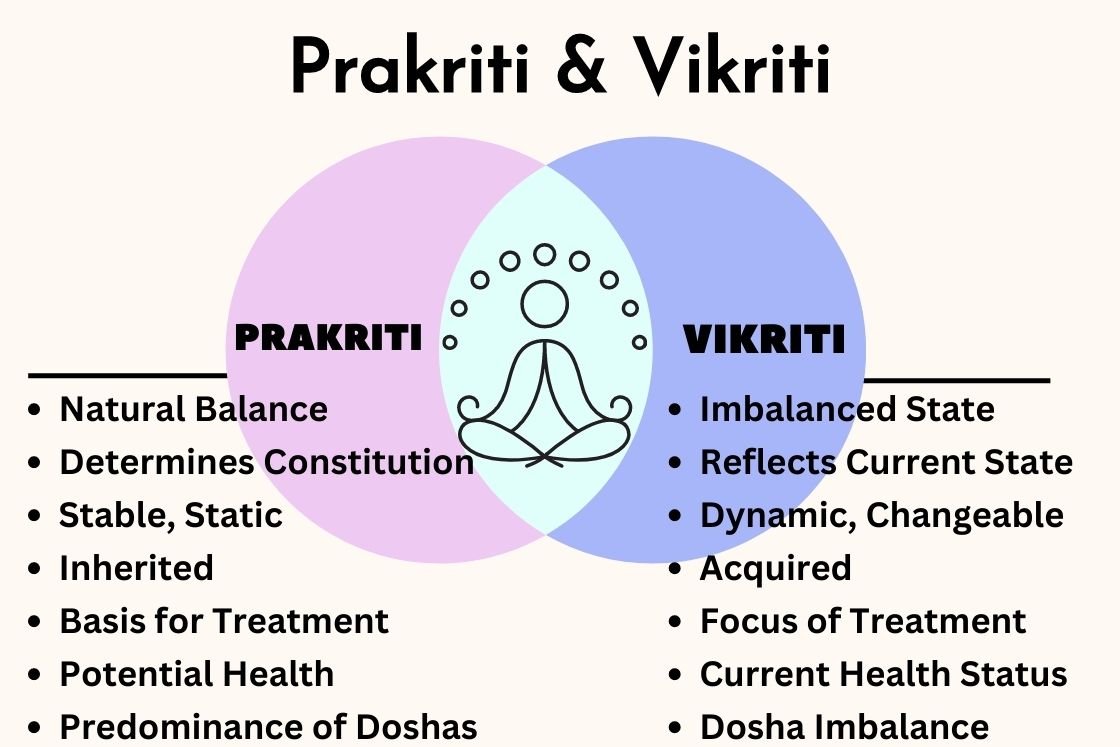
- Prakruti (स्वभाव or प्रकृति): This is your patient's constitutional blueprint, their inherent nature. It is determined at the time of conception and remains stable throughout life. It represents the body's natural state of equilibrium and defines its innate tendencies, strengths, and susceptibilities.
- Vikruti (विकृति): This is the current state of the Doshas, reflecting any imbalance or deviation from the Prakruti. It is dynamic and can change based on diet, lifestyle, season, age, and emotional state. Vikruti is the "imbalance of the moment" and is the primary target of our interventions.
The goal of a personalized Dinacharya is to apply daily practices that pacify the aggravated Doshas in the Vikruti, guiding the individual back towards the balanced state of their Prakruti.
To refresh your understanding of these concepts from a clinical and textual perspective, let's review a foundational text.
A preliminary mathematical model of Ayurvedic treatment
The following resource provides clear, textually-grounded definitions of Prakriti and Vikriti, along with other key assessment parameters like Agni and Koshta. This will reinforce the conceptual basis for our assessment.
Please read the section titled 'Theoretical foundations'. Pay close attention to the definitions of 'Doshas', 'Vitiation', 'Prakriti', and 'Vikriti', and how they are differentiated based on classical sources like the Charaka Samhita.
2. The Art of Assessment: Determining Prakruti and Vikruti
A truly personalized protocol can only arise from a comprehensive assessment. Ayurveda provides a systematic method for this known as Trividha Pariksha (three-fold examination).
A preliminary mathematical model of Ayurvedic treatment
To understand how to apply this three-fold examination in a clinical setting, let's explore the description provided in the same resource.
Please read the section 'Diagnosis of Prakriti, Vikriti, Agni, and Koshta'. Focus on the descriptions of Darshana, Sparshana, and Prashna and the types of information gathered through each method.
As you've just read, the Trividha Pariksha provides a holistic framework for data collection:
-
Darshana (Observation): This involves careful visual inspection. You are not just looking at the patient, but observing clues related to their Dosha constitution and imbalances.
- What to look for: Physical build (lean, medium, heavy), skin lustre and complexion, hair quality (dry, oily, fine), eye characteristics (small, sharp, large), gait, and general energy levels.
-
Sparshana (Palpation/Touch): This involves using touch to gather information.
- What to feel for: Skin temperature (cold, warm, hot), texture (rough, smooth, oily), and most importantly, the pulse (Nadi Pariksha), where the qualities of Vata, Pitta, and Kapha can be directly perceived in the radial artery.
-
Prashna (Questioning): This is a detailed inquiry into the patient's physiological and psychological functions. This is often the most revealing part of the assessment for determining Vikruti.
- What to ask about:
- Agni & Digestion: Appetite (variable, sharp, low), digestion quality (gassy, acidic, sluggish), bowel habits (Koshta).
- Sleep: Pattern (interrupted, sound), duration, quality upon waking.
- Energy Levels: Fluctuation, consistency, stamina.
- Mental/Emotional State: Tendency towards anxiety/worry (Vata), irritability/judgment (Pitta), or lethargy/attachment (Kapha).
- Preferences: Climate, food tastes, activity levels.
- What to ask about:
In modern practice, this process is often supported by standardized questionnaires (such as those developed by CCRAS or CSIR) to ensure a systematic and reproducible assessment of Prakruti. These tools can be excellent adjuncts to your classical clinical skills.
3. The Principle of Personalization: From Assessment to Protocol
Once you have a clear picture of the patient's Prakruti and, more critically, their Vikruti, you can design the Dinacharya protocol. The guiding principle is Samanya-Vishesha Siddhanta—using substances and actions (Gunas) that are opposite to the qualities of the aggravated Dosha in the Vikruti.
| Vikruti (Imbalance) | Core Principle | Abhyanga | Vyayama | Snana (Body) | Nasya |
|---|---|---|---|---|---|
| Vata Vitiation (Cold, Dry, Light, Rough, Mobile) | Warmth, Routine, Nourishment | Use warm, heavy oils (Sesame, Dhanwantaram). Slow, gentle pressure. Perform daily. | Gentle, grounding exercises like walking, swimming, or slow yoga. Avoid high-impact activities. Practice to 50% capacity (Balaardha). | Warm/Hot water to counteract coldness and relieve stiffness. | Nourishing oil (Anu Tailam, warm sesame oil) to lubricate nasal passages. |
| Pitta Vitiation (Hot, Sharp, Light, Oily, Liquid) | Cooling, Moderation, Calmness | Use cooling oils (Coconut, Chandanadi). Moderate pressure. Avoid during high heat. | Calming exercises like swimming or walking in nature, preferably during cooler parts of the day. Avoid over-heating and competitive sports. | Cool/Lukewarm water to pacify heat and prevent skin irritation. | Cooling oils (plain ghee) or herbal infusions to soothe inflammation. |
| Kapha Vitiation (Cold, Heavy, Slow, Oily, Static) | Stimulation, Lightness, Activity | Use warm, light oils (Mustard, Sesame) or dry powder massage (Udvartana). Vigorous, stimulating strokes. | Invigorating, strenuous exercise like running, cycling, or dynamic yoga. Aim for endurance to overcome lethargy. | Warm/Hot water to liquefy and mobilize Kapha, reducing heaviness and congestion. | Stimulating oils (Anu Tailam) or herbal powders to clear congestion. |
4. A Clinical Case Study: Bringing it all Together
Let's apply this systematic approach to a real-world case. This will demonstrate how assessment directly translates into a personalized Dinacharya.
Step 1: Patient Assessment
We will analyze the case of 'PD', a 44-year-old female patient presented in the research paper we have been studying.
A preliminary mathematical model of Ayurvedic treatment
The following reading details the initial consultation with 'PD'. It includes her self-reported symptoms and the physician's findings from the Trividha Pariksha.
Read the sub-section titled 'Initial consultation'. As you read, mentally map each symptom and observation to a specific Dosha. For instance, note which findings point to Vata, and which might point to Pitta.
Step 2: Analysis and Diagnosis
From the reading, we can synthesize the physician's diagnostic reasoning:
-
Prakruti: Vata-Pitta
- Vata signs: Thin/light physique, quick moving, rough/dry skin, fine/brittle hair, tendency to worry, light sleep.
- Pitta signs: Chiselled facial features, likely contributing to her determined (over-committing) nature. The diagnosis is stated as Vata-Pitta, though Vata signs are more prominent in the description.
-
Vikruti: Vitiated Vata
- This is the clear, current imbalance. The evidence is overwhelming: anxiety, fitful sleep, feeling ungrounded, cold hands/feet, stiffness, constipation with dry stool, abdominal gas and rumbling, and irregular appetite. These are classic signs of aggravated Vata Dosha.
-
Agni & Koshta
- Agni: Vishamagni (irregular digestive fire), directly evidenced by her unpredictable appetite and variable digestion (sometimes fine, sometimes bloated/gassy). This is the hallmark of Vata's influence on digestion.
- Koshta: Krura Koshta (hard/dry bowel), evidenced by her report of constipation with dry, firm stool and an "erratic" bowel pattern. This is also a direct result of excess dryness and irregularity from Vata.
Step 3: Designing the Individualized Dinacharya Protocol
Given the diagnosis of a clear Vata Vikruti, the treatment plan must be Vata-pacifying.
A preliminary mathematical model of Ayurvedic treatment
Now, let's examine the specific Dinacharya recommendations prescribed for 'PD' to address her Vata imbalance.
Read the recommendations under points 'A' and 'B'. For each recommendation, think about which quality (Guna) of Vata it is designed to counteract.
Step 4: Rationale for the Protocol
Let's break down the "why" behind these recommendations. This is the clinical reasoning you must develop.
-
Recommendation: Follow a diet of foods that are well-cooked, warm, moist, oily, and smooth.
- Rationale: This directly opposes the qualities of Vata (Sheeta, Ruksha, Laghu - cold, dry, light). The warmth, moisture, and oiliness provide the nourishment and grounding needed to pacify Vata.
-
Recommendation: Regular walking... rather than vigorous or high-impact exercise.
- Rationale: Vata's mobile quality can be exacerbated by overly strenuous or erratic activity. Gentle, regular movement like walking is grounding and builds stamina without depleting the system.
-
Recommendation: Have the main meal in the middle of the day and only a light meal in the evening.
- Rationale: This aligns the eating schedule with the natural rhythm of Agni, which is strongest midday (Pitta time). This helps regulate the Vishamagni characteristic of Vata.
-
Recommendation: Early to bed and early to rise; avoid staying up late.
- Rationale: This establishes a stable routine, which is the primary antidote to Vata's inherent irregularity and mobility.
-
Recommendation: Avoid loud music or excessive noise.
- Rationale: The Vata-predominant nervous system is sensitive to overstimulation. Reducing sensory input helps to calm the mind and reduce anxiety.
This case perfectly illustrates the process: comprehensive assessment reveals the Vikruti, and the principles of Samanya-Vishesha are used to design a targeted, multi-faceted Dinacharya to restore balance.
Test your understanding! (New Case)
A 35-year-old software engineer of Pitta-Kapha Prakruti presents with a Pitta Vikruti. His chief complaints are recurrent skin rashes that worsen in the sun, heartburn (Amlapitta), and a constant feeling of irritability and impatience, especially under work deadlines. He reports a very strong appetite and loose, frequent stools.
Based on this information, outline a modified Dinacharya protocol for him. For each of the following practices, state your recommendation and provide a brief rationale based on pacifying his Pitta Vikruti.
- Vyayama (Exercise):
- Snana (Bathing):
- Aahara (Dietary habit):
Show answer
Here is a sample protocol designed to pacify the patient's Pitta Vikruti:
-
Vyayama (Exercise):
- Recommendation: Moderate-intensity, cooling exercises performed during the cooler parts of the day (early morning or evening). Swimming, gentle cycling, or a brisk walk in a shaded area would be ideal. He should avoid strenuous workouts during midday or in direct sun.
- Rationale: The goal is to release stress and move the body without generating excess heat (Ushna Guna), which would further aggravate Pitta. Cooling and calming activities are preferred over highly competitive or aggressive sports that can fuel Pitta's intensity.
-
Snana (Bathing):
- Recommendation: A lukewarm or cool water bath. He should avoid very hot showers.
- Rationale: The cool temperature directly counteracts the hot quality of Pitta, helping to soothe the skin rashes, calm the nervous system, and reduce the overall feeling of heat and irritability.
-
Aahara (Dietary habit):
- Recommendation: He should favor three regular meals a day and never skip meals, especially lunch. His diet should include cooling, slightly dry, and substantial foods (sweet, bitter, and astringent tastes). Examples include rice, barley, cucumbers, leafy greens, and sweet fruits. He should reduce pungent, sour, and salty foods, as well as fried items and excessive red meat.
- Rationale: A strong appetite (Tikshnagni) is a sign of high Pitta; skipping meals will cause Agni to "burn" the tissues, leading to more acidity and irritability. A cooling diet with Pitta-pacifying tastes directly calms the internal fire, reducing heartburn and skin inflammation.
Conclusion
In this lesson, we have bridged the gap between knowing the individual practices of Dinacharya and applying them with clinical precision. You have learned to synthesize patient information through the Trividha Pariksha to create a coherent daily regimen tailored to their unique constitutional needs.
Key Takeaways:
- Individualization is Key: The effectiveness of Dinacharya lies not in a rigid list of rules, but in its adaptation to a person's Prakruti and Vikruti.
- Assessment is the Foundation: A thorough assessment using Darshana, Sparshana, and Prashna is non-negotiable for determining the Dosha imbalance that needs to be addressed.
- Opposites Attract Balance: The core therapeutic strategy is applying practices with qualities (Gunas) that are opposite to the qualities of the aggravated Dosha in the Vikruti.
- The Goal is Harmony: A personalized Dinacharya is a powerful tool to manage current imbalances (Vikruti) and guide the body and mind back to their natural state of health (Prakruti).
Preview of the Next Lesson:
We have now learned to create a protocol based on a general Dosha imbalance. In our next lesson, we will increase our clinical specificity by addressing the learning outcome: Analyze the methodology for modifying Dinacharya based on the stage of a disease (Samprapti) through representative case examples. This will involve understanding how to adapt our protocols not just to a Dosha imbalance, but to the specific pathogenesis of a named disease.