Introduction
In our last lesson, we constructed a multi-layered strategy for the mentor to maintain professional objectivity with the husband. We established the importance of structural "containers" (like scheduled meetings in neutral spaces), specific behavioral "guardrails" (like data-driven feedback), and internal cognitive "firewalls" (like the 'any other mentee' test). We identified the "Pause and Redirect" maneuver as a critical tool for when conversations stray from professional topics.
Today's lesson is a deep dive into the most challenging scenario where that maneuver is needed. Our learning outcome is to navigate conversations where the husband seeks advice on his marriage versus professional career advice. This is not just a moment of potential awkwardness; it is a critical test of the mentor's ethical integrity and his commitment to the roles agreed upon by all three individuals.
Your background as a social researcher gives you a keen understanding of how roles, expectations, and power dynamics operate within social systems. We will apply that lens to deconstruct this interaction and build a clear, repeatable protocol for the mentor to follow.
The Ethical Minefield: Defining the Conflict of Interest
Before scripting a response, we must be clear on why the mentor giving marital advice is problematic. This isn't simply about avoiding discomfort; it's about recognizing a fundamental conflict of interest. In professional ethics, a conflict of interest occurs when a person's private interests—in this case, his intimate relationship with the wife and friendship with the husband—could improperly influence their professional duties.
Let's look at a standard visualization of this concept.
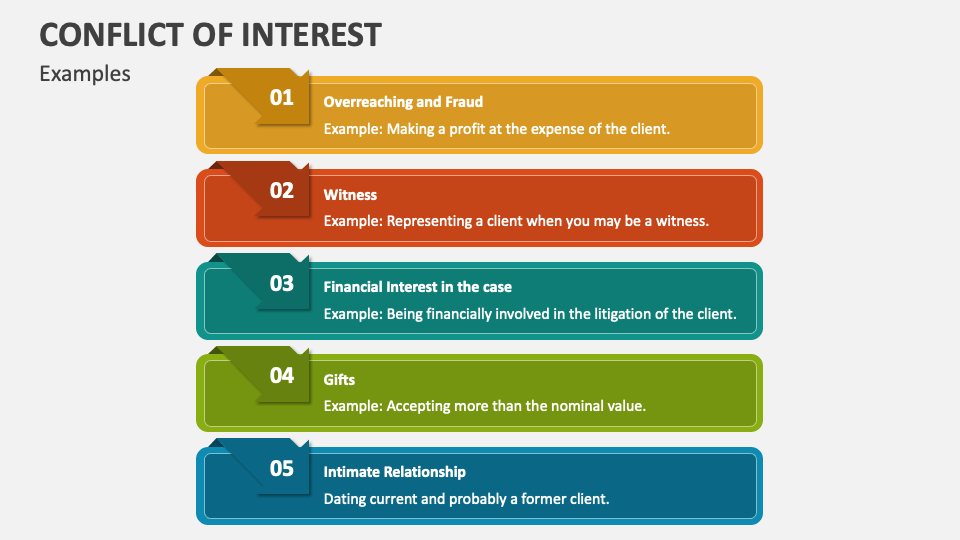
In this specific scenario, several conflicts are at play:
- Intimate Relationship: The mentor's advice cannot be seen as neutral. His perspective on the marriage is inherently shaped by being the wife's lover. He has a personal stake in the relationship's dynamics.
- Overreaching & Fraud: While "fraud" is a strong word, the principle of "making a profit at the expense of the client" applies. The "profit" here could be emotional or relational—for instance, subconsciously giving advice that strengthens his own position or makes his relationship with the wife easier, at the expense of providing the husband with objective counsel that truly serves the husband's best interests.
Therefore, the mentor's primary responsibility when asked for marital advice is to recognize and declare this conflict of interest, not to try and "give good advice" despite it.
Why Does the Husband Ask? Understanding the Motivation
To respond effectively, the mentor must first consider the possible motivations behind the husband's question. As a social researcher, you know that a direct question often carries underlying subtext. The husband might be asking because:
- He's Genuinely Seeking Wisdom: He respects the mentor's judgment and has temporarily blurred the line between "mentor" and "all-around life advisor."
- He's Testing the Boundaries: Consciously or unconsciously, he might be probing to see if the mentor will maintain the agreed-upon roles. The mentor's response is a test of his trustworthiness.
- He's Seeking Indirect Reassurance: The question "What should I do about X in my marriage?" could be a coded way of asking, "How do you view my marriage?" or "Are you a threat?"
- He's Expressing Vulnerability: He may feel overwhelmed and is reaching out to the person he perceives as having power or insight, forgetting the impropriety of the context.
An effective response must be robust enough to handle any of these motivations with empathy and clarity.
The Three-Step Framework for Navigating the Request
Here is a concrete, actionable framework for the mentor to use when the husband asks for marital advice during a professional session. This is the "Pause and Redirect" maneuver in its most refined form.
Step 1: Validate and Empathize
Do not immediately shut the husband down. Acknowledge the gravity of what he's sharing. This shows respect for him as a person and validates his feelings, separating the person from the inappropriate request.
- Husband: "I'm having a hard time focusing on this project. [Wife's Name] and I had a disagreement about our future plans, and I just don't know how to handle it. What do you think I should do?"
- Mentor's Validating Response: "I hear you. That sounds really tough, and I can see why it's weighing on you. Thank you for trusting me enough to share that."
Step 2: Clarify the Role and State the Boundary
This is the most critical step. The mentor must explicitly name the conflict of interest. This isn't an excuse; it's an ethical declaration that protects the husband and the integrity of the mentorship.
- Mentor's Boundary Statement: "Because of my deep personal care for both you and [Wife's Name], and my intimate relationship with her, I'm in a clear conflict of interest here. My perspective is inherently biased, so it would be unethical and unhelpful for me to give you advice on your marriage. My role as your mentor is to support your professional growth, and I need to protect that for you."
This statement is powerful because it frames the boundary as an act of service and protection for the husband, not as a rejection.
Step 3: Redirect to the Appropriate Channel & Pivot Back
After stating the boundary, provide a constructive path forward. Point the husband to the correct forum for such a conversation, demonstrating that the topic is valid, but the context is wrong. Then, decisively pivot back to the professional agenda.
- Mentor's Redirection & Pivot: "That is a crucial conversation, and it really belongs in a different space. It might be best to talk through it directly with [Wife's Name], or we could make it a point to discuss as a group at our next kitchen table check-in. For the remainder of our mentorship session today, let's focus on this project. Helping you succeed here is the best way I can support you in this role. Let's look at the first milestone."
The Internal Foundation: How Intimacy Reinforces Boundaries
This three-step framework requires significant discipline in the moment. That discipline is cultivated, as we've discussed, through the mentor's internal work. His ability to draw a clear line with the husband is directly connected to the promises he makes to himself regarding his roles, even during intimacy with the wife.
Consider his internal monologue during sex. When he is feeling most connected to the wife, he must simultaneously reinforce his commitment to the entire ethical structure they've built.
Mentor's Internal Monologue (Example): He is holding the wife, feeling a profound sense of love and connection. A thought arises: "I understand her so deeply in this moment." He immediately follows it with a self-correcting, reinforcing thought: "This understanding is a gift of this intimacy. It does not make me an expert on her marriage. My loyalty to [Husband's Name] is to honor our agreement, and that means honoring my role as his professional guide, not his marital counselor. My job is to support their partnership, not to intrude on it. I will protect that boundary for him, even when he asks me to cross it."
This internal act of reaffirming his role-based loyalty during a moment of intense personal connection is what makes his boundary-setting with the husband an act of integrity, not a cold, scripted rejection. He isn't just following a rule; he's living out a promise.
Conclusion
Navigating the husband's request for marital advice is a predictable and high-stakes challenge for the mentor. Successfully handling it is fundamental to the stability of this complex professional and personal dynamic.
Key Takeaways:
- Giving marital advice constitutes a clear conflict of interest for the mentor, compromising his ability to provide objective professional guidance.
- Understanding the husband's potential motivations—from genuine confusion to boundary testing—allows the mentor to respond with empathy.
- The Three-Step Framework (Validate, Clarify Role, Redirect) offers a clear, ethical, and repeatable script for navigating these conversations.
- The mentor's ability to execute this framework is not just a communication skill; it is founded on the internal discipline of reaffirming his role-based loyalties, a practice he maintains even during moments of intimacy with the wife.
Preview of the Next Lesson:
We have now established how the mentor should handle requests for general marital advice. But what happens when the conversation veers into more specific and potentially intrusive territory? In our next lesson, we will establish clear 'off-limits' topics regarding the sexual relationship with the wife during mentorship sessions with the husband. We will develop strategies for the mentor to deflect direct questions about his intimacy with the wife, protecting everyone's privacy while preserving the professional relationship.