Introduction
Welcome back. In our previous lesson, we focused on the mentor's internal world, analyzing how professional thoughts can intrude during intimacy and learning a cognitive reframing technique to manage that internal conflict. We established that maintaining the boundary between roles is an active mental process.
Today, we shift our focus from internal management to the external, objective ethical challenges that this dual relationship creates. The learning outcome for this lesson is to analyze specific ethical dilemmas arising from the overlap of sexual intimacy and professional mentorship roles with the wife.
Navigating these dilemmas isn't just about avoiding problems; it's about building a relationship structure that is resilient, fair, and founded on unimpeachable trust. For the mentor, understanding these ethical lines is crucial to act with integrity, ensuring that he fulfills his duties as a mentor without exploiting his power and protects the authenticity of his romantic connection with the wife.
1. The Ethical Landscape: Purpose, Power, and Conflict
Every relationship has certain duties and expectations, which are often tied to its purpose, or telos. A doctor-patient relationship's purpose is health, which creates duties of competence and confidentiality. A mentorship's purpose is the mentee's professional growth, creating duties of objective guidance and support. A romantic relationship's purpose is mutual intimacy and companionship, creating duties of care and reciprocity.
Ethical dilemmas arise when these relationships overlap and their purposes conflict. To explore this framework, please start by reading the first part of the following article.
The Ethics of Teacher-Student Relationships
This article, 'The Ethics of Teacher-Student Relationships' from the blog Philosophical Disquisitions, provides a strong foundation for thinking about relationship ethics. It introduces the idea of a relationship's purpose ('telos') and discusses the complications that arise from power asymmetry and overlapping relationship types.
Please read Section 1, titled 'How to Think About Relationship Ethics'. Focus on the concepts of a relationship's purpose (telos), the asymmetry of power, and the three problems the author identifies: vague purpose, overlapping relationships, and relationship analogies.
As the article points out, the mentor-wife relationship is a classic case of overlapping relationships. The primary ethical challenge that emerges from this overlap is a Conflict of Interest.
A conflict of interest occurs when personal interests or relationships could improperly influence, or appear to influence, professional judgment.
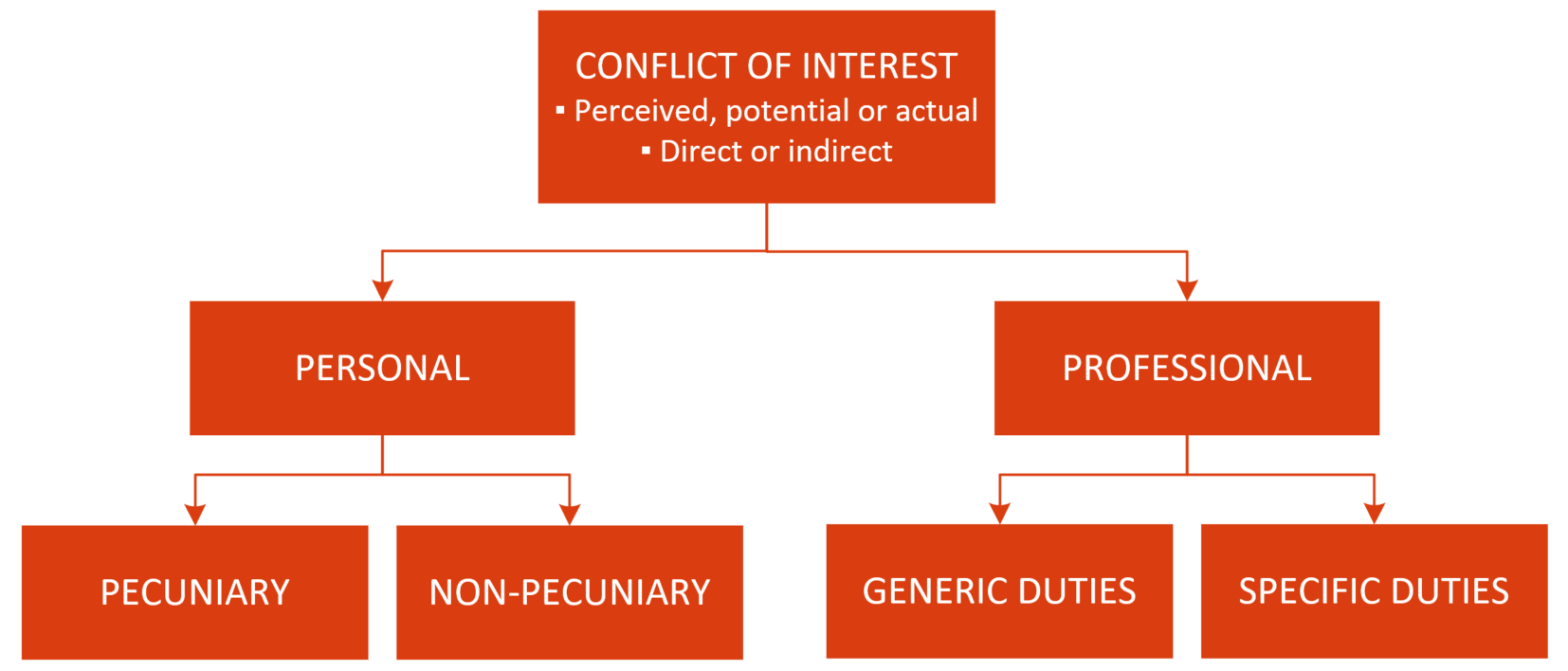
In your scenario, the mentor’s personal, romantic interest in the wife creates a conflict with his professional duty to provide her with objective, unbiased mentorship. This isn't a moral failing; it is an inherent structural problem that must be actively managed.
2. The Core Ethical Dilemmas
The article you just read sets the stage. Now, let's examine the three most critical ethical dilemmas that the mentor must navigate. These are drawn directly from ethical analyses of similar power-imbalanced relationships.
The Ethics of Teacher-Student Relationships
We will now continue with the same article, focusing on the section that directly addresses the problems with sexual relationships in a professional context.
Please read Section 2, 'The Problem with Sexual Relationships'. As you read, pay close attention to the three main arguments against such relationships: the effect of power asymmetry on consent, the potential for harm, and the betrayal of the professional mission.
Let's analyze these three dilemmas in the context of your specific scenario.
Dilemma 1: The Shadow over Consent
The article argues that power asymmetry "casts a shadow over any alleged consent." This does not mean the wife's consent is invalid. It means the mentor, as the "Individual in Authority," has an extraordinary ethical burden to ensure the conditions for consent are as uncoerced as possible.
- The Dilemma in Practice: The wife might feel subtle pressure to agree to things in the romantic/sexual relationship to maintain goodwill in the professional one. For instance, she might hesitate to voice a sexual boundary for fear it could be perceived as a rejection that might (even subconsciously) affect the mentor's willingness to help her professionally.
- The Mentor's Responsibility: The mentor must be hyper-aware of this dynamic. He has to actively create an environment where the wife feels safe to say "no" without any fear of professional repercussions. This requires constant reassurance and impeccable behavior on his part.
Dilemma 2: The Potential for Harm
The mentorship role requires giving direct, sometimes critical, feedback. The romantic role involves emotional vulnerability and affirmation. When these are embodied in one person, negative professional feedback can feel like a personal rejection, and vice-versa.
- The Dilemma in Practice: Imagine the mentor has to inform the wife that she was passed over for a promotion he had been helping her prepare for. This professional disappointment could easily bleed into the personal relationship, potentially impacting sexual desire and intimacy. The wife might feel a sense of inadequacy that is difficult to separate from her role as his lover.
- The Mentor's Responsibility: He must anticipate this "emotional bleed" and compartmentalize his communication. As we will discuss in a future lesson, this involves creating clear boundaries and 'transition rituals' to signal the shift from one role to another, protecting the intimate space from professional fallout.
Dilemma 3: The Betrayal of the Professional Mission (Conflict of Interest)
This is perhaps the most clear-cut ethical dilemma. The mentor's primary professional duty is to foster the wife's career based on merit. His personal feelings for her create a powerful bias.
- The Dilemma in Practice: Consider this scenario: A prestigious, career-defining project becomes available. Both the wife and the husband are suitable candidates. The mentor is asked to recommend one of them.
- If he recommends the wife, is it because she is truly the best choice, or is he influenced by his desire to see his lover succeed (and perhaps share in that success)? This is favoritism.
- If he recommends the husband to avoid the appearance of favoritism, he is unfairly penalizing the wife for their personal relationship. This is overcompensation.
- In either case, his professional judgment is compromised. He cannot fulfill his duty of objectivity.
The Connection to Intimacy
You specified that the mentor's perspective during intercourse is a key element of this course. These ethical dilemmas are not abstract problems that disappear in the bedroom. They are the source of the very intrusive thoughts we discussed in the last lesson.
From the mentor's point of view during sex, an unresolved conflict of interest can manifest as a powerful internal distraction:
"I love how she trusts me completely in this moment. But can she trust my professional judgment tomorrow when I have to decide on the project lead? Am I being fair to her? Am I being fair to her husband? This feeling of her trust in me right now... am I worthy of it if my professional integrity is compromised?"
Failure to address these ethical dilemmas externally creates a constant internal "noise" of guilt, anxiety, and doubt. This noise directly undermines his ability to be present as a lover, poisoning the very intimacy the relationship is built on. The cognitive reframing we practiced is a tool to manage the noise, but resolving the ethical dilemmas is the only way to lower its volume.
3. A Framework for Ethical Management
So, what is the solution? The ethical dilemmas—especially the conflict of interest—are structural. The solution must also be structural. We can look to formal institutional policies for a model of how to act.

The key principle is recusal. To maintain ethical integrity, the person in power must formally step away from any situation where their professional judgment could be compromised by their personal relationship.
The following policy document provides a detailed and actionable template for this.
Conflicts of Interest Arising Out of Consensual Relationships
This policy from UC Berkeley on 'Conflicts of Interest Arising Out of Consensual Relationships' provides a practical blueprint for managing the dilemmas we've discussed. It clearly defines roles and responsibilities.
Please read the following sections: 'II. Definitions' (focusing on 'Consensual relationship' and 'Individual in authority'), 'IV. Procedures' (focusing on section C, 'Eliminating conflict of interest'), and 'VI. Responsibilities' (focusing on section A, 'Individual in Authority').
The core takeaway is this: The Individual in Authority (the mentor) has the ultimate responsibility to identify the conflict of interest and recuse himself from evaluative or supervisory responsibilities.
In your scenario, this means the mentor must proactively establish a rule: "I can guide you, I can advise you, but I will formally recuse myself from any situation where I have to officially evaluate you, grade you, or make a hiring/promotion decision about you." This is not a punishment; it is an ethical necessity that protects everyone involved:
- It protects the wife by ensuring her professional achievements are judged on merit, free from the taint of favoritism.
- It protects the mentor by preserving his professional integrity.
- It protects the relationship by removing a major source of potential conflict, guilt, and distrust.
Conclusion
In this lesson, we have moved beyond the mentor's internal psychology to analyze the objective ethical dilemmas inherent in his dual role. By understanding these challenges, he can move from simply reacting to them to proactively managing them.
Key Takeaways:
- Ethical dilemmas in this relationship arise from the conflict between the purpose of mentorship (objective guidance) and the purpose of romance (mutual intimacy).
- The core dilemmas are the shadow cast on consent by the power imbalance, the potential for professional criticism to cause personal harm, and the conflict of interest that compromises professional judgment.
- These unresolved ethical issues are a direct cause of the internal conflict and intrusive thoughts that can damage intimacy.
- The primary ethical responsibility falls on the mentor, as the "Individual in Authority," to proactively manage these dilemmas. The most effective strategy is recusal—formally removing himself from any evaluative role over the wife.
Preview of the Next Lesson:
Analyzing these dilemmas and deciding on a strategy like recusal is the first step. The next is implementation. In our next lesson, we will focus on communication, learning how to formulate boundary-setting language to pause romantic interactions during professional feedback sessions with the wife. This will provide a practical tool to manage the role transitions in real-time.