Introduction
In our last lesson, we established a robust framework for developing mortality and morbidity assumptions, moving from the analysis of historical data to the projection of future trends. We will now apply a very similar structured thought process to another critical component of the actuarial toolkit: expense assumptions. While seemingly less complex than mortality, the process of setting and maintaining expense assumptions requires careful analysis, consistent economic reasoning, and diligent monitoring.
This lesson will equip you with the principles for setting and maintaining expense assumptions. We will first dissect the process of expense analysis, where raw financial data is categorized and allocated to derive meaningful unit costs. Then, we'll focus on projecting these costs into the future, paying special attention to the crucial role of inflation and the need for internal consistency. By the end of our session, you'll understand how to construct, project, and monitor expense assumptions in line with professional practice.
Part 1: Expense Analysis - Deconstructing Business Costs
Before we can project future expenses, we must first understand past expenses. This process, known as expense analysis, involves dissecting a company's financial accounts to quantify the costs associated with writing and administering its business. Given your background in statistics, you can think of this as an exploratory data analysis phase, where the primary goal is to identify the underlying drivers of cost.
An insurer or pension scheme incurs a wide variety of costs. A robust expense analysis begins with classification. Expenses are typically categorized in several ways:
-
By Timing: This is the most important classification for pricing and valuation.
- Initial Expenses: One-off costs incurred at the start of a contract. Examples include sales commissions, underwriting costs, and the cost of issuing policy documents.
- Renewal Expenses: Ongoing costs to maintain a policy. This includes premium collection, administrative staff salaries, and system maintenance.
- Termination Expenses: Costs incurred when a policy ends, either through a claim, maturity, or surrender. Examples include claims assessment and payment processing.
-
By Driver (Direct vs. Indirect): This helps us link costs to business volumes.
- Direct Expenses: Costs that can be clearly linked to a specific activity or block of business, such as commissions paid on a particular policy.
- Indirect Expenses (Overheads): Costs that are not directly attributable to a single policy or product line, such as head office rent or senior management salaries. These must be allocated across the business on a reasonable basis.
The resource below provides a clear definition of expense risk and the distinction between direct and indirect expenses.
[PDF] Life Principle-Based Reserves (PBR) Assumptions Resource Manual
This manual from the American Academy of Actuaries, though focused on reserves, offers excellent foundational definitions. This section defines expense risk and the key drivers of costs.
Please read the section on "Expenses," starting from this paragraph. Focus on the distinction between direct and indirect expenses and the examples of how costs can be modeled (e.g., per policy, per thousand, or per premium).
The goal of this analysis is to transform a large, aggregated expense figure from the company's accounts into a set of unit costs. This involves:
- Investigation: Analysing the company's accounts and identifying all relevant expenses.
- Allocation: Apportioning indirect/overhead expenses between different product lines and between initial and renewal activities. This step is often subjective and requires significant judgment.
- Calculation: Dividing the allocated expense totals by a relevant business volume metric (e.g., number of new policies sold, total premiums collected) to arrive at unit costs.
For example, we might derive the following unit assumptions:
- Initial per-policy expense: £200
- Renewal per-policy expense: £50 per annum
- Commission expense: 50% of the first year's premium, and 2.5% of renewal premiums.
It is also common to distinguish between administrative expenses and investment expenses. Investment management fees are often implicitly allowed for by using an investment return assumption that is net of these fees.
Part 2: Projecting Future Expenses and the Role of Inflation
Once we have our baseline unit costs from the expense analysis, the next step is to project them into the future. This projection has two key components: an allowance for inflation and adjustments for other known changes.
The Inflation Assumption
Expenses, particularly those related to salaries and services, tend to increase over time. This is driven by inflation. However, simply applying the headline Consumer Price Index (CPI) can be misleading. Actuaries must consider the specific nature of the expenses.
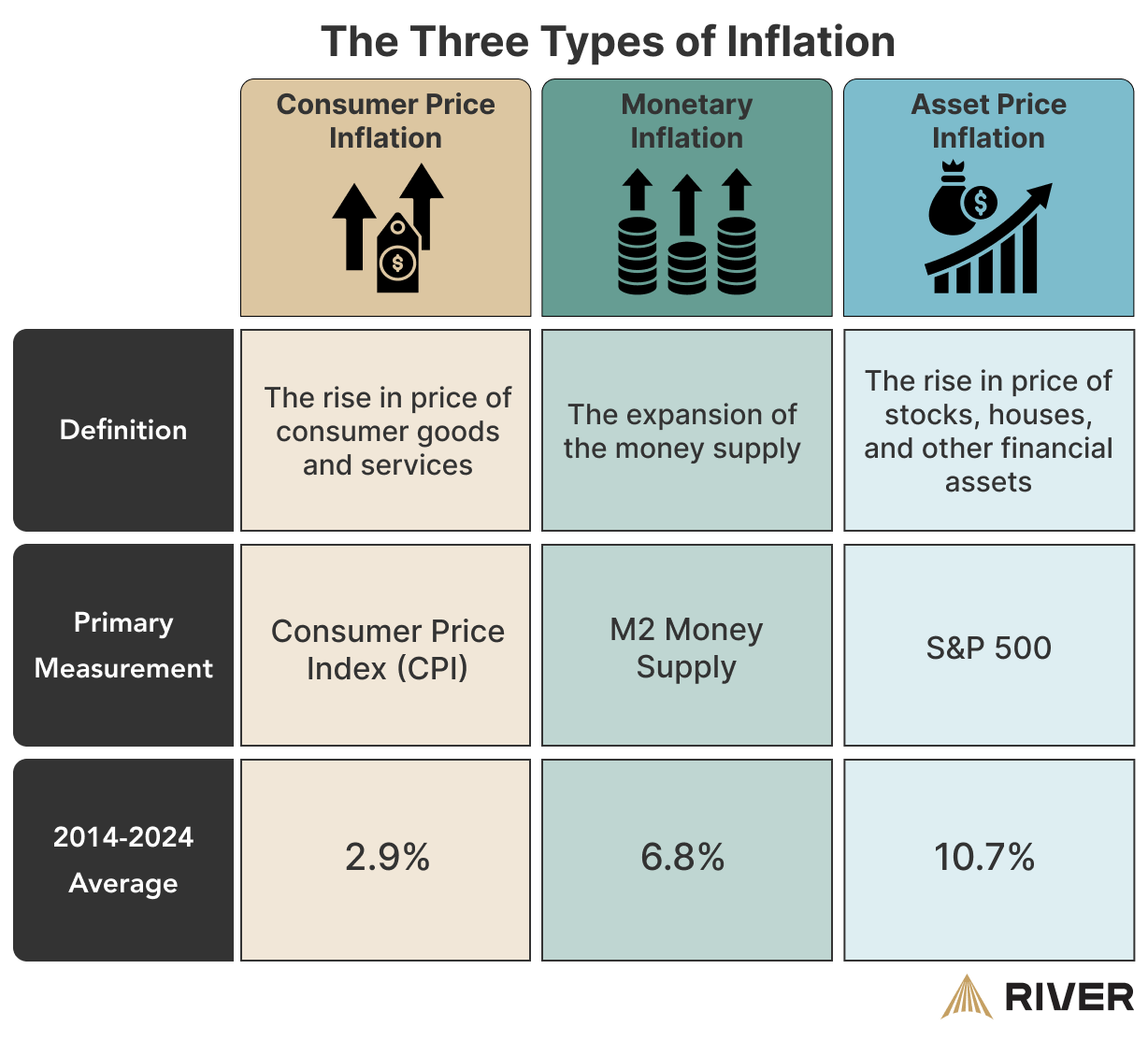
For instance:
- Salary-related expenses may increase in line with wage inflation in the financial services sector, which could be higher than general price inflation (CPI).
- Property expenses (like office rent) may follow a property-specific inflation index.
- Technology costs might even decrease over time in real terms due to efficiency gains.
A core principle in actuarial work is that all economic assumptions must be internally consistent. The inflation assumption used for expenses must be consistent with the inflation assumption underlying the valuation interest rate and any salary projection assumptions.
The "Building Block Approach" is a powerful framework for ensuring this consistency.
[PDF] Assessment and Selection of Actuarial Assumptions for Measuring ...
This paper from the Society of Actuaries provides a structured method for deriving consistent economic assumptions.
Please read the introduction to Chapter 7, "Economic Assumptions," to see how the inflation assumption fits into the wider picture. Then, focus on the Building Block Approach and the subsequent definition of Inflation. Notice how inflation is treated as a fundamental component common to the discount rate, salary increases, and other economic variables. This ensures a consistent economic outlook is used throughout the valuation.
Other Adjustments for Future Trends
Beyond inflation, the actuary must also adjust for any other known or anticipated changes that will affect future costs. This is where the forward-looking aspect of assumption setting comes to the fore. The following video on modeling healthcare costs provides an excellent analogy for the types of adjustments an actuary considers.
How Do Actuaries Model Healthcare Costs?
This video from "AHealthcareZ" explains how actuaries model healthcare costs, but the principles of adjusting a historical baseline for future changes are universally applicable to all expense assumptions.
Please watch the following clips, and as you do, think about how each concept could apply to a life insurance company's expenses: Applying Cost Trend: Watch from this section. The speaker applies different inflation ("cost trend") rates to different categories of cost (inpatient, outpatient, etc.). This is directly analogous to an actuary using different inflation rates for staff costs vs. IT costs. Adjusting for New Factors: Watch from this part. The video discusses adjusting for "new treatments" and "regulatory changes." For a general insurer, this could be a new IT system that changes processing costs or new regulations that increase compliance costs. Excluding Non-Recurring Items: Finally, watch from this clip. The actuary in the video excludes large, non-recurring claims. Similarly, when setting ongoing expense assumptions, an actuary would remove the impact of one-off projects, like an office move or a merger, from the historical data to avoid overstating future run-rate costs.
By combining a baseline from expense analysis, a consistent inflation assumption, and adjustments for known future changes, we arrive at a robust best-estimate expense assumption.
Part 3: Monitoring and Maintaining Assumptions
Setting an assumption is not a one-time exercise. It is a dynamic process that exists within the Actuarial Control Cycle. Assumptions must be regularly reviewed and updated to ensure they remain appropriate.
Maintaining expense assumptions involves:
- Monitoring Experience: The actuary will perform a regular expense experience analysis, comparing the actual expenses incurred by the company against the assumptions used for pricing and valuation.
- Analyzing Surplus/Loss: The output of this analysis is an expense surplus (if actual costs were lower than assumed) or an expense deficit/loss (if actual costs were higher). This is a key driver of a company's overall profit or loss.
- Feedback Loop: If the analysis reveals persistent and significant deviations, the actuary must investigate the cause. This could be due to poor cost control, unexpected inflation, or a fundamental change in the business. The investigation's findings then feed back into the assumption-setting process, leading to a revision of the unit costs or inflation assumption for future work.
This continuous cycle of setting, monitoring, and updating ensures that the company's understanding of its cost base remains current and that its products are priced and reserved for appropriately.
Conclusion
We have seen that setting expense assumptions is a methodical process that mirrors the approach we took for demographic assumptions. It begins with a detailed expense analysis to break down historical costs into meaningful, classifiable unit costs. These are then projected forward by applying a carefully chosen and consistent inflation assumption, along with adjustments for known future events. Finally, the process comes full circle through diligent monitoring of actual experience, which provides the feedback necessary to maintain the assumptions over time.
In our next lesson, we will build directly on this foundation. Having established how to set a "best-estimate" assumption for expenses (and previously for mortality), we will explore the concept of adding a margin for prudence, leading us to the topic of Margins for Adverse Deviation (MADs) and their role in valuation and capital assessment.
Key Takeaways & Cheatsheet
Here is a framework summarizing the process of setting and maintaining an expense assumption, which can serve as your cheatsheet for this topic.
| Stage | Goal | Key Activities | Key Considerations & Professional Judgment |
|---|---|---|---|
| 1. Expense Analysis | To understand and quantify past expenses. | 1. Investigate: Gather data from company accounts. 2. Classify: Group by timing (initial, renewal, termination) and nature (staff, IT, etc.). 3. Allocate: Apportion overheads to product lines. 4. Calculate: Derive unit costs (e.g., per policy, % of premium). |
- Method of allocation for overheads is subjective. - Treatment of one-off project costs (should they be excluded or amortized?). - Credibility of data, especially for new product lines. |
| 2. Assumption Setting (Projection) | To project future costs based on the analysis. | 1. Set Baseline: Use the unit costs from the analysis. 2. Add Inflation: Apply an explicit expense inflation assumption. 3. Adjust: Make allowances for known future changes (e.g., new systems, business process changes, regulatory impacts). |
- Choosing the appropriate inflation index (e.g., CPI vs. wage inflation). - Ensuring inflation assumption is consistent with other economic assumptions (Building Block Approach). - Justifying adjustments for future changes. |
| 3. Monitoring & Maintenance | To ensure assumptions remain valid over time. | 1. Monitor: Regularly compare actual expenses to assumed expenses. 2. Analyze: Calculate expense surplus or deficit to understand sources of profit/loss. 3. Feedback: Investigate causes of persistent deviations and update assumptions if necessary. |
- Defining triggers for when an assumption update is required. - Distinguishing random fluctuation from a genuine change in trend. - Feeding results back into the Actuarial Control Cycle. |