Introduction
Welcome to our next lesson. In our previous session, we examined the rise of organized nationalism, focusing on the early Indian National Congress and the Moderate-Extremist divide. We concluded by noting the limitations of the Moderates' "political mendicancy" and their narrow social base, which created an opening for a more confrontational and popular form of struggle.
Today, we will analyze the pivotal shift that transformed the freedom struggle from an elite-driven enterprise into a nationwide mass movement. This lesson addresses the learning outcome: Analyze the strategies and impact of the Gandhian mass movements (Non-Cooperation, Civil Disobedience, Quit India).
We will dissect these movements not just as historical events, but as strategic campaigns. We'll explore the core principles of Gandhian strategy, the organizational innovations he introduced, the socio-economic factors that influenced their success, and their ultimate impact on the British Raj. Your background in finance and strategy will be particularly useful here, as we can view these movements as large-scale case studies in mobilization, leadership, and organizational dynamics.
Part 1: The Gandhian Strategic Framework
Before diving into the specific movements, it's essential to understand the comprehensive strategic framework that Mahatma Gandhi developed. His approach was far more than simple protest; it was a multi-pronged system for achieving political and social transformation, which he called Satyagraha or "truth force."
Mahatma Gandhi and India's Struggle for Independence
To begin, let's watch a short clip from 'Mahatma Gandhi and India's Struggle for Independence' by Animated Lives. It introduces the concept of Satyagraha, born from Gandhi's experiences in South Africa.
Please watch from 02:42 to 03:19. Focus on how Satyagraha is defined as a form of non-violent resistance.
Satyagraha was not passive resistance. It was an active, non-violent confrontation with injustice. However, Gandhi's genius lay in integrating this method with two other crucial strategic pillars. The following reading provides an excellent analysis of this integrated "ecology of change."
Gandhi's strategy for success — use more than one strategy
The article 'Gandhi's strategy for success — use more than one strategy' by Mark and Paul Engler breaks down Gandhi's methodology into three interconnected streams of activity. This framework is key to understanding the depth of his political strategy.
Please read the introduction (from the beginning until 'Bringing together organizing traditions') and the section 'Living the alternative: the constructive program'. These sections will introduce the three core components of Gandhi's strategy.
As the article outlines, Gandhi’s success was built on weaving together three distinct but complementary strategies:
- Mass Mobilization (Satyagraha): Large-scale, non-violent direct action campaigns (boycotts, marches, civil disobedience) designed to disrupt the functioning of the state, garner public attention, and morally pressure the opponent.
- Structure-Based Organizing: Transforming the Indian National Congress from an elite debating society into a disciplined, mass-based political organization with a hierarchical structure reaching down to the villages. This provided the institutional "steel frame" for the movements.
- The Constructive Programme: Building alternative, self-reliant institutions outside the colonial framework. This included promoting hand-spun cloth (khadi), village industries, national schools, and working for Hindu-Muslim unity and the removal of untouchability. This was the "prefigurative" element—building the new society within the shell of the old.
Throughout our analysis of the three major movements, we will see how Gandhi deployed and balanced these three strategic components.
Part 2: The Non-Cooperation Movement (1920-22): The First Mass Experiment
The stage for Gandhi's first all-India movement was set by widespread anger over the repressive Rowlatt Act (1919), the brutal Jallianwala Bagh massacre, and the Khilafat issue, which concerned the fate of the Caliph of Turkey and mobilized a large section of Indian Muslims.
Strategy and Execution
The Non-Cooperation Movement was the first test of Gandhi's three-pronged strategy on a national scale.
- Mass Mobilization: The movement called for a boycott of government-run institutions: students left schools and colleges, lawyers boycotted courts, and politicians refused to stand for elections to legislative councils. Foreign cloth was burned, and government-awarded titles were renounced.
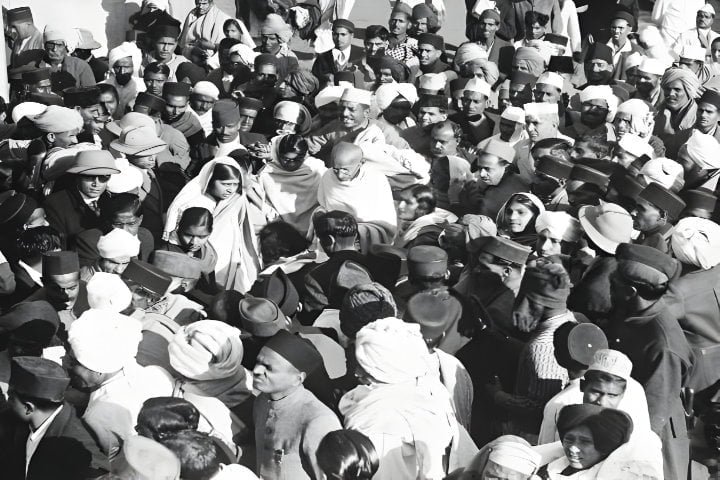
- Structure-Building: This was a period of profound organizational change for the Congress. Gandhi's reforms of the party constitution were crucial.
Gandhi's Gift: Lessons for Peaceful Reform from India's Struggle for ...
The working paper 'Gandhi's Gift' by Saumitra Jha and Rikhil Bhavnani offers a fascinating analysis of Gandhi's organizational innovations. It treats the Congress party's reform as a problem of personnel selection and incentive design.
Please read the section that begins with 'The Congress went through a large scale reorganization...' and ends just before the discussion on the Non-Cooperation Movement ('The reorganization of the Congress accompanied the Non-Cooperation Movement...'). Focus on how costly sacrifices, like giving up a legal practice or courting arrest, acted as a screening mechanism to select for committed, non-violent leaders.
As the paper argues, Gandhi effectively turned Congress into an organization where leadership was earned through sacrifice, not elite status. This created a cadre of disciplined leaders who could be trusted to lead non-violent campaigns.
Impact and Failure
The movement was a spectacular success in one respect: it was the first campaign to mobilize vast sections of the Indian population, breaking the spell of fear of the Raj. However, it failed to achieve its stated political goals. The movement was abruptly called off by Gandhi in February 1922 after the Chauri Chaura incident, where a protesting crowd turned violent and killed 22 policemen.
The abrupt end and the eventual collapse of Hindu-Muslim unity after the Khilafat issue was resolved highlight the key challenges identified in the paper "Gandhi's Gift":
- Maintaining Non-Violent Discipline: As the movement grew, the temptation for violence increased, and the leadership's ability to control the masses was tested and, in this case, found wanting.
- Aligning Incentives: The alliance with the Khilafat movement was opportunistic and not based on deeply aligned, long-term interests, making it fragile.
Part 3: The Civil Disobedience Movement (1930-34): The Strategic Zenith
The Civil Disobedience Movement (CDM) is often seen as the most strategically brilliant of the Gandhian campaigns. The context was the rejection of the all-white Simon Commission and the declaration of Purna Swaraj (Complete Independence) as the Congress's goal in 1929.
Strategy and Execution
The CDM showcased a more mature application of Gandhian strategy.
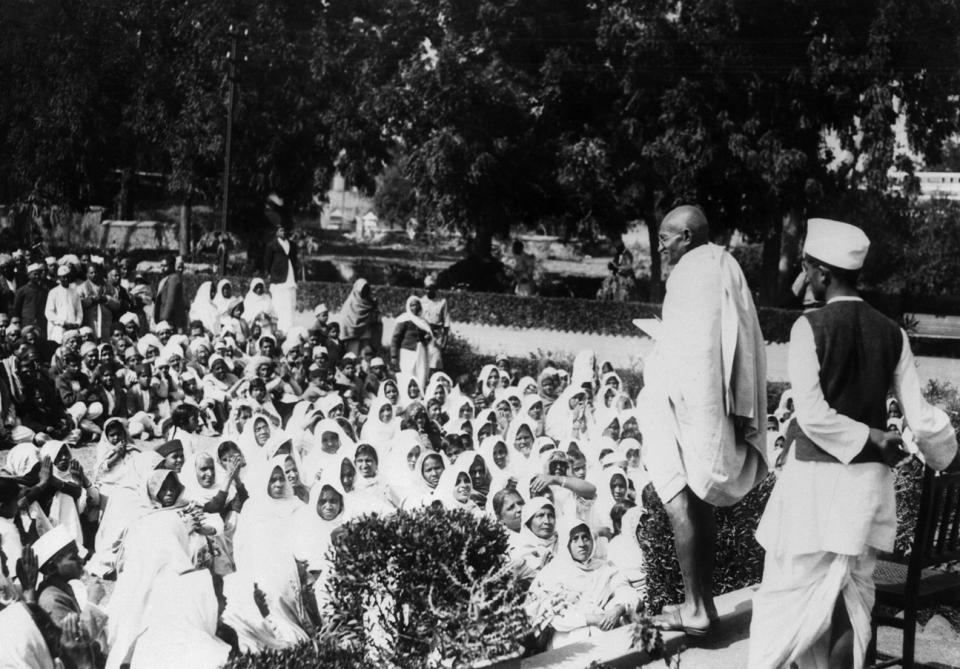
- Mass Mobilization: The movement was launched with the Salt March. Gandhi and his followers marched over 240 miles to the coastal village of Dandi to break the state's salt monopoly. This was a masterstroke:
- Symbolism: Salt was a simple, powerful symbol that connected with the daily lives of every Indian, rich or poor.
- Inclusivity: The issue cut across class and religious lines.
- Moral High Ground: It framed the law as fundamentally unjust and the act of breaking it as righteous.
Mahatma Gandhi and India's Struggle for Independence
Let's watch a segment from 'Mahatma Gandhi and India's Struggle for Independence' that covers the Salt Satyagraha.
Please watch from 04:56 to 06:17. Note the scale of the protest and the global attention it garnered.
The breaking of salt laws was followed by widespread civil disobedience across the country, including refusal to pay taxes and violation of forest laws.
- Economic Context: A crucial factor in the CDM's success was the Great Depression. As argued in "Gandhi's Gift," the collapse in global agricultural prices meant that Indian farmers no longer benefited from the British policy of open trade. This aligned their economic interests with the Congress's platform of self-rule and land reform, creating a powerful incentive for mass participation.
Impact and Outcome
The CDM shook the British Empire to its core. It led to the Gandhi-Irwin Pact of 1931, where the Viceroy negotiated with Gandhi on equal terms, a huge psychological victory. While the movement was eventually suppressed, its impact was profound. It directly led to the Government of India Act of 1935, which granted significant provincial autonomy and expanded the electorate from ~0.65% to ~14% of the adult population. From a strategic perspective, this was the most successful of the Gandhian movements in achieving concrete political concessions.
Part 4: The Quit India Movement (1942): The Final Confrontation
Launched in the midst of World War II and following the failure of the Cripps Mission to offer meaningful concessions, the Quit India Movement was the final great Gandhian campaign.
Strategy and Breakdown
This movement represented a radical departure in tone. Gandhi's famous call was "Do or Die"—a clear indication of a no-holds-barred final struggle.
Why British Left India? | Reality of Mahatma Gandhi's Role | Quit India Movement | Dhruv Rathee
The video 'Why British Left India?' by Dhruv Rathee provides an excellent, detailed account of the Quit India Movement, starting with the political context and Gandhi's iconic speech.
Watch the first minute (00:00-01:12) to hear the 'Do or Die' call, and then the section from 02:33 to 04:16 to understand the political backdrop with the failure of the August Offer and Cripps Mission.
The British, however, preempted the movement.
- Breakdown of Strategy: On August 9, 1942, the morning after the movement was launched, the British arrested the entire top leadership of the Congress, including Gandhi.
- Leaderless and Spontaneous Uprising: The movement became leaderless and decentralized. This led to a very different character than the previous campaigns. While there were strikes and protests, there was also widespread sabotage—damaging railway tracks, cutting telegraph wires—and the establishment of parallel governments in several areas.
Why British Left India? | Reality of Mahatma Gandhi's Role | Quit India Movement | Dhruv Rathee
Let's continue with the same video to see how the movement unfolded without its leaders.
Watch from 06:42 to 12:51. This section shows the spontaneous and often violent nature of the movement, highlighting the role of underground activists like Usha Mehta and Aruna Asaf Ali. Then watch from 12:51 to 14:05 to understand Gandhi's changed, more pragmatic stance on violence in this movement.
This sequence of events perfectly illustrates the theoretical framework from "Gandhi's Gift." The synchronized removal of the non-violent leadership cadre led to an immediate breakdown of non-violent discipline, making it easier for the British to justify brutal repression.
Impact and Legacy
Though brutally suppressed, the Quit India Movement had a decisive impact.
- It demonstrated unequivocally that the British had lost all moral authority to rule India. The sheer will of the people to achieve freedom was undeniable.
- The scale of the rebellion, which the Viceroy himself compared to the 1857 Revolt, made it clear to the British government—weakened by WWII—that holding onto India was no longer tenable in the long run.
- It brought the question of Indian independence to the forefront of international politics, increasing pressure on Britain from allies like the USA.
Conclusion
Today we have analyzed the three great Gandhian mass movements, viewing them as strategic campaigns that fundamentally altered the course of the Indian freedom struggle.
Key Takeaways:
- Gandhi's strategy was a sophisticated, three-pronged approach integrating mass non-violent protest, robust organizational structure, and a constructive program for social self-reliance.
- The Non-Cooperation Movement was the first, groundbreaking experiment in mass mobilization. Its failure to maintain non-violent discipline and its reliance on fragile incentive alignments provided crucial lessons.
- The Civil Disobedience Movement was the strategic high point, successfully leveraging economic discontent (the Great Depression) and a mature Congress organization to extract major political concessions (the Government of India Act, 1935).
- The Quit India Movement was a final, spontaneous conflagration. The preemptive arrest of its leadership led to a breakdown of non-violent strategy but demonstrated the complete loss of British legitimacy, making independence inevitable.
Preview of the Next Lesson:
While the Gandhian path was the dominant stream of the freedom struggle, it was not the only one. There were other groups who believed that freedom could not be won through non-violence. In our next lesson, we will explore these alternative streams, including the revolutionary movements and the role of Subhas Chandra Bose and the INA, to get a more complete picture of the fight for independence.