Hello and welcome back!
In our last lesson, we defined what an Exchange-Traded Fund (ETF) is and contrasted it with individual stocks, highlighting an ETF's key benefit of instant diversification. You learned that buying an ETF is like buying a whole basket of assets in a single transaction.
Today, we're taking the next practical step. This lesson is all about action. You will learn how to execute a purchase of an ETF through a brokerage platform. By the end of this lesson, you'll have the skill to buy your first ETF, a crucial step for both long-term investing and active trading. The good news is that if you can buy a stock, you can buy an ETF—the process is nearly identical.
The Steps to Buying an ETF
Just like buying a stock, purchasing an ETF requires you to place an order through your brokerage account. While the user interface might look slightly different from one broker to another, the core steps are universal.
Here is the general process:
- Log in to your brokerage account.
- Navigate to the trading screen or order ticket.
- Enter the ticker symbol for the ETF you want to buy (e.g.,
VOOfor the Vanguard S&P 500 ETF,QQQfor the Invesco QQQ Trust). - Select the action:
Buy. - Specify the quantity you want to purchase. You can usually do this in two ways:
- By Shares: Enter the number of whole shares you want.
- By Dollars: Enter the dollar amount you wish to invest. This is useful for buying fractional shares if a single share is more expensive than you want to spend.
- Choose your order type. As you've learned, a
Market Orderis the simplest, executing your trade at the next available price. - Preview your order to check all the details (ticker, quantity, estimated cost).
- Submit the order.
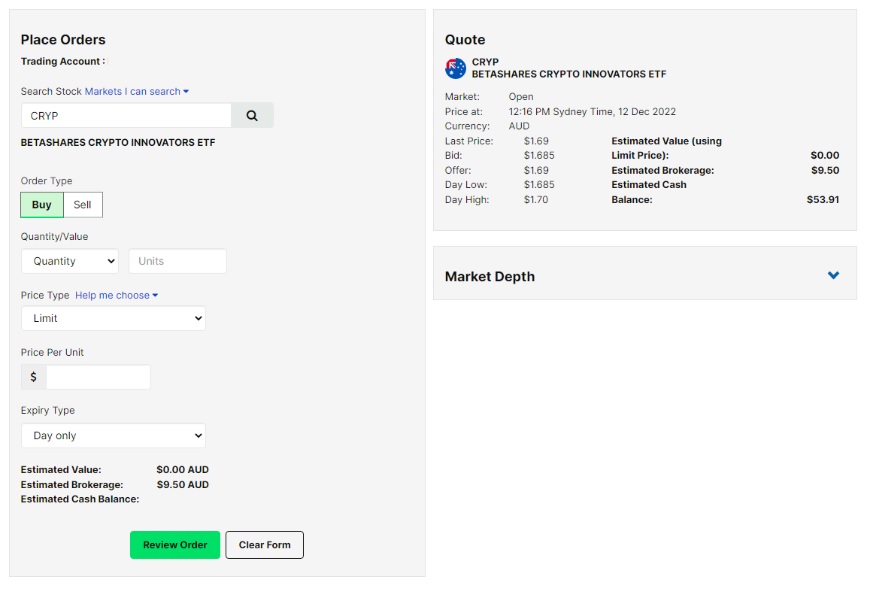
For a concise summary of these steps, you can refer to the following article.
How to Invest in ETFs (Exchange-Traded Funds)
The article 'How to Invest in ETFs' from The Motley Fool provides a clear, numbered list that outlines the exact process we're discussing. It's a great quick reference.
Find the section titled 'How to start investing in ETFs' and review the six steps listed. Notice how they map directly to the process we just outlined.
Watching It in Action: Live Demonstrations
Reading the steps is one thing; seeing them executed is another. The following videos show this process live on two different popular brokerage platforms, Robinhood and Vanguard. This will help you see that the principles are the same, even if the buttons are in different places.
Demonstration 1: Buying an ETF on Robinhood
First, let's watch a detailed walkthrough. This video is particularly useful because it covers buying by dollar amount (fractional shares) and setting up recurring investments, which is a powerful strategy for long-term goals.
If I Started Investing In 2026, This Is What I Would Do (Full Beginner’s Guide)
In his 'Full Beginner’s Guide' video, Humphrey Yang provides a live demo of buying an ETF on Robinhood. This will give you a clear, practical view of the entire process from search to submission.
Please watch from 17:47 to 24:39. Pay close attention to how he: Searches for the ETF using its ticker symbol (VOO). Navigates to the 'Buy' screen. Switches between buying in shares and buying in dollars. Places a simple market order to buy one full share.
Demonstration 2: Buying an ETF on Vanguard
Now, let's see the same process on a different platform. Vanguard is a firm many long-term investors use, so seeing its interface is also valuable.
Vanguard Index Funds: A Complete Beginner's Guide to Investing
Charlie Chang's 'Vanguard Index Funds' video includes a segment where he buys an ETF within his Vanguard account. This reinforces the universal nature of the steps you're learning.
Watch the segment from 04:59 to 07:03. Notice the similar steps: navigating to the trade screen, entering the symbol, selecting the quantity, and choosing a market order.
As you can see from both demonstrations, the core of the process is simple and consistent: Symbol -> Action -> Quantity -> Order Type -> Submit.
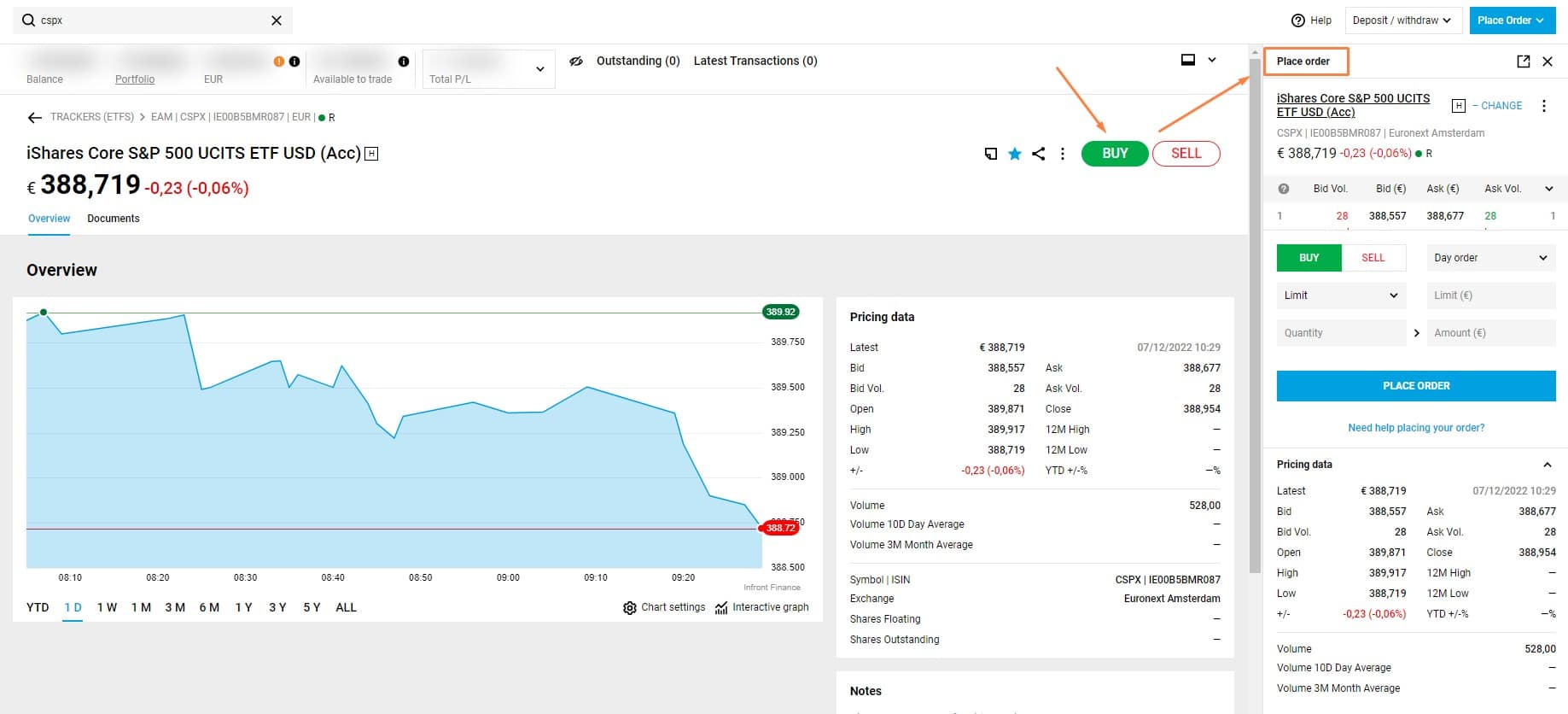
Test your understanding!
Imagine you have decided to invest in the technology sector using the Invesco QQQ Trust ETF, which tracks the Nasdaq-100 index and has the ticker symbol QQQ. You have $250 in your brokerage account that you want to invest.
Describe the key steps you would take on a typical brokerage platform to execute this trade using a market order.
Show answer
- Log in to my brokerage account.
- Go to the trade/order entry page.
- Enter the ticker symbol
QQQin the search or symbol box. - Select the action
Buy. - Choose to buy by dollar amount and enter
$250. (This will result in buying a fractional share, since one share of QQQ costs more than $250). - Select the order type as
Market Order. - Preview the order to confirm I'm buying $250 of QQQ.
- Submit the order.
Conclusion
Congratulations! You have now walked through the practical, step-by-step process of buying an ETF. This is a fundamental skill that unlocks a world of diversified investment options, forming the backbone of many successful long-term portfolios.
Here are the key takeaways from this lesson:
- Purchasing an ETF on a brokerage platform follows the same basic steps as buying an individual stock.
- The essential information you need for an order is the ticker symbol, action (buy), quantity (shares or dollars), and order type.
- Most brokers allow you to buy fractional shares by specifying a dollar amount, making it easy to invest in expensive ETFs and to invest small amounts consistently.
You now have the practical knowledge to execute trades for both individual stocks and diversified ETFs. In our next lesson, we'll address the logical next question: "What happens after I buy?" We will learn how to monitor open positions and account transaction history, so you can track your investments and see exactly what you own.