Welcome to your first lesson in data analytics! We'll begin our journey by building a solid foundation, exploring exactly what data analytics is and why it has become such a crucial field, especially within healthcare and your specific area of interest, pharmacy. By the end of this lesson, you will be able to define data analytics and describe its transformative role in modern medical and pharmaceutical practice. This understanding will provide the essential context for all the practical skills you'll acquire throughout this course.
What is Data Analytics?
At its core, data analytics is the science of drawing insights from raw data. In 2011, a technology research leader famously stated, "Information is the oil of the 21st century, and analytics is the combustion engine." This analogy is particularly fitting for healthcare, a field that generates a colossal amount of information every single day. Data analytics provides the tools and methods to harness that information, turning it from a sea of unprocessed facts into actionable knowledge that can improve systems and lives.
Let's ground this idea in a familiar context.
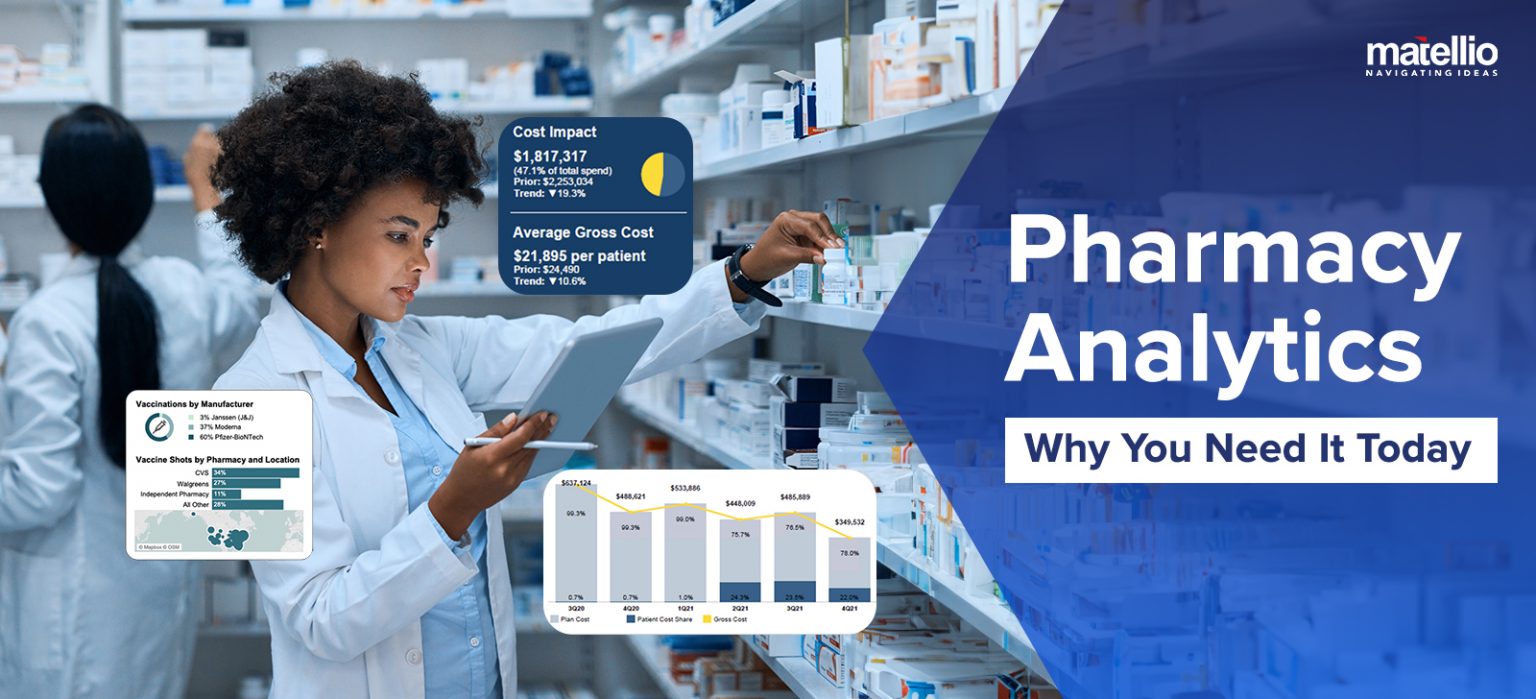
To formalize this concept, we'll look at a precise definition. The National Center for Biotechnology Information (NCBI) provides a clear overview of healthcare analytics.
Healthcare Analytics - StatPearls - NCBI Bookshelf - NIH
This article from the NCBI Bookshelf offers a concise, authoritative definition of healthcare analytics. As you read, focus on the types of data sources mentioned and the primary goals of applying analytics in a healthcare setting.
Please read the opening section, Definition/Introduction. Pay close attention to how it frames analytics as a tool for "evidence-based and outcome-driven decision-making."
The definition you just read highlights that analytics isn't a single action but a systematic process involving both quantitative (numerical) and qualitative (descriptive) data.
To expand on this, Dr. Chris Paton offers a slightly more detailed framework, defining analytics as a key step within a larger "data life cycle."
Health Care Data Analytics: Unit 1: "Introduction to Health Care Data Analytics" - Lecture A
In this video lecture, Dr. Paton presents a formal definition from the National Institute of Standards and Technology (NIST). This will help you understand analytics as a complete process, not just the analysis step itself.
Watch the segment from this timestamp. Note the four stages of the data life cycle mentioned: collection, preparation, analysis of patterns, and action.
As you can see, data analytics encompasses the entire process of moving from raw, unprocessed data to a valuable, actionable insight. It’s the engine that powers discovery and informed decision-making in a data-rich world.
The Role of Analytics in Healthcare
Why is this process so vital for healthcare? The Institute of Medicine noted that the healthcare system has become too complex and costly to operate without a mechanism for continuous learning. A "learning healthcare system" is one that systematically captures and assesses lessons from every patient interaction to improve future care. Data analytics is the engine that drives this learning.
Healthcare organizations—hospitals, clinics, insurance companies, and research labs—generate vast and varied data from sources like Electronic Health Records (EHRs), medical imaging, and insurance claims. By analyzing this data, we can uncover patterns and insights that would otherwise remain hidden.

To appreciate the clinical significance of this work, let's return to the NCBI article.
Healthcare Analytics - StatPearls - NCBI Bookshelf - NIH
This section explains why analytics is such a powerful tool in clinical and operational settings.
Read the section titled Clinical Significance. Focus on the examples given, such as predicting readmission risks and optimizing staffing, to understand the practical benefits.
By enabling a more efficient, informed, and proactive approach, data analytics helps healthcare professionals reduce errors, personalize treatments, and ultimately improve both patient outcomes and the efficiency of the entire system.
Data Analytics in Your Field: Pharmacy
Now, let's narrow our focus to the area that matters most to you: pharmacy. The role of a pharmacist is evolving, moving beyond traditional dispensing to become more integrated into the patient's entire healthcare journey. Data analytics is at the very heart of this transformation.
Many different organizations within the healthcare ecosystem hire data analysts, and the pharmaceutical sector is a major one.
In this video, "Alex The Analyst" breaks down the field of healthcare analytics from a career perspective. He explains why organizations need analysts and gives concrete examples of the work they do.
First, watch the segment explaining why companies hire healthcare analysts. Then, pay close attention to the list of employers, where he specifically mentions pharmaceutical and biotech companies. Finally, watch the excellent, detailed example of an analyst's work at a pharmaceutical company like Pfizer, from this timestamp. This scenario of analyzing clinical study data for drug efficacy and side effects is directly relevant to pharmacology and drug development.
This example shows how analytics is fundamental to the research and development that brings new drugs to market safely and effectively. But its role doesn't stop there; it permeates every aspect of modern pharmacy practice.
The following article provides a superb overview of how data analytics is revolutionizing the field.
[PDF] The Role of Data Analytics in Modern Pharmacy Practice
This article is a deep dive into the specific applications of data analytics within pharmacy. It covers several key areas where data-driven insights are changing how pharmacists work.
Please read the following sections: Start with the Introduction to understand the overall shift in the profession. Continue with the Description section, which explains the role of analytics in personalized medicine and pharmacogenomics—a fascinating intersection of genetics and pharmacology. Read about its impact on Medication Therapy Management (MTM) and how it helps identify drug interactions and non-adherence. Next, read the section on medication safety and inventory management to see how analytics improves operational efficiency. Finally, read about its use in public health and adherence monitoring. As you read, consider how each application moves the pharmacist's role from reactive (dispensing) to proactive (predicting, personalizing, and preventing).
As you can see, analytics empowers pharmacists to optimize therapy for individuals (pharmacogenomics), ensure safety across populations (error prevention), and manage the business of pharmacy more effectively (inventory control).
This data-driven expertise is most powerful when integrated into a healthcare team. Pharmacists, with their deep knowledge of medications, play a unique and vital role in interpreting data related to drug therapy.
Healthcare Analytics - StatPearls - NCBI Bookshelf - NIH
Let's conclude with a final reading that places the pharmacist's analytical role within the context of an interprofessional team.
In the section "Nursing, Allied Health, and Interprofessional Team Interventions," read the paragraph that begins here. Focus on the specific mention of how "Pharmacists play a key role in analyzing medication-related data to prevent adverse drug effects and optimize therapy."
This highlights that your future skills in data analytics won't exist in a vacuum. They will be a critical contribution to a collaborative effort to provide the best possible patient care.
Conclusion
In this introductory lesson, we have established a foundational understanding of data analytics and its profound impact on medicine.
Key Takeaways:
- Data Analytics is the systematic process of collecting, preparing, and analyzing data to discover meaningful patterns and support evidence-based decision-making.
- In healthcare, analytics drives a "learning system" by turning vast amounts of clinical and operational data into insights that improve patient outcomes, reduce costs, and enhance efficiency.
- In pharmacy, analytics is revolutionizing the profession. It is the engine behind personalized medicine, enhanced medication safety, optimized inventory, improved patient adherence, and effective public health monitoring.
You now know what data analytics is and why it is so important to your chosen field. In our next lesson, we will build on this by exploring the different kinds of questions analytics can answer. We will distinguish between the four main types of analytics: descriptive, diagnostic, predictive, and prescriptive.