Welcome to the next lesson in our course on contemporary Indian politics. In our previous session, we examined the 1992 demolition of the Babri Masjid, an event where political mobilization directly overrode the judicial process, profoundly altering India's social and political fabric. We concluded by noting the deep communal wounds and the political ascendancy of the BJP that followed this watershed moment.
Today, we return to the legal and political narrative to see its conclusion. This lesson analyzes the landmark 2019 Supreme Court judgment that finally settled the centuries-old Ayodhya title dispute. We will dissect the court's legal reasoning, its key findings, and the delicate balance it attempted to strike. Following this, we will explore the immense political significance of the 2024 Ram Mandir consecration, an event that marked the culmination of the Hindutva movement's most defining campaign.
The 2019 Supreme Court Verdict: Law, Faith, and Possession
After the 2010 Allahabad High Court verdict partitioned the disputed site three ways—a solution that satisfied none of the litigants—the case moved to the Supreme Court. For nearly a decade, the nation awaited a final resolution. On November 9, 2019, a unanimous five-judge bench delivered a historic, 1045-page judgment intended to bring legal closure to the dispute.
To begin, let's get a clear overview of the verdict's key components. The following video provides an excellent summary of the judgment, including its historical context and the main legal terms involved.
This video from BYJU'S IAS, titled "Explained: Ayodhya Verdict," provides a clear and structured breakdown of the Supreme Court's decision.
Please watch the following segments: Allahabad High Court Verdict (16:10-17:16): This briefly explains the 2010 three-way partition that the Supreme Court would later set aside. The 2019 Verdict (17:16-20:27): Pay close attention here. This section details the final decision: who got the land, the directions given to the government, the allocation of alternate land for a mosque, and the Court's crucial observations about the illegalities of 1949 and 1992. How the Court Arrived at its Conclusion (20:27-26:51): This is the core of the legal reasoning. Note the concepts of 'law of limitation' (for Nirmohi Akhara), 'preponderance of possibilities', the role of the ASI report, and the principle of adverse possession. Article 142: 'Complete Justice' (26:51-28:16): Understand how the court used this special constitutional power to justify allocating land for the mosque.
As the video explains, the Supreme Court's judgment was a complex act of legal balancing. It set aside the "illogical" three-way split of the Allahabad High Court and sought to provide a definitive resolution based on evidence of possession, rather than on scripture or historical claims of demolition alone.
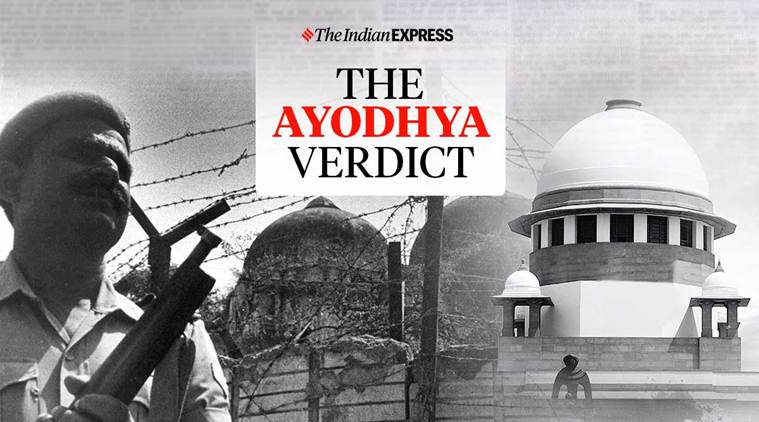
Let's delve deeper into the specific legal logic that underpinned this unanimous decision. The Supreme Court Observer provides a very precise summary of the judgment's core arguments.
Judgment Summary: Ayodhya Title Dispute - Supreme Court Observer
This summary from the Supreme Court Observer breaks down the intricate legal reasoning of the five-judge bench.
Please read the following sections to understand the court's rationale: Overview of Reliefs: Start with the bulleted list under the main introduction. It outlines the final orders: the reliefs granted. Juristic Personality: In the section "Determination of title," read about why the court rejected the idea of the land itself having legal rights. The court reasoned that this would extinguish competing claims based on faith alone, which would be unconstitutional. The ASI Report: Next, review the court's interpretation of the Archaeological Survey of India's findings. Note that the court found the report was ultimately inconclusive on whether a temple was demolished and that, even if one existed, it wouldn't automatically confer title today. The Deciding Factor: Possession: Finally, and most importantly, read the analysis of possessory rights. This is the crux of the judgment. The court treated the site as a "composite whole" but analyzed possession of the inner and outer courtyards separately. It concluded that while neither party could prove exclusive possession of the disputed inner courtyard, the evidence showed that "the possessory claim of the Hindus to the composite whole... stands on a better footing."
Key Legal Takeaways from the Judgment
To synthesize the information from these resources, the Supreme Court's verdict can be broken down into these core components:
- Title Awarded on Possession, Not Faith: The final decision rested on the legal standard of "preponderance of probabilities." The Court concluded that the Hindu parties had provided better evidence of continuous and uninterrupted worship in and around the disputed site (particularly the outer courtyard), giving them a stronger claim to possession of the site as a whole.
- Rejection of Absolutist Claims: The Court rejected the argument that the land itself was a "juristic person," a move that prevented the case from being decided solely on the religious belief of one party. It also ruled that the ASI's finding of a pre-existing structure was not enough to grant title.
- Acknowledging Past Wrongs: The judgment explicitly called the secret placement of idols in the mosque in 1949 an act of "desecration" and the 1992 demolition an "egregious violation of the rule of law." This acknowledgment was a crucial, albeit symbolic, concession to the Muslim parties.
- Invoking 'Complete Justice': In a significant move, the Court used its extraordinary powers under Article 142 of the Constitution to do "complete justice." It directed the government to allot a "prominent" 5-acre plot of land to the Sunni Waqf Board for the construction of a new mosque, recognizing that the community had been illegally deprived of its place of worship.
The judgment was thus a complex tapestry, weaving together findings on possession with acknowledgments of historical wrongs. While it brought legal closure, it was met with both relief and criticism. Some praised it as a pragmatic solution to an intractable problem, while others argued it effectively rewarded the parties responsible for the illegal demolition.
The following video discusses this ambiguity and touches upon the Places of Worship Act 1991, a law designed to prevent future disputes like Ayodhya.
After Pran Pratistha & Ram Mandir - What Next? | Will we finally get Ram Rajya?? | Akash Banerjee
In this clip from The Deshbhakt, political commentator Akash Banerjee reflects on the imperfections of the verdict and the context of the Places of Worship Act.
Please watch these two short segments: An Imperfect Verdict (4:39-7:02): This part discusses the broad acceptance of the verdict as an 'end to the dispute,' even while acknowledging its logical gaps and unanswered questions. Places of Worship Act (7:06-8:27): Here, the video explains the purpose of this crucial 1991 Act and notes how the Supreme Court itself upheld its importance, even as new claims on sites in Kashi and Mathura are emerging.
The 2024 Consecration: The Political Culmination
If the 2019 judgment provided the legal foundation, the consecration ceremony (Pran Pratishtha) of the Ram Mandir on January 22, 2024, was the grand political climax. The event was not merely a religious ceremony; it was a state-sponsored spectacle that marked the fulfillment of the BJP's oldest and most powerful ideological promise.

The political significance of this moment cannot be overstated. It represents a fusion of state power, religious symbolism, and national identity. For a deep analysis of what this event signifies for Indian politics, we turn to an article by political journalist Rohan Venkat.
The significance of Modi's Ram Temple ceremony + podcast ...
This article provides a sharp analysis of the political messaging and long-term implications of the Ram Mandir consecration ceremony.
Please read through the main sections of this article, focusing on the author's analysis of the event's political dimensions: Setting the Stage: Begin with the introduction and Prime Minister Modi's quote, where he describes the day as the start of a new era. This frames the government's official narrative. Background and Judicial Role: The section titled "Ram Temple" provides a brief recap and notes the criticism of the 2019 judgment, while also highlighting PM Modi's explicit thanks to the judiciary during his speech. Electoral Impact: Read the analysis of the ceremony's electoral impact, coming just months before the 2024 General Elections. Modi's Personal Role: Pay close attention to the section "Narendra Modi, chosen by God." It examines how the Prime Minister was positioned as the mukhya yajman (chief patron) of the ceremony, and how this cultivates an image of a leader divinely ordained to lead the nation. A Broader 'Civilisational Project': Finally, consider the argument that the ceremony is part of a larger project to redefine the Indian republic. This connects the event to the broader theme of democratic transformation we are exploring in this course.
As Venkat's analysis reveals, the consecration was meticulously choreographed to achieve several political goals simultaneously:
- Electoral Mobilization: The timing was perfectly synchronized with the 2024 election cycle, providing the BJP with a powerful narrative of having fulfilled a decades-old Hindu aspiration.
- Fusing State and Religion: With the Prime Minister presiding over the central rituals, the event blurred the lines between the Indian state and Hindu faith, a stark departure from the Nehruvian model of secularism.
- Cementing a New Narrative of India: The ceremony was presented as the symbolic dawn of a "new India," one that is shaking off a "mentality of slavery" and embracing its authentic Hindu civilisational identity. This narrative positions the temple not just as a place of worship, but as a "temple of national consciousness."
- Elevating the Leader: The event personally elevated Prime Minister Modi, casting him as the historical figure destined to restore Hindu pride and inaugurate a new golden age, or Ram Rajya.
Conclusion
The journey of the Ayodhya dispute, from a legal stalemate to a violent demolition and finally to a court-mandated resolution and political celebration, encapsulates the central ideological conflict of modern India. The 2019 Supreme Court judgment attempted a final, pragmatic settlement based on the secular principle of possession, while simultaneously acknowledging the illegal acts that had scarred the dispute's history. It sought to balance justice for all parties by invoking the unique constitutional provision of Article 142.
However, the 2024 Ram Mandir consecration demonstrated that the issue had transcended law to become the centerpiece of a political and civilisational project. The event marked the triumphant conclusion of the BJP's most potent mass mobilization campaign and a definitive statement on its vision for the Indian republic.
Key Takeaways:
- A Verdict on Possession: The Supreme Court awarded the disputed site to the Hindu deity Ram Lalla based on a "preponderance of probabilities" that they had a better claim to possession of the site as a whole.
- Acknowledging Wrongs, Seeking Balance: The judgment condemned the 1949 idol placement and the 1992 demolition as illegal acts and used Article 142 to provide "complete justice" by awarding 5 acres of alternate land for a mosque.
- Political Culmination of an Ideological Project: The 2024 Ram Mandir consecration was a masterfully executed political event designed to coincide with the election cycle, fuse state and religion, and project a new vision of a Hindu-centric Indian nation.
- Redefining Leadership and the Republic: The event cast Prime Minister Modi as a historic, quasi-religious figure and served as a powerful symbol of the BJP's broader project to reshape the Indian state's identity.
Having now witnessed the culmination of one of the BJP's foundational projects, our next lesson will step back to compare the two distinct eras of BJP governance at the Centre: the coalition-bound Vajpayee years and the majoritarian-dominant Modi era. This will help us understand the evolution of the party's strategy, power, and ideological expression.