The previous lessons explained why the Railroad Commission of Texas (RRC) regulates energy rather than trains, and how voters elect its commissioners. Now the focus shifts from the agency’s name and leadership to a practical boundary: where a complaint belongs.
This lesson develops a jurisdiction guide for five common issues—air emissions, surface-water discharges, railroad safety, electricity service, and private mineral-rights disputes. The key is to identify the specific problem, not just the industry or property where it occurred. A complaint at an oil well does not automatically belong to the RRC.
Start with the activity, then identify the issue
The RRC has primary regulatory jurisdiction over Texas oil and natural gas operations and several related industries, including pipelines and natural gas utilities. That is substantial authority, but it is not authority over everything connected to an oilfield. An air-emissions complaint and a dispute over a royalty check can arise from the same well yet require different routes.
Read the RRC’s own jurisdiction guide for its baseline description and its explicit exclusions:
RRC Authority and Jurisdiction
The Railroad Commission of Texas explains both the industries it regulates and several issues it does not decide. Read these passages to establish the boundary before using the complaint guide below.
On the “RRC's Authority and Jurisdiction” page, read the opening paragraph beginning with primary jurisdiction. Next, read the sentence immediately before “Railroads,” from the exclusions. In “Railroads,” read the historical explanation beginning with its creation, then find the “Rail Safety Inspection Program” entry and its description of state inspectors. Finally, in “Odors and Air Contaminants,” read from the authority statement through the identification of the environmental agency. Focus on how the type of concern changes the destination.
The distinction is especially important for private rights. The RRC can regulate how an oil or gas well operates without deciding whether a lease was honored or a mineral owner received the correct royalty. Regulatory oversight of production is not the same thing as adjudicating a private contract.
Environmental complaints can cross an industry boundary
The Texas Commission on Environmental Quality (TCEQ) is the principal state destination in this guide for complaints about air contaminants and pollution of surface water. Its complaint guide specifically includes odor or dust from oil and gas facilities, sheens in water, and unauthorized wastewater discharges. Thus, “it happened at an oilfield” is not enough to assign an air or water complaint to the RRC.
Read the relevant parts of TCEQ’s complaint-routing guide:
TCEQ’s guide supplies concrete examples of complaints it handles and identifies oil-and-gas matters that instead belong with the RRC. Use it to distinguish the substance of a complaint from the site where it arose.
Under “Issues with state or local water bodies,” read the examples from water-body concerns. Then, under “Issues with water quality,” read from water-quality concerns. In “Issues with air quality outside of Dallas, El Paso, Fort Worth, Galveston County, Houston, and Harris County,” find the examples beginning with oilfield air. Also locate “Issues about air quality under the jurisdiction of one of your local air programs” near the lower part of the page; it lists places where a local air program is the appropriate contact. Finally, under “Oil and gas operations other than emissions, odors, or wastewater discharges,” read from the jurisdiction guidance to the district-office contact. Notice that the page separates certain environmental complaints from other oil-and-gas operational complaints.
For a surface-water discharge, describe what is observable: for example, wastewater entering a creek or a sheen on a pond. TCEQ is an appropriate destination for the water-pollution complaint. If the source also appears to be a leaking oilfield tank or another failure of oil-and-gas operations, the RRC may need a report about that operational problem as well. More than one agency can have a role in the same incident; routing the water concern to TCEQ does not imply that the RRC has no oilfield responsibilities.
The same care helps with air complaints. An odor or suspected emissions from a compressor station is an air concern even though the station serves natural gas operations. Route it through TCEQ’s air-complaint guidance, checking its list of local air programs where applicable. Do not assume that every smell signals an emissions violation. A suspected natural-gas service-line leak is a different, potentially urgent safety matter: TCEQ’s guide directs people to the gas provider and the RRC district office, and to emergency services if there is immediate danger.
A five-issue jurisdiction guide
Use the first destination as a starting point, then read the qualification. These distinctions are more useful than a rule based solely on the word “railroad” or “oil.”
| Complaint as described | First appropriate route | Boundary to remember |
|---|---|---|
| Smoke, dust, odor, or other suspected air emissions from an oil or gas facility | TCEQ air-complaint guidance; a local air program where it has jurisdiction | The RRC regulates many oil-and-gas activities, but not air contaminants as such. A suspected gas leak requires the separate safety response described above. |
| Wastewater entering a stream, a sheen on a pond, or another suspected surface-water discharge | TCEQ for the water-pollution concern | Also report an apparent oilfield equipment or waste-handling problem to the RRC when relevant. The agencies may examine different aspects of one event. |
| Unsafe track, signals, equipment, or other railroad safety concern | Texas Department of Transportation (TxDOT) rail-safety program; the Federal Railroad Administration is the federal rail-safety authority | The RRC no longer regulates railroads. A train-related complaint is not automatically a rail-safety complaint; its particular issue still matters. |
| A complaint about electricity service, such as billing or service quality | The electric provider for an initial service complaint; the Public Utility Commission of Texas (PUC) for a complaint within its oversight | The RRC’s natural-gas-utility role does not make it the electricity regulator. The PUC’s role varies with the type of electric provider and issue. Report an outage or immediate electrical hazard promptly through the provider’s or emergency channels rather than waiting on a regulatory complaint. |
| An alleged underpaid royalty or disagreement over an oil-and-gas lease | The relevant parties, legal counsel, or an appropriate civil court for a private-rights dispute | The RRC does not decide lease terms or royalty-payment disputes merely because it regulates the well. |
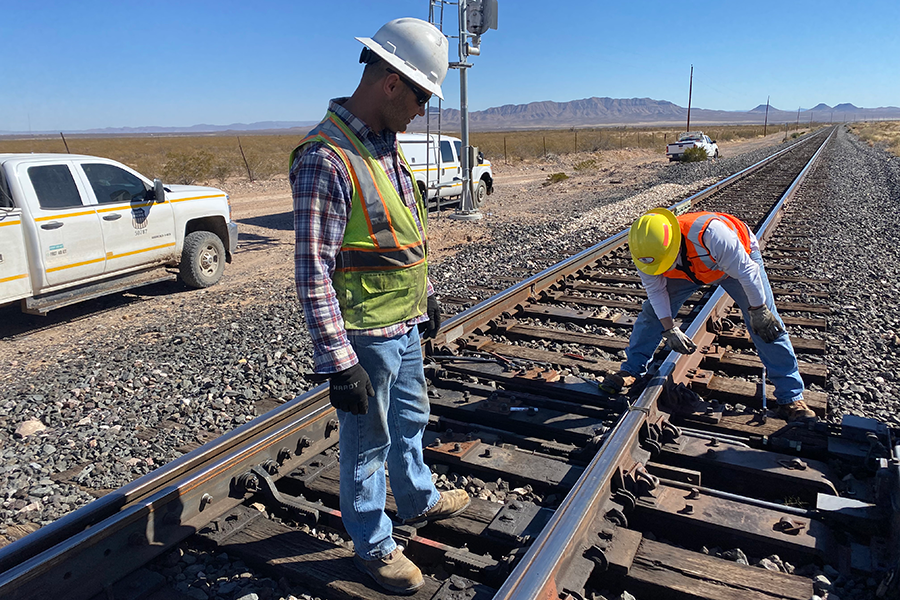
The rail example makes the historical trap visible. Workers inspecting a track are dealing with a rail-safety subject, but the agency called the Railroad Commission is not the state rail-safety destination.
The private-rights example exposes a different trap. An owner might disagree with both a well’s operation and a royalty calculation. Those are two claims, not one complaint with one automatic destination: a regulatory concern about the well may fall within RRC authority, while the calculation under a lease calls for a private legal remedy. The presence of a mineral owner does not turn every issue into a private dispute, just as the presence of an oil company does not turn every issue into an RRC matter.
Carrying the boundary forward
The working rule is to describe the conduct or harm first, then identify the authority for that issue. TCEQ is the starting point for the air and surface-water examples; TxDOT and federal rail authorities handle rail safety; electricity-service concerns generally begin with the provider and may go to the PUC; and lease or royalty disputes call for private legal routes. The RRC remains central to oil-and-gas regulation without absorbing all of those responsibilities.
That distinction will matter in the next module. You will examine why the RRC regulates where wells can be drilled, beginning with the prevention of resource waste and the interests of neighboring mineral owners.