Hello! In our last lesson, we put together a comprehensive checklist to make the crucial go/no-go decision on scaling a campaign. You learned to synthesize performance metrics, qualitative insights, and system-level signals to determine if a campaign has truly earned the right to grow.
Now, we begin our final module, "Building Your Scaling Playbook." This is where we will bring together everything you've learned in this course—from creative strategy and testing to budget allocation and scaling tactics—into a single, documented system. This lesson specifically addresses the learning outcome: Outline the structure and key components of a personalized, reusable scaling playbook. By the end of this lesson, you will have a clear blueprint for creating a document that will serve as your command center for all future scaling efforts.
What is a Scaling Playbook?
Think of a scaling playbook not as a rigid, unchangeable script, but as your company's living, internal guide to profitably growing on Meta. It’s a document that codifies your strategies, standard operating procedures (SOPs), and decision frameworks.
A well-structured playbook is invaluable for a few key reasons:
- Consistency: It ensures you and your team apply the same proven logic every time, reducing unforced errors.
- Clarity: It forces you to define your rules, thresholds, and processes, eliminating ambiguity during high-pressure situations.
- Scalability: It makes onboarding new team members or working with agencies far more efficient, as your entire methodology is documented.
- Institutional Knowledge: It creates a central repository for your learnings, ensuring that valuable insights are never lost.
The goal is to create a document that you can hand to a new media buyer and say, "This is how we run Meta ads here."
The Four Core Sections of Your Playbook
A robust scaling playbook can be organized into four main sections, each answering a critical question about your growth strategy.

We will structure our playbook into these four sections:
- The Foundation: What are the non-negotiable prerequisites for scaling?
- The Operating System: How are our campaigns structured and managed?
- The Growth Engine: What are our processes for finding new winning ads and audiences?
- The Rules of Engagement: What specific data triggers our actions?
Let's break down the key components that belong in each section.
Section 1: The Foundation (The Prerequisites)
Before you spend a single dollar on scaling, your playbook should outline the foundational elements that must be in place. This section sets the stage for success and is based on your business's unique context.
Scaling Meta Ads in 2025 Playbook
The "Scaling Meta Ads in 2025 Playbook" by Spiral provides an excellent overview of the essential foundations for scaling.
Read the sections titled "The Foundation for Scaling" and "Hiring." Pay close attention to the three pillars of Budget, Team, and Product-Market Fit, and the common mistakes to avoid when building your team.
Based on this reading, your playbook's first section should document:
- Financial Guardrails:
- Target Metrics: Your target CPA and ROAS, derived from your business's LTV and profit margins (as we defined in Module 4).
- Budgeting: Your minimum monthly testing budget and the capital runway you have available, especially for subscription models.
- Team & Roles:
- Ownership: Clearly define who owns what. At a minimum, you need an owner for Performance (media buying, analysis) and Creative (production, iteration).
- Responsibilities: Outline the key responsibilities for each role. For example, the Performance Marketer owns campaign setup, budget management, and reporting. The Creative Producer owns the creative briefing, production pipeline, and asset management.
- Technical Stack:
- Tracking: Document your setup for the Meta Pixel and Conversions API, including which events are tracked and prioritized.
- Analytics: List any third-party dashboards or analytics tools you use for reporting and analysis.
- Product-Market Fit: A brief statement on your ideal customer profile and the core value proposition that has been validated through organic or initial paid efforts.
Section 2: The Operating System (Campaign Structure)
This section of your playbook defines the "anatomy" of your ad account. How are campaigns organized? How does that structure evolve as you scale? A fantastic model for this is to create tiered structures based on daily ad spend.
How To Scale Meta Ads To \$100k/Day
In his video "How To Scale Meta Ads To $100k/Day," Spencer Pawliw presents a clear, multi-level framework for evolving your account structure as you scale.
Watch the section on the levels of scaling. Notice how the account structure adds complexity only when the budget justifies it. This provides a brilliant template for your playbook.
Your playbook should outline a similar tiered structure. Here's a template based on the video:
- Level 1: Under $3,000/day
- Structure: One primary prospecting campaign (Advantage+ or CBO).
- Philosophy: Simplicity is key. The entire focus is on feeding high-quality creatives into this single campaign and letting Meta's algorithm do the work. The main lever for growth is creative quality, not complex account structures.
- Level 2: $3,000 - $10,000/day
- Structure:
- Main Scaling Campaign (CBO/ASC): Still receives the majority of the budget.
- "Raw Content" Testing Campaign: A separate, lower-budget CBO campaign used to test new, lower-intent content like UGC from TikTok or product seeding. Winning concepts are graduated to the main campaign.
- Philosophy: As spend increases, you need a dedicated environment to test more volatile or unproven creative concepts without disrupting the performance of your main scaling campaign.
- Structure:
- Level 3: $10,000 - $50,000+/day
- Structure:
- Main CBOs: As before.
- Testing Campaigns: As before.
- ASC Scaling Campaigns: A new Advantage+ campaign is created specifically to scale your absolute top-performing "champion" ads from other campaigns.
- Whitelisting Campaigns: A separate campaign dedicated to running ads from creator profiles.
- Philosophy: At this level, you begin segmenting campaigns by function (testing vs. scaling) and creative type (brand vs. creator) to maximize control and efficiency at high spend.
- Structure:
Documenting these levels in your playbook provides a clear roadmap for how your ad account will evolve, preventing premature complexity.
Section 3: The Growth Engine (Testing & Iteration SOPs)
If the operating system is the skeleton of your account, the growth engine is the muscle. This section outlines the repeatable processes for creating, testing, and expanding your reach.
Your playbook should include SOPs for:
1. Creative Production & Iteration:
How do you consistently generate new ads? The goal is to create a well-oiled machine.
Meta Ads Scaling Solution: Complete Step-by-Step Guide
The AdStellar guide provides great insights into building a foundation for scaling.
Read the section "Step 2: Build Your Scaling Foundation with Creative Depth." Focus on the concepts of a "winners document" and a "rapid iteration system."
Your SOP should include:
- A weekly production target (e.g., "Launch 5 new concepts and 10 iterations per week").
- A weekly performance review cadence to analyze results and inform the next creative briefs.
- A "Winners Document": A central file or database where you catalog your best-performing ads, noting their hook, angle, format, and performance data. This becomes your go-to resource for inspiration and iteration.
2. Audience Expansion:
How will you find new people to show your ads to? Document your expansion hierarchy.
Meta Ads Scaling Solution: Complete Step-by-Step Guide
Let's return to the AdStellar guide to see a structured approach to audience expansion.
Read "Step 4: Expand Your Audience Strategy for Larger Reach." Note the different methods like layered lookalikes, interest stacking, and broad targeting.
Your playbook should list the audience types you will test, in order of priority:
- Lookalike Layering: 1% -> 3% -> 5% Lookalikes of purchasers.
- Interest Stacking: Combinations of 3-4 related interests.
- Broad Targeting: Open targeting (age, gender, location only).
- New Geographies/Languages: A list of potential new markets to test.
Section 4: The Rules of Engagement (Decision Frameworks)
This is the most critical part of your playbook. It translates strategy into action by defining the exact data points that trigger a specific decision. This removes emotion and guesswork from your daily optimizations.
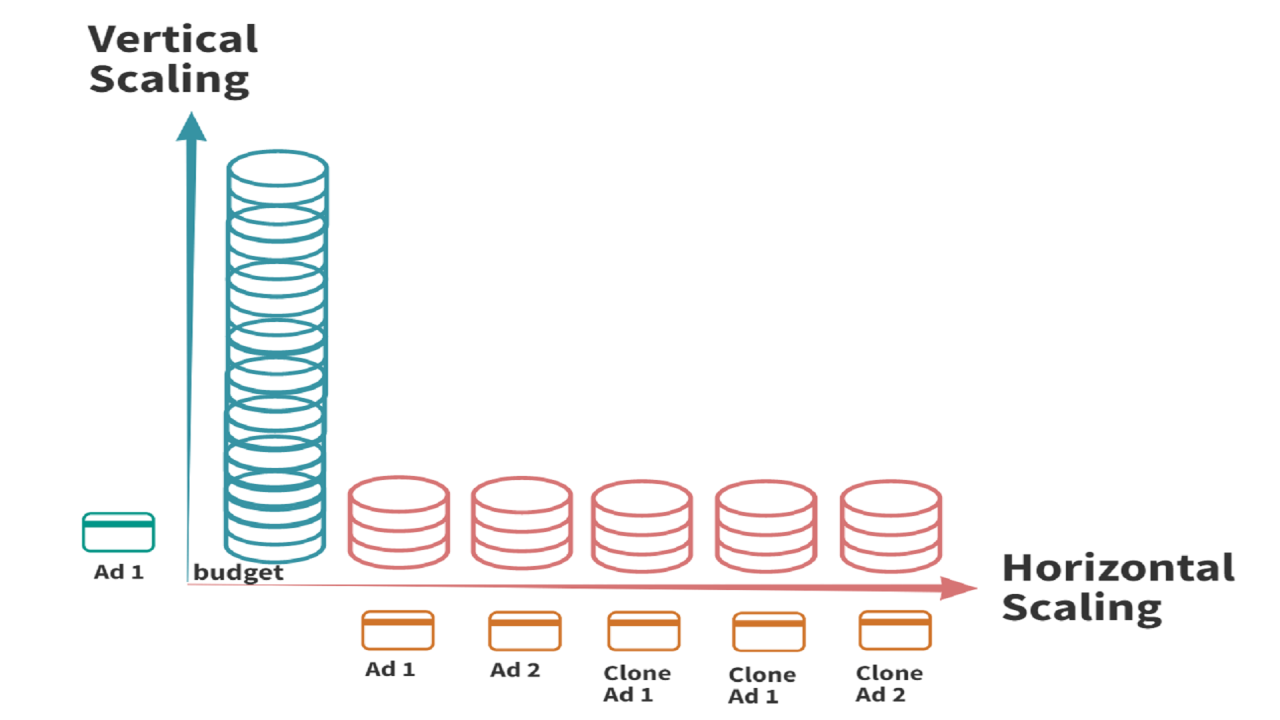
This section should include:
1. The Daily Scaling Flowchart:
This is your day-to-day decision tree for managing campaign budgets.
How To Scale Meta Ads To \$100k/Day
Spencer Pawliw's video also provides an exceptional, flowchart-based SOP that you can adopt directly into your playbook.
Watch the section detailing the EAM scaling process. This is a perfect example of a tactical, step-by-step decision framework.
Your flowchart should answer these questions in order:
- Is the campaign hitting its target KPI (CPA/ROAS)?
- If no, decrease budget by 20% or investigate issues.
- If yes, proceed to the next question.
- Has it hit the KPI for 2-3 consecutive days (i.e., are we in "scaling protocol")?
- If no, wait 24 hours and re-evaluate.
- If yes, proceed.
- Is performance primarily driven by click-based attribution (e.g., >60% of purchases are click-based)?
- If no, wait 24 hours; the signal may be weak.
- If yes, proceed.
- Decision:
- If performance is 0-50% above target KPI, increase budget by 20%.
- If performance is >50% above target KPI, consider a more aggressive increase (e.g., 30-50%).
2. Stop vs. Scale Thresholds for New Ads:
Your playbook must have explicit rules for testing.
Scaling Meta Ads in 2025 Playbook
The Spiral playbook offers very specific, battle-tested thresholds for making these decisions.
Read the sub-section "Stop vs Scale" within the "Scaling Ads" chapter.
Document these rules:
- Kill Rule: "Kill an ad set if it spends 3-7x our target CPA without a conversion."
- Scale Rule: "Move a winning ad to a scaling campaign once it achieves 10+ conversions while meeting or beating our target CPA."
3. "Kill Switches":
These are your emergency brakes. The AdStellar guide (LINK) mentions this concept. Your playbook should list automatic pause rules to prevent catastrophic budget waste. For example:
- "Pause any campaign if its CPA exceeds the target by 50% for 48 consecutive hours."
- "Pause any campaign if its frequency rises above 5 for 3 consecutive days in a prospecting audience."
Conclusion
You now have a complete outline for a professional-grade Meta Ads scaling playbook. By documenting these four key sections—Foundation, Operating System, Growth Engine, and Rules of Engagement—you transform your scaling efforts from a series of ad-hoc tactics into a cohesive, repeatable, and strategic system.
Key Takeaways:
- A scaling playbook is a living document that codifies your strategies and SOPs.
- Its structure should include four core pillars: Foundation (prerequisites), Operating System (account structure), Growth Engine (testing processes), and Rules of Engagement (decision frameworks).
- The Foundation sets your financial and team guardrails.
- The Operating System should outline a tiered campaign structure that evolves with spend.
- The Growth Engine details your SOPs for creative production and audience expansion.
- The Rules of Engagement are your most critical component, containing specific KPI thresholds and decision flowcharts that guide your daily actions.
In our next lesson, we will zoom in on one of the most important components of your playbook: defining the specific KPI thresholds that trigger scaling actions. We will detail how to set these numbers and integrate them into your documented frameworks.