Hello! Welcome to the first lesson of our final module, "Legacy & Modern Applications."
In our last session, we went behind the scenes to analyze the crucial role of the secret back-channel between Robert F. Kennedy and Anatoly Dobrynin. We saw how this confidential dialogue allowed for the credible signaling and face-saving compromises necessary to pull the world back from the brink of nuclear war. The outcome was a two-part agreement: a public deal and a secret "sweetener."
Today, we will step back and evaluate this final agreement in its entirety. Our learning outcome is to evaluate the final agreement, including the secret Jupiter missile removal, as a negotiated settlement that allowed both sides to claim victory. We'll dissect the public and private components of the deal to understand how both President Kennedy and Chairman Khrushchev could walk away from the confrontation and present the outcome as a success to their respective domestic and international audiences. For anyone with a background in history and government, this is a classic case study in the art of the politically viable compromise.
The Anatomy of the Final Agreement
Resolving a crisis of this magnitude is never a simple matter of one side winning and the other losing. The final agreement was a complex, multi-layered solution. Let's start with a clear breakdown of its core components.
Graham Allison on the Cuban Missile Crisis
The scholar Graham Allison provides a concise and widely accepted framework for understanding the three key parts of the resolution. This short clip from an interview with Foreign Affairs magazine lays them out clearly.
Please watch from 04:32 to 05:30. As you watch, identify the three components Allison describes: the public deal, the private ultimatum, and the secret sweetener. Note how few people were aware of the secret component.
As Allison explains, the resolution rested on three pillars:
- The Public Deal: The Soviet Union would publicly withdraw its offensive missiles from Cuba under United Nations observation. In return, the United States would publicly pledge not to invade Cuba.
- The Private Ultimatum: Robert Kennedy privately communicated to Ambassador Dobrynin that if the USSR did not agree to withdraw the missiles within a very short timeframe (24-48 hours), the U.S. would take military action to destroy them.
- The Secret Sweetener: In that same private conversation, RFK promised that the U.S. would remove its Jupiter missiles from Turkey. This was a crucial concession, but it had to be kept absolutely secret and would happen a few months after the crisis was resolved to avoid the appearance of a direct trade.
Now, let's examine how this complex package allowed each leader to declare victory.
Victory for Kennedy: The Public Narrative
For President Kennedy and the United States, the victory was immediate, tangible, and public. The primary objective—the removal of the Soviet nuclear threat just 90 miles from Florida—was achieved.
This outcome was broadcast to the world as a triumph of American resolve. Kennedy was seen as the leader who stood "eyeball to eyeball" with the Soviets and made them "blink."

This public perception was vital for Kennedy for two main reasons:
- Domestic Politics: It solidified his image as a strong, decisive leader, silencing critics who had accused him of being weak on Cuba, especially after the Bay of Pigs fiasco.
- Alliance Management: By keeping the Jupiter missile trade secret, he avoided a political firestorm within NATO. A public "quid pro quo" would have been seen as the U.S. sacrificing an ally's security (Turkey) for its own, potentially fracturing the alliance.
Victory for Khrushchev: The Strategic Gains
For Chairman Khrushchev, the picture was more complicated. Publicly, he had backed down, a move that contributed to his eventual removal from power two years later. However, from a strategic perspective, he achieved two of his primary goals.
- He secured the future of Communist Cuba. The U.S. non-invasion pledge was a formal guarantee that Castro's regime would be safe from American military intervention. For the USSR, protecting its new socialist ally in the Western Hemisphere was a major strategic victory.
- He eliminated a direct threat on the USSR's border. The secret removal of the obsolete but still potent Jupiter missiles from Turkey addressed a long-standing Soviet security concern. While he couldn't boast about it publicly, he could present this to the Presidium (the Soviet leadership) as a major concession forced from the Americans.
This enabled Khrushchev to frame the outcome not as a retreat, but as a successful gambit that had preserved a key ally and enhanced Soviet security.
Striking the Deal: Navigating the Final, Tense 48 Hours
The dual-victory outcome was not pre-ordained; it was the product of immense pressure and astute decision-making. To appreciate the final settlement, it's essential to understand the chaos of Saturday, October 27, when the crisis peaked.
[PDF] The Cuban Missile Crisis: United States Deliberations and ...
On October 27, with a US pilot shot down over Cuba, the White House received two conflicting messages from Moscow. The first, private letter offered a simple missiles-for-non-invasion deal. The second, public message added the demand for the Jupiter missile trade. This document provides a detailed account of how ExComm navigated this confusion to craft its final response.
Please read the portion of the section titled 'U.S.-SOVIET NEGOTIATIONS' that covers the events of Friday, October 26, and Saturday, October 27. This starts on page 18. Focus on: The arrival of the emotional, private letter from Khrushchev on Friday evening. The arrival of the more formal, public letter demanding the Turkey missile trade on Saturday morning. Robert Kennedy's ingenious proposal to publicly respond to the first letter while privately addressing the demands of the second. The account of RFK's climactic meeting with Dobrynin that evening, where the secret deal was cemented.
This reading shows the brilliance of the American response. The "Trollope Ploy," as it's sometimes called (after a novelist whose heroines would treat an unwanted proposal as if it were never made), allowed the U.S. to publicly accept a deal that was advantageous to them while simultaneously making the secret concession that was necessary to end the crisis. It was this two-track approach that created the space for both leaders to claim victory.
The Art of Secrecy: Implementing the Jupiter Deal
Agreeing to the secret deal was one thing; executing it without revealing the quid pro quo was another immense challenge, requiring delicate diplomacy and careful messaging—a task you'll be familiar with from your own experience in the civil service.
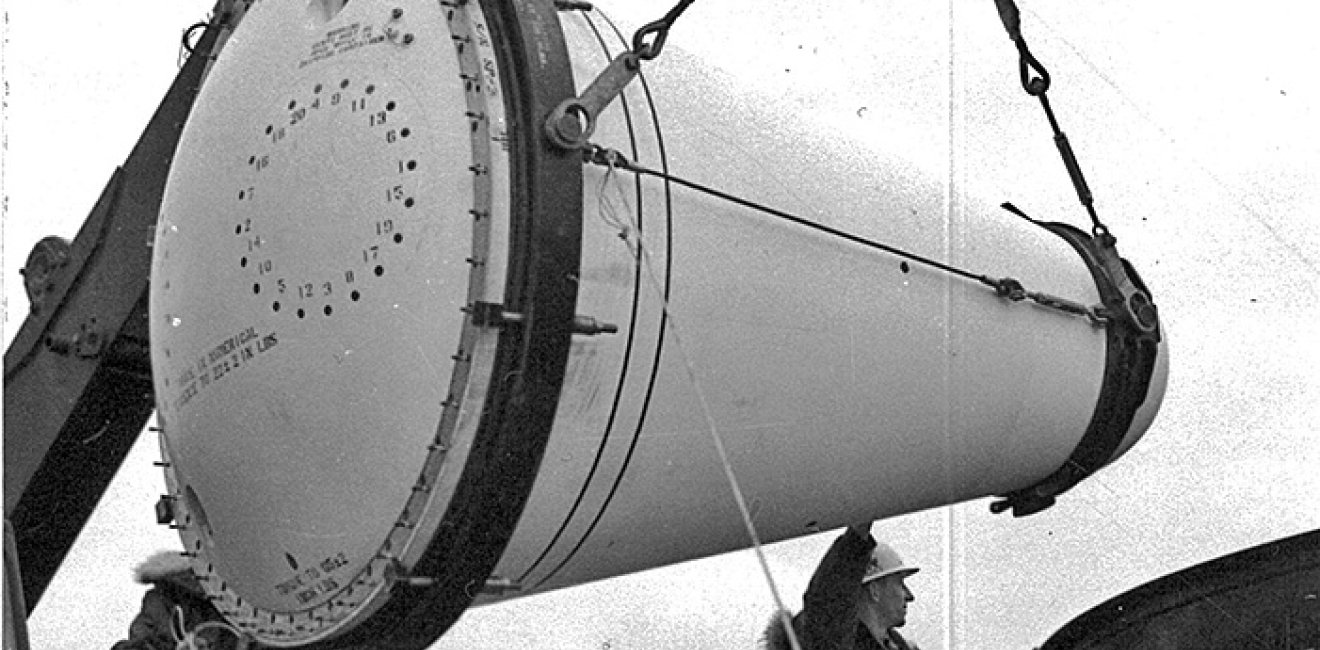
The U.S. couldn't just announce it was pulling missiles out of Turkey. Instead, they framed the action as a long-planned "modernization" of NATO's nuclear arsenal. The obsolete, vulnerable, liquid-fueled Jupiters were being "replaced" by far more capable and survivable Polaris submarines deployed in the Mediterranean.
The Jupiter Missiles and the Endgame of the Cuban Missile Crisis
This article from the Wilson Center, based on declassified documents, reveals the intricate diplomatic maneuvering required to implement the secret part of the agreement. It provides a fascinating look at the 'policy work' of the crisis resolution.
Please read the following sections: The Introduction (the first three paragraphs) to grasp the extreme secrecy of the deal. The section 'Perspectives on the Jupiter-Polaris Arrangement' to understand the strategic logic of framing the withdrawal as a 'replacement' with modern Polaris submarines. The section 'The Fanfani Visit and Italian Suspicions of a Secret Deal,' which highlights how even close allies suspected a trade and how Kennedy himself had to deny it to the Italian Prime Minister.
This reading demonstrates that the "victory" for Kennedy was predicated on maintaining a public fiction. The secret was so sensitive that it was kept not only from the public but also from most senior U.S. officials and NATO allies. As the documents show, Italian officials were highly suspicious of a deal, noting the April 1st deadline for the missile removal—exactly six months after the crisis—was a significant clue.
Evaluating the Legacy of "Victory"
While the settlement successfully averted war, the public narrative of a clear-cut American victory had its own complicated legacy. It helped forge a myth that sheer toughness, rather than compromise, is the key to resolving foreign policy crises.
The Biggest Myth Of The Cuban Missile Crisis | BBC Timestamp
As we touched on in our last lesson, the secrecy of the missile trade was crucial for Kennedy's political standing. Let's revisit this to evaluate the long-term consequence of this 'victory' narrative.
Please watch from 01:35 to 04:27. Consider the argument that the myth of the resolution—that toughness alone prevails—had a more lasting impact on future US foreign policy than the reality of the negotiated compromise.
Conclusion
The resolution of the Cuban Missile Crisis was not a simple surrender; it was a masterfully crafted negotiated settlement. By using a combination of public posturing and secret diplomacy, the Kennedy administration created an outcome that could be framed as a victory by both sides.
Key Takeaways:
- The final agreement consisted of a public pledge (US non-invasion of Cuba for Soviet missile withdrawal) and a secret deal (US removal of Jupiter missiles from Turkey).
- This dual structure allowed President Kennedy to claim a public victory by forcing the removal of the Cuban missiles, preserving his political standing and NATO cohesion.
- It also allowed Chairman Khrushchev to claim a strategic victory by securing a non-invasion guarantee for Cuba and achieving the removal of a direct nuclear threat to the USSR.
- The implementation of the secret deal was a complex act of policy, requiring careful messaging that framed the missile withdrawal as a "modernization" of NATO forces to conceal the quid pro quo.
- The resulting public myth of Kennedy's tough, uncompromising victory, while politically useful at the time, arguably created a problematic legacy for future US foreign policy, prioritizing confrontation over negotiation.
In our next lesson, we will examine the direct policy consequences that grew out of this near-catastrophe. We will analyze how the shock of the crisis led directly to the establishment of the Moscow-Washington hotline and the signing of the Limited Test Ban Treaty in 1963, the first significant steps to manage the nuclear arms race.