Welcome back. In our last lesson, we explored Jevons' Paradox, a counterintuitive principle where gains in efficiency can paradoxically lead to increased overall consumption of a resource. This happens when lower costs stimulate a disproportionate surge in demand.
Today, we will examine a related but distinct dynamic of production and growth: Verdoorn's Law. This law describes a virtuous cycle, a positive feedback loop where growth in output itself drives growth in productivity. Rather than efficiency causing more output (as in Jevons'), Verdoorn's Law posits that more output causes more efficiency. Your goal is to apply this principle to understand how scaling up lingerie production can lead to productivity gains, and how accumulating relationship experience enhances relational skills.
The Virtuous Cycle of Growth
Verdoorn's Law, named after the Dutch economist Petrus Johannes Verdoorn, observes a strong empirical correlation between the growth of output and the growth of productivity. The core idea is that as an entity—be it a factory, an industry, or even a person developing a skill—produces more, it gets better and more efficient at producing.
This isn't magic; it's the result of several concrete mechanisms:
- Learning-by-doing: Repetition breeds mastery. The more you do something, the faster and more adept you become.
- Economies of scale: Higher output volumes justify bulk purchasing, larger and more efficient equipment, and other investments that lower the per-unit cost.
- Specialization: As operations grow, individuals can specialize in specific tasks, leading to greater speed and proficiency than a generalist approach allows.
Let's explore how this powerful feedback loop manifests in your areas of interest.
Application 1: From Bespoke to Bulk in Lingerie Production
Imagine a boutique lingerie brand that starts with a single designer making bespoke pieces. At this stage, output is low, and productivity is limited by the skills and hours of one person. Now, let's say the brand gains popularity and orders begin to surge. This increase in output (demand) triggers the mechanisms of Verdoorn's Law.
- Increased Output: The brand needs to produce 100 bras a week instead of 5.
- Productivity Gains Follow:
- Learning & Experience: The designer and any new hires become incredibly fast at cutting and sewing the brand's core styles. The time to produce one bra decreases significantly. This phenomenon is often visualized as an experience curve, where cost per unit drops as cumulative production rises.
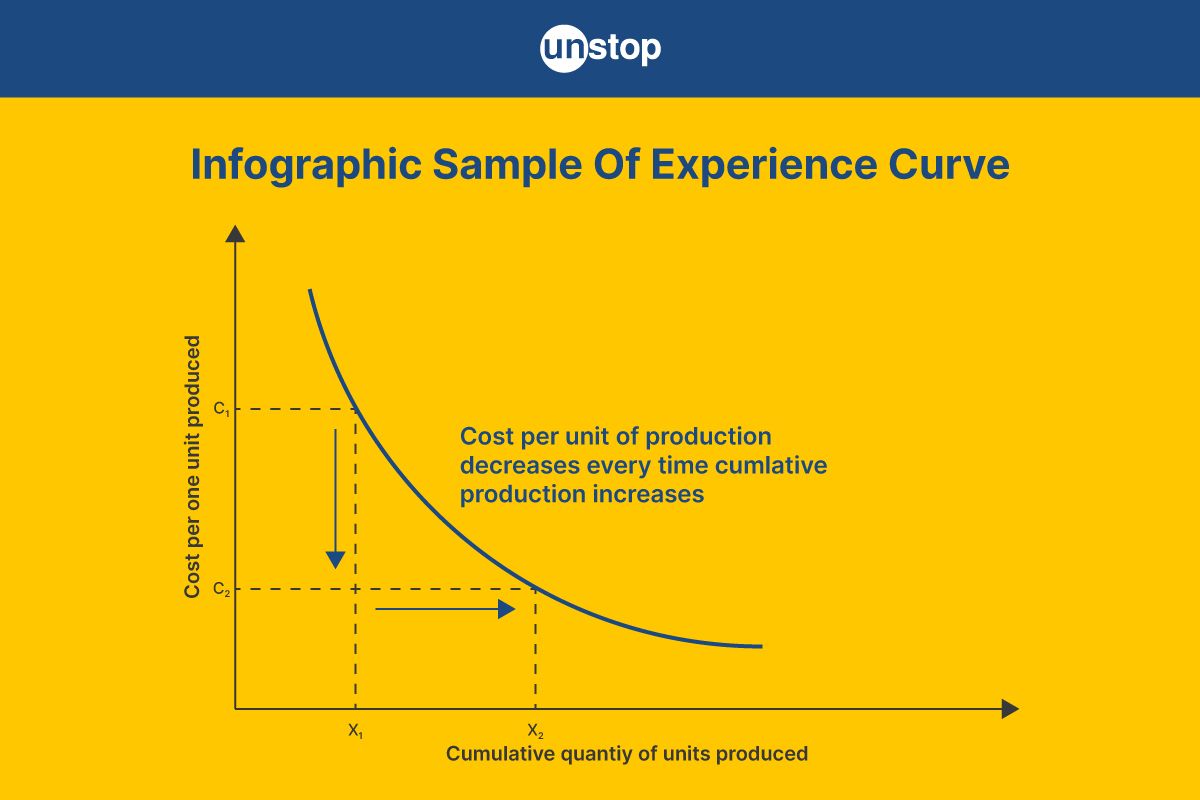
*   **Economies of Scale:** Instead of buying fabric by the yard, the brand now buys it by the roll, receiving a bulk discount. It can invest in an industrial-grade sewing machine or a die cutter for standard pattern pieces—investments that were unjustifiable at low volumes but are highly efficient at scale.
*   **Specialization:** The team can now specialize. One person might handle all the cutting, another assembles the cups, and a third focuses on finishing and quality control. Each worker becomes an expert at their specific stage, dramatically increasing the overall production speed and reducing errors.
In this scenario, the growth in output wasn't just met with more work; it actively created a more productive system. The need to scale up forced investments and process changes that led to endogenous productivity growth. This is the essence of Verdoorn's Law: output growth drives productivity growth.
Application 2: Building Relationship Skills in a Vee
Now let's apply this concept to the less tangible, but equally real, "production" within a relationship. In the context of a vee relationship (a husband, his wife, and her lover), the "output" can be seen as the sum of successfully navigated interactions: shared calendars managed, emotional needs met, conflicts resolved, and positive experiences created.
When the relationship is new, the "output" is low. The partners lack a shared history of resolving specific challenges. According to Verdoorn's Law, as they accumulate more experiences, their "relational productivity"—their collective skill and efficiency in maintaining a healthy, happy dynamic—should increase.

- Increased "Output": The vee relationship progresses over time. The partners have more conversations about boundaries, navigate more scheduling complexities, and face more external questions. The sheer volume of their shared relational life increases.
- "Productivity" Gains Follow:
- Learning-by-doing: The first time the husband feels a pang of jealousy or the wife feels torn between her partners, the resulting conversation might be clumsy, lengthy, and emotionally draining. By the tenth time a similar feeling arises, the partners have a "pattern" they recognize. They have developed communication shortcuts and proven reassurance strategies. The "cost" (in time and emotional energy) of resolving this specific issue decreases dramatically.
- "Economies of Emotional Scale": With experience, the partners build a foundation of trust. This trust acts as a relational asset, making future difficult conversations less "expensive." They don't have to re-establish their fundamental commitment each time a problem arises. This allows them to address issues more efficiently, without starting from zero.
- Specialization of Skills: Over time, the partners may naturally specialize in their supportive roles based on their strengths. The husband might become the go-to person for practical planning and providing a sense of stability. The wife, as the hinge, becomes highly proficient at "emotional translation" and ensuring both partners feel heard. Her lover might excel at introducing new perspectives and challenging established routines. The growth in the relationship's "output" allows for the development and refinement of these specialized, complementary skills, making the entire system more resilient and efficient.
Just as with the lingerie business, the increase in the volume and complexity of relational "production" is not just a burden; it is the very engine that drives the development of the skills needed to manage it effectively.
Conclusion
Verdoorn's Law provides a framework for understanding growth as a self-reinforcing process. It shows that the relationship between output and productivity is not a one-way street. While we often think of productivity as a prerequisite for growth, Verdoorn's Law reminds us that growth itself can be a powerful catalyst for productivity.
Key Takeaways:
- Verdoorn's Law: Describes the positive, causal relationship where growth in output leads to an increase in productivity.
- Core Mechanisms: This effect is driven by learning-by-doing (the experience curve), economies of scale, and increased specialization.
- Application in Business: As a company like a lingerie brand scales up its production, it becomes more efficient due to experience, bulk purchasing power, and division of labor.
- Application in Relationships: As partners in a complex structure like a vee accumulate a greater volume of shared experiences, they develop more efficient and effective skills for communication, conflict resolution, and mutual support.
In our last few lessons, we've looked at principles governing production, quality, and measurement. While Verdoorn's Law suggests a positive feedback loop where growth leads to greater competence, our next lesson will introduce a cautionary principle. We will begin a new module on organizational dynamics by examining the Peter Principle, which describes how capable individuals in a hierarchy can be promoted until they reach their "level of incompetence," potentially stalling the very productivity gains we've discussed today.