Welcome back. In our last session, we examined the Tullock Paradox, which explains why rational self-interest often leads groups to collectively under-invest in pursuing their own shared political or social goals. Today, we shift our focus from the dynamics of investment to the drivers of innovation, exploring Van Loon's Law.
This law, originally stated as "The amount of mechanical development will always be in inverse ratio to the number of slaves that happen to be at a country's disposal," provides a powerful lens for understanding innovation. In modern terms, it suggests that the pressure to innovate is inversely proportional to the availability of cheap labor or, more broadly, any cheap and abundant resource. This lesson will apply this principle to two contexts: analyzing the pressure for technological innovation in lingerie manufacturing, and considering how "convenience" in a relationship can reduce the drive for personal growth.
The Core Principle: Scarcity as a Catalyst
Van Loon's Law posits a simple but profound trade-off. If a problem can be solved easily and cheaply by throwing more manual labor at it, there is little economic incentive to undertake the difficult, expensive, and risky process of developing a technological solution. Conversely, when that cheap labor becomes scarce or expensive, the resulting friction creates immense pressure to innovate and find new, more efficient methods. Scarcity, therefore, becomes the mother of invention.
We will first see how this plays out on a global industrial scale before applying the same logic to the intimate scale of a personal relationship.
Application 1: Labor, Technology, and Lingerie Manufacturing
The global textile and apparel industry is a classic case study for Van Loon's Law. The decision of where and how to produce a bra is heavily influenced by the availability of labor.
[PDF] Innovation, Investment, and Emerging Opportunities in Today's ...
This report from the International Finance Corporation (IFC) provides a detailed look at the economic progression of the textile industry, which perfectly maps onto Van Loon's Law.
Please read the following sections to understand the dynamic between labor and technology: The Entry Point: In the first section, find the paragraph explaining how countries enter the industry. Read from this point to see how an abundance of low-wage, minimally skilled workers is the typical starting condition. This represents the "high availability of slaves" from Van Loon's original formulation. The Limits of Automation: In the section "Today’s Accelerating Trends," read the passage discussing automation concerns. The failed Adidas "Speedfactories" experiment is a powerful example of Van Loon's Law in action: advanced automation (high "mechanical development") could not compete with the efficiency and know-how of Asia's abundant and experienced workforce. The Inevitable Shift: As economies develop, wages rise and cheap labor becomes less abundant. This forces innovation. Read the case study on MAS Holdings. Note how the company evolved from being a simple lingerie producer (relying on labor) to a diversified manufacturer using more complex technologies (like seamless knitting), moving up the "complexity ladder." A Structured Progression: Finally, review the framework of the "Three Pillars." This framework formalizes the journey: Pillar One countries rely on abundant, low-skilled labor (high labor, low innovation pressure). Pillar Three countries are driven by technology and diversification (scarce/expensive labor, high innovation pressure).
As the report illustrates, a lingerie brand has a strategic choice.
-
High Labor Availability → Low Innovation Pressure: If a design requires intricate hand-stitching, beading, or complex assembly, it is most cost-effective to produce it in a "Pillar One" country where abundant, low-cost labor makes these manual tasks economically viable. There is little incentive to invest millions in a "sewbot" that can't match the dexterity of a human worker for a fraction of the price. The availability of cheap labor absorbs the need for mechanical innovation.
-
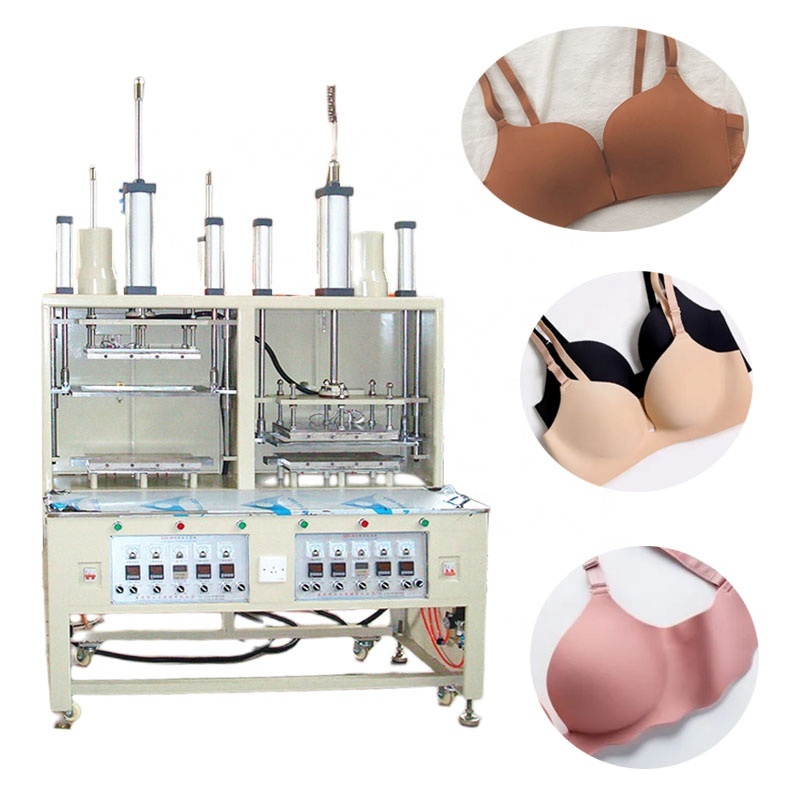
Low Labor Availability → High Innovation Pressure: In contrast, consider the production of seamless, molded bra cups. This requires significant capital investment in machinery. A brand in a "Pillar Three" country, facing high labor costs, is heavily incentivized to adopt such technology. The high cost of labor creates a powerful push toward "mechanical development."
The same logic applies to the fitting process itself. Manually measuring every client is labor-intensive. The high cost and logistical challenges of this "labor" create the incentive to develop technological solutions like the 3D body scanning apps you've seen, which aim to automate the process.

Application 2: Convenience and Personal Growth in a Vee Relationship
Now, let's translate Van Loon's Law into the context of a Vee relationship. Here, the "abundant, cheap resource" is not labor, but convenience. "Mechanical development" is not technology, but the hard work of personal and relational growth—developing new communication skills, confronting insecurities, and building more resilient emotional structures.
The law suggests an inverse relationship: the more convenient and effortless a relationship feels, the less pressure there is for the partners to engage in the difficult work of personal growth.
To understand this dynamic, it helps to consider the concept of "polysaturation," which describes reaching one's capacity for relationships.
What Does It Mean to Be Polysaturated in Polyamory?
This article from Non-Monogamy Help defines polysaturation and its implications, which we can use to understand the role of convenience.
Read the article to grasp the core ideas. Pay special attention to: The definition of polysaturation. The distinction between polysaturation and burnout. Polysaturation can be a state of contentment, which maps to our idea of "convenience." The advice for navigating this state, which involves deepening existing bonds rather than expanding—a form of "development."
Let's apply this to a Vee relationship (husband, wife, and wife's lover).
-
High Convenience → Low Growth Pressure:
Imagine a scenario where everything is easy. The husband is genuinely happy and feels no jealousy. The lover is content with the current arrangement and makes few demands. The wife (the hinge) faces no scheduling conflicts or emotional turmoil. This state of high convenience is the relationship equivalent of having an army of cheap, willing labor.
Because there is no friction, there is no need to "innovate." The partners don't have to:- Develop advanced negotiation skills, because there are no conflicts to negotiate.
- Confront and process deep-seated insecurities, because nothing is triggering them.
- Build complex systems for time management and emotional support, because the default state works fine.
This can feel like a perfect, stable state—much like being "satisfied" as described in the article on polysaturation. However, the risk, according to Van Loon's Law, is stagnation. The partners are not developing the "relational technology" needed to handle a future crisis precisely because the current convenience removes any incentive to do so.
-
Low Convenience → High Growth Pressure:
Now, imagine the opposite. The husband starts feeling a pang of jealousy. The lover expresses a desire for more time or a different kind of commitment. The wife feels torn and overwhelmed. The "convenience" has vanished; the "resource" has become scarce and expensive.
This friction, while uncomfortable, is a powerful catalyst for growth. It forces the partners to innovate. They must now invest in "relational development":- They might read books on communication or see a therapist to acquire new tools (new technology).
- They must have difficult, vulnerable conversations to understand and manage their insecurities, engaging in emotional R&D.
- They might create a shared calendar and formalize "date nights" to ensure everyone's needs are met, building new infrastructure.
The lack of convenience forces them to evolve from a simple system that worked under ideal conditions to a more complex and robust system designed to handle real-world stress. This is the personal and relational growth spurred by the absence of an easy solution.
Conclusion
Van Loon's Law provides a surprisingly versatile framework for understanding the drivers of change. Whether in a factory or a relationship, the presence of an abundant, low-cost solution—be it cheap labor or emotional convenience—can suppress the very pressure needed to innovate and grow.
Key Takeaways:
- Van Loon's Law: The incentive to develop new, complex solutions (technological or personal) is inversely proportional to the availability of a simple, cheap resource to solve the problem.
- Lingerie Manufacturing: The availability of low-cost labor in certain regions reduces the economic pressure to invest in full automation, whereas rising labor costs in other regions force companies to innovate and adopt more advanced technology to remain competitive.
- Relationship Dynamics: A state of high convenience and low conflict in a relationship can reduce the impetus for partners to develop more advanced communication skills and emotional resilience. Friction and discomfort, while challenging, often act as the necessary catalysts for personal and relational growth.
In our next lesson, we will explore Stigler's Law of Eponymy. We'll shift from the forces that drive innovation to the often-quirky ways in which we attribute and name discoveries, examining why scientific concepts are frequently not named after their original discoverers.