Welcome back. In our last lesson, we designed a direct mechanism—a formal contract—to resolve a problem of adverse selection, where one partner had hidden information (their STI testing history) before an agreement was made. We saw how a well-structured process of declaration and verification could make honesty the most rational path.
Today, we turn to the second major information problem in relationships and economics: moral hazard. This lesson addresses what happens after an agreement is in place. Specifically, you will learn how to model moral hazard in situations with unobservable actions, using the critical example of adherence to safe-sex protocols. While adverse selection deals with hidden information, moral hazard deals with hidden actions. This distinction is crucial for designing robust and trust-based relationship agreements.
From Hidden Information to Hidden Action
The core of moral hazard is a misalignment of incentives that arises when one party's actions are not observable by another, and the risk associated with those actions is borne by the other party.
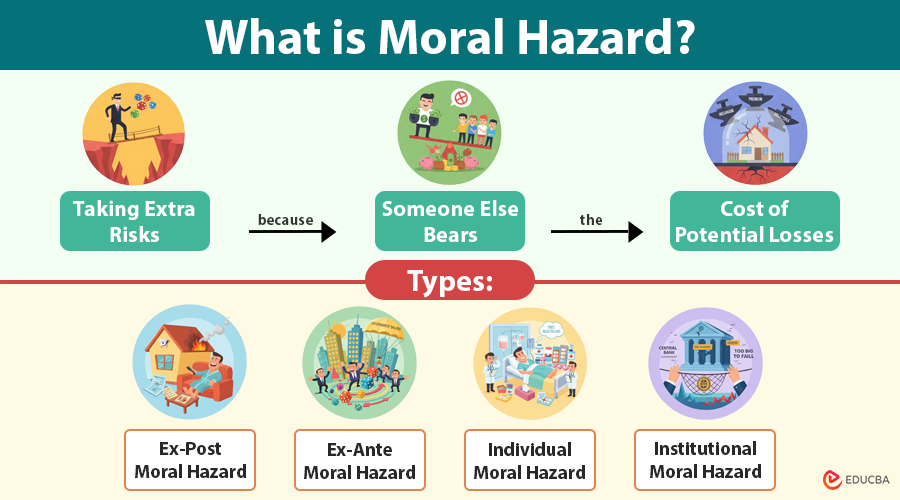
This infographic illustrates the core concept of moral hazard: one party takes on extra risk because another party bears the cost of potential negative outcomes. It applies to individual behavior as well as institutional settings.
In the context of a hotwife relationship, consider an agreement where a couple (the "principal") and a third partner (the "agent") agree on a set of rules, such as mandatory condom use. The action of using a condom during a private encounter is unobservable to the cuckold husband. The temptation to forgo this precaution for increased pleasure creates the moral hazard, as the husband primarily bears the emotional and health risks of that hidden action.
This is a classic Principal-Agent Problem.

This diagram shows the relationship between a Principal, who delegates authority, and an Agent, who acts on the Principal's behalf. The potential for a conflict of interests due to differing goals and unobservable actions is central to the problem.
The challenge is that the principal cannot write a contract based on the agent's effort or action (e.g., "The agent must use a condom 100% of the time"), because this action cannot be verified. Instead, the contract must be based on observable but "noisy" outcomes (e.g., health status). An undesirable outcome (like an STI) is more likely with low effort but not impossible with high effort, and vice-versa. Our goal is to design a contract (a set of incentives) that makes it rational for the agent to choose the high-effort action even when no one is watching.
Designing an Incentive Contract for Unobservable Actions
Let's construct a model. A principal (David, the husband) wants an agent (Clara, the wife) to exert "high effort" (always adhere to safe-sex protocols with her partner, Ethan). This action is costly to Clara, perhaps reducing spontaneity or pleasure. David cannot observe the effort, only the outcome, which is probabilistically linked to the effort.
- High Effort (e.g., 100% condom use): High probability of a good outcome (no STIs), low probability of a bad outcome.
- Low Effort (e.g., occasional condom use): Lower probability of a good outcome, higher probability of a bad outcome.
How can David incentivize high effort? He can't reward the effort directly, but he can structure payoffs around the outcome. A "high wage" (continued trust, shared joy, relationship stability) is paid for a good outcome, and a "low wage" (loss of trust, relationship crisis, termination of the arrangement) is associated with a bad outcome.
The following video provides an excellent and formal walkthrough of how to solve this exact problem. It details how to calculate the optimal "high" and "low" wages to ensure the agent chooses high effort. As you watch, map the concepts to our scenario: effort is condom adherence, output is health status, and wage represents the relationship consequences.
Principal Agent Models Part 2: Moral Hazard with Hidden Actions
This BurkeyAcademy video, "Principal Agent Models Part 2: Moral Hazard with Hidden Actions," clearly explains how to design a contract to incentivize an unobservable action.
Please watch the following segments: The Problem Setup (from 00:39 to 01:22): The instructor introduces the problem of unobservable effort and the need to base wages on observable output. Inducing Low Effort (from 01:58 to 05:09): This section shows the baseline calculation for a contract that only ensures participation, but doesn't incentivize high effort. Pay attention to the "Participation Constraint" (or Individual Rationality constraint), which ensures the agent agrees to the contract. Inducing High Effort (from 08:15 to 13:58): This is the core of the lesson. The instructor introduces the crucial Incentive Compatibility Constraint. This ensures the agent not only participates but also finds it in their best interest to provide high effort. Note how the solution involves solving a system of two constraints simultaneously. Comparing Profits (from 15:18 to 18:07): Here, the principal compares the profitability of inducing low versus high effort. This highlights the "cost of moral hazard"—the extra expense required to incentivize the desired action because it's unobservable.
The video demonstrates that to solve the moral hazard problem, a contract must satisfy two conditions:
- Participation Constraint (IR): The agent's expected utility from accepting the contract and exerting high effort must be at least as high as their outside option (e.g., not participating in the arrangement).
- Incentive Compatibility Constraint (IC): The agent's expected utility from exerting high effort must be greater than or equal to their expected utility from exerting low effort. This makes choosing the desired action rational for the agent.
The solution is often a contract that creates a significant gap between the reward for a good outcome and the penalty for a bad one, effectively making the risk of shirking too costly for the agent to bear.
The Inefficiency of Monitoring
Before we enrich this model, consider the alternative: what if the principal tries to eliminate the hidden action problem through direct monitoring? In our scenario, this would involve David becoming intensely suspicious, checking phone records, demanding constant updates, or creating a generally mistrustful environment.
This is not only emotionally draining but also costly. A recent paper on marital infidelity provides a useful formalization for this idea by modeling the psychological burden of surveillance.
Examining Marital Infidelity via Game Theory
This paper develops a game-theoretic model of infidelity that explicitly includes the costs of monitoring a partner.
Please read Section 3, General Model Framework. Focus on how the authors define the monitoring cost as a quadratic function, C(m) = \zeta m^2, and their justification for this choice. The key insight is that the marginal cost of monitoring increases as surveillance intensifies, reflecting a growing psychological and emotional toll.
The quadratic cost of monitoring illustrates why direct surveillance is an inefficient solution to moral hazard. It imposes significant costs on the principal and can damage the very trust the relationship is built on. A well-designed incentive contract, as described in the video, is a much more elegant and efficient solution. It aligns incentives without resorting to costly and destructive suspicion.
A Richer Model: The Role of Psychological Payoffs
The classic economic model is powerful, but it treats the agent as a purely rational maximizer of external payoffs. Your experience as a relationship analyzer suggests that internal states—emotions like guilt, jealousy, and compersion—are also critical components of utility. Psychological Game Theory (PGT) provides a framework for incorporating these belief-dependent payoffs into our model.
A key emotion for managing moral hazard is guilt. Guilt can serve as an internal enforcement mechanism. If an agent believes the principal expects them to behave in a certain way, violating that expectation can create a psychological cost, even if the agent is not caught.
[PDF] Psychological Game Theory - Eller College of Management
This paper by Battigalli and Dufwenberg provides a deep dive into Psychological Game Theory. The section on guilt is particularly relevant to our problem.
Please read the subsection "Guilt" within Section 4.1. Pay close attention to the definition of "simple guilt": player i experiences guilt when they believe player j's payoff is lower than player j initially expected. The discussion of the trust game (G5) is a direct parallel to our safe-sex scenario.
The concept of simple guilt fundamentally alters the agent's utility function. When Clara considers the "low effort" action (skipping a condom), her utility calculation is no longer just about her own pleasure versus the risk of a bad outcome. It also includes the psychological disutility of guilt from knowingly letting David down.
Utility(Low Effort) = Benefit(Pleasure) - Cost(Risk) - Cost(Guilt)
This has profound implications for the incentive compatibility constraint. The principal can actively foster conditions that trigger guilt to help enforce the agreement. By clearly communicating his expectations and his vulnerability, David isn't just stating a rule; he is establishing the belief structure necessary for guilt to function as a deterrent.
Let's synthesize this into a scenario:
- The Agreement (Contract Setup): David, Clara, and Ethan's relationship agreement explicitly states the importance of 100% condom use for David's peace of mind and everyone's health.
- Setting Expectations (Triggering Guilt):
- David: "For me to feel true compersion and joy for you, Clara, I need to feel completely safe. I am placing my trust in you and Ethan to honor our agreement on condom use. That trust is the foundation of this for me."
- The Agent's Decision (Moral Hazard Moment): Clara and Ethan are together. The temptation to skip the condom arises.
- Clara's Internal Monologue: "The standard model says I should weigh the extra pleasure against the probability of getting caught times the magnitude of the punishment. But it's more than that. David explicitly said he is trusting me. His expectation is clear. Violating that trust, even if he never finds out, would make me feel immense guilt, which would poison my own enjoyment. The psychological cost of breaking that trust, combined with the catastrophic risk if something went wrong, makes the 'high effort' choice (using the condom) the truly optimal one for me."
In this richer model, the incentive contract has both an external component (the consequences tied to observable outcomes) and an internal one (the psychological cost of violating a trusted partner's expectations). A robust relationship agreement leverages both.
Conclusion
In this lesson, we have deconstructed the problem of moral hazard in the context of relationship agreements. We've moved from identifying the core conflict of unobservable actions to building a sophisticated model for its resolution.
Key Takeaways:
- Moral Hazard vs. Adverse Selection: Moral hazard concerns hidden actions after an agreement is made, whereas adverse selection involves hidden information before.
- The Principal-Agent Framework: Moral hazard is a classic principal-agent problem where the agent's costly effort is unobservable, requiring the principal to contract on noisy, observable outcomes.
- Incentive Design: A contract solves moral hazard by satisfying two key constraints: the Participation Constraint (making the deal attractive enough to join) and the Incentive Compatibility Constraint (making the desired action the agent's most rational choice).
- Psychological Payoffs: In relationships, internal states are powerful incentives. The psychological cost of guilt, triggered by violating a partner's stated expectations, can be a potent tool for ensuring incentive compatibility and enforcing agreements.
Preview of the Next Lesson:
We have now examined two cornerstone problems of mechanism design—adverse selection and moral hazard—primarily through the lens of non-cooperative game theory, where a principal designs incentives for an agent. In our next lesson, we will shift perspective to explore a powerful tool from cooperative game theory: the Vickrey-Clarke-Groves (VCG) mechanism. This will allow us to analyze how groups can make collective decisions that are socially optimal, a crucial skill for navigating complex group dynamics and shared choices within a relationship.