Introduction
In our last lesson, we took a critical look at the business limitations of generative AI and computer vision, establishing that even the most powerful technologies come with significant challenges related to accuracy, cost, and real-world viability. This pragmatic perspective is essential for an AI strategist.
Today, we will synthesize what you've learned about different AI categories into a coherent, practical framework. The goal of this lesson is to equip you with a structured method for matching AI techniques—like Predictive ML, Generative AI, Computer Vision, and NLP—to specific business problems. This is perhaps the most fundamental skill in your consulting toolkit, allowing you to move from understanding the technology to strategically applying it. As we will explore, the key is to always start with the business problem, not the technology.
Part 1: The Strategic Landscape
Before diving into a specific problem, a consultant must first understand the landscape of opportunities. AI is not a single tool for a single purpose; it can be applied across an organization to achieve diverse strategic goals.
A helpful way to start thinking about this is to consider the four primary domains where digital technologies, including AI, create value.
Integrating Generative AI Into Business Strategy: Dr. George Westerman
This video from MIT's Dr. George Westerman provides a high-level strategic view on digital transformation, which is highly relevant to AI strategy.
Watch the segment from 08:11 to 09:23, where he outlines the four key areas to look for opportunities: customer experience, operations, business models, and employee experience. Consider how these apply to the EPC industry.
For an EPC company, these four areas could translate to:
- Operations: Optimizing construction schedules, predictive maintenance on heavy equipment, or automating site safety monitoring.
- Employee Experience: Providing engineers with AI assistants to quickly find information in technical manuals or building codes.
- Customer Experience: Giving clients a more transparent, real-time view of project progress through AI-powered analytics.
- Business Models: Offering new data-driven services, such as risk analysis for large-scale projects based on historical data.
Once you have a sense of where an opportunity might lie, you can further classify its strategic impact. Gartner's AI Opportunity Radar is a useful tool for this.

This radar helps you and your future clients answer a key question: "Are we trying to improve what we already do, or are we trying to create something entirely new?"
- Everyday AI: Focuses on optimization and efficiency. For an EPC firm, this could be using AI to automate the three-way matching of invoices, purchase orders, and delivery receipts (Internal Operations, Back Office).
- Game-Changing AI: Aims to create new value propositions or capabilities. This might involve using AI to generate multiple novel design options for a complex structure that meet a specific set of performance and cost constraints (Internal Operations, Core Capabilities).
With this strategic context, you are now ready to analyze a specific business problem and find the right technical solution.
Part 2: A Framework for Matching AI to Business Problems
A robust consulting framework helps you move from a vague business need to a concrete technical approach in a structured way. We will use a simple but powerful two-step process:
- Characterize the Business Problem: Ask a set of diagnostic questions to define the problem's core attributes.
- Match to the AI Pattern: Based on those attributes, select the most appropriate category of AI.
Step 1: Characterize the Business Problem
Before you can suggest a solution, you must deeply understand the problem. The following questions, inspired by Dr. Westerman's lecture, will be your primary diagnostic tool.
Integrating Generative AI Into Business Strategy: Dr. George Westerman
This section of the video provides a brilliant set of questions that a business leader or strategist should ask to understand the nature of an AI problem.
Watch the clip from 26:23 to 27:43. Pay close attention to the questions he poses about the problem itself and the data required to solve it.
Let's formalize these into a consultant's checklist:
Problem & Output Characteristics:
- What is the desired outcome? Are you trying to predict a future value (e.g., project delay), classify something (e.g., risk level), understand unstructured information (e.g., a contract), or create something new (e.g., a report draft)?
- What is the cost of being wrong? An error in a schedule prediction has financial costs, while an error in a safety system could have human costs. This defines the required accuracy.
- Is explainability required? Do you need to justify the AI's decision to a regulator, client, or court? If an AI flags a contract clause as high-risk, you need to know why.
- Is consistency critical? Do you need the exact same output for the same input every time (like a calculator), or is some variation acceptable (like a human writer)?
Data & Input Characteristics:
- What is the nature of the input data? Is it structured (e.g., numbers in a spreadsheet, sensor readings), unstructured text (e.g., daily reports, emails, contracts), images/videos (e.g., site photos, drone footage), or a human prompt?
- Do you have a reliable source of "truth"? To train a predictive model, you need historical data where the outcome is known (e.g., past projects with their final cost overruns). This is called labeled data.
- Is your data representative? A model trained only on data from commercial building projects may perform poorly when applied to a petrochemical plant project.
Answering these questions gives you a clear "problem profile" that you can then match to an appropriate AI solution.
Step 2: Match to the AI Pattern
Once you have the problem profile, you can map it to a major AI "pattern." These patterns are categories of tasks that AI is well-suited to perform.
AI for Business: #2 AI Use-cases (50 Practical Applications)
This video provides an excellent overview of the most common AI use case patterns. It's a great way to build your vocabulary of what's possible.
Watch the introduction from 01:42 to 02:43 to get an overview of the patterns. Then, you can explore the specific sections on prediction, computer vision, natural language understanding, and content generation to see concrete business examples for each.
We can group these patterns into the four main AI techniques relevant to this course. The table below connects the diagnostic questions from Step 1 to the appropriate AI pattern.
| Problem Characteristic | Best Fit AI Pattern | Examples in EPC |
|---|---|---|
| Input: Structured Data (numbers, categories) Output: A prediction or classification Explainability: Often possible |
Predictive Analytics (ML) Uses historical data to find patterns and make forecasts. |
Predicting cost overruns, forecasting equipment failure (predictive maintenance), classifying project risk. |
| Input: Unstructured Text (documents, emails) Output: Insights, summaries, classifications, search |
Natural Language Processing (NLP) Enables computers to understand, interpret, and manipulate human language. |
Analyzing contracts for risk clauses, searching technical docs, summarizing daily progress reports. |
| Input: Images, Videos Output: Object detection, classification, analysis Explainability: Generally low |
Computer Vision (CV) Allows machines to "see" and interpret visual information. |
Monitoring site safety (PPE detection), tracking construction progress vs. BIM models, quality inspection. |
| Input: A prompt or instruction Output: New, original content (text, code, images) Consistency: Low (probabilistic) |
Generative AI Creates new data that resembles the data it was trained on. |
Drafting initial project reports, generating meeting summaries, creating synthetic training data. |
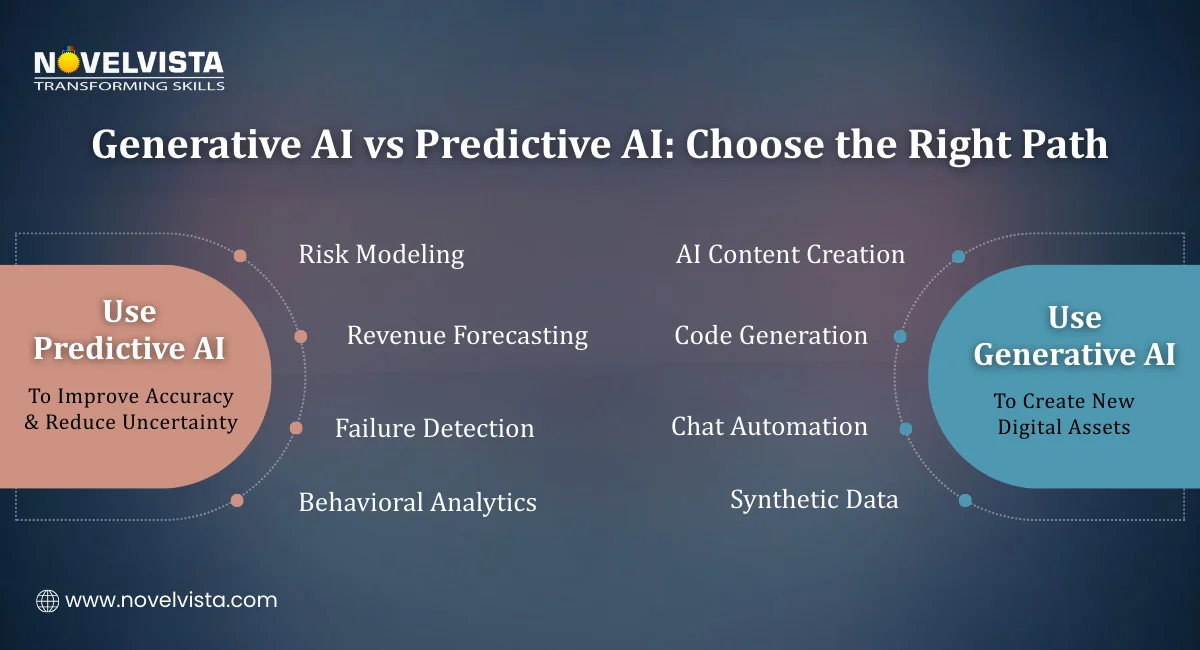
This table is the core of your matching framework. By first profiling the problem and then consulting this table, you can make a well-reasoned initial recommendation for the right type of AI.
Part 3: The Framework in Action: AI for Dispute Management
Let's make this concrete by applying the framework to your specific area of interest: claims and dispute management in EPC. A recent academic paper systematically reviewed AI applications in this exact domain.
[PDF] artificial intelligence applications for proactive dispute management ...
This research paper provides a powerful real-world demonstration of how different AI techniques are being applied to the problem of construction disputes.
Please navigate to Table 2: Profile of Articles on Artificial Intelligence Applications in Construction Dispute Management. Skim through this table to get a sense of the research. Focus on the "AI Technique," "Input," and "Output (Target)" columns. You don't need to understand every detail, but rather see the pattern of how problems are matched to solutions.
Let's analyze two examples from that table using our two-step framework:
Case 1: Predicting if a Dispute will Occur (Proactive)
-
Source: (Ayhan, Dikmen & Birgonul, 2021) in Table 2.
-
Business Problem: A project manager wants to know the likelihood of a major dispute occurring on a new project to take preventative action.
-
Step 1: Characterize the Problem
- Outcome: A classification ("Disputed" or "Undisputed").
- Cost of Wrong: Moderate. A false negative (predicting no dispute when one occurs) means a missed opportunity for prevention.
- Input Data: Structured project data (Project value, duration, number of changes, etc.).
- Source of Truth: Historical data from 108 past projects where the outcome (disputed or not) is known.
-
Step 2: Match to the AI Pattern
- The profile (structured input, classification output, known historical outcomes) is a classic fit for Predictive Analytics (ML). The paper confirms this, listing "Machine Learning Predictive Classification Models" as the technique.
Case 2: Finding Causes of Disputes from Legal Documents (Reactive)
-
Source: (Ye et al., 2023) in Table 2.
-
Business Problem: A legal team wants to understand the most common root causes of disputes in subcontracting by analyzing thousands of past court cases.
-
Step 1: Characterize the Problem
- Outcome: Insights and categories (the paper identified 37 common causes).
- Cost of Wrong: Low. An incorrect categorization might slightly skew the analysis but is not critical.
- Input Data: Unstructured text (3,150 litigation case documents).
- Source of Truth: Not applicable in the same way; the goal is to discover patterns, not predict a known label.
-
Step 2: Match to the AI Pattern
- The profile (unstructured text input, discovery/insight output) is a perfect match for Natural Language Processing (NLP). The paper confirms this, citing "Text mining and NLP" as the technique.
These examples show how the framework can guide your thinking from a business question to a specific AI methodology, grounded in real-world applications within your domain.
Conclusion
Today you have developed the first version of your core consulting framework. The process of identifying a business opportunity, characterizing the problem with a set of diagnostic questions, and matching it to the right AI pattern is a repeatable and robust methodology.
Key Takeaways:
- Start with the Business Problem: Before considering any AI solution, first identify a valuable business problem in areas like operations, customer experience, or employee experience.
- Use Diagnostic Questions to Profile the Problem: Understand the nature of the inputs, the desired outputs, and the business constraints like required accuracy, explainability, and consistency.
- Match the Profile to the AI Pattern: Based on the problem's characteristics, map it to one of the major AI categories: Predictive Analytics, NLP, Computer Vision, or Generative AI.
- Frameworks Ground Your Advice: Using a structured approach like the one we've developed today ensures your recommendations are logical, defensible, and well-suited to the client's actual needs.
In our next lesson, we will begin the second module of our course, "AI Value Creation in the EPC Sector." You will take the framework you've built today and apply it to identify specific, high-impact AI use cases across the entire EPC lifecycle, from design and procurement to construction and project controls.