Hello! Welcome to the first lesson in your journey to becoming a professional poker player.
Given your primary goal of mastering the mental game and overcoming tilt, we're starting with the most critical foundation. You've correctly identified that tilt and impulsiveness are holding you back, and your interest in psychology and mental mastery will be a significant asset here. This first module is designed to turn that interest into a practical, powerful tool at the table.
Today's lesson focuses on a single, crucial objective: to identify the specific triggers that cause you to tilt during poker sessions. Think of this as the diagnostic phase. Before we can treat an issue, we need to understand exactly what it is, what causes it, and how it manifests. By the end of this lesson, you'll have a clear framework for analyzing your own tilt and an action plan to start gathering the intelligence you need to conquer it.
Let's begin.
1. What is Tilt? Beyond the Anger
Most players think of tilt as explosive anger—slamming the table or berating an opponent. While that's one form, it's a very narrow definition. A more precise and useful way to think about it comes from the world's top mental game coach, Jared Tendler, whose work will be a cornerstone of our mental game training.
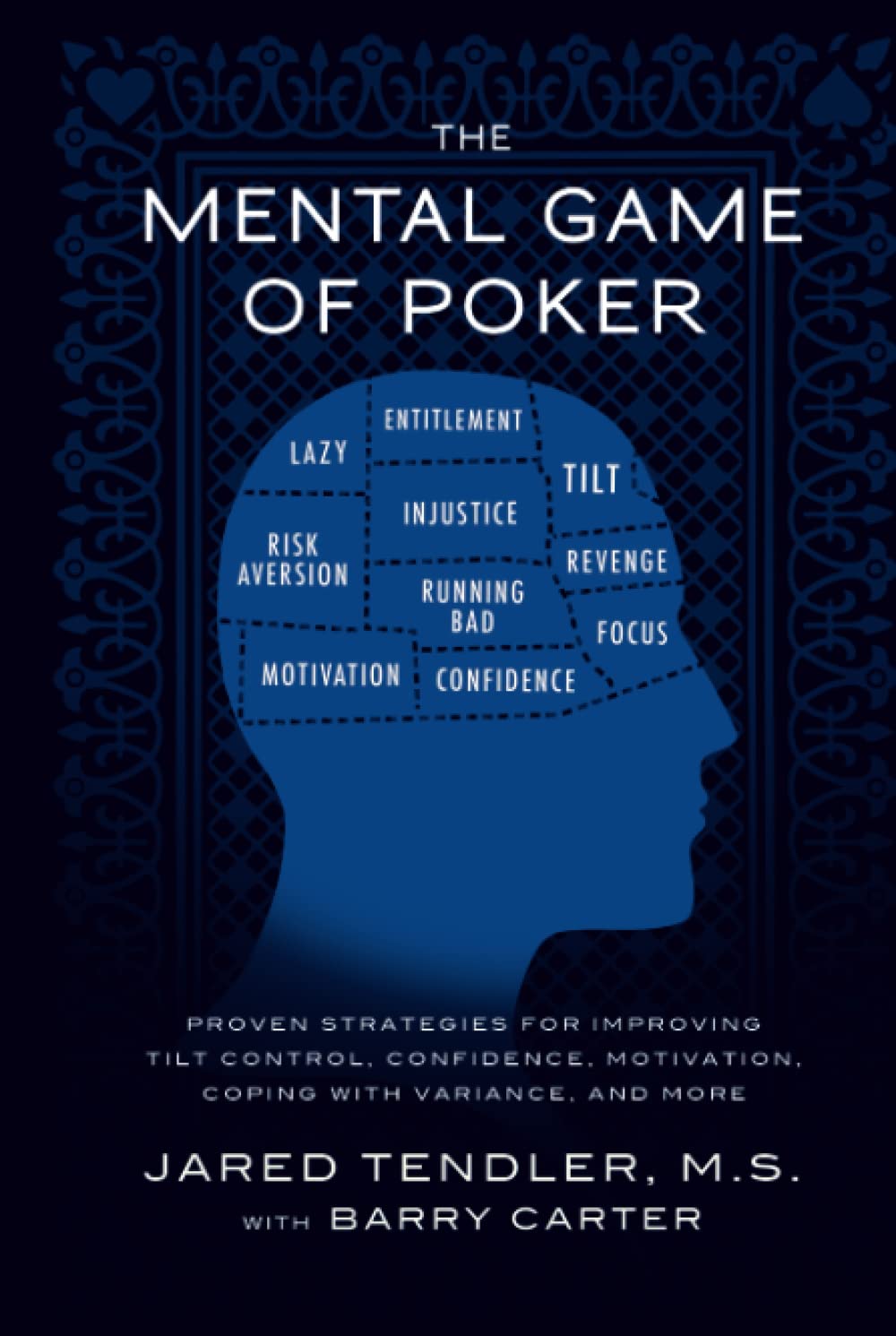
Tendler defines tilt simply as: Anger that leads to bad play.
This is important because it separates productive anger (e.g., getting angry at yourself for being lazy, which then motivates you to play better) from destructive anger that costs you money.
The effect of this destructive anger on performance is best illustrated by the "Performance Stress Curve."
To get a clear understanding of this crucial concept, please watch this short segment from one of Jared Tendler's masterclasses.
Stake Me To Play - Mastering the Mental Game of Poker - Jared Tendler
In this clip from 'Mastering the Mental Game of Poker,' Jared Tendler explains the relationship between your emotional state (arousal/stress) and your quality of play. This model is fundamental to understanding why tilt is so destructive.
Watch the section from 00:10:38 to 00:13:57. Pay close attention to the graph he shows and the idea that performance suffers when your emotional arousal is either too high or too low.
As Tendler explains, your best performance—your "A-game"—happens when your emotional arousal is in a balanced middle ground, often called "the zone."
- Too little arousal (boredom, fatigue, low motivation) leads to poor, unfocused play.
- Too much arousal (intense anger, frustration, fear) also leads to poor play. This is tilt.
When you are tilted, your emotions rise to a point where they literally shut down higher brain functions like logical reasoning, planning, and self-control. You know you shouldn't make that bad call, but you do it anyway. That's your emotional brain overpowering your rational brain.
2. A Vocabulary for Tilt: The Seven Types
"Tilt" is a general label, but to solve it, we need to be more specific. Just as a doctor distinguishes between different types of illnesses, we need to distinguish between different types of tilt. Each has a different root cause, or "faulty logic," that triggers it.
The following video clip provides the most important framework for this lesson. In it, Jared Tendler breaks down tilt into seven distinct categories. Understanding these categories will give you the vocabulary to accurately label what you experience.
Stake Me To Play - Mastering the Mental Game of Poker - Jared Tendler
This is the core of today's lesson. Watch this segment where Jared Tendler outlines the seven types of tilt. As you watch, think about which of these resonate most with your own experiences at the table.
Watch from 00:15:28 to 00:21:17. Don't worry about memorizing all seven right away; just get familiar with the concepts.
Here is a summary of the seven types of tilt Tendler described:
-
Running Bad Tilt: This isn't a unique type, but the result of other tilt types happening so frequently that the anger accumulates. You never have time to mentally "reset," so you start each session with lingering frustration, making you tilt even faster.
-
Injustice Tilt: This is the feeling that you've been wronged or that the results are unfair. It's triggered by bad beats, coolers, and suck-outs. You might think, "I played it perfectly, I should have won that pot! This is so unfair."
-
Hate-losing Tilt: Common among highly competitive people. You understand variance logically, but you have a visceral, emotional hatred of losing any given pot or session. This can make you fight too hard for small pots or refuse to fold clear losing hands.
-
Entitlement Tilt: The belief that you deserve to win because you're a better player, you've studied more, or your opponent is a "fish." When a weaker player wins a pot from you, it feels like they are stealing something you are owed.
-
Mistake Tilt: Getting angry at yourself for making a tactical error. This is common in perfectionists and can spiral: you make one mistake, get angry about it, which makes you play worse and make more mistakes.
-
Revenge Tilt: This is when you make the conflict personal against a specific player who you feel has disrespected you, outplayed you, or is constantly being aggressive towards you. Your goal shifts from "making the most money" to "beating this one person."
-
Desperation Tilt: The overwhelming urge to win back your losses and "get even." This is extremely dangerous, leading players to play marathon sessions, move up in stakes, or gamble in pit games to try and recoup poker losses.
Test your understanding!
You're playing a $1/$2 live game. A very loose, recreational player has been winning pot after pot with weak hands. You raise preflop with K♠️K♣️. He calls with 8♦️7♦️. The flop is K♦️9♦️2♣️. You bet for value, he calls. The turn is the 3♠️. You bet big, he calls. The river is the J♦️, giving him a flush. You bet again, he raises all-in, and you call, losing a huge pot. You feel a hot flash of anger and think, "This idiot should have folded preflop! How can he win a 300bb pot off me when I'm the one who studies and works on my game?"
Which two types of tilt are most prominent in this reaction?
Show answer
The two most prominent types are Entitlement Tilt and Injustice Tilt.
- Entitlement Tilt: The thought process "How can he win... when I'm the one who studies" is classic entitlement. It's the belief that your superior skill or effort entitles you to win the pot against a weaker player.
- Injustice Tilt: The feeling that the outcome was fundamentally unfair—a "bad beat" where you flopped a set and lost to a backdoor flush draw—is the hallmark of injustice tilt.
3. From Why You Tilt to What Makes You Tilt
The seven categories above explain the psychological why. Now let's connect them to the concrete what—the specific in-game events that pull the trigger.

The following reading identifies common in-game situations that cause tilt. As you read, notice how these situations map directly onto the seven categories we just discussed.
The 7 Worst Tilt Triggers in Poker and Your Game Plan
This article from Smart Poker Study, titled 'The 7 Worst Tilt Triggers in Poker', provides an excellent list of common, frustrating in-game events. This will help you connect the psychological categories of tilt to specific events you see at the table.
Read the sections numbered 1 through 7, starting with '1. Missing the Flop Over and Over' and ending with '7. The Fish Won’t Fold'. For each trigger, think about which of Tendler's tilt categories it relates to (e.g., Suck-outs -> Injustice Tilt).
By connecting a specific event (like a suck-out) to a psychological category (Injustice Tilt), you move from simply feeling angry to diagnosing the problem: "Okay, that was a bad beat, and it's triggering my Injustice Tilt." This act of labeling is the first step toward control.
Your Action Plan: Create Your Tilt Profile
Knowledge is only powerful when applied. Your main task between this lesson and the next is to become a detective of your own mental game. You are going to start gathering data to create your personal Tilt Profile. The goal is to move from a vague feeling of "I'm on a downswing and tilting" to a precise understanding of your patterns.
Jared Tendler provides a perfect set of questions for this. Over the next week, after every single poker session you play, take 10 minutes to sit down with a notebook or a document and answer the following questions. Be as specific and honest as possible.
Mental Game of Poker Excerpt 4 - Tilt Profile
This excerpt from 'The Mental Game of Poker' provides the exact questions you need to build your Tilt Profile. This is your primary assignment for the week.
Read the first part of this short excerpt, specifically the list of questions under the first horizontal line. These are the questions you will use for your journaling.
To summarize, your "Tilt Profile" journal entries should answer:
- What caused you to tilt? (Be specific: A bad beat? An opponent's comment? Making a stupid mistake?)
- What are the things you say to yourself (in your head or out loud)?
- How do you know that you’re on tilt? (What’s the first physical or mental sign? E.g., heart racing, clenching your jaw, feeling foggy, urge to play loose.)
- How does your body react? (Hot face, sweaty palms, tense shoulders, etc.)
- Can you identify the point when tilt starts shutting down your thinking?
- At what point do you take action (if any) to deal with it?
Don't judge what you write down. The goal is pure data collection. This intelligence is the raw material we will use to build your mental armor.
Conclusion and Next Steps
Congratulations on completing your first lesson. We've laid a critical piece of the foundation for your professional poker journey.
Key Takeaways:
- Tilt is not just any negative emotion; it is specifically anger that leads to bad play.
- Emotions affect performance via the Performance Stress Curve. Tilt happens when emotional arousal is too high, shutting down your logical mind.
- Tilt can be broken down into seven distinct types (e.g., Injustice, Entitlement, Revenge), each with its own underlying trigger.
- Your first step toward mastery is to diagnose your own patterns by creating a Tilt Profile through post-session journaling.
Preview of the Next Lesson:
Now that you have a system for diagnosing your tilt triggers, our next lesson will focus on emotional "first aid." We will cover the learning outcome: Apply breathing and pause techniques to interrupt impulsive decisions at the table. You'll learn simple, powerful, in-the-moment tools to create a crucial gap between the trigger and your action, giving your rational brain the time it needs to come back online.
Complete your Tilt Profile journaling this week, and I'll see you in the next lesson.