Introduction
Welcome back. In our last lesson, we focused on the grassroots of cultural change. We identified the critical mindset shifts required for an Agile culture—like moving from controlling to empowering and from planning to experimentation—and explored practical interventions like building psychological safety and establishing organizational rhythm to help teams navigate this transition.
However, as you know from your extensive experience in organizational design, teams don't exist in a vacuum. They take their cues from leadership. An organization's culture is often a direct reflection of its leaders' values and behaviors—what they tolerate, what they celebrate, and where they invest their attention.
This lesson focuses squarely on that dynamic. We will address the learning outcome: Define leadership's role in modeling and reinforcing new cultural norms during Agile transformation. We will explore:
- The shift from a traditional command-and-control manager to an Agile servant leader.
- The specific, observable behaviors leaders must model to make the new culture feel authentic and safe to adopt.
- The concrete actions leaders must take to reinforce the new norms and reshape the organizational system around them.
For you, in your role designing a large-scale transformation, understanding this is paramount. You are not only a leader who will need to embody these principles yourself, but you will also be responsible for coaching and developing the entire leadership cohort of the company.
Part 1: The New Leadership Paradigm: From Controller to Enabler
The move to an Agile, adaptive organization, especially one leveraging AI and microservices, demands a fundamental reinvention of leadership. The old paradigm of the leader as the primary decision-maker, director of tasks, and holder of information becomes a bottleneck. The new paradigm is one of an enabler, a coach, and a cultivator of talent.
A powerful resource that details this shift is "The Intelligent Enterprise." It contrasts the old and new leadership skills required in a flatter, AI-driven organization, which aligns perfectly with the technical transformation you're planning.
[PDF] The Intelligent Enterprise: Reimagining Leadership ... - HTP Group
Let's begin by reviewing the document 'The Intelligent Enterprise' by HTP Group. It provides a crisp comparison between traditional leadership and the 'Power Skills' needed for the future.
Please find and review 'Table 2: Comparison of Traditional Leadership Skills vs. Power Skills' on page 24. This table clearly outlines the shift in focus, approach, and communication style that defines modern leadership.
This table highlights a move from authority to influence, from process to relationships, and from reactive to proactive change. The embodiment of this new model in the Agile world is the concept of Servant Leadership.
To get a clear and concise overview of this philosophy, let's watch a short video.
Agile - Servant Leadership | Agile Practice Guide - Agile Core Practices
This video from David McLachlan provides an excellent introduction to Servant Leadership, a core practice in Agile.
Please watch the entire video (approximately 4 minutes). Pay close attention to the leader's priorities (Why -> People -> Process), their key characteristics, and their primary responsibilities.
As the video explains, a servant leader's primary focus is not on directing work but on serving the team by:
- Ensuring they understand the "why" behind their work.
- Creating an environment where they can succeed.
- Removing impediments that block their progress.
- Coaching them to grow their skills and careers.
This is the essence of the "Controlling → Empowering" mindset shift we discussed previously. Your role as a transformation architect involves helping leaders redefine their success—from being the hero with all the answers to being the host who creates the conditions for others to be heroes.
Part 2: Modeling the Way: The Observable Behaviors of an Agile Leader
Saying you're a servant leader is easy; demonstrating it through daily actions is what builds trust and changes culture. People watch what leaders do, not what they say. Let's explore the specific behaviors that leaders must model.
The Scaled Agile Framework (SAFe) provides a practical guide on this topic.
Leadership and Culture Discipline - Scaled Agile Framework
The article 'Leadership and Culture Discipline' from the Scaled Agile Framework website breaks down the key behaviors for leaders in a digital-age organization.
Please read the subsections 'Leading by Example' and 'Adapting and Innovating'. Focus on the bulleted lists of behaviors in each section, as they provide a checklist of observable actions.
These sections give us a powerful set of behaviors to look for and cultivate:
- Modeling Authenticity and Trust: Acting with integrity, admitting mistakes, and being transparent about challenges. This isn't about being perfect; it's about being human and accountable.
- Modeling a Growth Mindset: Being an "insatiable learner," asking for feedback, and challenging one's own assumptions. This gives the team permission to learn and experiment.
- Modeling Adaptability: Challenging the status quo, encouraging experimentation (which you know is key!), and using data to guide decisions rather than relying on gut feeling or tradition.
The "Power Skills" table in "The Intelligent Enterprise" provides a more detailed competency model for these behaviors. For instance, "Leading by Example" is enabled by Power Skills like Emotional Intelligence and Resilience. "Adapting and Innovating" is powered by Adaptive Thinking and Critical Thinking.
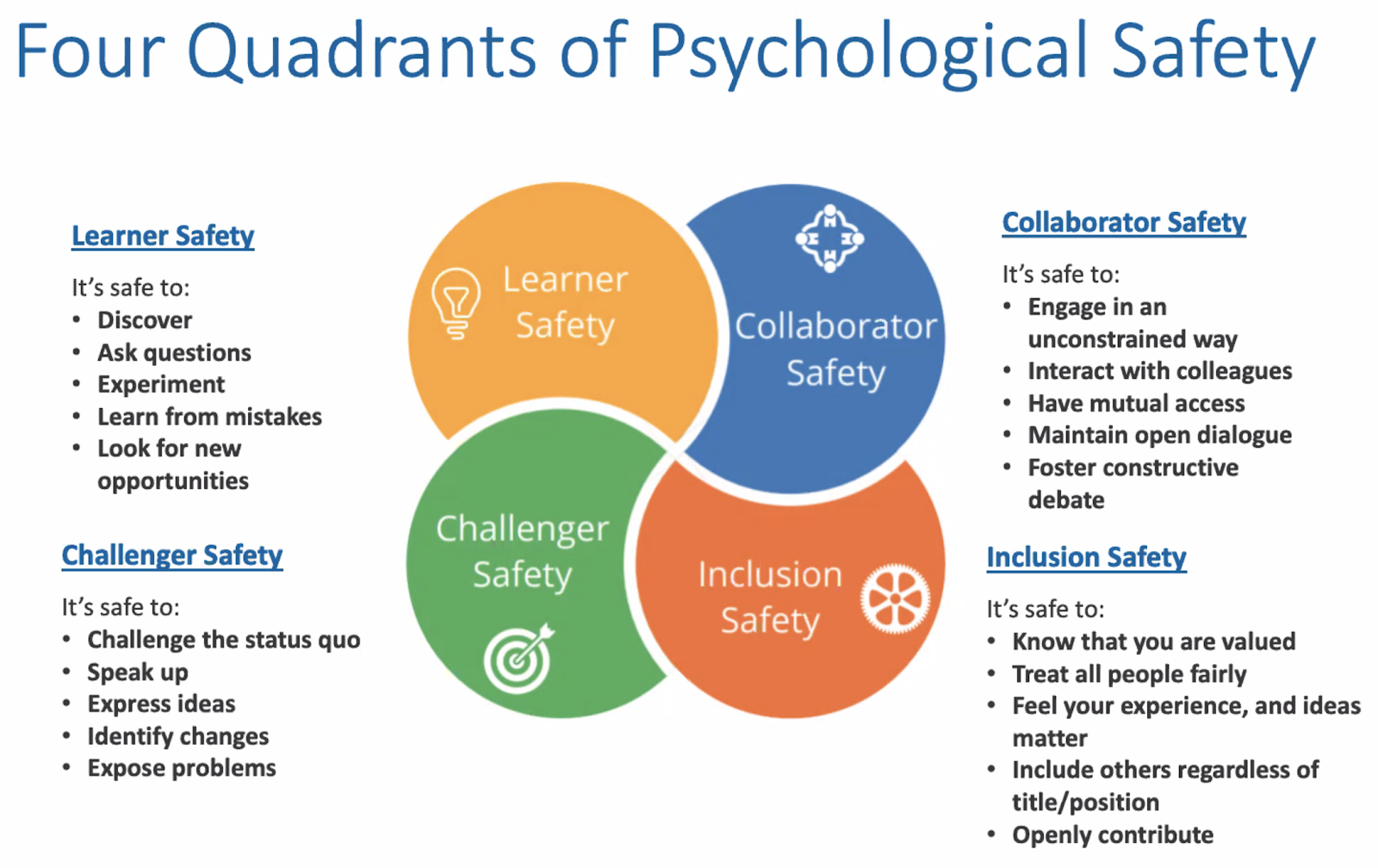
A primary outcome of leaders modeling these behaviors is the creation of psychological safety, which we identified as a foundational intervention in our last lesson. When a leader admits a mistake, it becomes safer for an employee to do the same.
Part 3: Reinforcing the Change: Shaping the System
Modeling new behaviors is critical, but it's only half the equation. Leaders hold the authority to change the organizational systems that dictate "how things are done around here." This is how they reinforce the new culture and make it stick.
A crucial insight, articulated by both John Kotter and W. Edwards Deming, is that you can't change the culture directly. You change the practices and systems, and if those new ways are successful, the culture follows.
Leadership and Culture Discipline - Scaled Agile Framework
Let's return to the SAFe article, which makes this point powerfully.
Please read the subsection 'Changing the Culture'. Pay close attention to the quotes: 'culture change comes last, not first' and 'only managers (leaders) can change the system.'
This is where your work in organizational design becomes central. Leaders reinforce the new culture by actively reshaping the system. What does this look like in practice?
-
Decentralizing Decisions: This is perhaps the most powerful reinforcing mechanism. When a leader who used to make all the decisions now explicitly delegates authority to a team and trusts their judgment, it sends an undeniable signal that the culture has changed. The SAFe article's section on "Growing Leaders" highlights this.
-
Removing Barriers: A servant leader actively seeks out and removes systemic obstacles—be it a cumbersome approval process, a lack of access to data, or conflicting departmental goals. Their job is to clear the path for their teams, reinforcing the idea that the organization's structure should enable, not hinder, value delivery.
-
Changing the Conversation: Leaders reinforce culture by changing what they talk about and what they measure.
- Old: "Is the project on schedule and on budget?"
- New: "What did we learn from our last experiment? What's the most important customer value we can deliver next? What's blocking you?"
-
Aligning Incentives and Recognition: As a leader, you must champion the overhaul of performance management and reward systems. If the company espouses teamwork but only rewards individual "heroes," the new culture will fail. Leaders reinforce collaboration by publicly celebrating team achievements and promoting individuals who demonstrate coaching and mentoring skills. This directly connects to the "Systemic Reinforcement" phase detailed in the roadmap within the "The Intelligent Enterprise" resource (LINK, section 4.2).
Practical Application Exercise
Imagine you are coaching the VP of Engineering at the software company. She has a traditional background and is used to a command-and-control style, but she is genuinely committed to supporting the Agile transformation. She asks you for a "90-day plan" with three concrete actions she can take to visibly model and reinforce the new Agile culture.
Your Task (10 minutes):
Based on today's lesson, outline three specific, observable actions for this VP. For each action, briefly explain what it is and why it's effective for shifting the culture.
Suggested Approach
Here are three examples of impactful actions the VP could take:
-
Action: Change How You Attend Sprint Reviews.
- What: Instead of attending to judge the team's output or ask "Is it done?", the VP will attend one team's Sprint Review each week with the stated goal of learning. She will only ask questions like: "What was the most surprising thing you learned this sprint?" or "How will this new functionality help our customers?"
- Why it's effective: This models curiosity and a focus on learning over blame (Learner Safety). It shifts the dynamic from a status report to a conversation about value and discovery, reinforcing the "Planning → Experimentation" mindset.
-
Action: Create a "Celebrate Learning" Award.
- What: In her next all-hands meeting, the VP will create a new, recurring recognition. She will publicly celebrate a team that ran an experiment that "failed" but produced significant, valuable learning that prevented a larger mistake down the road. She will ask the team to present what they learned.
- Why it's effective: This is a powerful way to reinforce psychological safety (Challenger Safety). It makes it safe to take calculated risks and shows that the organization values learning as much as it values success. It directly counters a culture of fear.
-
Action: Implement "Decision Delegation" with Direct Reports.
- What: The VP will hold a workshop with her direct reports (the Engineering Directors) to create a "Delegation Board." For key decisions (e.g., team budget allocation, cross-team technical architecture, hiring), they will explicitly agree on the level of delegation—from "Tell" (VP decides) to "Fully Delegated" (Director decides).
- Why it's effective: This is a systemic intervention that reinforces the "Controlling → Empowering" shift. It provides clarity on autonomy, builds trust, and actively decentralizes decision-making, which is a core tenet of Agile leadership. It also models the behavior she wants her directors to adopt with their own teams.
Conclusion
Today, we've established that leadership is the lynchpin of cultural transformation. Without leaders who actively model and reinforce the desired norms, any change initiative is destined to remain a superficial "veneer of change."
Key Takeaways:
- Agile leadership is Servant Leadership—a fundamental shift from directing tasks to enabling people.
- Leaders model the new culture through their daily, observable behaviors: demonstrating vulnerability, being a curious learner, and challenging the status quo with data. This is how they build psychological safety.
- Leaders reinforce the new culture by reshaping the system around them—by decentralizing decisions, removing systemic blockers, changing performance metrics, and rewarding collaborative behaviors.
- Remember the mantra: Culture change comes last, not first. It is the outcome of new, successful ways of working that leaders must have the courage to initiate, protect, and sustain.
Preview of the Next Lesson
We've now examined the core cultural and leadership elements of your delivery process transformation. To succeed, these changes must be orchestrated within a larger, coherent program structure. In our next module, "Transformation Governance and Program Management," we will zoom out to look at the 'scaffolding' that holds the entire transformation together. The first lesson will be: "Identify key roles and bodies for a transformation governance structure (e.g., Steering Committee, TMO, Workstream Leads)."