Hello! Welcome to your next lesson in the Capstone module.
In our last lesson, we focused on a crucial step in your transition to a Business Analyst role: articulating your project management experience using BA terminology. You learned to reframe your accomplishments to highlight the "what" and "why" of your work, not just the "how" and "when."
Now, we'll put that new perspective into practice. This lesson prepares you for the interview hot seat by addressing the most common questions hiring managers will ask. You'll learn how to take your reframed stories and structure them into clear, confident, and compelling answers that showcase your value as a future BA.
The learning outcome for this lesson is to respond to common behavioral and technical BA interview questions. By the end of this session, you'll have a framework and the confidence to handle the questions that stand between you and your goal.
1. Know Your Opponent: Types of Interview Questions
BA interviews typically consist of two main categories of questions. Understanding what an interviewer is looking for with each type is the first step to crafting a great answer.
- Behavioral & Scenario-Based Questions: These questions test your past actions and your problem-solving process. They often start with "Tell me about a time when..." or present a hypothetical challenge like, "What would you do if...". The interviewer wants to see evidence of your soft skills—communication, conflict resolution, critical thinking—and how you navigate real-world complexity.
- Technical & Knowledge-Based Questions: These questions test your understanding of core BA concepts, tools, and methodologies. They often ask for definitions or comparisons, like "What is the difference between a BRD and an SRS?" or "What tools are you proficient in?". Here, the interviewer is validating that you have the foundational knowledge required for the job.
Your goal is to blend your practical experience with formal BA knowledge to answer both types effectively.
2. The STAR-C Framework: Your Blueprint for Great Answers
The most effective way to answer behavioral and scenario-based questions is to use a structured storytelling framework. You may be familiar with the STAR method; for BA interviews, we'll use a slightly enhanced version called STAR-C.
35 Scenario-Based Business Analyst Interview Questions (w
The article '35 Scenario-Based Business Analyst Interview Questions' provides an excellent breakdown of a powerful answering framework called STAR-C. It also explains how interviewers score your answers, giving you insight into what they value most.
First, read the section 'How Scenario-Based Questions Are Scored'. Pay close attention to the 'Four-Pillar Scoring Framework' (Analytical Thinking, Communication, Solution Design, and Domain Knowledge). This tells you exactly what hiring managers are listening for. Next, read 'The STAR-C Framework for BA Scenarios'. This builds on the standard STAR method by adding a 'Conclusion' step, which is your chance to demonstrate reflection and a growth mindset.
The STAR-C framework breaks down as follows:
- Situation: Briefly describe the context. What project were you on? What was the business environment? (e.g., "On a project to launch a new programmatic ad reporting dashboard...")
- Task: What was your specific responsibility or the goal you were tasked with? (e.g., "...my task was to define the requirements for the V1 launch amidst conflicting requests from the sales and account management teams.")
- Action: This is the core of your answer. Describe the specific, sequential steps you took. Use the BA lexicon from our last lesson. What did you do? (e.g., "First, I facilitated separate elicitation workshops with each team... Then, I created a process map of the current reporting workflow... Finally, I presented a prioritized feature list based on an impact-effort analysis...")
- Result: What was the outcome? Quantify it whenever possible. (e.g., "...which resulted in a consensus on the MVP scope and a 15% reduction in manual report generation time post-launch.")
- Conclusion: What did you learn from the experience? What would you do differently next time? (e.g., "The key takeaway was that by focusing on the underlying business needs rather than their stated positions, I could find common ground. In future projects, I now start with root cause analysis before diving into feature requests.")
The PeopleAMP video below refers to a similar CAR (Context, Action, Result) method. Both are excellent structures for telling a concise, impactful story.
10 Business Analyst Interview Questions and Answer #interviewquestions #interview #businessanalysis
To see this framework in action, let's watch the introduction of the video '10 Business Analyst Interview Questions and Answer'. The presenter explains the CAR method, which is functionally identical to STAR and will be used throughout his examples.
Watch from the beginning to 01:31. Notice how the presenter emphasizes that this structure applies to almost every response. This is the key to consistent, high-quality answers.
3. Answering Common Behavioral & Scenario-Based Questions
Let's apply the STAR-C framework to some of the most frequent and important behavioral questions. For each one, your goal is to pull from your project management background and reframe the story using your BA lens.
Question 1: "Tell me about a time you handled a difficult stakeholder or conflicting stakeholder priorities."
- Interviewer's Intent: They want to assess your conflict resolution, negotiation, and communication skills. Can you navigate organizational politics and build consensus?
- How to Answer:
- Situation: Describe a real project where stakeholders had competing demands (e.g., Sales wanted a feature for new clients, while Operations needed a feature to improve efficiency).
- Task: Your task was to reconcile these demands and determine the right path forward for the project.
- Action: Explain your process. Did you hold 1-on-1 meetings to understand their underlying needs? Did you facilitate a joint workshop? Did you use data to show the impact of each option? Did you use a prioritization framework like MoSCoW?
- Result: What was the final decision? How did you achieve buy-in? Did you find a compromise or have to escalate with a clear recommendation?
- Conclusion: What did this teach you about stakeholder management?
10 Business Analyst Interview Questions and Answer #interviewquestions #interview #businessanalysis
The '10 Business Analyst Interview Questions' video provides excellent sample answers to this question. It demonstrates how to articulate the situation and your actions clearly.
Watch the segment from 05:03 to 06:40 in the 'Angelo the BA' video (resource ID LINK) and the segment from 10:51 to 13:32 in the 'PeopleAMP' video (resource ID LINK). Pay attention to how both speakers frame their actions around creating a 'shared understanding' and using 'data-driven insights' or structured workshops to depersonalize the conflict.
Question 2: "How do you handle changing requirements during a project?"
- Interviewer's Intent: They are testing your understanding of change management, scope control, and your adaptability (especially your Agile vs. Waterfall mindset).
- How to Answer:
- Situation: A project was underway when a stakeholder requested a significant change late in the process.
- Task: Your task was to evaluate the request without derailing the project and to manage stakeholder expectations.
- Action: Explain your process. You didn't just say "no" or "yes." You performed an impact analysis (on timeline, budget, and other requirements). You communicated the trade-offs clearly to the stakeholder and the project sponsor. You documented the change request through a formal process.
- Result: What happened? Was the change incorporated, deferred to Phase 2, or rejected? The key is that a structured, informed decision was made.
- Conclusion: What does this show about your approach to balancing flexibility with discipline?
10 Business Analyst Interview Questions and Answer #interviewquestions #interview #businessanalysis
Let's review two perspectives on managing change. One focuses on the flexible, Agile mindset, while the other addresses the formal change request process.
Watch the 'PeopleAMP' video from 16:22 to 20:14. Notice the emphasis on an 'agile mindset' and using 'impact analysis'. Then, watch the 'Angelo the BA' video (resource ID LINK) from 03:10 to 04:22, which discusses how this differs in a Waterfall context. Being able to speak to both shows your versatility.
Test your understanding!
A stakeholder asks for a "user-friendly" interface. Using what you've learned, how do you turn this vague requirement into something actionable?
Show answer
You would use probing questions to convert the abstract concept into measurable criteria. You could ask:
- "Can you describe the biggest pain points with the current interface?"
- "What's the maximum number of clicks a user should need to complete the main task?"
- "How can we measure success? For example, a 20% reduction in support tickets related to this feature, or a user satisfaction score of 4 out of 5?"
This process is about defining acceptance criteria that are specific, measurable, and testable.
4. Answering Common Technical & Knowledge-Based Questions
For these questions, a direct and clear answer is best. Show you know the definition, but also briefly explain why it matters in a business context.
Question 1: "What is the difference between a Business Requirements Document (BRD) and a Functional Specification Document (FSD) / System Requirements Specification (SRS)?"
- Interviewer's Intent: This is a direct test of your knowledge of formal documentation, which you've identified as a key interest. They want to know if you understand the different audiences and purposes of BA deliverables.
- How to Answer:
- BRD: Explain that the BRD focuses on the "what" and "why" from a business perspective. It outlines the business goals, objectives, and high-level requirements. Its audience is primarily business stakeholders, sponsors, and project managers.
- FSD/SRS: Explain that this document focuses on the "how" from a system perspective. It translates the business requirements into detailed functional and non-functional requirements that developers and QA testers will use to build and test the system. It describes user interactions, data, and system behavior.
- The Bridge: Conclude by stating that a key BA role is ensuring traceability—that every functional requirement in the FSD/SRS maps back to a business requirement in the BRD.
Top 30 Most Common Business Analyst Interview ...
The article 'Top 30 Most Common Business Analyst Interview Questions' provides a concise and effective way to explain this distinction.
Read Question 3, 'What is the difference between a Business Requirement Document (BRD) and a System Requirement Specification (SRS)?'. The example answer is a great model for a clear, confident response.
Question 2: "Can you describe your experience with process modeling?"
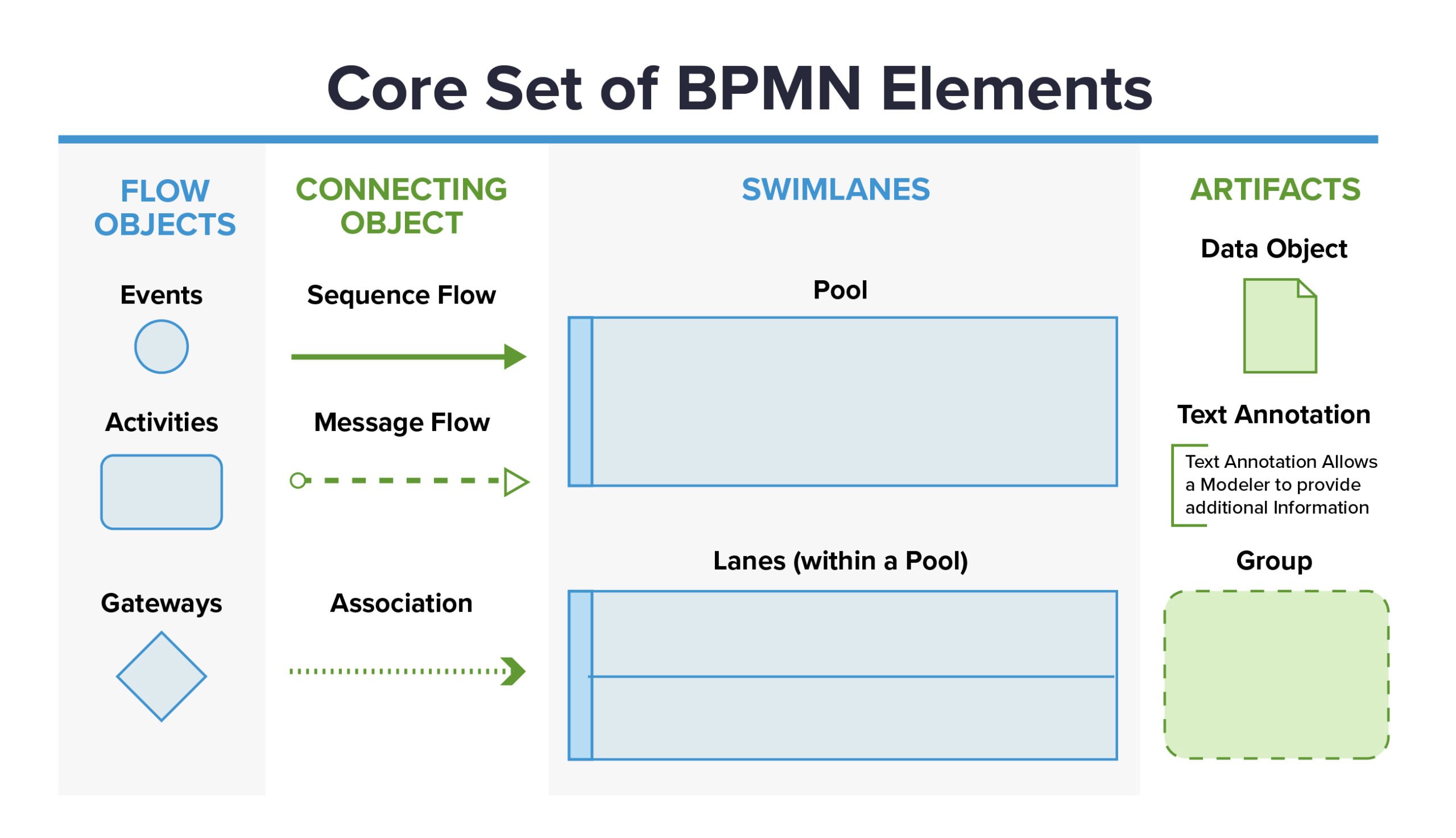
- Interviewer's Intent: They want to know if you have experience with a fundamental BA skill: visualizing and analyzing business processes. This is a great opportunity to mention BPMN, which you covered in a previous module.
- How to Answer:
- Explain that you use process modeling (e.g., creating process flow diagrams, swimlane diagrams, or BPMN models) to visually represent workflows.
- State the purpose: to analyze the "as-is" state to identify bottlenecks and inefficiencies, and to design an improved "to-be" state.
- Mention tools you've used (even if it's just Visio, Lucidchart, or draw.io).
- Give a brief STAR-C example: "In a previous role, I mapped the end-to-end procurement process using swimlane diagrams. This visualization helped stakeholders see a key redundancy, and by redesigning the process, we were able to reduce processing time by 15%."
Question 3: "What business analysis tools are you proficient in?"
- Interviewer's Intent: This is an open door to showcase your technical and practical skills. A structured answer is much more impressive than a random list.
- How to Answer: Group your tools by category. This shows you think about the BA workflow in a structured way.
10 Business Analyst Interview Questions and Answer #interviewquestions #interview #businessanalysis
The '10 Business Analyst Interview Questions' video offers a fantastic structure for answering this question by categorizing tools.
Watch from 22:15 to 24:29. Notice how the presenter groups tools into categories: Process Modeling, Requirements Management, Data Analysis, Collaboration, and Data Visualization. Use this structure for your own answer.
- Your Answer Structure:
- Process Modeling: "For process modeling, I've used tools like Visio and Lucidchart to create BPMN diagrams."
- Requirements Management & Collaboration: "For managing requirements and team collaboration, I'm proficient with Jira and Confluence for writing user stories and maintaining project documentation, and tools like Slack and MS Teams for communication."
- Data Analysis: "For data analysis, I have foundational skills in SQL for querying databases and experience using Excel for analysis and reporting."
- Data Visualization: "And for presenting findings to stakeholders, I have experience building dashboards in Tableau."
This structure allows you to confidently list the tools you know while also demonstrating a mature understanding of the BA toolkit.
5. Your Turn: Practice and Personalize
Reading and watching are important, but practice is what builds confidence. Let's apply what you've learned to your own experience.
- Select one behavioral/scenario-based question from this lesson (e.g., handling difficult stakeholders, managing change, eliciting vague requirements).
- Draft a full STAR-C answer based on a real project from your background, ideally from your time in AdTech. Write it out.
- S: What was the AdTech project context?
- T: What was your objective?
- A: What BA-like actions did you take?
- R: What was the measurable outcome? (e.g., improved campaign performance, faster ad trafficking, etc.)
- C: What did you learn?
- Practice saying it out loud. Does it sound natural? Is it concise (aim for under 2 minutes)?
This exercise is the most important part of this lesson. It will prepare you to think on your feet and draw from your unique background to impress interviewers.
Conclusion
You are now equipped with the strategies and frameworks to confidently respond to a wide range of BA interview questions. Remember that every question is an opportunity to showcase your analytical mind, your communication skills, and your ability to drive business value.
Key Takeaways:
- Understand the Intent: Recognize whether the question is testing your behavior, your process, or your knowledge.
- Use the STAR-C Framework: Structure your answers for behavioral and scenario questions to tell a compelling and complete story.
- Leverage Your Experience: Use your reframed project management stories as the evidence for your skills. You have the experience; now you have the language to describe it.
- Group Your Tools: When asked about tools, answer by category to show you understand the full BA workflow.
- Practice, Practice, Practice: The best answers come from preparation, not memorization.
Preview of the Next Lesson:
You've learned to tell your story and answer common questions. In our final lesson, "Develop a personal action plan for the first 90 days in a new Business Analyst role," we'll focus on how to hit the ground running once you've landed the job. This is a question often asked at the end of interviews and demonstrates that you are a forward-thinking, proactive candidate.