Hello! Welcome to your next lesson on sustainable social engagement.
In our last lesson, we conducted a "mask audit" to identify the personas you adopt in social situations and tallied their high energy cost. You discovered that the effort of performing—of being the "Engaged Participant" or the "Socially Effortless" networker—is a primary reason why socializing can feel so draining. This awareness is the crucial first step.
Today, we move from diagnosis to solution. The learning outcome is to develop a personal framework for authentic self-expression across different social contexts.
If social masks represent a high-cost, low-return strategy for connection, authenticity is the opposite. It's an energy-efficient approach that generates genuine charisma and deeper bonds. This lesson will provide you with a structured model to stop performing and start expressing, allowing you to be yourself strategically and sustainably.
1. What is Authentic Self-Expression?
Authenticity isn't about blurting out every thought or ignoring social norms. It's about reducing the gap between your inner self and your outer actions. It's a choice to act from a place of genuine interest rather than from a place of perceived obligation.
Let's begin by watching a short talk that frames this choice.
Authentic self expression: Sarah Hernholm at TEDxSDSU
In this TEDx talk, Sarah Hernholm introduces the core conflict between authentic self-expression and doing what we think we 'should' be doing.
Watch the first 1 minute and 40 seconds of the video. Pay close attention to the distinction she makes between expressing your authentic self and conforming to expectations.
This idea of being a "recovering contortionist" likely resonates with the feeling of wearing a social mask. The key question is, how do we stop contorting ourselves? The answer lies in changing our primary navigation tool. Instead of using external expectations as our guide, we can use our internal energy.
This brings us to the foundational question for your entire framework.
Exhausted After Socializing? This Question Changed Everything For Me
This video, 'Exhausted After Socializing?', offers a simple but powerful question that reframes the entire challenge of introversion and social energy.
Watch from 04:33 to 06:27. Focus on the central question introduced and how it shifts the goal from changing who you are to designing a life that works with who you are.
The question, "What energizes me versus depletes me?" is the compass for your framework. Authentic self-expression means consciously choosing actions, conversations, and environments that align with your energizers.
This leads to a powerful equation for authenticity.

Our previous lesson was about building Self-Awareness. Today is about building the Courage to act on it through a structured framework.
2. A Personal Framework for Authenticity: The Three Pillars
A robust framework helps you move from theory to practice. We will build yours on three pillars, synthesized from the work of confidence experts, that guide you from your internal mindset to your external behavior.
Pillar 1: Rewrite Your Story (Internal Alignment)
The need to wear a mask is driven by limiting stories you tell yourself about social interaction. Stories like, "If I'm quiet, people will think I'm not smart," or "I need to be bubbly to be liked." The first pillar is about consciously rewriting these narratives.
The article "The Introvert Confidence Myth" outlines this as a critical phase in developing authentic confidence.
This article provides a phased process for building confidence that aligns with introversion. We'll focus on the 'Story Transformation' phase.
Read the section titled 'The Quiet Confidence Development Process.' Focus specifically on 'Phase 2: Story Transformation.' Notice how it suggests replacing limiting beliefs with accurate, empowering ones.
This process of "not my story," as Sarah Hernholm calls it in her TEDx talk, is about taking authorship of your own experience.
Action Step: Rewrite One Story
Look back at the "Mask Audit" you completed in the last lesson.
- Identify a Limiting Story: Pick one mask and identify the underlying belief. For example, for the "Engaged Participant" mask, the story might be: "I need to speak up frequently to prove my value."
- Write an Empowering Alternative: Reframe it based on your authentic strengths. For example: "My value comes from deep listening and contributing thoughtful, well-considered insights. I influence through depth, not volume."
This isn't just positive thinking; it's adopting a more accurate story about where your strengths lie.
Pillar 2: Define Your Purpose (Situational Alignment)
When you enter a social situation without a clear internal purpose, your default goal becomes seeking approval or avoiding rejection—the very drivers of masking. Defining an authentic purpose beforehand acts as an anchor, grounding you in your own intentions.
The article 'The Social Confidence Lie' explains how having a clear purpose transforms social interactions from a performance into a meaningful activity.
Read the section 'The Four Pillars of Natural Social Confidence' and focus on 'Pillar 2: Purpose Clarity.' Understand why having an internal compass prevents you from defaulting to performance mode.
An authentic purpose shifts your focus from "How am I being perceived?" to "What am I here to do?"
Action Step: Define Your Purpose
Think about your next meeting at your public speaking organization. Instead of the default goal of "making a good impression," define an authentic, energizing purpose. For example:
- "My purpose is to learn one new speaking technique by observing others."
- "My purpose is to make one newer member feel welcome."
- "My purpose is to have one meaningful conversation about a topic I genuinely care about."
This internal mission gives you a reason to be there that is entirely within your control.
Pillar 3: Choose Your Strategy (Behavioral Alignment)
This pillar answers the question: "How do I actually behave authentically?" It involves choosing introvert-friendly strategies that leverage your natural strengths. This is about expressing yourself strategically, not just more.
Let's return to 'The Introvert Confidence Myth' to find concrete, practical ways to express yourself authentically.
Read the section 'Phase 3: Strategic Expression.' This provides a toolkit of behaviors that are both authentic for an introvert and highly effective.
Here are some key strategies from the reading:
- Contribute quality, not quantity: Make one or two well-thought-out comments instead of forcing multiple superficial ones.
- Focus on one-on-one conversations: Build influence through deeper connections rather than trying to "work the room."
- Leverage written communication: Follow up a meeting with a thoughtful email that captures your more detailed analysis.
- Lead with questions: Use your natural listening skills to guide the conversation and help others think more clearly.
Test your understanding!
You are at a club social event, and your purpose is to "have one meaningful conversation." You see a large, loud group in the center of the room and two people discussing a book in a quieter corner. Which "Strategic Expression" tactic would best serve your purpose and align with your authentic self?
a) Join the large group and try to be as loud and outgoing as possible.
b) Stand by the wall and wait for someone to approach you.
c) Approach the two people in the corner and use your listening skills to understand their conversation before contributing.
d) Make a brief appearance and then leave, since large events are depleting.
Show answer
The best answer is c). This choice aligns with the strategy of focusing on deeper, one-on-one (or small group) conversations where your natural strengths of listening and depth can shine. It actively pursues your purpose ("meaningful conversation") in a way that is likely less draining than option (a). Option (d) achieves energy preservation but doesn't fulfill your purpose, while option (b) is passive and relies on others.
3. Applying the Framework Across Different Contexts
Authenticity is not about being the exact same person in every situation. It's about ensuring your core self is present, adapted appropriately for the context. Think of it as the interplay between your internal resources (values, energy) and external ones (social norms, relationships).
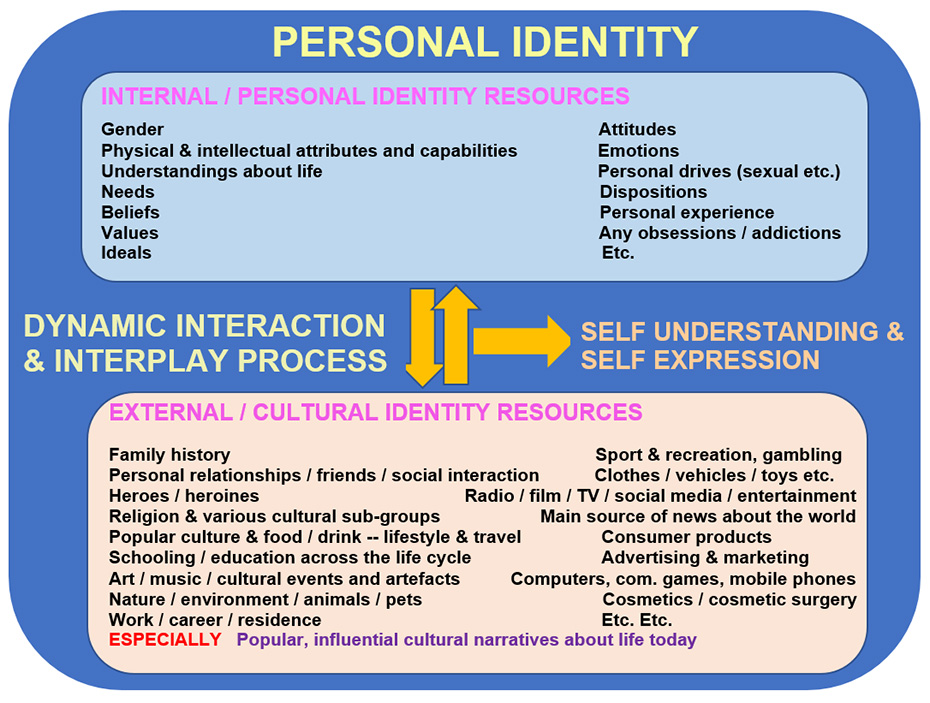
Your framework must be flexible. Here’s how you can adapt your strategies for different scenarios, using guidance from "The Introvert Confidence Myth."
This final reading will show you how to apply these authentic confidence strategies to the specific situations you encounter regularly.
Read the section 'Introvert Confidence in Different Contexts.' Pay attention to the practical advice for meetings, leadership roles, and networking.
Let's break it down for your specific contexts:
-
In Public Speaking Club Meetings:
- Rewrite Story: From "I must be a charismatic speaker" to "I am a thoughtful and prepared communicator."
- Define Purpose: "To practice delivering one point clearly" or "To give one person specific, helpful feedback."
- Choose Strategy: Arrive early to get comfortable. Prepare your thoughts beforehand. Focus on listening intently to other speakers to inform your own contributions.
-
In Networking or Social Events:
- Rewrite Story: From "I must be a master of small talk" to "I am a builder of meaningful connections."
- Define Purpose: "To learn something interesting about two new people."
- Choose Strategy: Focus on quality conversations with a few people. Prepare a few open-ended questions about topics you genuinely find interesting (e.g., "What's the most exciting project you're working on?").
-
In Academic Discussions (your Economics classes):
- Rewrite Story: From "I have to answer instantly to seem smart" to "My ability to synthesize complex information before speaking is a strength."
- Define Purpose: "To understand the professor's argument fully" or "To connect today's topic to a concept from another class."
- Choose Strategy: Use listening as your primary tool. If you need time to think, use a phrase like, "That's an interesting point, let me think about that for a second." Follow up with professors or classmates via email where your written articulation can shine.
Conclusion
In this lesson, you have constructed a personal framework for authentic self-expression. You've moved beyond simply identifying the energy cost of social masks to building a practical, sustainable alternative rooted in your natural strengths.
Key Takeaways:
- Authentic self-expression is guided by the principle of aligning your actions with what energizes you.
- A personal framework for authenticity can be built on three pillars: Rewriting Your Story (internal), Defining Your Purpose (situational), and Choosing Your Strategy (behavioral).
- Authenticity is not static; it is expressed strategically by adapting your core self to different social contexts.
This framework is your personal model for optimizing social interactions—not for performance, but for genuine connection and energy management.
Preview of the Next Lesson:
A key part of authenticity is being comfortable with not having all the answers. In our next lesson, we will cover how to "Admit a lack of knowledge on a topic confidently and frame it as a learning opportunity." You'll learn how this single skill can disarm pressure, build trust, and turn potential moments of embarrassment into opportunities for connection.