Hello! Welcome back to our Hindi lessons.
In our last session, we focused on asking open-ended questions with kya (what), kahan (where), and kaise (how). You learned the crucial rule of placing the question word where the answer would be in a sentence. This was a major step toward initiating more detailed conversations.
Today, we'll learn the other side of that coin: how to say "no" or "not." The learning outcome for this lesson is to construct negative sentences using nahi (नहीं). This is an essential skill for expressing opinions, stating facts, and responding to questions—all vital for your goal of discussing pop culture with a live audience. You'll be able to say things like, "I am not busy" or, more importantly, "I do not like this movie."
1. The Core Rule of Negation: Placing nahi
In English, we typically place "not" after a helping verb (e.g., "I am not going," "It is not good"). Hindi has an equally straightforward, though different, rule.
The word for "not" is nahi (नहीं).
The Rule: In most cases, nahi is placed directly before the verb (or the verb block, which includes the main verb and any helping verbs like hai, hoon, etc.).
Let's look at this in detail.
Negation in Hindi: How to Make Negative Sentences
The article 'Negation in Hindi: How to Make Negative Sentences' from HindiPod101 provides an excellent explanation of this core rule. It clearly shows how to transform a positive sentence into a negative one.
Please read section 2, 'Negating a Statement with नहीं (Nahiin)'. Pay close attention to the table comparing positive and negative sentences. Notice where Nahiin is placed in each example.
As the article explains, the structure is quite consistent. Let's break it down using sentences you already know.
With the verb hona (to be):
- Positive:
Yeh mera kamra hai.(This is my room.) - Negative:
Yeh mera kamra **nahi** hai.(This is not my room.)
With an action verb:
- Positive:
Bacche khel rahe hain.(The kids are playing.) - Negative:
Bacche **nahi** khel rahe hain.(The kids are not playing.)
The Subject-Object-Verb order remains intact. You just insert nahi before the verb phrase.
2. Seeing nahi in Action
Now, let's watch a video to hear some of these negative sentences spoken naturally. This will help you get a feel for the rhythm and pronunciation.
100 Hindi Sentences to get you through a day - Learn Hindi through English
The video '100 Hindi Sentences to get you through a day' by Watch and Learn Hindi contains several great examples of negative sentences. We'll watch a few key clips.
Please watch the following short segments: 12:53 - 13:08: I am not busy (Main vyast nahi hoon) 14:48 - 15:02: This is not important (Yeh mahatvapurna nahi hai) 16:45 - 17:00: I don't know (Mujhe nahi pata) 18:31 - 18:45: I don't like them (Mujhe veh pasand nahi hai) For each one, notice how nahi comes right before the verb or the end of the phrase.
The last example, Mujhe veh pasand nahi hai, is particularly important for your goal of discussing movies and songs. It's the structure you'll use to express dislikes, which we'll cover in more detail in a future lesson.
3. nahi in Pop Culture
Since your goal is to discuss movies, let's look at how nahi appears in some iconic Bollywood dialogues. This will make the grammar more memorable and directly applicable to your interests.

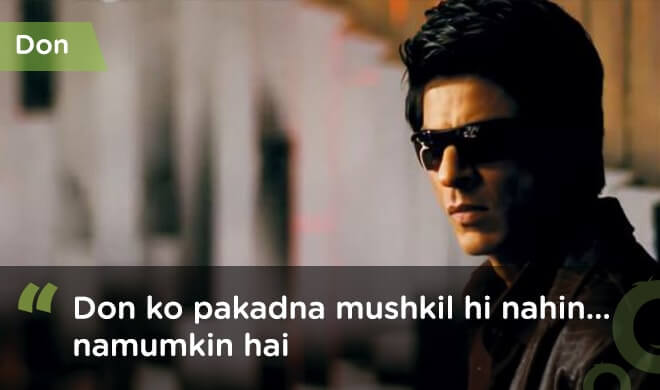
Seeing these examples in context helps bridge the gap between passive understanding (which you already have) and active use.
4. Responding to Questions with "No"
In the last two lessons, you learned how to ask questions. Now, let's learn how to answer them negatively. You can give a short answer or a full sentence.
- Short Answer: The simplest way to say "no" is just
Nahi. To be more polite, especially when addressing an audience or someone you don't know, useJi nahi. - Full Sentence Answer: To give a complete answer, you simply negate the statement that the question is based on.
Negation in Hindi: How to Make Negative Sentences
Let's go back to the HindiPod101 article, which has a section dedicated to this.
Read section 3, 'Giving a Negative Response to a Question'. Notice the structure of the full-sentence answers.
For example, if someone asks you:
- Question:
Kya aapko yeh film pasand hai?(Do you like this movie?) - Your negative answer:
Ji nahi, mujhe yeh film pasand **nahi** hai.(No, I don't like this movie.)
5. Other Ways to be Negative
Just like English has "not," "no," "never," and "not at all," Hindi also has different words for negation that add flavor and emphasis. Nahi is your all-purpose tool, but here are two more that are extremely useful for expressing opinions.
Bilkul nahi(बिल्कुल नहीं): "Not at all" or "Absolutely not." This is perfect for showing strong disagreement.Kya aapko yeh gaana pasand hai?(Do you like this song?)Bilkul nahi!(Not at all!)
Kabhi nahi(कभी नहीं): "Never."Main yeh film kabhi nahi dekhoonga.(I will never watch this movie.)
You can find these and other examples in the same HindiPod101 article under section 4, "Other Negating Words and Phrases."
Test your understanding!
You're doing a live stream and discussing the movie Don. How would you turn these positive statements into negative ones to express your opinion?
Yeh film achhi hai.(This movie is good.)Mujhe yeh kahani pasand hai.(I like this story.)Action scenes aasan hain.(The action scenes are simple/easy.)
Show answer
Yeh film achhi **nahi** hai.(This movie is not good.)Mujhe yeh kahani pasand **nahi** hai.(I don't like this story.)Action scenes aasan **nahi** hain.(The action scenes are not simple/easy.)
Conclusion
Great job! You've now mastered a fundamental building block of Hindi conversation. Being able to form negative sentences is just as important as being able to ask questions.
Key Takeaways:
- The primary word for negation is
nahi. Nahiis placed directly before the verb or verb phrase (e.g.,khel raha hai).- To give a polite negative answer to a question, you can say
Ji nahiand then follow up with a full negative sentence. - You can use phrases like
bilkul nahi(not at all) andkabhi nahi(never) to add emphasis to your negative statements.
Preview of the Next Lesson:
We have now covered asking both yes/no and open-ended questions, as well as how to provide negative answers. To complete this module on basic conversation, our next lesson will focus on how to respond to common greetings and inquiries about well-being. This will help you manage the social niceties of starting and ending conversations, whether with a friend or your online audience.