Hello! Welcome to the first lesson in your journey to speaking conversational Hindi.
Given your goal of discussing Indian pop culture and interacting with a live audience, mastering sentence construction is our first and most important step. Your background in English studies will be a great asset, as you're already familiar with the building blocks of language like subjects, verbs, and objects.
Today, we'll tackle the most fundamental difference between English and Hindi: the sentence structure. This lesson will help you identify the Subject-Object-Verb (SOV) sentence structure in Hindi. Understanding this single concept is the key to unlocking your ability to move from passively understanding Hindi to actively forming your own sentences.
1. The Core Difference: SVO vs. SOV
In English, we structure our sentences as Subject-Verb-Object (SVO).
- I (Subject) watch (Verb) a movie (Object).
Hindi, however, follows a Subject-Object-Verb (SOV) pattern. The main action word, the verb, moves to the end of the sentence.
- Main (I - Subject) film (movie - Object) dekhta hoon (watch - Verb).
Let's look at a simple visual that breaks this down.
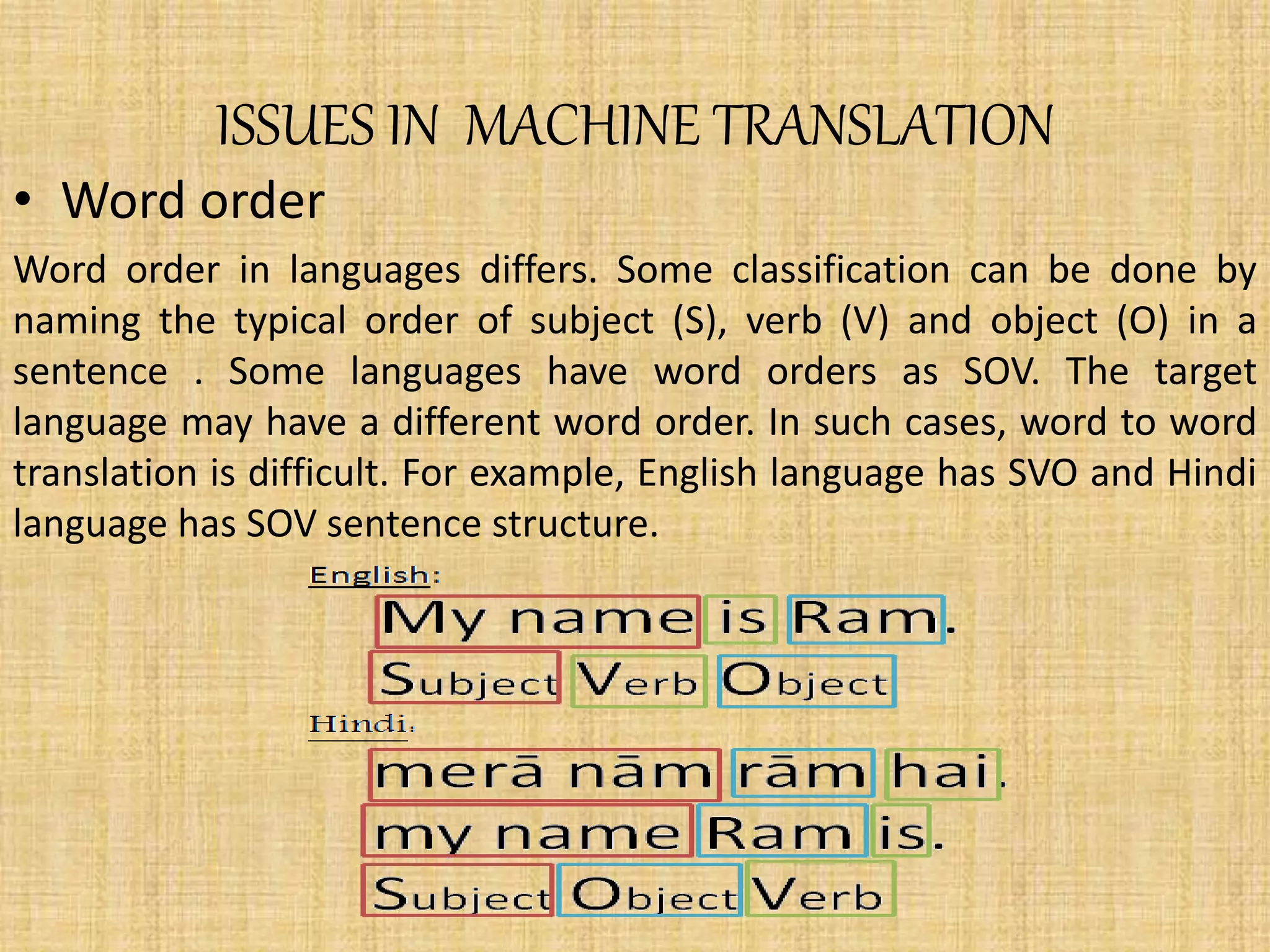
This shift of the verb to the end is the single most important rule to remember as we begin. To hear this explained, please watch the first minute of the following video.
Spoken Hindi basics for Beginners | Learn spoken Hindi through English
The video 'Spoken Hindi basics for Beginners' by Hindi Sumvaad offers a concise explanation of the SVO vs. SOV difference.
Watch from 00:21 to 01:06. Pay close attention to the example 'My name is Firdaus' and how it is restructured in Hindi.
As you can see, the structure is predictable. Once you get used to placing the verb at the end, constructing basic sentences becomes much more intuitive.
2. A Method for Building Sentences
Since you have a strong grasp of grammar, let's use a systematic way to think about this new structure. The key is to identify the parts of your English sentence first and then re-arrange them.
A helpful resource for this is the guide "Learn Hindi - Sentence Structure Made Easy." It lays out a simple, effective method.
Learn Hindi - Sentence Structure Made Easy
This guide provides a clear method for deconstructing English sentences to rebuild them in the Hindi SOV order.
Read 'Lesson One: The Basic Sentence' (page 13 of the PDF). Focus on the three questions used to identify the Verb, Subject, and Object. Notice the example: 'Nick sends letters' becomes 'Nick letters sends.'
The method is straightforward:
- Find the Verb: Ask "What is being done?"
- Find the Subject: Ask "Who is doing it?"
- Find the Object: Ask "...what?"
Let's try this with a sentence relevant to your goal: "I watch a movie."
- Verb: "watch"
- Subject: "I"
- Object: "a movie"
Now, rearrange these into the SOV order: "I a movie watch." This simple mental trick is the foundation for speaking Hindi.
Test your understanding!
Using the S-O-V method, how would you rearrange the English words for the sentence "You read the book"?
Show answer
Subject: You
Object: the book
Verb: read
SOV rearrangement: "You the book read."
3. Putting It into Practice: Your First Hindi Sentences
Now let's move from rearranging English words to forming actual Hindi sentences. We'll start with the most basic structure, which involves the verb "to be."
The following video is a great practical guide to building your first sentences.
Learn How to Make Hindi Sentences Easily #1
The video 'Learn How to Make Hindi Sentences Easily #1' from the Watch and Learn Hindi channel shows how to use 'main hoon' (I am) to create simple, useful sentences.
Please watch the sections from 01:50-02:45 and 03:44-05:43. Notice how the verb 'hoon' (am) always comes at the end of the sentence, confirming the SOV structure.
As the video explains, the structure is:Main (I) + [rest of the sentence] + hoon (am).
This directly follows the SOV pattern where the subject (Main) is first and the verb (hoon) is last.
For example, using your own profession:
- English (SVO): I am a teacher.
- Hindi (SOV):
Mainteacherhoon.
Notice that Hindi often omits articles like 'a' or 'the', which simplifies things.
Let's try another one related to your interests. Suppose you're discussing a movie character.
- English: I am a fan.
- Hindi:
Mainfanhoon.
It's that direct.
4. Solidifying the Concept
To reinforce this, let's practice rearranging a few more sentences. We'll use the worksheet from the "Sentence Structure Made Easy" guide you looked at earlier. For now, just focus on rearranging the English words into the SOV order.
Learn Hindi - Sentence Structure Made Easy
This worksheet provides excellent practice for applying the SOV rule. We will use the first three sentences as an exercise.
Find the 'Lesson One Worksheet' on page 18 of the PDF. Look at the first three sentences. For each one, identify the Subject, Object, and Verb, and then write down the English words in the SOV order.
Try rearranging these sentences on your own first:
- I learn Hindi.
- We ask a question.
- I speak English.
Check your work
Here are the correct SOV rearrangements and the corresponding Hindi sentences.
-
I learn Hindi.
- SOV order:
I Hindi learn. - Hindi sentence:
Main Hindi seekhta hoon.(if you're male) orMain Hindi seekhti hoon.(if you're female). We will cover verb changes for gender in a later lesson.
- SOV order:
-
We ask a question.
- SOV order:
We a question ask. - Hindi sentence:
Hum sawaal poochte hain.(sawaal= question)
- SOV order:
-
I speak English.
- SOV order:
I English speak. - Hindi sentence:
Main Angrezi bolta hoon.(male) orMain Angrezi bolti hoon.(female). (Angrezi= English)
- SOV order:
Spending time on this initial re-wiring of your brain from SVO to SOV will pay off immensely as we add more complexity to our sentences.
Conclusion
Excellent work today. This first step is the most crucial one, and you've navigated it well.
Key Takeaways:
- The fundamental structure of a Hindi sentence is Subject-Object-Verb (SOV).
- This is different from English, which uses a Subject-Verb-Object (SVO) structure.
- In practice, this means the main verb (the action word) almost always comes at the end of a Hindi sentence.
- You can already build simple sentences like
Main teacher hoon.(I am a teacher).
Preview of the Next Lesson:
In our next lesson, we will expand on the verb 'to be' (hona). You'll learn how to use it not just to state your profession, but also your name and location. This will give you the tools to craft a simple self-introduction—a vital skill for your streaming goals.