Hello! Welcome back to our Hindi course.
In our last lesson, we learned how to state your opinion with phrases like mujhe lagtā hai (I think). This is a fantastic tool for sharing your basic perspective on a movie or song. Today, we'll take that skill to the next level. After all, a good review doesn't just say "I think this movie is good"; it often explains why by comparing it to something else.
This lesson directly addresses that need. Our goal is to use comparatives to compare two movies, songs, or characters. By the end of this hour, you'll be able to construct sentences like, "I think this movie is more interesting than that one," a crucial skill for the nuanced discussions you want to have on your live streams.
1. The Core of Comparison: Using se for "than"
In English, we often change the adjective to make a comparison (e.g., big -> bigger). In Hindi, the logic is different and, in many ways, simpler. You don't change the adjective; instead, you add a special word, or postposition, to show the comparison.
The most important word for making comparisons in Hindi is se (से), which functions like the English word "than."
The basic formula is:
Item A + Item B + se + Adjective + Verb (e.g., hai)
This translates to "Item A is [Adjective] than Item B." Notice that se comes directly after the item you are comparing against (Item B).
To get a solid grasp of this structure, let's dive into an excellent article that breaks it down.
This Vs. That In Hindi: Master Comparisons Easily
The article 'This Vs. That In Hindi: Master Comparisons Easily' provides a fantastic, conversational guide to this topic. We'll start with the section that introduces the foundational role of 'se'.
Please read the section titled 'Understanding the Basics: The “Than” Factor in Hindi'. Pay close attention to the sentence structure and the examples provided.
As the article explains, the structure is quite logical. Let's look at an example:
Dilli Mumbai se baṛī hai.(दिल्ली मुंबई से बड़ी है।)- Translation: Delhi is bigger than Mumbai.
- Breakdown:
Dilli(Item A)Mumbai(Item B)se(than)baṛī(big)hai(is).
Notice an important detail here: the adjective baṛī (big) agrees with Dilli, which is a feminine noun. This rule of adjective agreement, which you've seen before, still applies.
Acchā vs. Behtar
The article also points out a useful distinction for "better."
Acchā(अच्छा) means "good." You can use it in a comparison:Yeh film us film se acchī hai(This movie is better than that movie).Behtar(बेहतर) specifically means "better." It's often clearer and more direct.Yeh film us film se behtar hai.
Both are correct and widely used, so you can choose whichever feels more natural to you.
2. Making Nuanced Comparisons: "More" and "Less"
Sometimes you want to be more specific than just "bigger" or "better." You might want to say something is "more interesting" or "less expensive." For this, we use the words:
Zyādā(ज़्यादा) - moreKam(कम) - less
The structure is a simple extension of what we just learned:
Item A + Item B + se + zyādā/kam + Adjective + Verb
Let's continue with the same article to see how this works in practice.
This Vs. That In Hindi: Master Comparisons Easily
Now, let's explore how to incorporate 'zyādā' (more) and 'kam' (less) and learn some new adjectives to expand your descriptive ability.
Please read the sections 'Crafting Comparative Sentences in Hindi' and 'Moving Beyond “Better”: Other Comparative Adjectives'. Focus on how 'zyādā' and 'kam' are added to the sentence structure and notice the new vocabulary.
This is incredibly powerful for your goal of reviewing pop culture. Let's build some relevant examples:
- To compare songs:
Yeh gāānā us gāāne se zyādā emotional hai.(यह गाना उस गाने से ज़्यादा इमोशनल है।) - This song is more emotional than that song. - To compare movies:
Shah Rukh Khan kī nayī film uski purānī film se kam interesting hai.(शाहरुख़ ख़ान की नई फ़िल्म उसकी पुरानी फ़िल्म से कम इंटरेस्टिंग है।) - Shah Rukh Khan's new movie is less interesting than his old movie. - To compare characters:
Yeh character us character se zyādā funny hai.(यह कैरेक्टर उस कैरेक्टर से ज़्यादा फनी है।) - This character is funnier than that character.
Test your understanding!
You are comparing two movies. Movie A is long (lambā - masculine) and Movie B is short (chhoṭā - masculine). How would you say, "Movie A is longer than Movie B"?
Show answer
Film A film B se lambī hai.
Wait, a trick question! The word film (फ़िल्म) is feminine in Hindi, even though we might think of it as neutral in English. Therefore, the adjective must be feminine: lambī. The correct sentence is: Film A film B se lambī hai.
3. Let's Practice: Comparing Pop Culture Icons
Now it's time to put this into active use. Let's use your interest in movies and pop culture to practice.
Practice Scenario 1: Comparing Actors
Look at this image. You're chatting with a friend on your stream about Bollywood actresses.

Your friend asks for your opinion. How would you form these sentences? Try saying them out loud.
- "I think Kareena is a better actress than Anushka." (Use
mujhe lagtā haifrom the last lesson andbehtarfor "better".)Show answer
`Mujhe lagtā hai ki Kareena Anushka se behtar actress hai.`
- "Anushka is younger than Kareena." (The word for "young" is
chhoṭā/chhoṭī.)Show answer
`Anushka Kareena se chhoṭī hai.` (We use `chhoṭī` because Anushka is female).
Practice Scenario 2: Who is More Powerful?
Now, look at this image. It's a classic pop-culture debate.
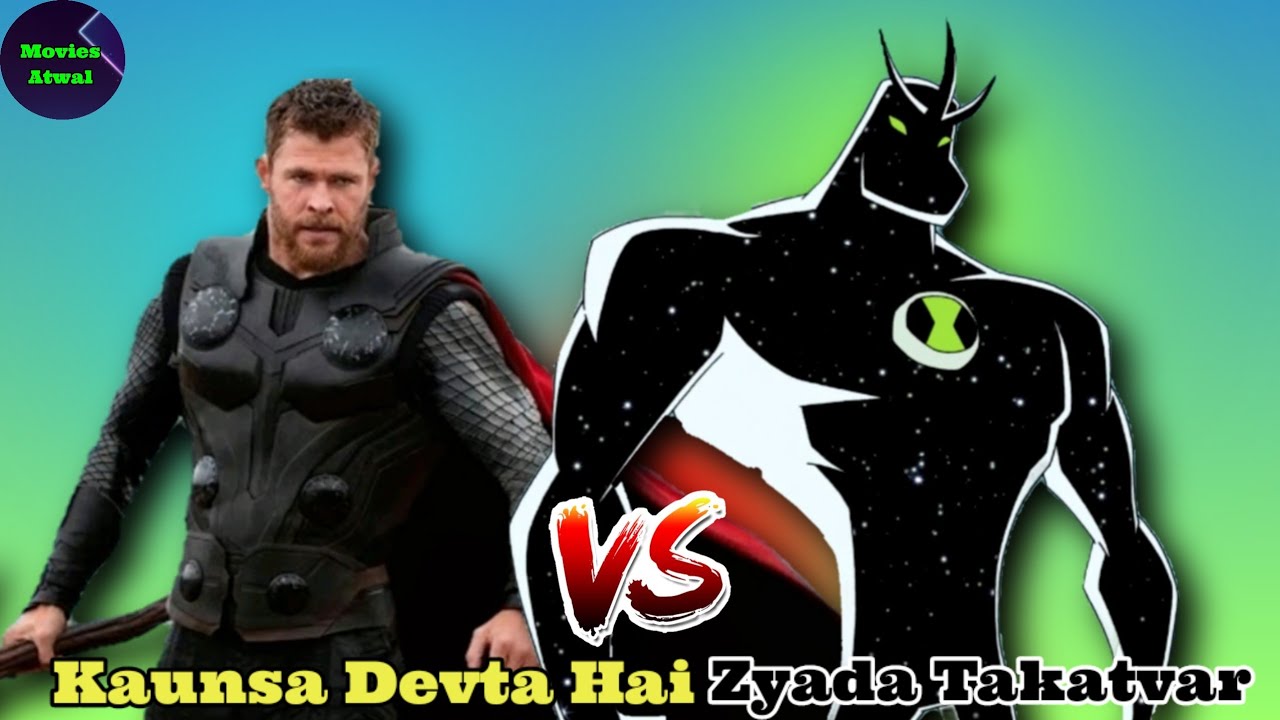
The question is already set up for you: tākatvar means "powerful." How would you answer this question by stating your opinion?
- "In my opinion, Thor is more powerful than Alien X." (Use
mere khayāl sefor "in my opinion".)Show answer
`Mere khayāl se, Thor Alien X se zyādā tākatvar hai.`
- "I don't think Alien X is stronger than Thor." (
strongcan also betākatvar. Usemujhe nahīñ lagtā.)Show answer
`Mujhe nahīñ lagtā ki Alien X Thor se zyādā tākatvar hai.`
This kind of practice, combining opinions with comparisons, is exactly what you'll be doing when you discuss movies and shows with your audience.
Conclusion
Excellent work today! You've added a vital tool to your conversational toolkit. By mastering comparatives, you can now provide reasons for your opinions and engage in much deeper, more interesting discussions.
Key Takeaways:
- The basic structure for comparison is
Item A + Item B + se + Adjective. - The postposition
semeans "than" and always comes after the thing being compared against. - To say "more" or "less," add
zyādāorkambefore the adjective:...se zyādā interesting hai. - Remember that adjectives must still agree with the gender of the noun they describe (e.g.,
film lambī hai).
Preview of the Next Lesson:
You can now compare two things (A is better than B). The natural next step is to declare something the absolute best. In our next lesson, we will learn how to use superlatives to say things like, "This is the best movie of the year!" or "This is the most beautiful song." This will complete your ability to rank and review things, from good, to better, to the best.