Hello! Welcome to the fourth module of your course. In our previous lessons, we built a solid foundation, culminating in an understanding of how combining a ketogenic diet with intermittent fasting creates a powerful synergy to enhance and sustain a ketogenic state. The core mechanism, as we saw, is the profound and stable suppression of insulin.
Now that we have a reliable strategy for getting into and staying in ketosis, we can turn to your primary interest: cognitive enhancement. This lesson directly addresses the learning outcome: Explain how ketones provide a more stable energy source for the brain compared to glucose.
We will build a framework to understand this claim, moving from the mechanics of fuel delivery to the measurable impact on brain function. We'll examine:
- The different ways glucose and ketones are transported into the brain.
- The evidence suggesting the brain not only uses ketones but prefers them.
- The fundamental bioenergetic advantage that ketones hold over glucose.
- The resulting impact on the stability of your brain's communication networks.
Your skeptical nature will appreciate that we will ground these ideas in research from leading experts in the field.
1. The Brain's Fuel Delivery: A "Push" vs. "Pull" System
The human brain is an incredibly energy-intensive organ, consuming about 20% of the body's oxygen at rest despite being only 2% of its weight. To function optimally, it needs a constant, reliable supply of fuel. Glucose and ketones are the two main fuels, but they arrive at the brain via two fundamentally different logistical strategies.
Dr. Stephen Cunnane, a prominent researcher in brain metabolism, describes this as a "push" versus a "pull" system.
To understand this crucial distinction, please watch the following segment from one of his lectures.
Dr. Stephen Cunnane - Brain Glucose and Ketone Metabolism
In this clip from 'Brain Glucose and Ketone Metabolism', Dr. Stephen Cunnane explains the 'push' vs. 'pull' mechanism for brain fuel uptake.
Watch from 04:52 to 07:03. Focus on the distinction he draws: glucose is 'pulled' into the brain based on activity-driven demand, while ketones are 'pushed' in based on their concentration in the blood.
Let's break this down:
- Glucose (Pull): The uptake of glucose is demand-driven. When a neuron is active and its internal glucose level drops, it signals for more. This "pull" mechanism is efficient for moment-to-moment needs but can be less stable if the brain's overall demand outstrips the supply or transport capacity.
- Ketones (Push): The uptake of ketones is supply-driven. The amount of ketones entering the brain is directly proportional to their concentration in your bloodstream. As long as you are in ketosis, the brain has a steady, non-fluctuating supply of fuel being "pushed" in, regardless of immediate neuronal activity.
This "push" mechanism is the first pillar of stability. It ensures a consistent energy reserve for the brain, insulating it from the peaks and troughs of demand-driven glucose uptake.
The different transport molecules at the blood-brain barrier facilitate this process. Glucose uses GLUT transporters, while ketones use MCT (monocarboxylate) transporters.

2. A Preferred Fuel, Not Just an Alternative
A logical follow-up question is: if ketones are just being passively "pushed" in, does the brain actually use them effectively? The evidence suggests it does more than that—it actively prefers them when they are available.
Let's return to Dr. Cunnane's presentation. He demonstrates that as the brain's uptake of ketones increases, its uptake of glucose simultaneously decreases.
Dr. Stephen Cunnane - Brain Glucose and Ketone Metabolism
This next segment from Dr. Cunnane shows the inverse relationship between brain ketone and glucose uptake, supporting the idea that ketones are a 'preferred' fuel.
Watch from 07:03 to 08:32. Pay close attention to the graph showing that as brain ketone uptake goes up, glucose uptake goes down. This is called a 'glucose-sparing' effect.
This inverse relationship is key. The brain isn't just adding ketones on top of its baseline glucose consumption; it's actively substituting its primary fuel source. This substitution implies preference. The brain, when given a choice, opts for ketones, thereby "sparing" glucose. This phenomenon is especially pronounced in brains where glucose metabolism is impaired, such as in aging or Alzheimer's, but the principle holds even in healthy brains.
Test your understanding!
Imagine two scenarios for fueling a city's power grid:
- Scenario A (Pull): Each neighborhood power station constantly requests electricity from the central plant based on real-time usage.
- Scenario B (Push): The central plant continuously sends a large, steady supply of electricity into the grid, which all stations can draw from as needed.
Which scenario is more analogous to ketone metabolism in the brain, and why does this model contribute to energy stability?
Show answer
Scenario B is analogous to ketone metabolism. The central plant "pushing" a steady supply into the grid is like the liver producing ketones that are then pushed into the brain based on their concentration in the blood. This model provides greater stability because the energy supply is constant and not dependent on fluctuating, moment-to-moment demand signals from individual neighborhoods (neurons). There is always a ready reserve of power available.
3. The Efficiency Advantage: More Energy Per Unit
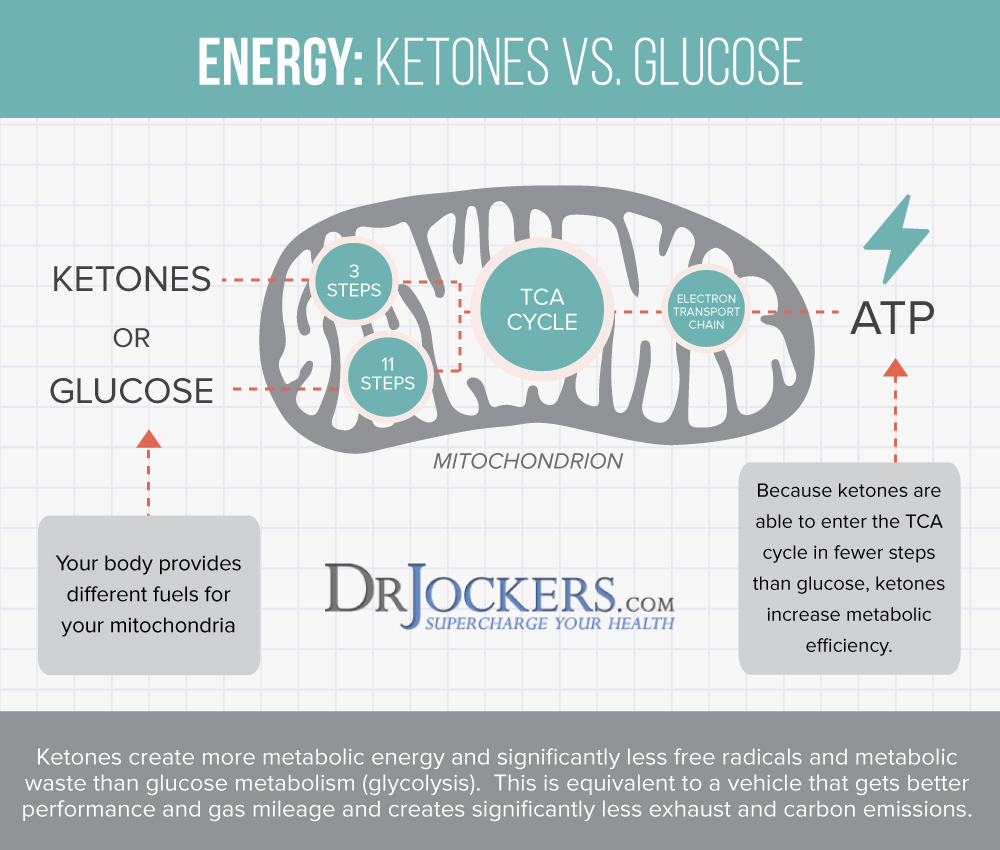
Why would the brain prefer ketones? The answer lies in fundamental bioenergetics. Ketones are a more efficient fuel source, yielding more energy per unit than glucose.
A rigorous 2020 study published in the high-impact journal PNAS quantified this advantage. For a logical, evidence-based perspective, this paper is an excellent resource.
Diet modulates brain network stability, a biomarker for ...
Let's examine a key passage from the paper 'Diet modulates brain network stability...'. This study provides a precise, quantitative reason for the brain's preference for ketones.
Read the second paragraph of the article, which begins 'Endogenous ketone bodies...'. Focus on the sentence that quantifies the energy difference: 'Of those advantages, one of the most fundamental is that, as cellular inputs, β-hydroxybutyrate molecules increase Gibbs free energy change for ATP by 27% compared to glucose'.
The key takeaway is the 27% increase in Gibbs free energy for ATP. In simple terms, Gibbs free energy is the maximum amount of usable energy that can be extracted from a "reaction" (in this case, metabolizing a fuel). This means that for each unit of fuel it processes, a brain cell gets significantly more energy from a ketone molecule than from a glucose molecule.
This increased efficiency means the brain can meet its high energy demands more easily and with less metabolic byproduct.
4. The Outcome: Brain Network Stability
So, we have a fuel that is delivered more consistently ("push") and provides more energy per unit (27% more Gibbs free energy). What is the tangible result of this for cognitive function?
The same PNAS study introduced a fascinating biomarker: brain network stability. This measures how consistently different regions of the brain communicate with each other. A stable network is efficient and robust. An unstable network is prone to "switching" between functional states, which is energetically costly and has been linked to aging and cognitive decline.
The researchers' findings were striking.
Diet modulates brain network stability, a biomarker for ...
Let's return to the PNAS paper to see the ultimate effect of this superior fuel source on brain function.
Please read the section titled 'Ketosis Stabilizes Brain Networks.' The crucial finding is stated in the first sentence: '...brain networks are stabilized in healthy younger adults through ketosis...'. Contrast this with the finding later in the paragraph that '...a standard diet and glucose bolus consistently destabilized brain networks.'
The study demonstrated that dietary ketosis (and even taking exogenous ketones) measurably stabilized brain networks. Conversely, a standard diet and a direct dose of glucose destabilized them.
This provides a potential neurological basis for the feelings of "mental sharpness" and stable mood that many people report in ketosis. The brain isn't just getting more energy; that energy is fostering a more stable, coherent, and efficient operational state. It's not lurching between metabolically "cheap" and "expensive" states; it can sustain its most active and powerful networks.
Conclusion
Today, we've constructed a clear, evidence-based framework for why ketones are considered a more stable energy source for the brain than glucose.
Key Takeaways:
- Consistent Supply: Ketones operate on a "push" system, entering the brain based on their availability in the blood, which provides a more stable supply than the demand-based "pull" system for glucose.
- A Preferred Fuel: When ketones are available, the brain actively uses them in preference to glucose, demonstrating a "glucose-sparing" effect.
- Greater Efficiency: Ketone metabolism yields approximately 27% more usable energy (ATP) for brain cells compared to glucose metabolism, making it a more potent fuel.
- Enhanced Stability: This stable and efficient fuel supply results in a measurable increase in the stability of the brain's functional networks—a key indicator of healthy brain function.
You now have a mechanistic understanding of how your metabolic state directly impacts the very foundation of your brain's energy economy. This moves beyond simple calorie counting into the realm of true metabolic optimization.
In our next lesson, we will build upon this foundation. We will explore how ketones act not just as a superior fuel, but also as powerful signaling molecules that can trigger neuroprotective and regenerative effects, such as reducing inflammation and increasing Brain-Derived Neurotrophic Factor (BDNF). This will shift our focus from fueling the brain to actively protecting and enhancing it for long-term health.