Hello! Welcome to the third lesson in our module on the triangle bikini top.
In our previous lessons, we defined the triangle top's purpose as providing minimal, adjustable coverage and explored the specific material science required for swimwear, focusing on durability against UV rays and chlorine.
Today, we build on that foundation to explore the creative and functional diversity within this seemingly simple design. Our goal is to analyze style variations of the triangle top (e.g., classic string, fixed-band, halter). We will deconstruct the triangle top into its core variations, looking at both fundamental changes in its construction and the clever styling techniques that transform its appearance.
The Baseline: The Classic String Triangle Top
Before we can analyze variations, we must first establish our baseline: the classic string triangle top. This is the most iconic and versatile version of the design.
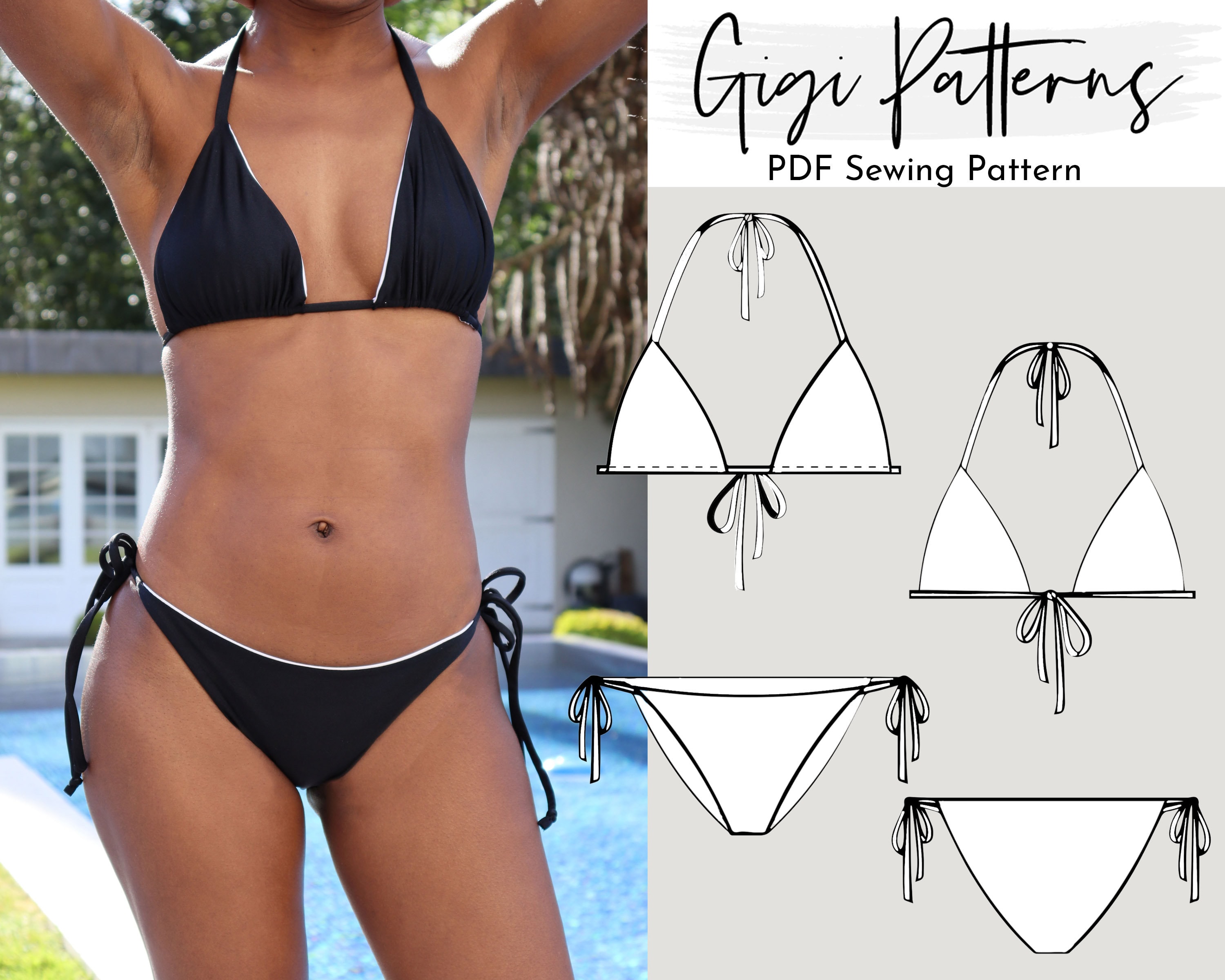
The core features of this design are:
- Two triangular fabric cups.
- A long string that threads through the base of both cups, which then ties around the back.
- Two strings originating from the apex of each cup, which tie together behind the neck in a halter style.
The key functional characteristic here is that the cups can typically slide along the bottom string, allowing the wearer to adjust the spacing and coverage. This adaptability is central to the design's purpose.
1. Structural Variations: Construction as a Design Choice
The first major way triangle tops vary is in their fundamental construction. As a designer, your choices here create a trade-off between adjustability and stability. The two primary structural types are the sliding triangle (our classic baseline) and the fixed-band triangle.
To understand this distinction, let's look at an article that outlines these styles.
Bikini Top Styles: Bandeau vs. Triangle | ViX
The article 'Bikini Top Styles: Bandeau vs. Triangle' from ViX provides a concise explanation of the difference between sliding and fixed triangle tops. This is a fundamental concept in swimwear design.
Please read the paragraph under the 'Triangle Bikini Tops' heading that begins 'Depending on the style of the swimsuit...'. This short section clearly defines sliding vs. fixed triangles.
As the text explains, the difference comes down to whether the cups are attached to a band:
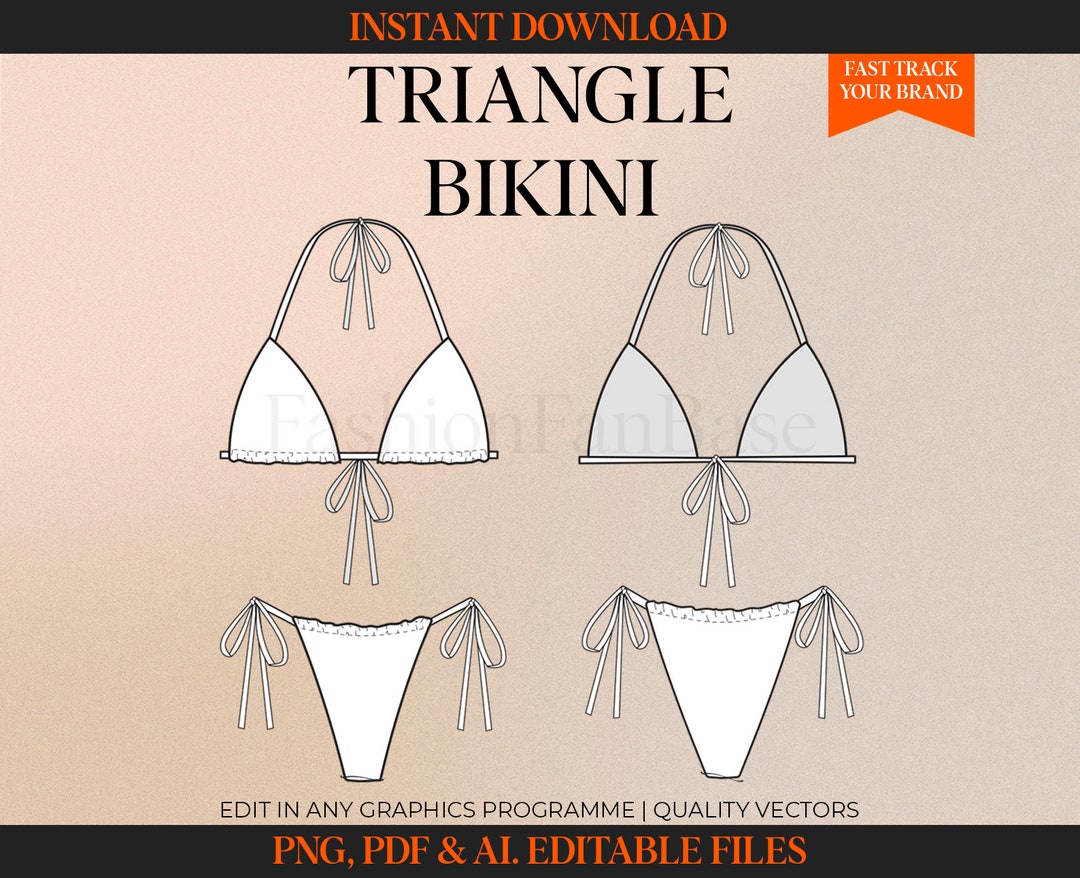
- Sliding Triangle Top: This is the classic string style we just discussed. Its main advantage is maximum adjustability. The wearer can slide the cups closer together to create more cleavage or further apart for more coverage.
- Fixed-Band Triangle Top: In this variation, the triangular cups are sewn directly onto a solid fabric band that encircles the torso. This band often fastens with a clasp, similar to a traditional bra. The primary advantage is enhanced support and stability. Because the cups are anchored, this style is more secure and reliable for swimming or beach activities.
The image below provides a clear visual comparison using technical sketches, which are a key tool in design.
A third common structural variation is the Halter Triangle Top. While most triangle bikinis are technically halters (tying behind the neck), this term often refers to a more substantial design. Halter variations might feature wider neck straps, a thicker under-bust band, or more fabric connecting the cups to the straps. These modifications distribute weight more effectively and offer greater support, particularly for those with larger busts.
2. Styling Variations: The Art of the Tie
The true genius of the classic string triangle top lies in its versatility. One simple garment can be transformed into numerous styles through different tying methods. This is where a designer's vision can be realized by the wearer. By providing long enough ties, you empower the user to create their own look.
Let's explore some of these creative techniques.
How to tie bikini tops: 7 creative techniques - SwimZip
The article 'How to tie bikini tops: 7 creative techniques' from SwimZip is an excellent guide to the styling versatility of the triangle top. We will examine a few key variations to understand how tying affects both aesthetics and function.
Please read the following sections to understand four distinct styles: Start with the 'Classic tie' to reinforce our baseline. Read the section on the 'Criss-cross tie'. Read about the 'Upside down tie'. Finally, review the 'Body wrap tie'.
Now, let's analyze these variations from a design perspective, considering their impact on usability and aesthetics.
Analysis of Tying Variations
-
Classic Tie:
- Aesthetic: Timeless, minimalist, focuses on the natural shape.
- Usability: Standard support and coverage, highly adjustable. This is the functional benchmark.
-
Criss-Cross Tie:
- Aesthetic: Creates a keyhole or 'X' shape at the front. It draws attention to the neckline and collarbones, adding a decorative element that can visually balance the torso.
- Usability: The criss-cross can offer a slight boost in support and lift by pulling the cups inwards and upwards.
-
Upside-Down Tie:
- Aesthetic: Trendy and daring. It creates significant cleavage and "underboob" exposure by reversing the top's orientation. The ruched bottom of the cup now sits on the inner side of the bust.
- Usability: This style sacrifices support and coverage for a specific look. As the article notes, it works best for smaller to medium busts and is not ideal for high-activity situations. This is a clear example of prioritizing a specific aesthetic over functional support.
-
Body Wrap Tie:
- Aesthetic: Creates a "strappy" or "cut-out" effect around the midriff. This style highlights the waist and can create the illusion of an hourglass silhouette.
- Usability: The extra wraps around the torso can provide a feeling of enhanced security, as the top is anchored in more places. As a designer, this requires making the underbust ties significantly longer than standard.
These styling variations demonstrate that the design of a triangle top isn't just about the physical object, but also about the potential for interaction you build into it.
Conclusion
Today we've seen how the simple triangle bikini top is a canvas for a wide range of styles. The variations stem from two main sources: fundamental differences in construction and creative methods of styling.
Key Takeaways:
- Triangle top variations can be categorized as structural (how it's made) or styling (how it's worn).
- The primary structural trade-off is between the sliding triangle (more adjustability) and the fixed-band triangle (more stability and support). Halter styles offer another route to enhanced support.
- The classic string bikini's long ties unlock numerous styling variations—like the criss-cross, upside-down, and body wrap—each creating a distinct aesthetic and altering the top's functional support and coverage.
- As a designer, your decisions about construction (fixed vs. sliding) and details (like tie length) directly enable or limit these potential variations for the wearer.
Next Up:
We have now defined the triangle top's purpose, examined its materials, and analyzed its style variations. In our final lesson for this module, we will bring it all together by focusing on the last learning outcome: proposing suitable pairings for these different triangle top styles with both Western and Indian attire for resort and beach contexts.