Welcome to the final module of our course. In our previous lesson, we framed a comprehensive strategy for the revival of the Muslim Ummah, identifying intellectual renewal as its foundational pillar. We concluded that the engine for this intellectual and spiritual revitalization is the disciplined practice of Ijtihad. This concept is not merely an abstract historical term; it is the primary mechanism that ensures Islamic law remains a dynamic, living system capable of addressing new challenges.
Today, we will dissect this vital concept. For your CSS and PMS exams, questions on Ijtihad are common and require a nuanced understanding that goes beyond a simple definition. This lesson is designed to equip you with that depth. We will define Ijtihad, establish its legitimacy through the Quran and Sunnah, and meticulously outline its various types, the stringent conditions for its practice, and its crucial Shariah-based limitations.
Defining Ijtihad: The Exertion of the Mind
At its core, Ijtihad is the formal process of juristic reasoning to derive or discern a Shariah ruling for a situation not explicitly addressed in the primary sources.
The word itself comes from the Arabic root j-h-d (جهد), which means to exert the utmost effort. This linguistic origin is key—Ijtihad is not casual opinion-making but a rigorous, systematic, and exhaustive intellectual struggle.
What is Ijtihad and What are Its Limitations
This article from a CSS preparation resource provides a clear and concise definition, which is an excellent starting point.
Please read the section "Understanding the term 'Ijtihad'". Pay close attention to the linguistic root and the formal jurisprudential definition provided, especially the quote from the renowned scholar al-'Amidi.
As you've read, in Islamic jurisprudence (Usul al-Fiqh), Ijtihad is the exertion of a qualified jurist's mental faculty to its utmost capacity to arrive at a probable ruling (zann) on a matter of law. This effort is undertaken when a clear and decisive ruling is not available in the Quran or the Sunnah.
The Shariah Basis for Ijtihad
The legitimacy of Ijtihad is firmly established within the primary sources themselves. The Quran and the Sunnah both allude to and directly authorize the use of reasoned judgment when direct textual guidance is absent.
Evidence from the Quran
The Quran encourages believers to refer complex matters to people of knowledge who can deduce the correct understanding. This act of deduction is the essence of Ijtihad.
"And when there comes to them a matter concerning (public) safety or fear, they spread it around. But if they had referred it back to the Messenger or to those of authority among them, then the ones who (can) draw correct conclusions from it would have known about it." (Quran 4:83)
The phrase "those who can draw correct conclusions from it" (alladhīna yastanbiṭūnahu minhum) is a direct reference to a group possessing the intellectual ability to derive rulings and insights—the Mujtahidun.
Evidence from the Sunnah
The most explicit endorsement comes from a famous Hadith concerning the companion Mu'adh ibn Jabal (RA), when the Prophet (PBUH) appointed him as a judge for Yemen.
The concept of Ijtihad in the history of Islamic Jurisprudence | Dr. Steven Masood
Dr. Steven Masood's article provides the context and text of this foundational Hadith. Your background in history will help you appreciate the significance of this event in the early formation of the Islamic legal tradition.
Please read the second paragraph of the article, which details the conversation between the Prophet (PBUH) and Mu'adh ibn Jabal (RA).
This Hadith is foundational for several reasons:
- It establishes a clear hierarchy of sources: First, the Quran; second, the Sunnah; and third, the jurist's reasoned judgment (Ijtihad).
- It provides Prophetic sanction: The Prophet's (PBUH) express pleasure and approval institutionalized Ijtihad as a legitimate third source of law.
- It demonstrates pragmatism: It shows that from the very beginning, Islamic law was equipped with a mechanism to handle novel situations not foreseen in the texts.
Conditions and Qualifications of a Mujtahid
The legitimacy of Ijtihad is directly tied to the qualifications of the person performing it, the Mujtahid. Islamic scholars laid down stringent conditions to protect the Shariah from being distorted by unqualified opinions or personal whims. This is not an exercise open to everyone.
The following flowchart gives a modern perspective on the kind of rigorous evaluation process that mirrors the spirit of classical Ijtihad. Before a new opinion is accepted, the source, basis, and qualifications of the person offering it are scrutinized.

The classical conditions for a Mujtahid are rigorous and comprehensive:
- Mastery of the Arabic Language: Deep knowledge of grammar, rhetoric, and semantics is necessary to understand the nuances of the Quran and Sunnah.
- Profound Knowledge of the Quran: This includes knowing the occasions of revelation (asbab al-nuzul), which verses are general and which are specific, and being an expert on the verses pertaining to legal rulings (ayat al-ahkam).
- Profound Knowledge of the Sunnah: This involves mastery over the major Hadith collections, expertise in Hadith criticism (ilm al-rijal and mustalah al-hadith) to assess authenticity, and knowledge of the context of the Hadiths (asbab al-wurud).
- Knowledge of Usul al-Fiqh (Principles of Jurisprudence): The Mujtahid must be an expert in the methodology of law, including principles of analogy (Qiyas), consensus (Ijma), and other juristic tools.
- Knowledge of Consensus (Ijma): He must know which issues have already been settled by the unanimous consensus of previous generations of scholars, as Ijtihad cannot overturn Ijma.
- Moral Integrity and Piety ('Adalah): The jurist must be a person of upright character, known for their piety and sincerity, ensuring their judgment is not swayed by personal desire or external pressure.
The concept of Ijtihad in the history of Islamic Jurisprudence | Dr. Steven Masood
For a detailed list of these qualifications, let's return to Dr. Masood's article.
Read the section titled "The Qualification of a Mujtahid," which outlines the scholarly consensus on the expertise required to perform Ijtihad.
Types of Ijtihad and Ranks of Mujtahids
Ijtihad is not a monolithic concept. Classical jurists developed a hierarchy to classify the different levels of Ijtihad, corresponding to the rank and capacity of the scholar performing it.
The concept of Ijtihad in the history of Islamic Jurisprudence | Dr. Steven Masood
This section of the article provides a clear, standard classification of Mujtahids into three main ranks. Understanding this hierarchy is crucial for appreciating the structured nature of Islamic legal development.
Please read the section "Ranks of Mujtahids and categories of Ijtihad." Focus on distinguishing between the three main types.
As you have read, the ranks can be summarized as:
-
Mujtahid Mutlaq (Absolute/Independent Jurist): This is the highest rank. These jurists, such as the founders of the four great Sunni schools of law (Imam Abu Hanifa, Imam Malik, Imam al-Shafi'i, and Imam Ahmad ibn Hanbal), established their own principles of jurisprudence (Usul) directly from the primary sources. This level of Ijtihad is known as Ijtihad fi'sh-Shar' (Ijtihad in the Law). Most scholars believe this rank has not been attained for many centuries.
-
Mujtahid Muntasib (Jurist within a School): This jurist works within the established methodological framework (Usul) of a particular school of law but is qualified to derive rulings for new cases that may differ from those of the school's founder. Prominent examples include Imam Abu Yusuf and Imam Muhammad al-Shaybani in the Hanafi school. Their work is called Ijtihad fil-Madhhab (Ijtihad in the School).
-
Mujtahid Muqallid (Jurist on Particular Issues / Affiliated Jurist): This jurist is primarily a follower (muqallid) of their school of law but is qualified to exercise Ijtihad on specific issues where no clear ruling exists from the earlier masters of the school. This is also referred to as Ijtihad al-Fatwa (Ijtihad in issuing a legal verdict).
This hierarchical structure ensured both stability (by adhering to established principles) and flexibility (by allowing for new rulings on novel issues).
Shariah-Based Limitations of Ijtihad
Perhaps the most critical part of understanding Ijtihad for your exam is knowing its limits. Ijtihad is a powerful tool, but its application is carefully circumscribed to preserve the foundations of the faith. An answer that highlights these limitations demonstrates a mature and balanced understanding.
The following diagram gives a high-level view of the sources and principles of Islamic law. Notice how Ijtihad is situated as a tool for legal reasoning, distinct from the primary sources of Quran and Sunnah.
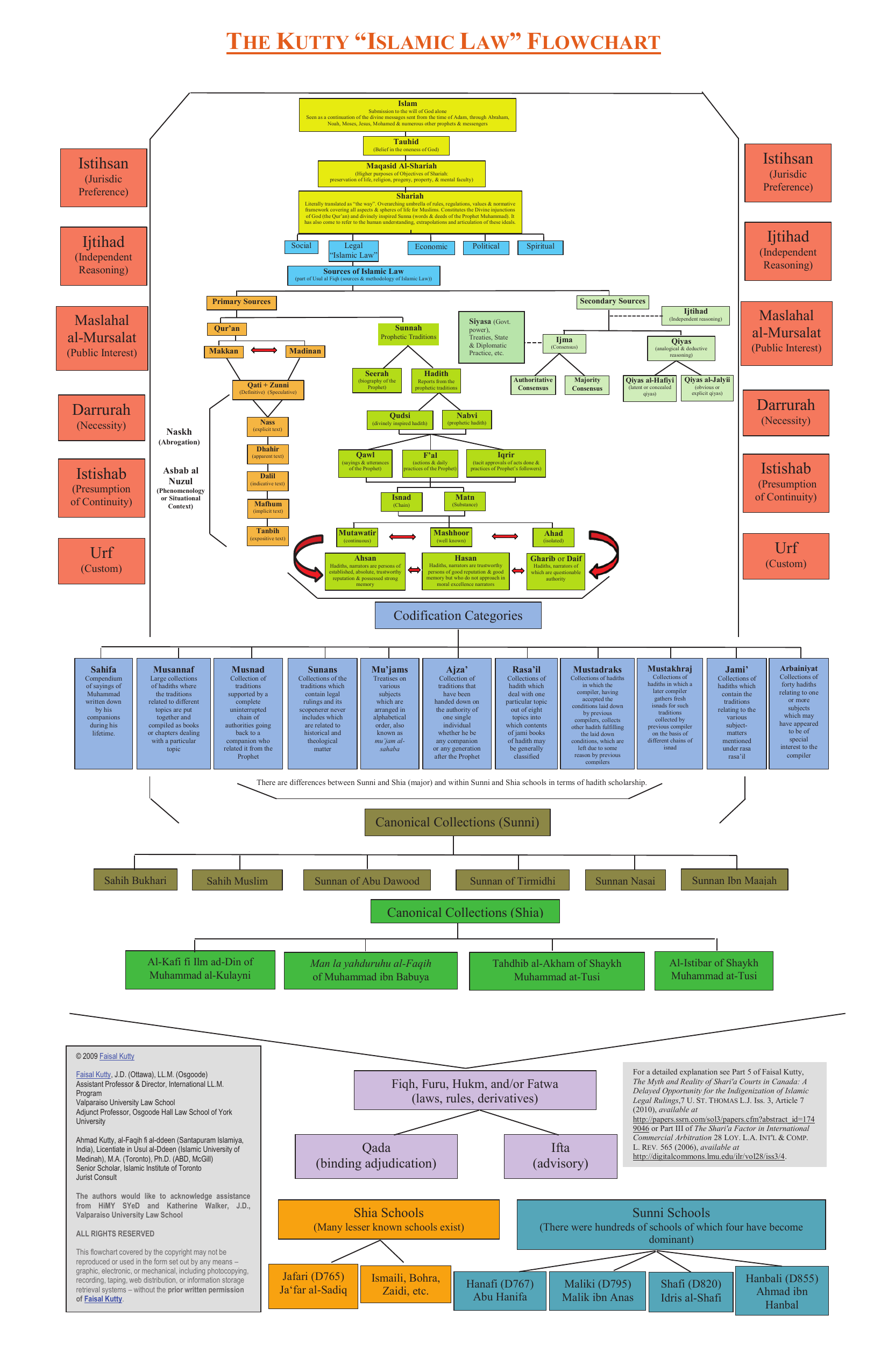
Let's explore these limitations in detail.
What is Ijtihad and What are Its Limitations
The same CSS-focused article provides an excellent, point-by-point breakdown of the limitations of Ijtihad, complete with supporting evidence.
Read the entire section titled "Limitations of Ijtihad." This is a very important section. For each limitation, make sure you understand the principle and the evidence provided.
To summarize the key boundaries you've just read about:
- No Ijtihad on Decisive Texts (Nass Qat'i): Ijtihad is only applicable where the Quran and Sunnah are silent or where the text is open to interpretation (zanni). It cannot be used to overrule a clear, unambiguous, and definitive text.
- No Ijtihad on Core Beliefs ('Aqidah): The fundamental articles of faith—the Oneness of God (Tawheed), the finality of Prophethood, the authenticity of the Quran, the reality of the Hereafter—are fixed and not subject to Ijtihad.
- No Ijtihad against Consensus (Ijma): A matter settled by the unanimous agreement of qualified scholars in a previous era is considered binding. Ijtihad cannot be used to contradict such a consensus.
- No Ijtihad on Prescribed Rituals: The specifics of established acts of worship, such as the number of rak'ahs in Salah or the rites of Hajj, are not open to reinterpretation.
- Ijtihad is Probabilistic, Not Absolute: The finding of a Mujtahid is considered a probable truth (zann), not an infallible one. This is why different Mujtahids can arrive at different conclusions, and why they are rewarded even if mistaken, as the famous Hadith states: "If a judge makes a ruling... and is mistaken, he will have one reward."
Conclusion
In this lesson, we have thoroughly deconstructed the concept of Ijtihad, positioning it as the indispensable intellectual tool for maintaining the dynamism of Islamic law.
Key Takeaways:
- Definition: Ijtihad is the rigorous exertion of a qualified jurist's mind to derive Shariah rulings on matters not explicitly covered by the Quran and Sunnah.
- Legitimacy: Its practice is firmly sanctioned by both the Quran (4:83) and the Sunnah (the Hadith of Mu'adh ibn Jabal).
- Conditions: The practice of Ijtihad is restricted to highly qualified scholars (Mujtahidun) who meet stringent criteria of knowledge and piety.
- Types: Ijtihad is hierarchical, ranging from the Absolute Ijtihad of the founders of law schools to more restricted forms practiced within a school's framework.
- Limitations: Ijtihad has clear boundaries. It cannot be applied to definitive texts, core articles of faith, or matters settled by scholarly consensus.
You now have a multi-dimensional understanding of Ijtihad that is essential for both your exams and for appreciating the intellectual depth of the Islamic legal tradition. We have defined what Ijtihad is. In our next and final lesson, we will explore its contemporary relevance, evaluating the necessity and scope of Ijtihad for addressing the pressing global challenges faced by the Muslim Ummah today.