Following our detailed examination of the Meethaq-e-Madinah as the constitutional blueprint for the new Islamic state, we now turn to the practical architecture of state-building. A constitution, however brilliant, remains a theoretical document until its principles are translated into tangible institutions and societal structures. This lesson explores precisely that translation from blueprint to reality.
Our focus addresses the learning outcome: Analyze the Prophet's (PBUH) strategies for state-building in Madinah (Muakhaat, market regulation, census) and evaluate their significance using modern social cohesion frameworks. We will dissect three masterstrokes of the Prophet's (PBUH) statecraft that cemented the foundations of the Madinan polity. Each strategy targeted a critical vulnerability—social division, economic dependency, and administrative ignorance—and transformed it into a source of strength, creating a cohesive and sovereign state.
1. Forging Social Cohesion: Al-Muakhaat (The Brotherhood)
The Hijrah brought two distinct groups together in Madinah: the Muhajirun (emigrants from Makkah), who had abandoned their homes and wealth, and the Ansar (helpers of Madinah), the established local community. This presented a classic challenge of social integration. The Muhajirun were displaced, economically destitute, and possessed different professional skills (trade) compared to the largely agrarian Ansar. Left unaddressed, this could have led to social stratification, dependency, and resentment.
The Prophet's (PBUH) first major socio-political initiative was Muakhaat. This was far more than a simple welcoming gesture. He systematically paired one Muhajir with one Ansar, creating a formal, binding pact of brotherhood. This pact was so profound that in the initial stages, these "brothers-in-faith" could inherit from one another, a provision later superseded by Quranic verses on inheritance based on blood kinship once the community was stable.
Prophetic Economy – How an Islamic Economy was Born
The article "Prophetic Economy" provides a concise overview of the initial steps in building the Madinan state. It highlights the Muakhaat as a foundational act of political and social genius.
Please read the section titled "Political Stability – a key ingredient". Focus on how the pact is described not just as a social gesture but as an act of "social and financial solidarity," effectively creating a system of support and even seed capital for the newcomers.
The significance of Muakhaat can be evaluated through the lens of modern social cohesion frameworks.
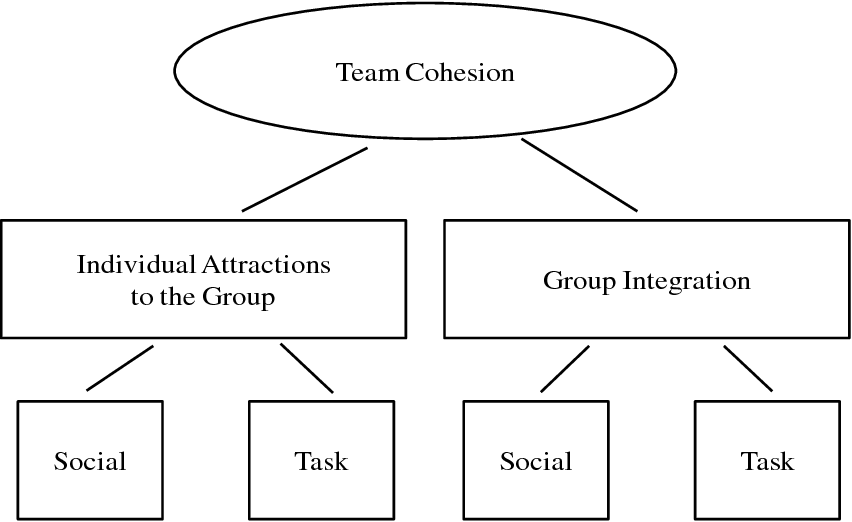
Using the "Team Cohesion" model as an analogy for societal cohesion, the genius of Muakhaat becomes clear:
-
Individual Attractions to the Group:
- Social: The pact immediately addressed the social and psychological trauma of displacement for the Muhajirun. They were not refugees in a camp but honored members of a new family, breaking their isolation and fostering a deep personal attachment to the new community.
- Task: Both Muhajirun and Ansar were united by the grand "task" of building and defending the new Islamic state. This shared purpose gave their new bond a clear, goal-oriented dimension.
-
Group Integration:
- Social: Muakhaat actively dissolved pre-existing tribal identities ('asabiyyah based on blood) and replaced them with a new, higher-order identity based on faith ('ukhuwwah imāniyah). It was the living, breathing manifestation of the Ummah Wahidah (single community) concept enshrined in the Meethaq-e-Madinah.
- Task: The pact facilitated practical economic integration. The Ansar shared their resources, and the Muhajirun brought their commercial expertise. This synergy, as we will see, became a powerful engine for economic growth.
The Quran immortalized the spirit of the Ansar in this initiative:
"And those who were settled in the home (Madinah) and [in] faith before them love those who emigrated to them and find not any want in their breasts of what they were given but give [them] preference over themselves, even though they are in privation." (Surah Al-Hashr, 59:9)
In essence, Muakhaat was an act of profound social engineering that manufactured social capital, creating the trust, reciprocity, and shared identity necessary for a resilient society.
2. Securing Economic Sovereignty: The Madinah Market
Upon arriving in Madinah, the Prophet (PBUH) observed that the city's economic life was dominated by a few tribes, with markets characterized by exploitative practices such as riba (usury), gharar (transactions involving excessive uncertainty), and monopolistic control. Economic dependence on such a system would mean political vulnerability for the nascent Muslim state.
The Prophet's (PBUH) response was not to reform the existing markets but to create an entirely new one—Souq al-Nabi (the Prophet's Market). This was a strategic move to establish economic sovereignty.
The Prophet's ﷺ Market - An Incredible Economic Revolution - Utrujj
This article from Utrujj provides an exceptionally detailed analysis of the Prophet's market, breaking down its impact into economic, legal, social, and political outcomes. It is an ideal resource for understanding this strategy's multi-faceted significance.
Please read the following sections: Begin with the introduction to understand the corrupt context of the old markets. Read the "FIRST AXIS: ECONOMIC REVOLUTION". Pay close attention to the principles of breaking monopolies and creating a tax-free, open-access environment. Note how this empowered the Muhajirun. Next, read the "SECOND AXIS: LEGAL OUTCOMES". Focus on how the market became the birthplace of Islamic commercial law and the institution of Hisbah (market regulation). Finally, read the "THIRD AXIS: SOCIAL OUTCOMES" and "FOURTH AXIS: POLITICAL OUTCOMES". These sections directly explain how the market fostered social equality and solidarity and led to economic and political independence for the state.
The establishment of the Madinah market was built on revolutionary principles that hold profound lessons for modern economics:
-
Freedom and Fair Competition: The market was established in a wide, open space. The Prophet (PBUH) declared, "This is your market; let it not be narrowed, and let no tax be taken on it." There were no rents, no permanent stalls, and no levies. This broke the existing monopolies and created a level playing field, attracting traders and consumers, and allowing market forces of supply and demand to operate fairly. This was a "free market" in terms of access, but not a lawless one.
-
Ethical Regulation (Hisbah): The freedom of the market was balanced by firm ethical oversight. The Prophet (PBUH) personally acted as the first market inspector (Muhtasib), forbidding deceit, fraudulent weights and measures, and transactions based on gharar or riba. His famous instruction to a grain seller who was hiding wet grain at the bottom of a pile—"Whoever deceives is not one of us" (Sahih Muslim)—became a foundational principle of Islamic commercial ethics. This established the institution of Hisbah, a form of consumer protection and ethical regulation that is a cornerstone of Islamic governance.
-
Socio-Economic Integration: This new economic ecosystem was the practical vehicle for the Muhajirun's empowerment. When his Ansari brother offered to give him half his wealth, the famous companion Abdur-Rahman ibn 'Awf (RA) replied, "May Allah bless you in your family and your wealth. Just show me where the market is." Using his commercial skills in this new, fair environment, he quickly became one of the most successful and charitable merchants in Madinah. The market thus enabled the Muhajirun to achieve self-sufficiency, transforming them from dependents into productive contributors to the state's economy.
This strategy secured the economic backbone of the state, directly contributing to its political stability and sovereignty. It demonstrated a sophisticated model of a regulated free market, one that encourages enterprise while protecting against exploitation—a balance that remains a central debate in contemporary economic policy.
3. Establishing Administrative Capacity: The Census
A state cannot govern what it cannot measure. A modern state relies on data for planning, resource allocation, and security. In a pioneering administrative move, the Prophet (PBUH) conducted a census of the Muslim community.
He commanded his companions:
"Count for me everyone who has verbally declared themselves to be Muslim." (Sahih al-Bukhari)
The companions recorded the number, which was approximately 1,500 people at the time. This simple act was a profound step in the transition from a tribal collective to an organized state.
Significance of the Census:
-
Foundation of Public Administration: The census provided the nascent state with its first reliable dataset. This data was crucial for:
- Military Planning: Assessing the number of men available for the defense of Madinah against existential threats like the Quraysh.
- Social Welfare: Estimating the number of people, enabling a more systematic collection and distribution of Zakat (obligatory charity) and other forms of social support.
- Political Assessment: Giving the leadership a clear understanding of the size and strength of their community.
-
Institutionalization of Citizenship: The act of being formally counted and registered reinforced the identity of being a member of the Madinan state. It was a formal expression of citizenship, moving beyond the informal ties of tribe and solidifying one's allegiance to the central authority of the Prophet (PBUH).
-
A Precursor to Bureaucracy: This act aligns with the broader administrative structure the Prophet (PBUH) was building. As we see in the video "The Political Strategy of the Prophet Muhammadﷺ," he appointed officials for various roles—registrars for treaties, secretaries for charity and war spoils, and assessors for agricultural produce.
The Political Strategy of the Prophet Muhammadﷺ With Dr Fadhl Hasan
This excerpt from the interview with Dr. Fadhl Hasan highlights the administrative machinery of the Madinan state. While it doesn't mention the census specifically, it illustrates the context of organized statecraft in which the census was a logical and necessary tool.
Watch the segment from 13:20 to 14:34. Notice the enumeration of specific administrative roles, such as registrars for treaties, secretaries for booty, and assessors for crops. The census fits perfectly within this framework as the primary tool for understanding the very population these officials were meant to serve.
In the language of modern public administration, the census was the first step toward evidence-based governance. It reflects a shift to a rational, organized approach to state management, a principle fundamental to the functioning of any effective government, including contemporary Pakistan.
Conclusion
The Prophet Muhammad's (PBUH) state-building in Madinah was a masterclass in strategic leadership. It went far beyond the proclamation of a constitution. Through concrete, targeted initiatives, he built a resilient and thriving society from the ground up.
Key Takeaways:
- Muakhaat was a social engineering marvel that replaced tribal cleavages with a powerful, faith-based solidarity, creating immense social cohesion and integrating a displaced population.
- Market Regulation established economic sovereignty by breaking monopolies and creating a unique model of a regulated free market that balanced enterprise with ethical guardrails, ensuring social justice and economic empowerment.
- The Census was a foundational act of modern statecraft, providing the data necessary for administrative planning in defense, welfare, and political management, and formalizing the concept of citizenship.
Together, these strategies demonstrate how the Prophet (PBUH) meticulously constructed the social, economic, and administrative pillars of the state. He did not leave social integration to chance, allow economic life to be dictated by exploiters, or attempt to govern in ignorance.
In our next lesson, we will delve deeper into the operational machinery of this new state. We will build on our understanding of these foundational strategies to evaluate the Prophet (PBUH) as an Administrator, analyzing his organizational structure, methods of delegation, and accountability mechanisms, and comparing them with principles of modern public administration.