Introduction
In our last lesson, we delved into the complex world of perceptions, analyzing how the historical discourse of Orientalism has shaped, and continues to shape, the Western view of Islam and Muslims. We unpacked how these intellectual frameworks, born out of colonial power dynamics, create an "other" and often fuel misunderstanding. Today, we move from the realm of perception to the lived realities that these perceptions influence. Our focus shifts to the tangible challenges faced by the more than half a billion Muslims who live as minorities across the globe.
This lesson directly addresses the learning outcome of analyzing the key political, social, and cultural challenges confronting these communities, with specific examples from both Western and non-Western contexts. As we explore these issues, it is crucial to understand that the term "minority" isn't merely about numbers. A community can be a numerical majority yet be marginalized in terms of political power or economic status. We will therefore examine the challenges through the lens of marginalization, power dynamics, and the struggle for rights and identity.
The Global Landscape of Muslim Minorities
Before diving into the specific challenges, it's helpful to visualize the global distribution of Muslim minority communities. They are not confined to one region but are a worldwide phenomenon, each with a unique history and set of circumstances.

While Europe often dominates the conversation, the challenges in non-Western contexts can be starkly different and, in some cases, far more severe.
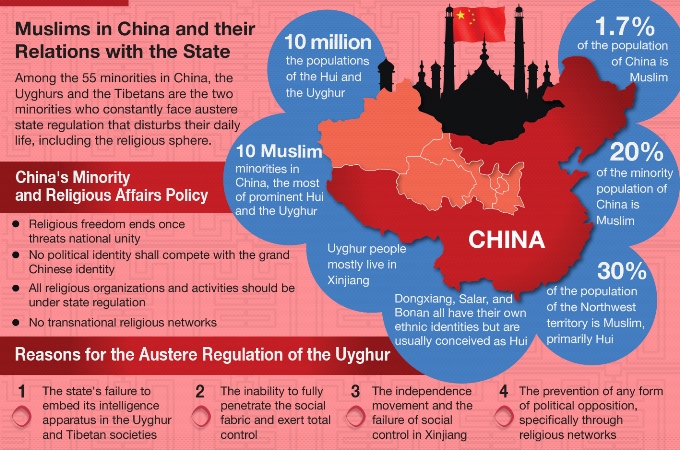
These visuals underscore the diversity of the minority experience. The issues in Singapore or France are fundamentally different from those in Xinjiang or Kashmir. To analyze these effectively for your CSS exam, we need a clear framework.
A Framework for Analyzing Challenges
A structured approach is essential for a high-scoring analytical answer. Drawing upon the work of policy institutes like the Brookings Institution, we can categorize the challenges facing Muslim minorities into three interconnected domains: political, social, and cultural.
- Political Challenges: These relate to the community's relationship with the state. This includes issues of citizenship, political representation, state-sponsored discrimination through laws, and being targeted by security policies (e.g., counter-terrorism).
- Social Challenges: These concern the community's position within the broader society. This includes discrimination in employment and housing, social exclusion, the rise of Islamophobia, and the complex process of integration versus assimilation.
- Cultural Challenges: These revolve around the preservation of identity and religious practice. This encompasses debates over religious symbols (like the hijab or minarets), the right to practice religious rituals freely, and the impact of negative media portrayals on public perception.
Let's now apply this framework to specific examples.
Case Studies: Western vs. Non-Western Contexts
The nature and intensity of challenges vary dramatically depending on the political and historical context of the host country.
[PDF] Muslim Communities - Organisation of Islamic Cooperation
This comprehensive 2020 report from the Organisation of Islamic Cooperation (OIC) provides a country-by-country overview of Muslim communities. It is an excellent resource for gathering concrete facts and examples for your exam answers. We will use it to compare the situations in Europe and Asia.
First, browse the section on Muslim Communities in Europe (starting on page 4). You don't need to read every entry, but focus on the summaries for a few key countries to grasp the common themes: France (p. 9): Note the emphasis on laïcité (strict secularism) and the controversial bans on the headscarf in public schools. This is a prime example of a cultural and political challenge. Switzerland (p. 23): The key point here is the 2009 constitutional amendment banning minarets, a clear restriction on religious expression driven by public referendum. Germany (p. 11): The focus is on integration challenges following large-scale immigration and the government's attempts to foster dialogue. Hungary (p. 12): This is an example of overt political hostility, where government officials describe immigration as a threat and defend "Christian Europe." Next, turn to the section on Muslim Communities in the Asia-Pacific Region (starting on p. 28) and examine the following cases, which present a different category of challenges: Myanmar (p. 30): This is the most extreme case. Read the summary of the Rohingya crisis, described by the UN as "ethnic cleansing." The challenges here are not about integration but about survival, persecution, and statelessness. India (p. 33): Given your background in Pakistan Studies, this section is critical. Focus on the challenges that have arisen in recent years, including the abolition of Jammu and Kashmir's semi-autonomous status and the controversial citizenship law (CAA), which is seen as discriminatory against Muslims. China (p. 32): Although the report's entry is brief and uses cautious language, it confirms the concentration of Uyghurs in Xinjiang and their distinct situation. Combined with the infographic we saw earlier, this points to a challenge of intense state surveillance and forced assimilation.
As you can see, the challenges in the West, while significant, often revolve around integration, discrimination, and religious freedom within a democratic (though often biased) framework. In contrast, the examples from Myanmar, India, and China involve more fundamental issues of state-sponsored persecution, discriminatory legislation targeting citizenship, and even physical violence and ethnic cleansing.
The Core Tension: State Power and Religious Identity
At the heart of many of these challenges lies a fundamental tension: how does a religious minority, whose identity is shaped by the principles of Islam, coexist with a modern secular state, which claims ultimate authority? This question is particularly acute when the state's laws appear to contradict religious values or when the state itself becomes an oppressor.
Two of the world's leading scholars on this topic, Talal Asad and Abdullahi An-Naim, have debated these issues extensively. Professor An-Naim, a Muslim scholar from Sudan, offers a powerful framework for navigating this tension.
Islam, Human Rights, and the Secular (with Talal Asad and Abdullahi An-Naim)
In this recording of a conversation at Georgetown University, Professor An-Naim articulates his vision for the relationship between Islam, the secular state, and human rights. His arguments provide a sophisticated analytical lens for your CSS exam.
First, listen to An-Naim's response to a question about the tension between Sharia and human rights, particularly regarding slavery where he makes a crucial point. He argues that both Sharia and human rights are human constructs. Sharia is the human understanding of divine sources, not divinity itself. This view opens a path to reform and reinterpretation from within Islam, rather than seeing Sharia and secular law as immutably opposed. Next, watch the segment where the scholars discuss the paradox of separating religion and state. An-Naim explains his model, which distinguishes between institutions and politics. He argues for the separation of religious and state institutions, but acknowledges the inevitable connection between religion and politics. This nuanced view allows religious citizens to participate in public life and political debate, arguing for their values within a shared civic space governed by constitutionalism and human rights. Finally, consider his pragmatic answer to a Pakistani student's question about structural injustice where he emphasizes struggle. He acknowledges that identifying the problem is not enough; the key is to have a strategy for "fighting back" and "struggle." This sets the stage for our next section.
Professor An-Naim’s perspective is vital because it rejects a passive approach. It empowers minority communities by framing them as active agents who must engage, challenge, and seek to transform the state and society they live in, using both their Islamic values and the tools of modern citizenship.
Strategies for Responding to Challenges
If the problems are political, social, and cultural, then the solutions must also operate on these levels. A comprehensive CSS answer should not just diagnose the problems but also evaluate potential strategies for minority communities. We can group these strategies into two main categories: internal empowerment and external engagement.
1. Internal Empowerment: Building Power from Within
This approach focuses on strengthening the community's internal capacity—economically, socially, and intellectually—to a point where it becomes an indispensable part of society. The popular speaker Nouman Ali Khan, though not an academic, articulates this pragmatic strategy very clearly.
Being Muslim in a Secular Society - Q&A with Nouman Ali Khan
In this talk, Nouman Ali Khan offers a motivational and highly practical perspective on how Muslim minorities, particularly in the West, can overcome challenges.
First, listen to his vision for a stronger mindset. He argues that to prevent future generations from facing the same problems, the community must become people who hold positions of power and influence, because society "only cares about what offends the powerful." Next, he outlines a key strategy: using the system's own rules. He urges Muslims to learn the "language of power," which in Western societies often means pursuing collective legal action against discrimination rather than simply complaining individually. Finally, he makes a powerful economic argument. He challenges Muslims to shift their mentality from being employees to employers, to build businesses, and to become so integral to society that it faces a collapse if they were removed. He argues that when a community is needed, it cannot be easily discarded, even if it is hated.
This strategy is about building social and economic capital. It’s a long-term vision focused on self-reliance, strategic engagement with host country systems (legal, economic), and creating value that makes the community integral, not peripheral.
2. External Engagement: Holding the State Accountable
Complementing internal empowerment is the strategy of external engagement, which involves actively using the rights of citizenship to hold the state accountable and push for justice. This aligns perfectly with Professor An-Naim's framework.
Islam, Human Rights, and the Secular (with Talal Asad and Abdullahi An-Naim)
Let's return to Professor An-Naim's arguments, which provide the philosophical and political basis for this external engagement.
The foundation of this strategy is what An-Naim calls the "self-determining human." The human rights project, he argues, is not state-centric but people-centric. Citizens must make the state protect human rights. From this flows the idea that human rights are not a magical solution, but a tool. As he states, human rights are a means to promote social justice and individual freedom; if they don't serve that purpose, they aren't worth having. This pragmatic view encourages minorities to use the human rights framework instrumentally to advocate for their own protection. Finally, how is change achieved? An-Naim is clear that it doesn't happen through gentle persuasion alone. It requires pressure and struggle, which can take many forms, from advocacy to protest. The refusal to submit to injustice is, in his view, a divine quality in humans.
Conclusion
We have journeyed through the complex and often harsh realities faced by Muslim minorities around the world. We've seen that these challenges are not monolithic; they range from social discrimination and battles over religious symbols in the West, to existential threats of persecution, statelessness, and violence in parts of Asia and Africa.
Key Takeaways:
- Diverse Challenges: The political, social, and cultural challenges faced by Muslim minorities vary significantly between Western and non-Western contexts.
- Analytical Framework: Structuring your analysis around political, social, and cultural challenges provides clarity and depth, which is crucial for the CSS exam.
- Core Tension: The relationship between a religious community and the modern secular state is a central point of tension, requiring constant negotiation.
- Human Agency: Sophisticated analysis, as offered by scholars like Abdullahi An-Naim, emphasizes that Sharia, law, and human rights are all human-interpreted constructs. This empowers minorities to act as "self-determining" agents of change.
- Dual Strategy: Effective responses to these challenges often involve a dual strategy: internal empowerment (building economic and social capital) and external engagement (using the tools of citizenship and human rights to hold the state accountable through pressure and struggle).
Preview of the Next Lesson:
The immense challenges and unique circumstances of living as a minority have spurred a modern development in Islamic jurisprudence known as Fiqh al-Aqalliyyat (Jurisprudence for Minorities). In our next lesson, we will evaluate this emerging field, analyzing its principles and assessing its effectiveness in providing guidance to Muslims navigating life in non-Muslim majority societies.