Introduction
Welcome to our new module, "Islamic Civilization and its Global Interactions." In our previous modules, we traced the establishment and consolidation of the Islamic state and its core principles. Now, we shift our focus to the broader civilizational impact of Islam on the world stage.
Today's lesson addresses a question of immense historical significance, one that frequently appears in CSS and PMS exams: the contributions of Islamic civilization to Western progress in science and philosophy. Our goal is to move beyond a simple list of achievements and to analyze what these contributions were, why they were significant, and, crucially, how they were transmitted to Europe, ultimately paving the way for the Renaissance and the modern age. We will explore the intellectual environment that fostered these breakthroughs and the specific channels through which this knowledge transformed the West.
A Tale of Two Civilizations: Setting the Stage
To appreciate the scale of Islamic civilization's impact, we must first understand the context. During the period often called the Islamic Golden Age (roughly 8th to 13th centuries), cities like Baghdad, Cordoba, and Cairo were bustling hubs of intellectual inquiry, commerce, and culture. In stark contrast, Europe was experiencing what historians have termed the "Dark Ages," a period of relative stagnation and fragmentation following the collapse of the Roman Empire.
The disparity in intellectual resources was immense. A single library in Muslim Spain could hold hundreds of thousands of volumes when the largest monastic libraries in Christian Europe contained only a few hundred. To grasp the depth of this contrast and the "circumstantial evidence" for Islamic influence, it is essential to understand the arguments made by historians.
[PDF] The Islamic Impact on Western Civilization Reconsidered
This section of the paper by Basit B. Koshul sets the stage by challenging the "rejectionist" view that downplays Islamic influence. It establishes a powerful argument based on the stark contrast between the vibrant, advanced Islamic civilization and the "barbarism" of medieval Europe.
Please read the section titled "The Circumstantial Evidence". Pay close attention to the argument presented by the author Briffault and the powerful examples used to illustrate the civilizational gap, such as the comparison of Al-Hakim's library with the Repoll Monastery, and the description of hygienic practices. This provides a compelling framework for understanding why influence was not just possible, but inevitable.
This stark contrast makes it clear that when two civilizations with such a wide gap in knowledge and development exist in close proximity, the influence of the more advanced on the less developed is a natural law of history.
The Scientific Revolution: More Than Just Preservation
A common misconception is that Muslim scholars merely acted as passive custodians of ancient Greek knowledge. While the preservation and translation of Greek texts were vital, the true contribution lay in critically engaging with, correcting, and fundamentally advancing this knowledge. The most significant advance was arguably the development of the scientific method itself.
Greek thought, particularly Platonism, often distrusted the senses and favored pure speculative reason. Islamic scholars, spurred by Quranic injunctions to observe and reflect upon the natural world as signs (Ayat) of God, pioneered a new empirical approach.

This new spirit of inquiry was based on:
- Observation: Meticulous and prolonged study of natural phenomena.
- Experimentation: Testing hypotheses through controlled experiments, a concept largely alien to the Greeks.
- Inductive Reasoning: Drawing general principles from specific observations, as opposed to the purely deductive logic of Aristotle.
Let's explore how this new methodology was articulated and put into practice.
[PDF] The Islamic Impact on Western Civilization Reconsidered
This part of the paper details the Islamic intellectual "revolt" against the limitations of Greek philosophy and explains how the Qur'an itself fostered an empirical spirit. This is a crucial argument for your CSS exams, as it elevates the discussion from a list of inventions to a fundamental epistemological shift.
First, read the section "Islam’s Revolt against Greek Philosophy". Focus on how thinkers like Ibn Hazm and others challenged Greek speculative thought and developed the core components of the scientific method. Note the examples from Ibn Tufayl and the work on specific gravity. Next, read the following section, "The Qur’anic Influence on Islamic Epistemology". This provides the theological underpinning for the scientific spirit in Islam. Understand how the Quranic call to observe the 'signs of Allah' (Ayat Allah) in nature was a radical departure from the Greek worldview and directly stimulated empirical investigation.
This empirical spirit produced an explosion of knowledge across numerous fields.
Exploring the Historical Muslim Perspective on Science and Knowledge | Countercurrents
This article provides a concise summary of the key figures and their achievements, reinforcing the points from the more detailed academic paper.
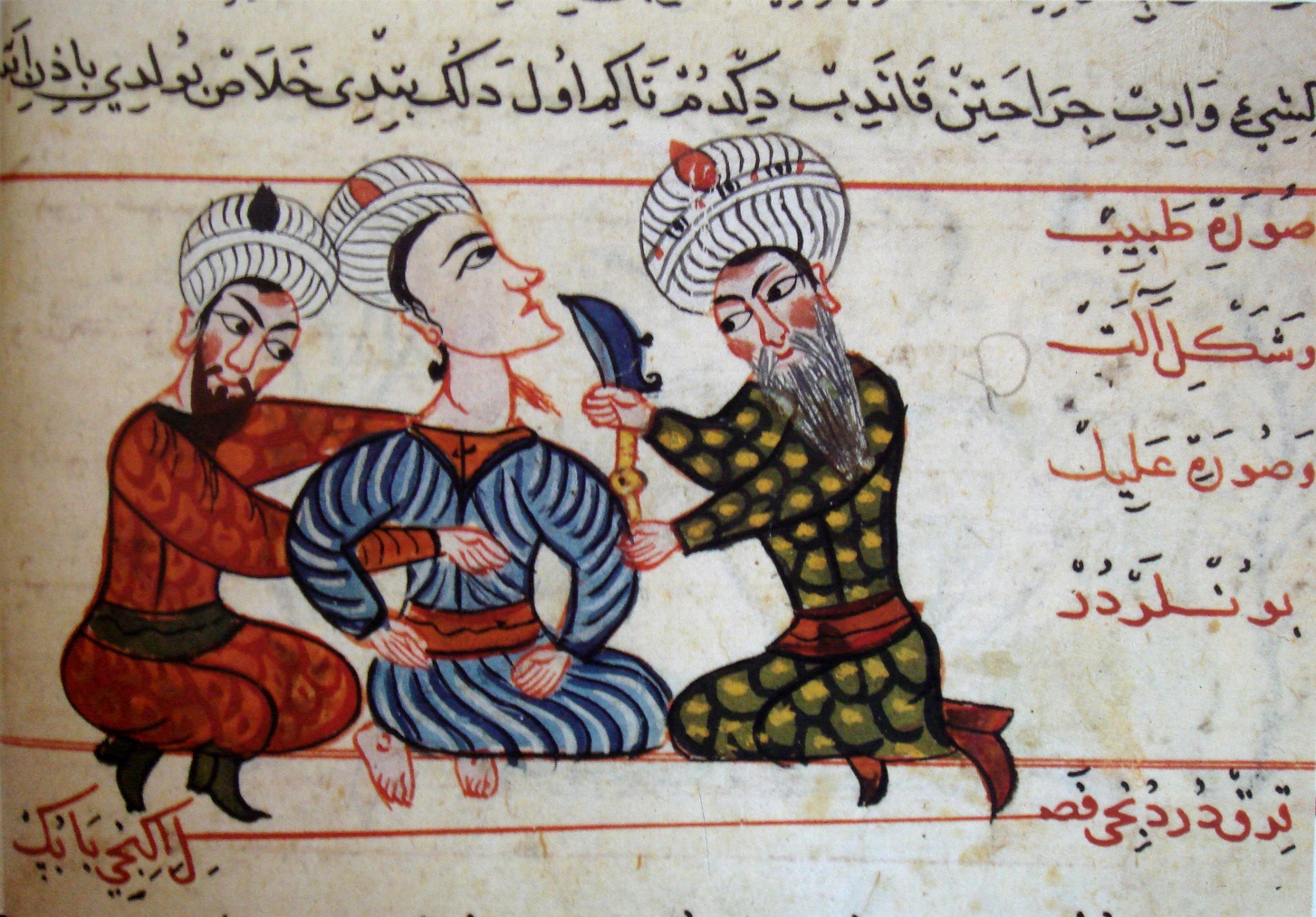
Skim through the sections "Muslim Contribution to Science" and "The Rise and Decline of Muslim Contributions to Science". Identify the key names associated with specific fields: Mathematics: Al-Khwarizmi (Algebra, Algorithms) Medicine: Ibn Sina (Avicenna) and his Canon of Medicine Optics: Ibn al-Haytham (Alhazen) Chemistry: Jabir Ibn Hayyan (Geber)
The Philosophical Bridge: From Aristotle to the Renaissance
Just as in science, Muslim philosophers were not mere translators. They engaged deeply with Greek philosophy, particularly Aristotle, and sought to harmonize it with Islamic theology. This process, known as Falsafa, created a sophisticated intellectual tradition that would become the primary vehicle for reintroducing rationalism to Europe.
Two figures stand out as central pillars of this philosophical bridge: Ibn Sina and Ibn Rushd.
Ibn Sina (Avicenna)
Ibn Sina was a true polymath whose work in medicine and philosophy was unparalleled. His philosophical system, a synthesis of Aristotelianism and Neoplatonism within an Islamic framework, profoundly shaped subsequent thought in both the East and West.
Ibn Sina (Avicenna) - The Greatest Muslim Philosopher?
This video from Let's Talk Religion provides an excellent overview of Ibn Sina's life, work, and immense influence. We will focus on his major works and their transmission to Europe.
Watch the segment on Ibn Sina's major literary works, especially the description of The Canon of Medicine. Note its status as an authoritative text in Europe until the 18th century. Then, watch the explanation of his influence on the West, highlighting how his works were translated and influenced scholasticism and thinkers like Thomas Aquinas.
Ibn Rushd (Averroes)
Known in the West as "The Commentator," Ibn Rushd's primary mission was to purify Aristotle's philosophy from the Neoplatonic interpretations of his predecessors. He championed a rigorous rationalism, arguing that philosophy and religion were two paths to the same truth. While his ideas were met with resistance in the Muslim world, they became the bedrock of intellectual life in European universities.
Ibn Rushd (Averroes) - The Guardian of the Philosophers
This video from Oases of Wisdom situates Ibn Rushd within Western intellectual history and explains his crucial role in defending philosophy.
Watch the opening of the video which notes Ibn Rushd's inclusion in Raphael's famous Renaissance fresco, The School of Athens, a powerful symbol of his importance to the West. Then, watch the concluding segment which explains how, despite his limited legacy in the Muslim world, his outlook proliferated through Europe like wildfire, kickstarting the intellectual rebirth that led to the Renaissance.
The Transmission Channels: How the Knowledge Traveled
The "how" is as important as the "what." The transfer of this vast body of scientific and philosophical knowledge was not accidental; it occurred through specific, identifiable channels.
[PDF] The Islamic Impact on Western Civilization Reconsidered
This section of Koshul's paper provides the "hard evidence" by detailing the specific institutions and individuals involved in the transmission of knowledge. This is exactly the kind of detailed, analytical information that elevates a CSS answer.
Read the section "The Islamic Influence Manifested in Critical Institutions and Personalities". Focus on three key areas: The borrowing of institutional concepts: Understand how the Islamic concepts of waqf (charitable trusts for colleges) and ijazah (license to teach) were adapted to form the basis of the first European colleges. Geographic Hubs: Note the importance of places like Salerno, Paris, and especially Montpelier, and their connections to the Arab-Islamic world. Pay special attention to Toledo in Spain, which became a massive translation center after its reconquest. Key Individuals: Familiarize yourself with the names of European scholars like Adelard of Bath and Gerard of Cremona, who traveled to Muslim lands, learned Arabic, and became conduits for this new knowledge.
Conclusion
In today's lesson, we have analyzed how Islamic civilization served as a crucial bridge and catalyst for Western progress. We've seen that this was not a passive process of preservation but an active one of innovation and advancement.
Key Takeaways:
- The Scientific Method: The Islamic intellectual tradition, grounded in the Quran's call for observation, developed an empirical and experimental approach to knowledge that was a necessary precursor to modern science.
- Specific Contributions: Breakthroughs in medicine (Ibn Sina), optics (Ibn al-Haytham), mathematics (Al-Khwarizmi), and philosophy (Ibn Rushd) provided the substance of the European intellectual revival.
- Philosophical Rationalism: The works of philosophers like Ibn Sina and Ibn Rushd, when translated into Latin, reintroduced rigorous rationalism to Europe, directly fueling the Scholastic movement and laying the groundwork for the Renaissance.
- Transmission Channels: This knowledge was transferred through key geographical hubs like Spain and Sicily, the establishment of the first European universities modeled on Islamic institutions, and the dedicated work of translators who made Arabic texts available in Latin.
For your CSS exam, framing your answer around these four pillars—Method, Substance, Philosophy, and Transmission—will allow you to present a comprehensive, analytical, and compelling argument.
Preview of the Next Lesson:
Having examined the historic flow of knowledge from the Islamic world to the West, our next lesson will explore the more complex, modern relationship. We will evaluate the mutual influences between Islamic and Western civilizations in the contemporary era, including a critical analysis of the academic and political impact of Orientalism.