In our previous lesson, we critically evaluated the feasibility of the Khilafat model in the modern world, concluding that while a literal replication is impracticable, its core principles of accountability, consultation, and justice are profoundly relevant. Today, we bridge the gap between that theoretical conclusion and on-the-ground reality, moving from a general assessment to a specific application.
Your goal is to prepare for the CSS/PMS exams, which reward not just historical knowledge but the ability to apply that knowledge to solve contemporary problems. This lesson is designed precisely for that purpose. Our learning outcome is to derive transferable governance lessons from the Khulfa-e-Rashideen period for improving contemporary public administration in Pakistan. We will dissect the administrative genius of the Rashidun Caliphate, especially during the tenures of Hazrat Umar (RA) and Hazrat Ali (RA), to extract a blueprint for reforming Pakistan's civil service.
The Moral Compass: Governance as a Sacred Trust (Amanah)
Before we can derive specific lessons, we must understand the foundational ethic that animated the Rashidun state. Governance was not seen as a right or a privilege, but as a sacred trust (Amanah) from God, for which the ruler is accountable to both God and the people. The ruler's authority flows from their commitment to upholding Divine Law (Shari'ah), and this authority is legitimized through the consent and allegiance (Bay'a) of the community.
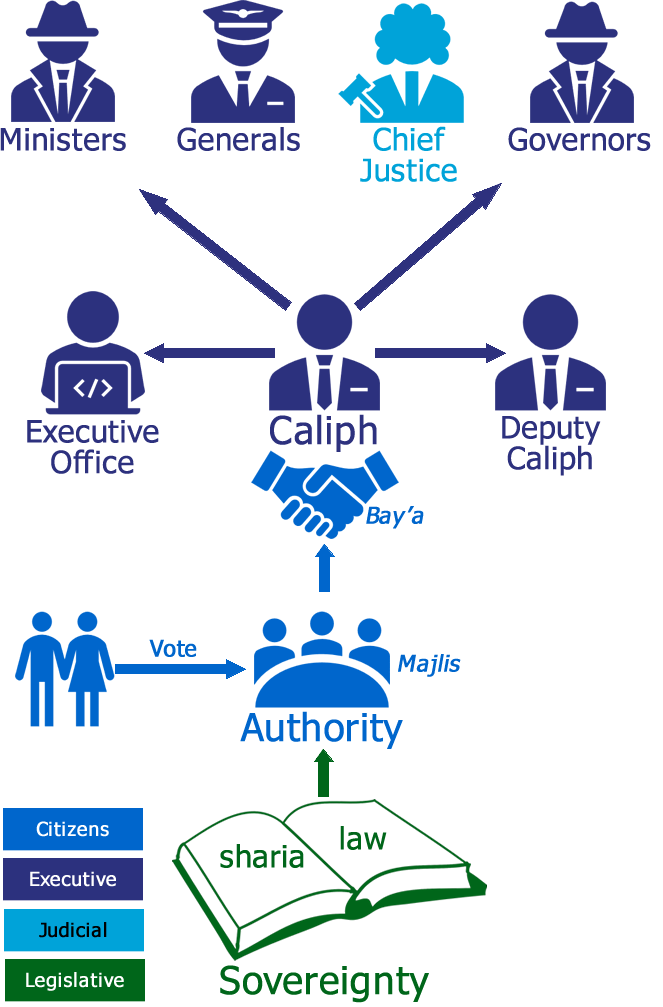
This concept of leadership as a trust creates a powerful moral imperative for justice and public service. It is from this core idea that all other principles of good governance emerge. Let's explore four key pillars and their practical lessons for Pakistan today.
1. The Pillar of Radical Accountability
The most striking feature of the Rashidun period was the uncompromising accountability of the rulers. This was not a vague ideal but an enforced reality.
Historical Precedent:
The standard was set by the very first Caliph, Hazrat Abu Bakr (RA), in his inaugural address: "If I do well, help me; and if I do wrong, set me right." This statement established a social contract where the public had not just a right, but a duty, to hold their leader accountable.
Hazrat Umar (RA) institutionalized this principle. He established an accountability council and a system that serves as a powerful model for modern states. For a detailed look at this, watch the following segment from the lecture "Good Governance and Public Administration in Islam."
Good Governance and Public Administration in Islam | Islamic Studies lecture JWT
This video provides a concise overview of the key institutions established during the Rashidun period. Pay close attention to the mechanisms created specifically to ensure the accountability of high-ranking officials.
Watch the section on Hazrat Umar's (RA) institutional reforms, focusing on the establishment of the accountability council. Notice how it was designed as a neutral body, distinct from the politicized institutions we often see today. Also, note the practice of asset declaration for governors upon appointment and the subsequent assessment for any extraordinary increase in wealth.
As the video explains, governors had to publicly declare their assets upon appointment. At the end of their tenure, their wealth was reassessed. Any unjustifiable increase was confiscated and deposited in the Bait-ul-Mal (public treasury). This wasn't a suggestion; it was a non-negotiable condition of public service.
Transferable Lesson for Pakistan:
The challenge in Pakistan is not the absence of accountability bodies (like the National Accountability Bureau), but their perceived politicization and the pervasive "VIP culture" that places the powerful above the law. The lesson from Hazrat Umar (RA) is to establish a truly independent accountability institution, insulated from executive and political pressure. This would involve:
- Mandatory and Public Asset Declarations: All public office holders, from parliamentarians to civil servants in Grade-17 and above, should be required to publicly declare their assets and those of their dependents upon taking office and upon leaving it.
- Forensic Audits: A specialized, independent body should conduct forensic audits of any suspicious accumulation of wealth by public officials.
- Austerity in Public Office: The spirit of accountability also extends to how public funds are used. The extravagance seen in government—large entourages, luxurious residences, and fleets of vehicles—stands in stark contrast to the austerity of the Caliphs. Hazrat Ali (RA) famously rebuked his governor of Basra, Usman ibn Hunayf, for simply attending a lavish feast, reminding him that a leader must share in the hardships of their people, not indulge in luxury at their expense.
2. The Pillar of Meritocracy
The Rashidun state functioned on the principle that public office is a responsibility for the most competent and pious, not a reward for the well-connected.
Historical Precedent:
This principle is rooted in the Sunnah of the Prophet (PBUH), who warned, "When authority is given to those who do not deserve it, then wait for the Hour (the Day of Judgment)." (Sahih al-Bukhari)
The Caliphs meticulously followed this. Hazrat Ali (RA), in his famous letter of instruction to the governor of Egypt, Malik al-Ashtar, provides a detailed framework for civil service recruitment.
The Epistles of Hazrat Umar (RA) and Hazrat Ali (RA) to Public ...
This article analyzes the letters of the Caliphs as a source for their administrative philosophy. The letter to Malik al-Ashtar is considered a masterclass in governance.
Please read the subsection The Letter to Malik al-Ashtar: A Blueprint for Ethical Governance. Focus on the criteria laid out for the Selection of Officials. Note the emphasis on character, experience, and merit over any other consideration.
As you've read, Hazrat Ali (RA) warns against nepotism and favoritism, instructing his governor to select officials based on "integrity, experience, merit, foresight, and courage." This creates a professional, not a personal, bureaucracy.
Transferable Lesson for Pakistan:
Pakistan's public administration is persistently challenged by nepotism, political appointments, and the sifarish (recommendation) culture, which undermines morale and efficiency. To counter this, Pakistan can:
- Strengthen and Insulate the FPSC: The Federal Public Service Commission (FPSC) and its provincial counterparts must be constitutionally and operationally insulated from political interference.
- Objective Performance Metrics: Promotions and key postings must be tied to objective, transparent performance evaluations rather than patronage.
- Specialized Training: The spirit of selecting the "strong and the trustworthy" implies a need for both competence and integrity. Pakistan's civil service training academies should have a renewed focus on ethical leadership and specialized skills relevant to modern challenges, moving beyond generalist administration.
3. The Pillar of the Rule of Law
In the Rashidun Caliphate, the law was supreme, and no one, not even the Caliph himself, was above it.
Historical Precedent:
The most powerful example is the incident where Hazrat Ali (RA), while serving as Caliph, took a dispute over a shield with a Jewish citizen to court. The judge ruled against the Caliph because he could not produce sufficient witnesses. The Caliph accepted the verdict without question. This incident demonstrated to the world that in an Islamic state, the rule of law is absolute.
Hazrat Umar (RA) formalized the judiciary, and his letter to the judge Abu Musa al-Ashari is a foundational document on legal procedure and judicial ethics.
The Epistles of Hazrat Umar (RA) and Hazrat Ali (RA) to Public ...
This article provides an excellent summary of Hazrat Umar's famous letter on the judiciary.
Read the section The Letter to Abu Musa al-Ashari: The Foundation of Islamic Judiciary. Pay close attention to the core principles of Equality before the Law, the importance of Due Process and Evidence, and the encouragement of Reconciliation.
Transferable Lesson for Pakistan:
Pakistan's judicial system is often criticized for being slow, inaccessible to the poor, and susceptible to pressure. The lesson from the Rashidun period is the critical need for an independent and efficient judiciary. This means:
- Enforcing Judicial Independence: The complete separation of the judiciary from the executive must be enforced in practice, not just in theory.
- Simplifying Legal Procedures: To ensure swift justice, legal procedures should be reformed to reduce backlogs and make the process more accessible to the average citizen, reflecting the emphasis on clear and timely judgments.
- Promoting Alternative Dispute Resolution (ADR): Hazrat Umar's (RA) advice to encourage reconciliation is a direct endorsement of mechanisms like mediation and arbitration, which can settle disputes more efficiently and amicably than lengthy court battles.
From Ideal to Reality: A Critique of Pakistan's Civil Service
The principles of the Rashidun Caliphate provide a powerful lens to critically analyze and propose reforms for Pakistan's public administration. The following resources offer a direct comparison, highlighting the gap between the Islamic ideal and contemporary reality.
The Epistles of Hazrat Umar (RA) and Hazrat Ali (RA) to Public ...
This section of the article on the Caliphal epistles directly applies the historical lessons to Pakistan's modern challenges, providing a perfect model for a CSS exam answer.
Please read the entire section titled Critical Analysis: The Islamic Ideal vs. the Civil Service in Pakistan. Note how it contrasts the ideal with the real in four key areas: Merit, Accountability, Welfare, and Austerity.
[PDF] governance system of hazrat umar farooq (ra) in welfare state and ...
This academic paper provides a structured comparison between the welfare state under Hazrat Umar (RA) and the governance challenges in Pakistan.
First, review the bulleted list detailing the specific institutions and policies of Hazrat Umar's (RA) government. Then, read the analysis of Pakistan's situation, starting from the discussion on its ideological foundations and the subsequent governance gap. Finally, note the author's direct call for reform in the concluding paragraph, which states, "The need is that our governing elites should have a realistic psychoanalysis on governance of Hazrat Umar Farooq (R.A)."
These readings crystallize the transferable lessons: the administrative framework of the Khulafa-e-Rashideen is not a utopian fantasy but a practical sourcebook for good governance.
Conclusion
This lesson demonstrates that deriving lessons from the Khulafa-e-Rashideen is not an exercise in nostalgia, but a vital task for reform. The period offers a clear and actionable framework for improving public administration in Pakistan.
Key Takeaways:
- Radical Accountability: Public service is a trust. This can be operationalized through independent accountability bodies and mandatory, transparent asset declarations for all officials.
- Unyielding Meritocracy: The efficiency and integrity of the state depend on appointing the most competent and trustworthy individuals. This requires strengthening institutions like the FPSC and insulating them from political patronage.
- Supremacy of Law: Justice must be swift, accessible, and blind. The judiciary must be truly independent, and all citizens, especially those in power, must be equal before the law.
- Citizen-Centric Welfare: The primary purpose of the state is the welfare of its people. This demands a shift from a rule-bound bureaucracy to a citizen-centric service delivery model, inspired by the all-encompassing social responsibility of the Bait-ul-Mal.
By internalizing these principles, Pakistan's civil service can begin to bridge the gap between its founding ideals and its current reality, moving closer to the model of justice and efficiency established 14 centuries ago.
In our next module, we will broaden our scope to analyze the foundational theories of the Islamic political and judicial systems, exploring concepts like Divine Sovereignty (Hakimiyyah) and Consultation (Shura) in greater depth.