Greetings. In our last lesson, we evaluated the groundbreaking judicial and welfare reforms of Hazrat Umar (RA), which established the institutional conscience of the nascent Islamic state. We saw how he built a society on the principles of independent justice and universal social security. His work created a state that was not only vast but also just.
As we transition to the caliphate of his successor, Hazrat Usman ibn Affan (RA), the nature of the challenge shifts. The rapid expansion under Hazrat Umar (RA) brought immense diversity, which, in turn, created a new, critical threat—not to the state's borders, but to its very spiritual foundation. Today, we will explore one of the most pivotal events in Islamic history. Our objective is to analyze the compilation and standardization of the Quran during the caliphate of Hazrat Usman (RA), evaluating its historical context and long-term significance.
This is not merely a historical account. For your CSS/PMS exam, understanding this process is crucial for answering questions on the authenticity of the Quran, the sources of Islamic law, and the measures taken by the Rightly Guided Caliphs to ensure the unity of the Ummah. We will dissect the "why," the "how," and the profound, lasting impact of this monumental undertaking.
1. The Historical Context: A Crisis of Recitation
To understand Hazrat Usman's (RA) actions, we must first appreciate the state of the Quran before his caliphate.
- During the Prophet's (PBUH) Lifetime: The Quran was revealed over 23 years. It was memorized by hundreds of companions (huffaz) and simultaneously written down on various materials (parchment, leather, bones) by scribes. The Prophet (PBUH) himself would instruct the scribes where to place each revealed verse.
- The Compilation of Hazrat Abu Bakr (RA): After the Battle of Yamama (12 AH), where many huffaz were martyred, Hazrat Umar (RA) grew concerned and urged Caliph Abu Bakr (RA) to compile the Quran into a single volume. Zayd ibn Thabit, a chief scribe of the Prophet (PBUH), was tasked with this project. He meticulously gathered the written fragments and cross-referenced them with the memorized accounts of the companions. The resulting collection, known as the suhuf, was a work of preservation, not standardization. It was kept in the personal custody of Hazrat Abu Bakr (RA), then Hazrat Umar (RA), and finally Hazrat Umar's daughter, Hafsa (RA).
The key factor that necessitated Hazrat Usman's intervention was the concept of the Seven Ahruf. To make recitation easier for various Arab tribes with different dialects, the Prophet (PBUH) was given permission by Allah to teach the Quran in seven distinct but equally valid modes (ahruf). These were not different Qurans, but slight variations in pronunciation, dialect, and sometimes even wording that enriched the meaning without any contradiction.
This was well-understood by the companions in Arabia. However, by Hazrat Usman's time (23-35 AH), Islam had spread far into Persia, Armenia, Azerbaijan, and North Africa. New converts, with different linguistic backgrounds, learned the Quran from the companions who had settled in their regions. When soldiers from these different regions (e.g., Syria and Iraq) met on military campaigns, they heard each other reciting the Quran differently and, unaware of the concept of ahruf, began accusing one another of mispronouncing or corrupting the holy text.
This was the spark that threatened to ignite a major fire of disunity (fitna).
The History Of The Quranic Text| A Breakdown From Revelation To Compilation| Muhammed Ali
To grasp the concept of the Seven Ahruf and how they functioned, I recommend watching a segment from the video "The History Of The Quranic Text" by The Muslim Lantern. It provides a clear and accessible explanation.
Please watch the section from "The Seven Ahruf". The speaker explains how Islam's spread to different Arab tribes necessitated different modes of recitation for ease and how these variations, like Malik vs. Maliki, enriched the meaning without contradiction.
The gravity of this situation was famously brought to the Caliph's attention by the companion Hudhayfah ibn al-Yaman. After witnessing fierce disputes among soldiers on the Azerbaijan and Armenia frontiers, he rushed to Madinah and delivered a stark warning to Hazrat Usman (RA):
"O chief of the Believers! Save this nation before they differ about the Book (Quran) as Jews and the Christians did before." (Sahih al-Bukhari 4987)
This was the catalyst. The threat was not a military invasion, but an internal collapse stemming from disagreements over the very source of the faith.
2. The Uthmanic Project: Process and Methodology
Hazrat Usman (RA), demonstrating profound leadership and foresight, immediately took action. His approach was consultative, systematic, and decisive.
- Consultation (Shura): He gathered the senior companions of the Prophet (PBUH) in Madinah, presented the issue, and consulted them. They unanimously agreed that a definitive, standardized text was needed to quell the disputes.
- Formation of a Committee: Hazrat Usman (RA) appointed a high-level committee to undertake this task. It was led by Zayd ibn Thabit (RA), given his prior experience with the Abu Bakr compilation and his role as a primary scribe of the Prophet (PBUH). The other members were prominent Qurayshi companions: 'Abdullah ibn al-Zubayr, Sa'id ibn al-'As, and 'Abd al-Rahman ibn al-Harith ibn Hisham.
- The Primary Reference: Hazrat Usman (RA) sent for the suhuf from Hafsa (RA). This was the authenticated master copy from Hazrat Abu Bakr's era, ensuring a direct and unbroken chain back to the original revelation.
- Standardizing the Dialect: Hazrat Usman (RA) gave a crucial instruction: "In case you disagree with Zayd ibn Thabit on any point in the Qur’an, then write it in the dialect of Quraysh, for the Qur’an was revealed in their tongue." This decision resolved the issue of multiple ahruf by standardizing the written text based on a single dialect—that of the Prophet's (PBUH) own tribe.
- Creation of the Master Codex: The committee meticulously prepared a new master copy, verifying it against the suhuf and the collective memory of the huffaz. This standardized version is known as the Mushaf al-Imam or the Uthmanic Codex.
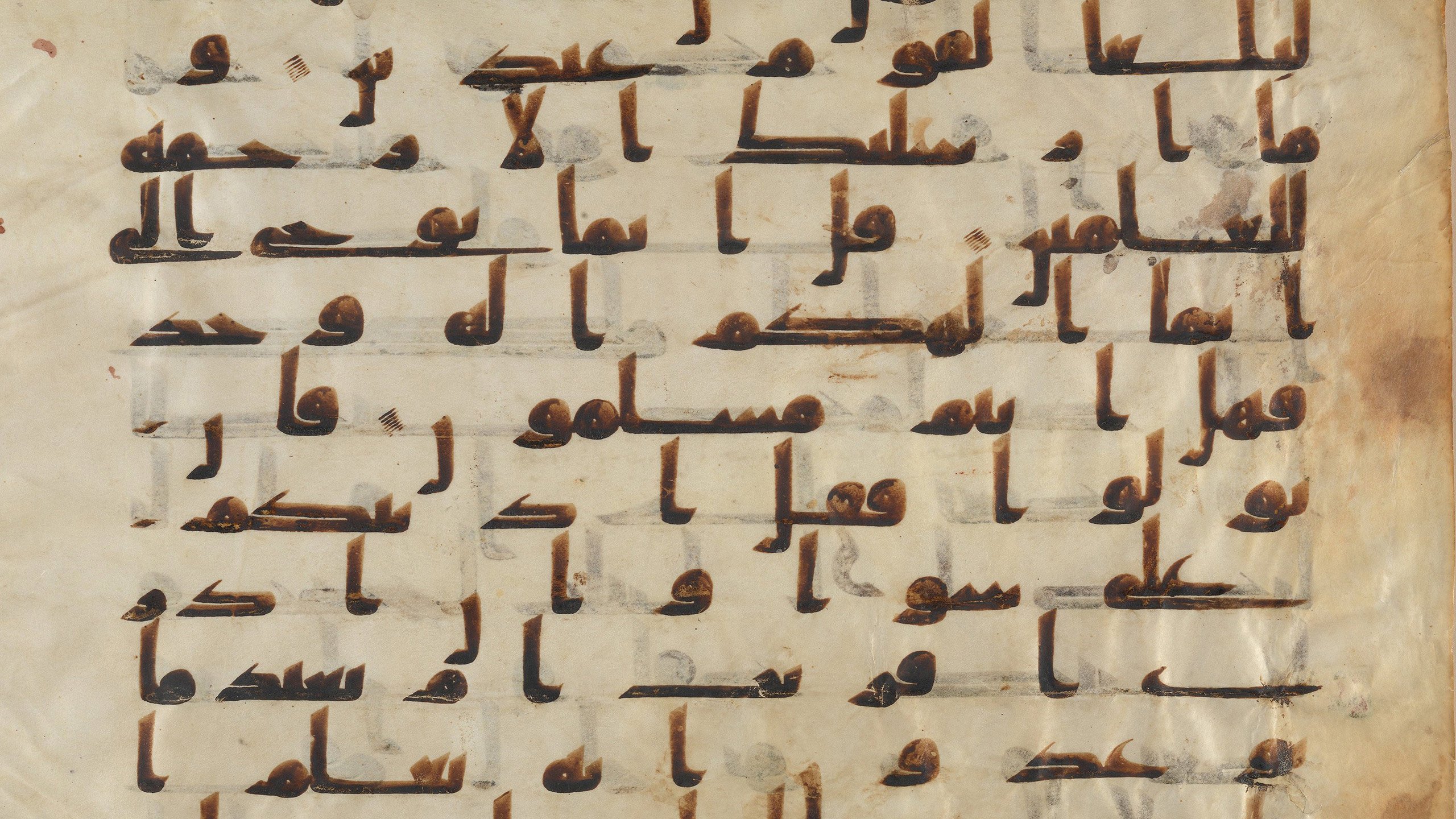
The Role of Caliph Uthman in Standardising the Qur'an
The article from Najam Academy provides a clear, step-by-step account of this process, perfectly suited for building your exam notes.
First, read the section "Historical Context" to review the state of the Quran before Usman (RA). Then, focus on the sections "The Catalyst for Standardization", which details Hudhayfah's warning, and "How Did Uthman Standardize the Mushaf?", which describes the committee's work.
3. Implementation, Analysis, and Long-Term Significance
With the master codex complete, the final and most critical phase of the project began.
- Distribution: Hazrat Usman (RA) had several exact copies made from the master codex. He sent these copies to the major metropolitan centers of the Islamic empire, such as Kufa, Basra, Damascus, and Makkah, and kept one in Madinah. Crucially, he also sent a qualified reciter with each codex to teach the people the standard, approved way of recitation.
- Unification: He then gave the order that all other personal codices (masahif) and fragments of the Quran that differed from the new standard codex were to be burned or otherwise destroyed.
This last step, while sounding harsh to a modern ear, was a vital act of statesmanship. It was not the "destruction of the Quran," as some critics allege. Rather, it was the removal of non-standard, unofficial copies—some of which contained personal notes, interpretations, or now-abrogated verses—to eliminate the source of conflict and unify the Ummah upon a single, authoritative text. The decision was supported by the vast majority of companions, including Hazrat Ali (RA), who later said, "Do not say anything about 'Uthman except good. By Allah, he did not do what he did with the masahif except with the full agreement of us all."
Evaluating the Long-Term Significance
The standardization of the Quran was one of Hazrat Usman's (RA) greatest and most enduring contributions. Its significance can be analyzed from several angles:
-
Political and Social Unity: At a time when the empire was facing potential fragmentation over religious practice, this act provided a single, unassailable textual foundation for all Muslims, regardless of their ethnic or geographical origin. It preempted the possibility of different Muslim communities developing around different versions of their holy book, a fate that had befallen previous religious communities.
-
Textual Authenticity and Preservation: It ensured that the Quran transmitted through the ages is the one that was collated under Hazrat Abu Bakr (RA) and standardized by the consensus (ijma') of the companions under Hazrat Usman (RA). The Rasm al-Uthmani (the Uthmanic script) became the universal and unchanging standard for all copies of the Quran to this day. This provides the historical basis for the Muslim belief in the Quran's perfect preservation, as promised by Allah:
"Indeed, it is We who sent down the Qur’an and indeed, We will be its guardian." (Surah Al-Hijr, 15:9)
-
Foundation of Quranic Sciences: The standardized consonantal text, which intentionally lacked dots and vowels, became the bedrock for the development of 'Ilm al-Qira'at (the science of the canonical readings). Scholars worked to document all valid recitations that fit the Uthmanic rasm and could be traced back to the Prophet (PBUH) through authentic chains of transmission. This preserved the richness of the revelation while safeguarding it within an authorized framework.
Corroboration from Manuscript Evidence
The traditional Islamic narrative is powerfully supported by modern academic and manuscript studies. Early manuscripts discovered in the last century, dated through paleography (the study of handwriting) and carbon-dating, show a remarkable consistency with the Quran we have today and point to an early, standardized archetype.
The history of the Quran: the Uthmanic standardisation & manuscripts with Mohammed Al Firas (Part 1)
For an academic perspective that analyzes the manuscript evidence, I highly recommend this video from the Islamic Origins channel. It discusses the findings of Western academics and how they relate to the traditional account, providing the multi-dimensional view required for CSS.
First, watch the introduction to the traditional narrative to set the stage. Next, listen to the speaker's first argument for historicity: the unanimity of the Islamic tradition on Usman's role. Then, watch the analysis of the Parisino-petropolitanus Codex, a very early manuscript that conforms almost perfectly to today's text. Also, pay attention to the discussion on the famous Sana'a palimpsest, which shows an earlier, non-standard text being erased and overwritten with the standard Uthmanic text. This is physical evidence of the standardization process in action. Finally, the segment on orthographic patterns explains how consistent, idiosyncratic spellings across multiple early manuscripts prove they all derive from a single written original.
This convergence of traditional history and modern manuscript analysis provides a powerful, evidence-based case for the historicity of the Uthmanic standardization and the remarkable preservation of the Quranic text.
Conclusion
The standardization of the Quran under Hazrat Usman (RA) was a monumental achievement born of a crisis. Faced with the threat of textual disunity that could have shattered the Muslim Ummah, he acted with wisdom, consultation, and decisiveness. His project was not one of creation, but of preservation and unification.
Key Takeaways:
- Historical Context: The project was necessitated by disputes over recitation arising from the spread of Islam and a lack of understanding of the Seven Ahruf. Hudhayfah ibn al-Yaman's warning was the immediate catalyst.
- The Process: It was a systematic effort based on consultation (Shura), led by an expert committee, using the authenticated suhuf of Hazrat Abu Bakr (RA) as its reference, and standardizing on the Qurayshi dialect.
- The Outcome: The creation of the Uthmanic Codex (Rasm al-Uthmani), which was distributed to major cities. All other non-standard copies were removed from circulation to ensure unity.
- Long-Term Significance: This act preserved the unity of the Ummah, guaranteed the textual integrity and authenticity of the Quran for all subsequent generations, and provided the stable foundation for the development of Quranic sciences. This traditional account is strongly corroborated by early manuscript evidence.
In our next lesson, we will continue our examination of Hazrat Usman's (RA) caliphate by evaluating his administrative and economic policies, including the expansion of the navy, and analyzing the socio-political consequences that arose during his rule.