Hello! Welcome to the final lesson in our first module.
In the past few lessons, we've established the foundations of Islam. We started with the core beliefs, traced the historical origins of the Sunni-Shia split, and just last time, we detailed the key differences in religious authority and practice that define the two sects. You now understand what makes Shia Islam distinct.
Today, we address a crucial question that brings all this context home to Iran: Why did Persia, a major center of Sunni Islamic civilization for nearly 900 years, transform into the global heartland of Shia Islam?
This lesson will explain the pivotal historical events that engineered this religious shift. Understanding this story is essential, as it explains the unique identity of modern Iran and its role in the world. By the end of our 60 minutes, you will be able to explain how and why Iran became, and remains, the world's most prominent Shia-majority nation.
1. A Sunni Powerhouse for Centuries
It might be surprising to learn, but for the majority of its Islamic history, the land we now call Iran was predominantly Sunni. Following the Arab conquest in the 7th century, Persia gradually converted to Islam and became a vibrant center of Sunni learning, art, and science for centuries.
To get a quick overview of this long history and the dramatic change that occurred, let's start with a short video.
The video 'Why is Iran Shia?' from History Snapshot provides a concise summary of Persia's history from the Arab conquest through the Safavid transformation.
Watch from the beginning to 02:26. Pay attention to how long Persia remained Sunni and the suddenness of the shift in 1501 with the arrival of a new dynasty.
As the video highlighted, everything changed in 1501 with the rise of a new power: the Safavid dynasty. This is the single most important factor in Iran's conversion to Shi'ism.
2. A New Empire, A New Identity
The Safavids, led by a charismatic and ambitious young ruler named Shah Ismail I, needed a way to unify their new empire and, crucially, distinguish it from its powerful rivals. The most significant of these rivals was the formidable, and staunchly Sunni, Ottoman Empire to the west.
Adopting Shia Islam was a brilliant, if brutal, strategic move. It created a unique and cohesive identity for the Safavid state, setting it apart from its Sunni neighbors and justifying the political and military struggle against them.
The 1514 Battle of Chaldiran against the Ottomans was a defining moment. Although the Safavids lost the battle, the defeat had a profound effect: it checked their westward expansion and forced them to consolidate their power within the Iranian plateau, reinforcing the border between the Turkic/Arab Sunni world and the Persian Shia world that largely exists to this day.
Let's read a short article that puts this strategic decision into a geopolitical context.
This 16th Century Battle Created the Modern Middle East
This article from The Diplomat, 'This 16th Century Battle Created the Modern Middle East,' explains the geopolitical consequences of the Safavid-Ottoman rivalry.
Read the first half of the article, focusing on the sections before 'It is important to note...'. The key takeaway is how the rivalry with the Ottomans and the outcome of the Battle of Chaldiran pushed the Safavids to aggressively promote a distinct Shia identity to ensure their state's survival.
3. The Mechanics of Conversion
So, how did the Safavids actually convert a vast, majority-Sunni population? It was a top-down, state-driven project that unfolded over two centuries, using a combination of force and cultural integration.
The following video provides an excellent, detailed account of this process.
Why Is Iran Shia? | Iran Documentary
The 'Hikma History' documentary 'Why Is Iran Shia?' details the specific policies the Safavids used to transform Iran's religious landscape. We'll watch it in two parts.
First, watch from 01:14 to 02:43 and then from 05:32 to 09:21. Focus on the two key methods described: The initial phase of forced conversion and suppression of Sunni orders by the Qizilbash warriors. The strategic decision to import Shia scholars from Arab lands to build a new religious establishment.
As the video explained, the initial phase was coercive. Shah Ismail used his loyal Qizilbash warriors to enforce Shia practices, including the public cursing of the first three Sunni Caliphs—an act designed to create a sharp, unbridgeable divide with Sunnis.
However, force alone is rarely enough to change a whole society's beliefs. The Safavids' shrewder move was to build a religious infrastructure from scratch by inviting Shia scholars from what is now Lebanon and Iraq. These scholars laid the intellectual groundwork for Shi'ism in Iran.
The second phase of the conversion was about winning hearts and minds by weaving Shia beliefs into the very fabric of Persian culture.
Why Is Iran Shia? | Iran Documentary
Let's continue with the 'Hikma History' documentary to see how the Safavids used culture to solidify the conversion.
Now, watch from 09:21 to 12:04. Notice how the state promoted activities that are now iconic features of Iranian Shia culture, such as: Pilgrimages to the tombs of Imams' descendants (Imamzadehs). Elaborate public mourning ceremonies for Imam Hussein (which evolved into the Ta'ziyeh passion plays). Celebrating Shia-specific holidays.
This cultural integration was the key to making the conversion permanent. By the time the Safavid dynasty fell in 1722, Iran’s transformation was complete. Shia Islam was no longer just a state policy; it was the core of the people's identity.
4. The Lasting Legacy
The Safavid project was so successful that its effects define the region today. Subsequent Iranian dynasties, right up to the present day, have maintained and built upon this Shia identity. The 1979 Islamic Revolution, which we will study in depth later, further cemented Iran's role as the world's preeminent Shia power.
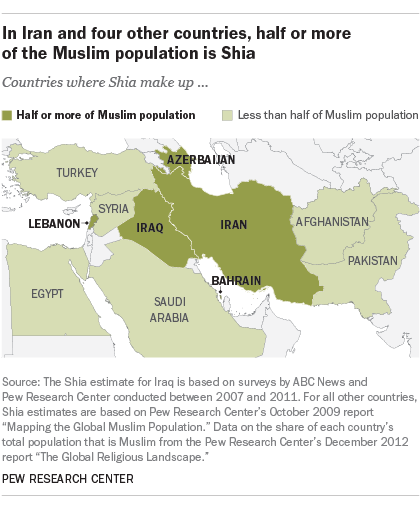
The map below clearly shows the result of this history. The areas that are majority Shia today align almost perfectly with the sphere of influence of the former Safavid Empire.
Conclusion
You've now completed the foundational module of our course! We have journeyed from the birth of Islam to the specific historical forces that shaped Iran's unique religious character.
Let's summarize today's key takeaways:
- A Deliberate Shift: Iran was a majority-Sunni region for nearly 900 years before the Safavid dynasty initiated a state-led conversion to Shia Islam starting in 1501.
- Political Motivation: A primary driver for this conversion was geopolitical. The Safavids needed a unifying ideology to distinguish their empire from and compete with their powerful Sunni neighbor, the Ottoman Empire.
- A Two-Pronged Method: The conversion was achieved through a combination of initial force and a long-term strategy of cultural integration, which included importing a clerical class and weaving Shia rituals and holidays into the national fabric.
- Enduring Identity: This transformation was so profound that it has defined Iran's identity for the last 500 years, making it the undeniable center of the Shia world.
In our next module, we will step back from religion and look at another, even older, layer of Iranian identity: the legacy of the ancient Persian Empire. We'll explore how the memory of Cyrus the Great and the glories of Persepolis continue to shape the cultural pride and national consciousness of Iranians today.