Welcome to your first lesson in the Investment Banking course. Your goal is to break into this competitive field, and our aim is to equip you with the deep, practical knowledge required to succeed. We'll start today by building the essential foundation for everything that follows. This lesson will define the fundamental purpose of an investment bank, explaining its role within the financial system—specifically capital markets—and its impact on the broader economy. Understanding this 'big picture' is the critical first step before we dive into the technical skills like financial modeling and valuation that are central to your goals.
The Core Function: A Financial Intermediary
At its heart, an investment bank is a financial intermediary. Its primary job is to connect entities that need capital with those that have capital to invest. Think of large corporations wanting to build a new factory, a fast-growing tech company needing funds to scale, or even a government planning a major infrastructure project. These entities need vast sums of money. On the other side, you have institutional investors—like pension funds, mutual funds, and insurance companies—that manage enormous pools of savings and are looking for opportunities to deploy that capital productively.
Investment banks are the expert agents who stand in the middle, structuring the deals that bring these two sides together. They are, in essence, the "corporate matchmakers" of the financial world.
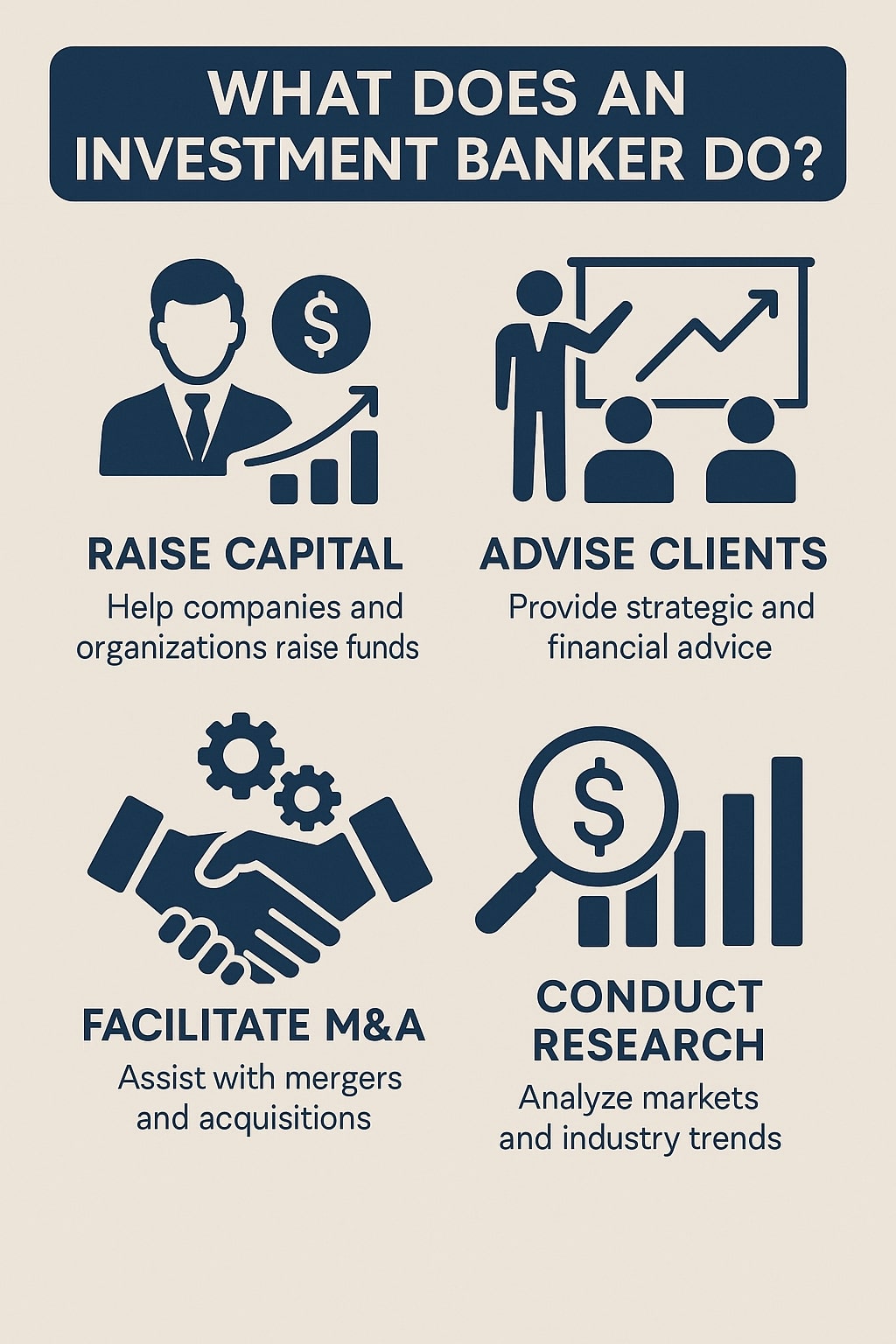
To begin, let's get a more formal definition and overview of these core functions from a leading industry training provider, Wall Street Prep.
Investment Banking | Quick Primer - Wall Street Prep
This reading introduces the core definition of investment banking, focusing on its two primary functions: M&A advisory and capital raising (underwriting).
Please read the first two main sections of the article. Start with the introduction, which defines the role of an investment bank as a strategic advisor and financial intermediary. Then, continue to the section "How Does Investment Banking Work?", focusing on the descriptions in the table that detail the M&A and Underwriting functions.
As the reading highlights, an investment bank's work boils down to two main areas:
- Advising on Mergers & Acquisitions (M&A): Helping companies buy, sell, or merge with other companies.
- Raising Capital (Underwriting): Helping companies or governments raise money by issuing securities.
For a more dynamic and engaging take on these functions, the following video explains the role of investment bankers in making billion-dollar deals happen.
FINANCIAL SYSTEM explained in 18 mins
This segment from "FINANCIAL SYSTEM explained in 18 mins" colorfully describes the main activities of investment banks—IPOs, M&A, and capital raising—framing them as the work of "corporate matchmakers."
Watch the section on investment banks, which starts at this timestamp. Pay attention to how it describes the three main activities: taking companies public (IPOs), mergers and acquisitions, and raising capital.
The Engine Room: Capital Markets
Investment banks perform these functions within a specific part of the financial system known as the capital markets. These are not physical places, but a network where long-term funds are raised through the buying and selling of financial instruments like stocks (equity) and bonds (debt).
To understand the investment bank's role, it's crucial to distinguish between the two types of capital markets:
- Primary Market: This is where new securities are created and sold for the first time. When a company like Google had its Initial Public Offering (IPO), it sold brand-new shares to investors in the primary market to raise capital. The money from this sale went directly to the company.
- Secondary Market: This is where existing securities are traded among investors. If you buy shares of Google today on the stock exchange, you are participating in the secondary market. The money goes to the seller of the shares, not to Google itself.
Investment banks are the key players in the primary market. They are the ones who help a company structure its IPO or bond issuance, price the securities, and find investors to buy them. This process is called underwriting.
In the secondary market, the bank's Sales & Trading division facilitates the continuous buying and selling of these securities, which provides the liquidity that makes the whole system work.
The following video from the Corporate Finance Institute provides a clear, structured explanation of this crucial distinction and the role banks play in each market.
What are Capital Markets? | Intro to Capital Markets (Part 1)
This video, "Intro to Capital Markets," explains the fundamental difference between primary and secondary markets and clarifies the role of investment banks as intermediaries in both.
Please watch the following segments: Start with the definitions of primary and secondary markets. Next, focus on the detailed explanation of the primary market, which shows how a corporation (like Amazon) uses an investment bank to issue new securities. Finally, watch the summary comparing the key characteristics of each market. This table clearly outlines the different stakeholders, intermediaries, and functions.
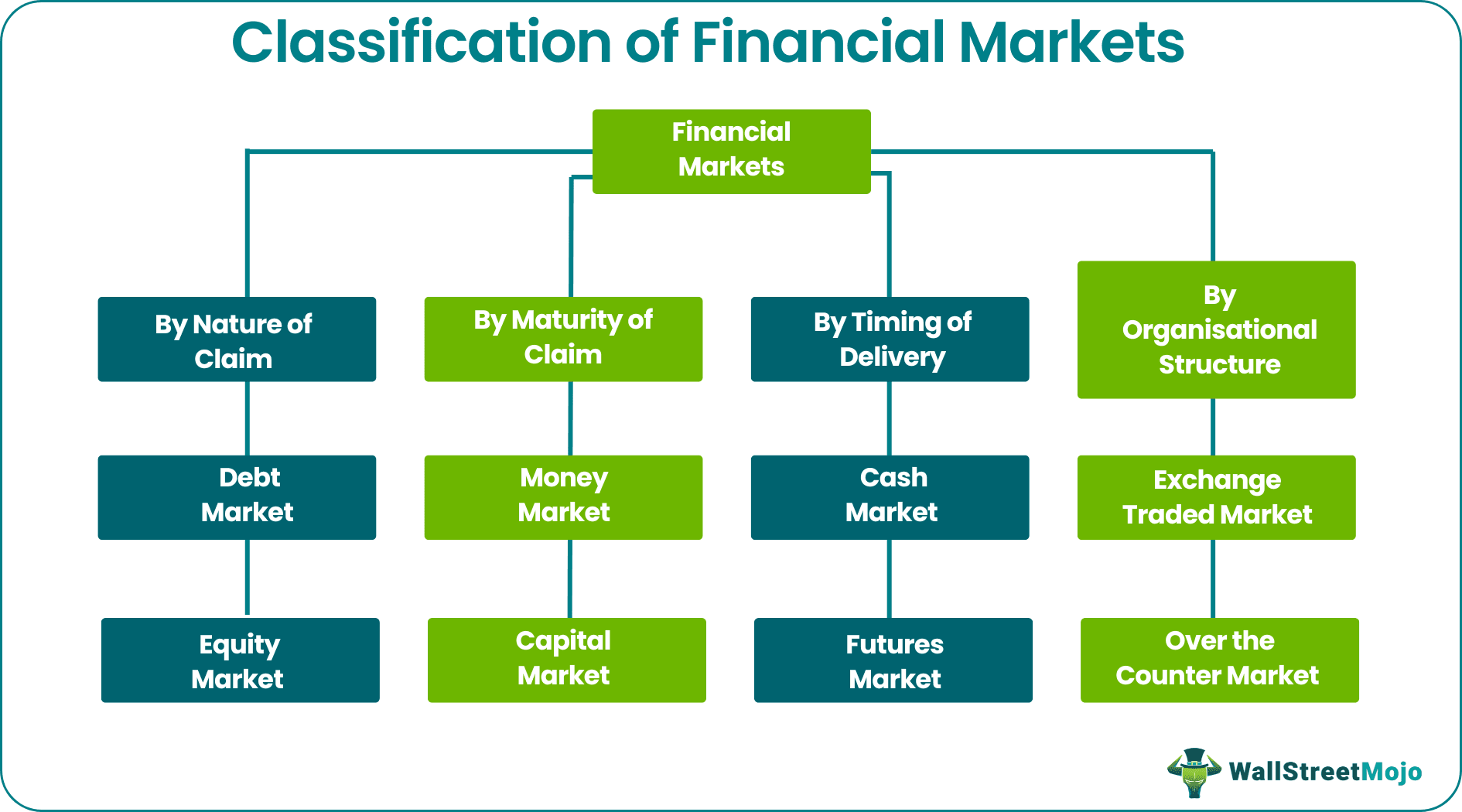
This chart illustrates how these markets fit into the broader classification of financial markets. The work of an investment bank is primarily focused on the Capital Market, dealing in long-term instruments like stocks (Equity Market) and bonds (Debt Market).
The Role in the Broader Economy
Now that we've established what investment banks do and where they do it, let's address the most important question: why does it matter? How does this activity contribute to the broader economy?
The functions of an investment bank are not just about complex financial transactions; they are fundamental to economic growth and dynamism. By efficiently channeling capital from savers to borrowers, the financial system, with investment banks at its core, serves several critical purposes.
The following document from the Association for Financial Markets in Europe (AFME) provides an excellent summary of these functions.
[PDF] The role of banks and financial markets in the economy - AFME
This report outlines the essential functions that banks and financial markets perform for the economy, providing a clear link between financial activities and real-world impact.
Please read the following three parts of the document: On the first page, read the section titled "The main functions of banks and financial markets in the economy". Focus on the four main purposes listed: credit provision, liquidity, risk management, and payments. Turn to page 5. Read the section "Investment banks help companies and governments raise finance through capital markets". This details the specific services like underwriting and book building that are central to the capital-raising process. Finally, on page 6, read the section "Liquidity provision: market-making services in secondary markets". This explains the critical link between the secondary market (trading) and the primary market (capital raising).
As the AFME report details, the role of investment banks in the economy can be summarized by a few key contributions:
- Capital Formation and Allocation: This is the most direct impact. By helping companies raise capital, investment banks enable them to invest in research and development, build new factories, hire more employees, and expand into new markets. This is the engine of economic growth, innovation, and job creation.
- Liquidity Provision: The willingness of investors to buy new stocks and bonds in the primary market depends heavily on their confidence that they can sell them later in a liquid secondary market. The Sales & Trading arms of investment banks, acting as market-makers, provide this liquidity. Without it, raising capital would be far more difficult and expensive for companies.
- Facilitating Strategic Transactions (M&A): Mergers and acquisitions are not just about companies getting bigger. They can allow a firm to acquire new technology, achieve efficiencies of scale, or enter new geographic markets. This reshuffling of corporate assets, guided by investment banks, can lead to a more efficient allocation of resources across the economy.
- Price Discovery: Through the process of underwriting and trading, investment banks help the market determine the fair value of securities. This provides crucial information to investors and companies about the value of assets and the cost of capital, leading to better investment decisions.
In your future work building financial models and performing valuations, remember that you are not just manipulating spreadsheets. You are creating the analytical tools that support this vital process of capital allocation. A valuation is not an academic exercise; it is the basis for advising a client on a fair price for an acquisition or determining the right price for an IPO that will fund the next generation of technology.
Conclusion
In this introductory lesson, we have established the foundational role of investment banks. Let's summarize the key takeaways:
- Core Function: Investment banks are financial intermediaries that connect entities needing capital with those who have it to invest. They act as "corporate matchmakers."
- Primary Activities: Their work is centered on two main pillars: raising capital for clients through underwriting securities (stocks and bonds) and advising on mergers and acquisitions (M&A).
- Operating Arena: These activities take place in the capital markets. Banks are the primary agents in the primary market where new securities are created, and they provide essential liquidity in the secondary market where existing securities are traded.
- Economic Impact: By facilitating the flow of capital to its most productive uses, investment banks are crucial engines for economic growth, innovation, job creation, and the efficient allocation of resources.
You now have a solid contextual framework for what an investment bank does and why it matters. This "why" will underpin all the technical "how" that we will explore in the coming lessons.
In our next lesson, we will look inside the bank itself to identify the main divisions of an investment bank (IBD, S&T, Research, Asset Management) and their functions. This will help you understand how these different parts work together to deliver the services we've discussed today and where the classic "investment banker" role you're targeting fits in.