Hello! Welcome back to our course.
In our last lesson, we focused on recognizing paraphrasing and synonyms. We learned that IELTS Reading questions rarely use the exact words from the text, testing your ability to understand ideas instead of just matching words. Today, we will build directly on that skill to tackle our next learning outcome: to draw basic inferences from academic texts.
This lesson will teach you how to "read between thelines." You will learn what an inference is, how to make one logically, and how to apply this skill to the types of questions you'll face in the IELTS exam.
1. What is an Inference?
An inference is a conclusion you reach based on evidence and reasoning. It's about understanding what is implied or suggested, rather than what is directly stated.
To make an inference, you act like a detective. You take the clues from the text and combine them with your own background knowledge to understand the hidden meaning.
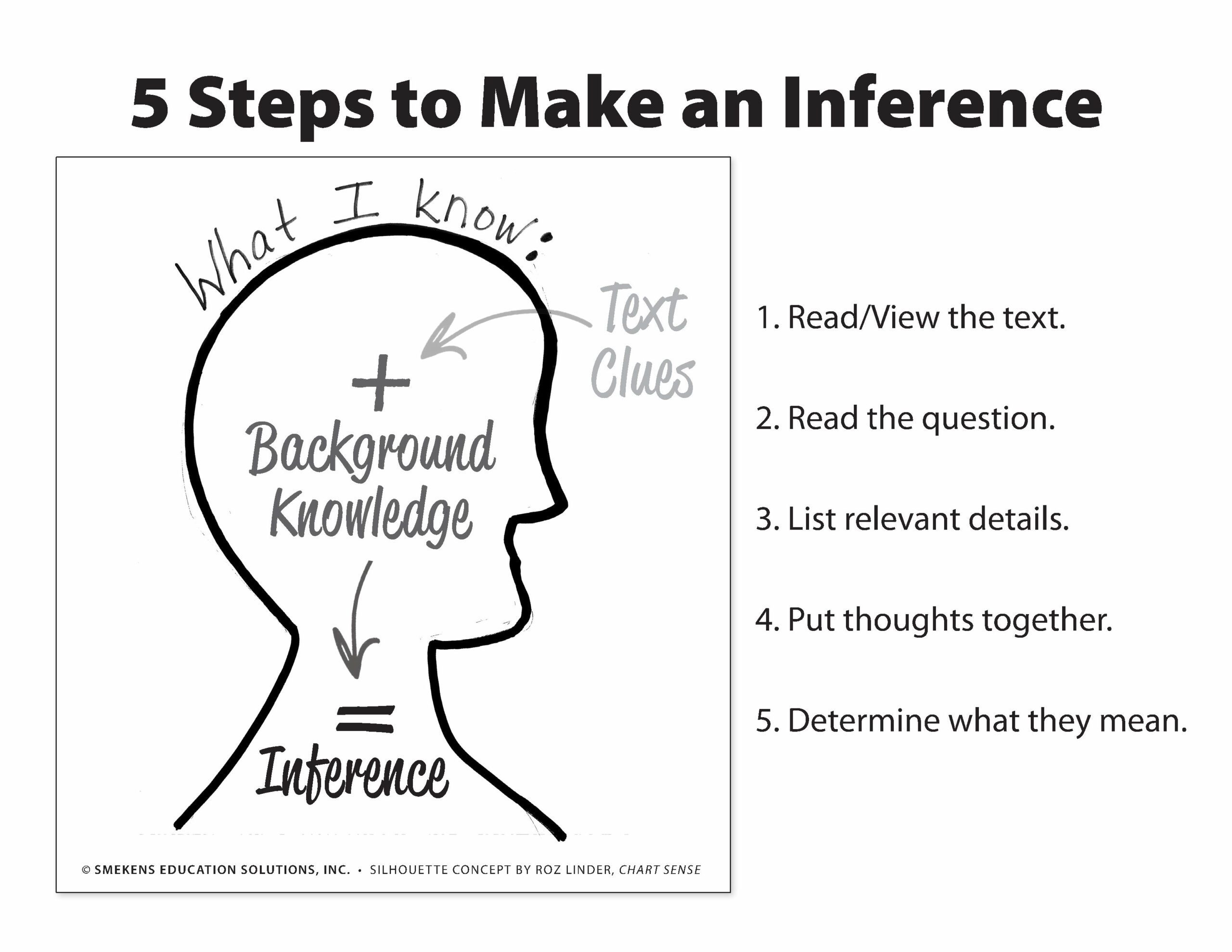
To see this in action, let's watch a short video that explains the concept with a simple example.
#8 How to Make Inferences While You Read (Reading Comprehension)
This video, '#8 How to Make Inferences While You Read', clearly defines what an inference is and how it differs from information that is directly stated by the author.
Please watch the first part of the video, from the beginning until 01:24. Pay attention to how the speaker uses clues from the sentence about the 'new student' to infer that she is nervous, even though the word 'nervous' is never used.
As the video showed, the author gave you clues (new student, sweat, stomach ache), and you used your knowledge of how people feel in new situations to infer she was nervous. This is the core skill we will practice today.
2. How to Make Inferences: A Step-by-Step Approach
To make sure your inferences are logical and based on the text, it helps to follow a structured process. A good inference is not a wild guess; it is an educated conclusion supported by evidence.
The following reading from a university course on reading comprehension provides an excellent guide.
English Reading Comprehension - Khon Kaen University
This document, 'English Reading Comprehension' from Khon Kaen University, contains a detailed unit on making inferences. We will read the key sections that define the skill and provide a clear example.
Please read 'UNIT 7: MAKING INFERENCE' from page 97 to the end of page 99. Focus on three things: The 'DEFINITION OF INFERENCE' on page 97. The 'Guidelines for Building Inference Skills' on page 98. 'Example A' on pages 98-99, which shows how to infer multiple facts about Suzanne from just a few short sentences.
The guidelines from the reading are very useful. When you read for the IELTS exam, always be asking yourself questions: Why did the author include this detail? What does this description tell me about the person or situation? What is likely to be true, based on what I've read?
3. Inferences in IELTS: Avoiding Common Traps
In the IELTS exam, inference questions are designed to be challenging. They test if you can distinguish a logical inference from an unsupported guess. Examiners create "distractors" (incorrect answer choices) that look tempting but are not supported by the text.
One of the most common traps is using extreme or overly strong language. A reading passage might suggest something is possible, but a distractor might claim it is always true or the only option.
This next video, while designed for a different test (the LSAT), offers brilliant strategies for spotting these traps that are directly applicable to IELTS.
This video, '6: Inference' from LSAT Lab, explains how to identify common traps in inference questions. It will teach you to be suspicious of answers with strong or extreme language.
Please watch two key sections: From 02:13 to 04:17: This part explains why answers with 'strong language' are often wrong and why more 'moderate' claims are more likely to be correct. From 09:48 to 12:13: This part provides excellent examples of common traps, such as using words like 'cannot' or 'most', and the trap of assuming that because something was mentioned, it's the only possibility.
The key takeaway is to be critical of the answer choices. A correct inference must be supported by the passage. If an answer choice uses words like all, never, only, must, or most, you should double-check the passage very carefully to see if such a strong claim is truly supported. Often, it is not.
4. Practice Activity
Now let's apply these skills to an IELTS-style practice question. Read the short passage below about meditation and choose the best answer. Think about the clues in the text and avoid the traps we just discussed.
Let's return to the PDF resource we looked at earlier.
English Reading Comprehension - Khon Kaen University
This is 'Exercise II, Passage 1' from the 'English Reading Comprehension' PDF. It's a short, academic-style text followed by a multiple-choice inference question.
Please go to page 106 and complete the task for 'Passage 1'. First, read the passage about meditation carefully. Then, answer the multiple-choice question by selecting the inference that is best supported by the text.
Let's review the answer. The correct choice is (c).
- Why is (c) correct? The text states that "More and more doctors are prescribing meditation as a way to..." and lists several benefits. It also calls meditation "one of the proven alternative therapies." This supports the inference that meditation is one of the methods people use.
- Why are the others incorrect?
- (a) is too strong. The text calls meditation "one of" the therapies, not the "only" effective method.
- (b) is contradicted by the text, which says its use "is not new" and has been practiced for "thousands of years."
- (d) is also contradicted. The text says doctors "are prescribing" it now, not that it was only used "in the past."
This exercise shows exactly how inference questions work in an academic context. You have to read carefully and choose the option that is logically supported, not one that makes an extreme or unsupported claim.
Conclusion
Great job today! Mastering inference is a big step toward achieving a high score in the IELTS Reading section. It moves you from simply understanding words to understanding the writer's underlying meaning.
Key Takeaways:
- Inference is the skill of using clues in the text and your own background knowledge to understand what is implied.
- A good inference is a logical conclusion, not a wild guess.
- In the IELTS exam, be very careful with answer choices that use strong or extreme language (like
only,all,never). - The correct inference is always the one that is most directly supported by the evidence in the text, even if that evidence is paraphrased.
In our next lesson, we will continue to build on our reading skills by learning to understand the function of paragraphs within a text. Understanding how to make small inferences from sentences will help you understand the larger role that each paragraph plays in building the author's overall argument.