Hello! Welcome back.
In our last lesson, you completed a full IELTS Speaking test simulation, which was a fantastic way to experience the pressure and structure of the real exam. A key part of that lesson was reviewing your own recording to identify areas for improvement. Today, we will apply that same principle of careful review to the other receptive skills: Listening and Reading.
This lesson's objective is to learn how to review incorrect answers in Reading and Listening to identify error patterns. Simply doing practice test after practice test without understanding why you are making mistakes will not raise your score. By learning to analyze your errors, you can target your weaknesses and turn them into strengths, which is the most efficient way to improve your band score.
1. The Power of Analyzing Mistakes
To get a high score in IELTS, you need to be strategic. Losing marks is often not about being "bad" at listening or reading, but about falling into predictable traps or having specific, fixable weaknesses. A few corrected errors can make a significant difference.
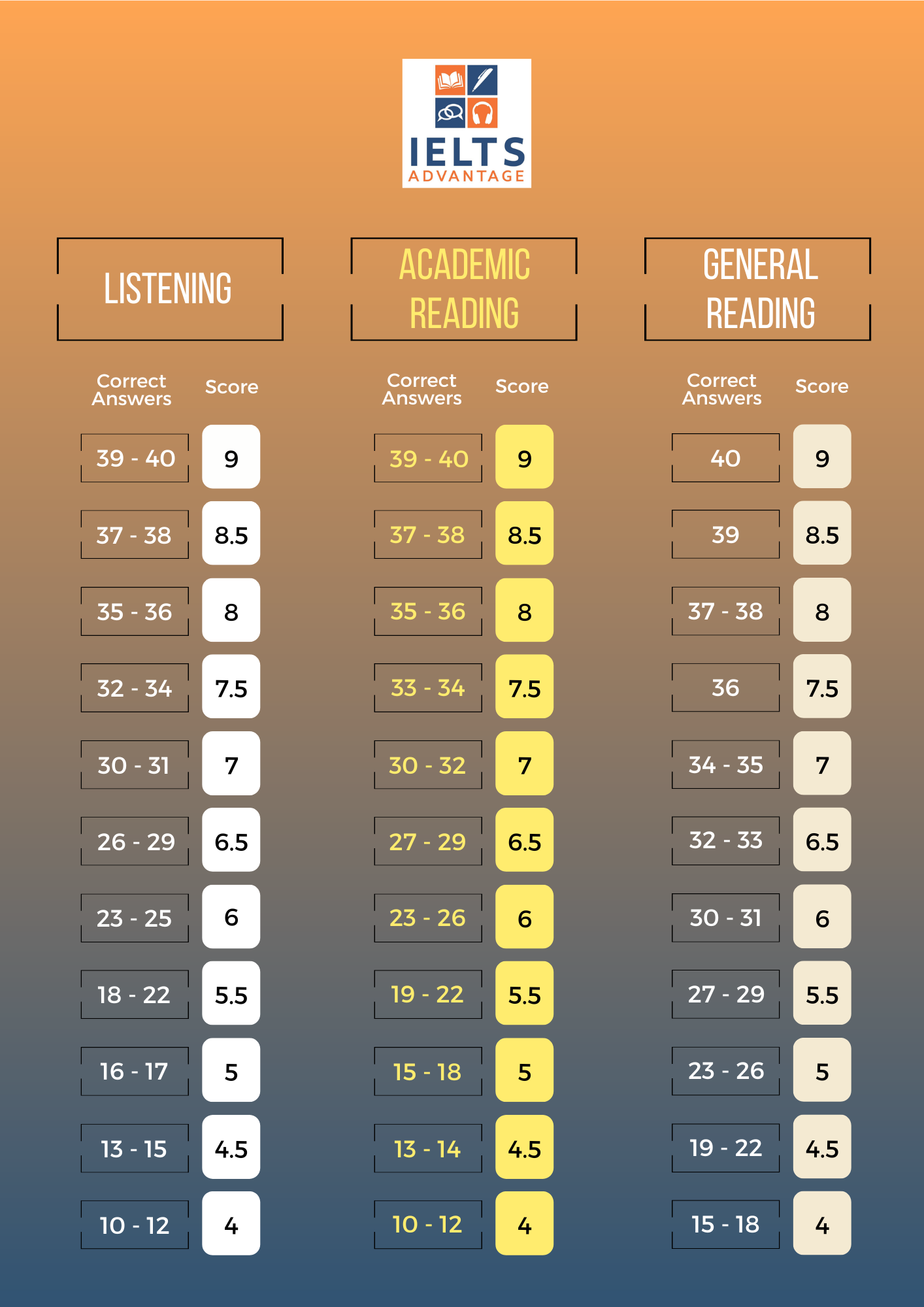
The key is to move from just practicing to analyzing. Let's see what this looks like for the Listening test.
2. Identifying Your Listening Error Patterns
Often, students have one or two key weaknesses that hold back their Listening score. The first step is to figure out what yours are.
The ONLY IELTS Listening Strategy You Need
This video from IELTS Advantage is excellent at explaining the different types of error patterns students have in the Listening test. As you watch, think about which of these patterns might apply to the mistakes you made in your recent practice test.
Watch the following segments that describe common student profiles: Struggling with certain question types (02:34 - 03:30): Do you always lose marks on maps or multiple choice questions? Making spelling mistakes (03:30 - 04:17): Do you find the answer but write it incorrectly? Difficulty with Section 3 (05:06 - 06:03): Do you get confused when multiple people are speaking? Difficulty with Section 4 (06:03 - 07:05): Do you struggle with the academic vocabulary in the final lecture? Errors increasing with difficulty (07:05 - 08:05): Do you start strong but lose marks as the test gets harder? Losing focus or having vocabulary gaps (08:05 - 09:12): Do your mistakes seem random, or are there many words you don't understand?
After watching, you should have a clearer idea of the types of mistakes you might be making. It's rarely everything at once; it's usually a specific pattern.
3. Error Patterns in the Reading Test
The same logic of finding specific weaknesses applies to the Reading section. Just practicing more won't help if you keep repeating the same strategic errors.
Why is my IELTS Reading Score NOT Increasing?
The same instructor from IELTS Advantage explains how to analyze your Reading mistakes. The core idea is the same: find the pattern behind your errors.
Please watch these two key parts: Mistakes / Weakness Analysis (06:50 - 08:50): Pay close attention to the different reasons for mistakes: spelling, strategy confusion, vocabulary issues, skill issues (like scanning), or specific question types (like True/False/Not Given). Work on your weak areas (08:50 - 10:29): This section emphasizes that once you identify a weakness, you must actively work to fix it.
The message from both videos is clear: Analyze your mistakes to find patterns, then focus your practice on fixing those specific issues.
4. The Error Log: Your Tool for Systematic Improvement
The most effective way to analyze your mistakes is by keeping an error log. This is a document where you record every mistake, analyze why you made it, and decide on an action to prevent it from happening again.
The following resource provides excellent templates for an error log. Since you have an interest in AI, you might appreciate how it frames error analysis as a data-driven process.
IELTS Error Log Template: How to Track and Fix Weaknesses
This article from the 'BabyCode' blog provides detailed templates for creating an error log. We will focus on the structures for Listening and Reading.
Please study the following sections to understand how to structure your log: First, find the heading 'Complete Listening Error Log Template'. Review the table structure and the 'Critical Listening Error Categories' (Attention, Prediction, Comprehension, Technical). Next, find the heading 'Complete Reading Error Log Template'. Review its table structure and the 'Error Category Classifications' (Comprehension, Strategy, Technical). Focus on understanding the categories. This will help you classify your own mistakes.
Your Turn: Let's Practice
Think back to the full Listening and Reading practice tests you took. Let's try to log one mistake from each. You don't need to create the full table now, just answer these questions for one listening and one reading error:
Example Listening Error:
- Question # and Correct Answer: Question 5, "Wednesday"
- My Answer: "Wensday"
- Error Category: Technical (Spelling)
- Why I made the mistake: I am not confident with the spelling of the days of the week in English.
- Action Plan: Practice writing all the days of the week and add them to my vocabulary app for review.
Now, try it yourself for one listening error and one reading error you remember making. This is the core activity of error analysis.
5. Using Audio Scripts to Dig Deeper
For the Listening test, the audio script (or transcript) is your most valuable tool for analysis. When you get an answer wrong, you must read the script to understand exactly why.
10 IELTS Listening tips to avoid common mistakes
This article from IDP, an official IELTS owner, gives several useful tips. We will focus on one of the most powerful: using the audio script.
Please read the section titled 'Look at the audio scripts'. It gives you three concrete activities you can do with a script to understand your mistakes and improve your listening skills.
When you review your listening mistakes with the script, ask yourself:
- Did I miss the answer because I didn't know a key vocabulary word?
- Did the speaker say the answer differently than I expected (using a synonym)?
- Did I get confused by a "distractor" – an answer that seemed correct but wasn't?
- Was the speaker's accent or speed difficult to understand?
As a native Arabic speaker, you might find that certain English sounds which don't exist in Arabic can be tricky. Reading the script while listening can help your brain connect the written word to its spoken form, improving your pronunciation recognition over time.
Conclusion
Well done. Today you've learned the most important meta-skill for IELTS preparation: how to learn from your mistakes.
Key Takeaways:
- Stop just practicing; start analyzing. Your goal is to understand the why behind every error.
- Error patterns are common. Your mistakes likely fall into specific categories: question types, skills (e.g., spelling, vocabulary), or test sections.
- An error log is your most powerful tool. It provides a structured way to track, analyze, and fix your weaknesses.
- Use the audio script. For listening, the script is essential for diagnosing the root cause of your errors.
In our next lesson, we will formalize this process. Your task will be to create and maintain a personal error log to track recurring mistakes. You will set up your own log and begin filling it with the errors from the practice tests you've already completed.