Hello! Welcome back to the course.
In our last session, we looked at the "where" of investing, distinguishing between the primary market where companies issue new shares to raise capital (like an IPO) and the secondary market (the stock exchange) where investors trade those existing shares among themselves.
Today, we shift our focus from the "where" to the "what." We will explore the main building blocks of the investment world. This lesson addresses the learning outcome: Define and compare key financial instruments: stocks, bonds, and mutual funds. Understanding these three core asset types is fundamental to your goal of building an investment portfolio on the Colombo Stock Exchange (CSE) or anywhere else.
Let's begin by defining each instrument one by one.
1. Stocks (Equities): Owning a Piece of the Company
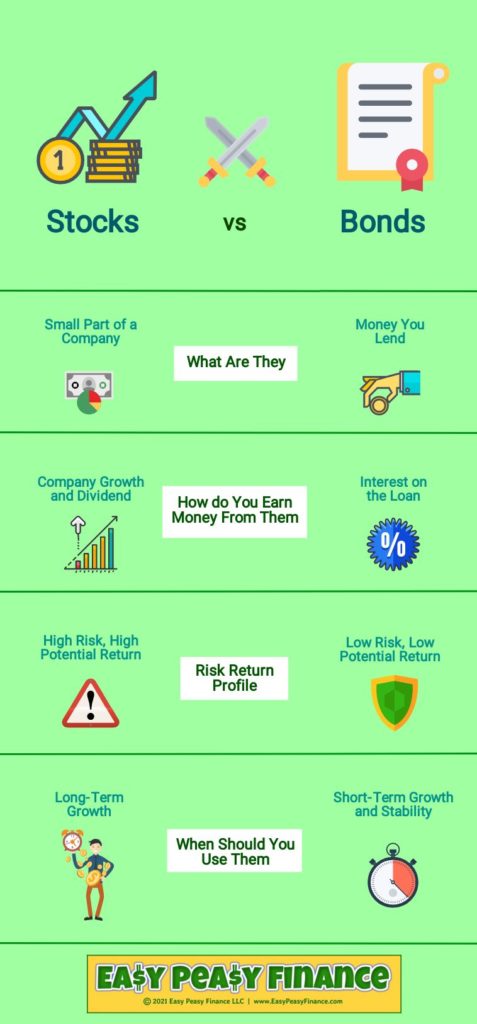
A stock, also known as a share or equity, represents a slice of ownership in a public company. When you buy a company's stock, you become a shareholder, which means you own a small part of that business—its assets, its brand, and its future profits.
To get a quick overview, let's start with a video.
The Basics of Investing (Stocks, Bonds, Mutual Funds, and Types of Interest)
This video from Professor Dave Explains provides a clear, concise definition of stocks and how they generate returns for investors.
Please watch the segment from 00:30 to 01:36. Focus on the two ways stockholders make money: dividends and capital gains.
As the video explained, there are two primary ways to earn a return from stocks:
- Capital Appreciation (or Capital Gains): If the company performs well and investors become more optimistic about its future, the demand for its stock increases, driving up the price. If you sell your shares for more than you paid, you realize a capital gain.
- Dividends: Companies may distribute a portion of their profits to shareholders. This payment is called a dividend. It's a way for the company to share its success directly with its owners.
From your perspective as an IT professional, you can think of owning a stock as having a fractional ownership stake in a company's core assets—not just its buildings, but its source code, patents, and intellectual property. If the company's products (like a new software suite or cloud service) succeed and profits grow, the value of your ownership stake can increase.
The Colombo Stock Exchange (CSE) brochure you saw in the last lesson provides a locally relevant definition.
Invest with the COLOMBO STOCK EXCHANGE
Let's revisit the CSE brochure for its definition of a share. This reinforces the concept in the context of the Sri Lankan market.
Please read the section 'What is a share?' on page 3 of the PDF. It's a short but important definition.
2. Bonds (Debt): Loaning Money for a Fixed Return
While stocks represent ownership, bonds represent debt. When you buy a bond, you are not buying a piece of the company; you are lending money to the company or a government. In return for your loan, the issuer promises to pay you periodic interest payments (called "coupons") and then return the original loan amount (the "par value" or "face value") on a specific future date (the "maturity date").
Let's watch another segment from the same video to understand bonds.
The Basics of Investing (Stocks, Bonds, Mutual Funds, and Types of Interest)
This next clip from Professor Dave Explains clearly defines bonds and their three key components.
Please watch from 01:36 to 02:17. Pay attention to the definitions of coupon rate, maturity date, and par value.
To use an IT analogy, a bond is like a formal loan agreement with a clearly defined Service Level Agreement (SLA). The terms are fixed: you know the interest rate you'll receive and exactly when you'll get your money back. This makes them generally less risky than stocks, where returns are not guaranteed.
The main types of bonds you'll encounter are:
- Corporate Bonds: Issued by companies to raise money for things like building a new factory or funding research.
- Government Bonds: Issued by governments to fund public spending. In Sri Lanka, these are primarily Treasury Bills (short-term) and Treasury Bonds (long-term).
This infographic provides a great visual summary of the core differences between stocks and bonds.
3. Mutual Funds (Unit Trusts): The Power of Pooling
What if you don't want to pick individual stocks or bonds yourself? Or what if you have a smaller amount to invest and want to be diversified across many companies? This is where mutual funds come in.
In Sri Lanka, mutual funds are more commonly known as Unit Trusts.
A Unit Trust pools money from thousands of investors and uses that collective fund to buy a large, diversified portfolio of assets (stocks, bonds, etc.). This portfolio is managed by a professional fund manager. When you invest, you buy "units" of the fund, which represent your proportional share of the underlying assets.
This approach is similar to how a cloud provider like AWS operates. Instead of building and managing your own complex server infrastructure from the ground up, you use a managed service. With a Unit Trust, you are effectively hiring a professional to build and manage a diversified investment portfolio for you, benefiting from their expertise and the economies of scale.
The following video from CAL (Capital Alliance), a Sri Lankan financial services firm, explains the concept of Unit Trusts very well.
Learn how to Build wealth the smarter way - Learn About Unit Trust Funds | CAL
This video from CAL Sri Lanka explains how Unit Trusts work, using local examples. It's a fantastic resource for understanding this concept in the context of your investment goals.
Please watch the segment from 02:32 to 05:46. The speaker explains the core mechanism of how a Unit Trust pools money and provides access to investments that might be hard for an individual to buy, like Treasury Bonds which have high minimum investment requirements in Sri Lanka.
The key benefits, as highlighted in the video, are:
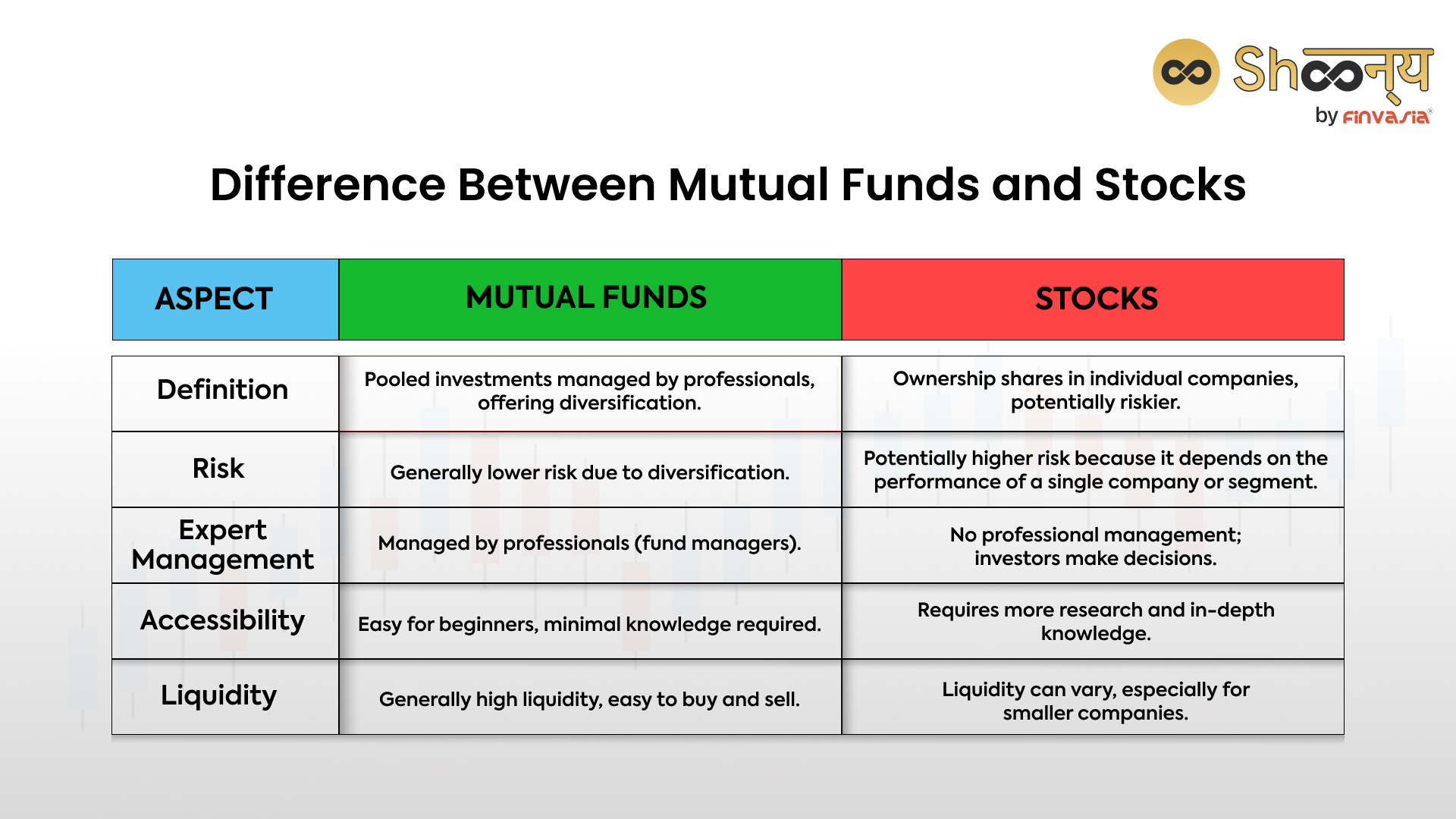
- Diversification: Instead of owning one or two stocks, your money is spread across dozens or even hundreds of securities. If one company performs poorly, its impact on your overall investment is minimized.
- Professional Management: A team of experts makes the decisions about what to buy and sell.
- Accessibility: It allows you to invest in a wide range of assets with a relatively small amount of money.
4. Comparing the Three Instruments
Now that we have defined each instrument, let's put them side-by-side to compare them directly. The best way to do this is to look at them across several key characteristics: what they are, the risks involved, and the potential returns.
This infographic compares stocks with mutual funds, highlighting the key difference in diversification and management.
For a comprehensive comparison of all three, the following reading is excellent.
Stocks, Bonds And Mutual Funds: Key Differences
This article from Bankrate provides a superb summary, including a table that compares stocks, bonds, and mutual funds across several important factors.
Please read the entire article, paying close attention to the comparative table at the top. It provides a clear, high-level summary of the key differences in risk, income, and fees.
To reinforce the most important benefit of Unit Trusts (diversification), let's watch one more clip from the CAL video. It uses a powerful example to show how diversification protects your capital.
Learn how to Build wealth the smarter way - Learn About Unit Trust Funds | CAL
This final clip from CAL illustrates the practical benefit of diversification through a Unit Trust if one of the underlying investments were to fail.
Watch the segment from 00:28:14 to 00:33:50. Focus on the 'Diversification Benefits' section and the example of how a diversified portfolio would fare during a corporate collapse compared to a single investment.
This example clearly shows that by spreading your investment, you significantly reduce the risk of losing your entire capital if a single company or bond issuer fails.
Conclusion
You've now learned about the three fundamental building blocks of investing. Understanding their distinct characteristics is the first step toward making informed decisions.
Key Takeaways:
- Stocks represent ownership in a company. They offer high potential returns through capital gains and dividends but also come with higher risk.
- Bonds represent a loan to a company or government. They offer more predictable, lower returns through fixed interest payments and are generally lower risk than stocks.
- Mutual Funds (Unit Trusts) are pooled investments that hold a diversified portfolio of stocks, bonds, and other assets. They offer instant diversification and professional management, making them a practical option for many investors.
Preview of the Next Lesson:
Now that we have a solid grasp of what stocks are, our next lesson will zoom in on your specific goal: investing in Sri Lanka. We will explore the Colombo Stock Exchange in detail, covering its structure and key indices like the ASPI and S&P SL20. This will prepare you to navigate the local market with confidence.