Welcome to the final lesson of your course on becoming a set pieces coach. Congratulations on making it to the end!
In our last lesson, you learned how to structure a professional portfolio to showcase your set piece designs and opposition analysis. We covered the key components, from your coaching philosophy to detailed case studies, and explored how to use presentation software to bring your ideas to life.
Now, we will focus on creating the most critical piece of that portfolio. This lesson is dedicated to the learning outcome: Select and refine your best work to create a compelling case study for a job application. A powerful case study is your 'master key'—a single document that can demonstrate your full range of skills to a potential employer and make a decisive first impression.
We will break down the structure of a professional case study, discuss how to select the right topic, and cover techniques to refine your analysis into a polished, persuasive final product.
1. The Anatomy of a Compelling Case study
A case study is more than just a list of observations. It's a structured narrative that tells a story: you identify a problem, analyse it with evidence, and propose a specific, well-reasoned solution. This "Problem-Solution-Impact" format is highly valued by decision-makers in any field, including football.
A fantastic, universally applicable structure for an in-depth analysis is shown below. While the example is from a different industry, the principles are exactly what we need.
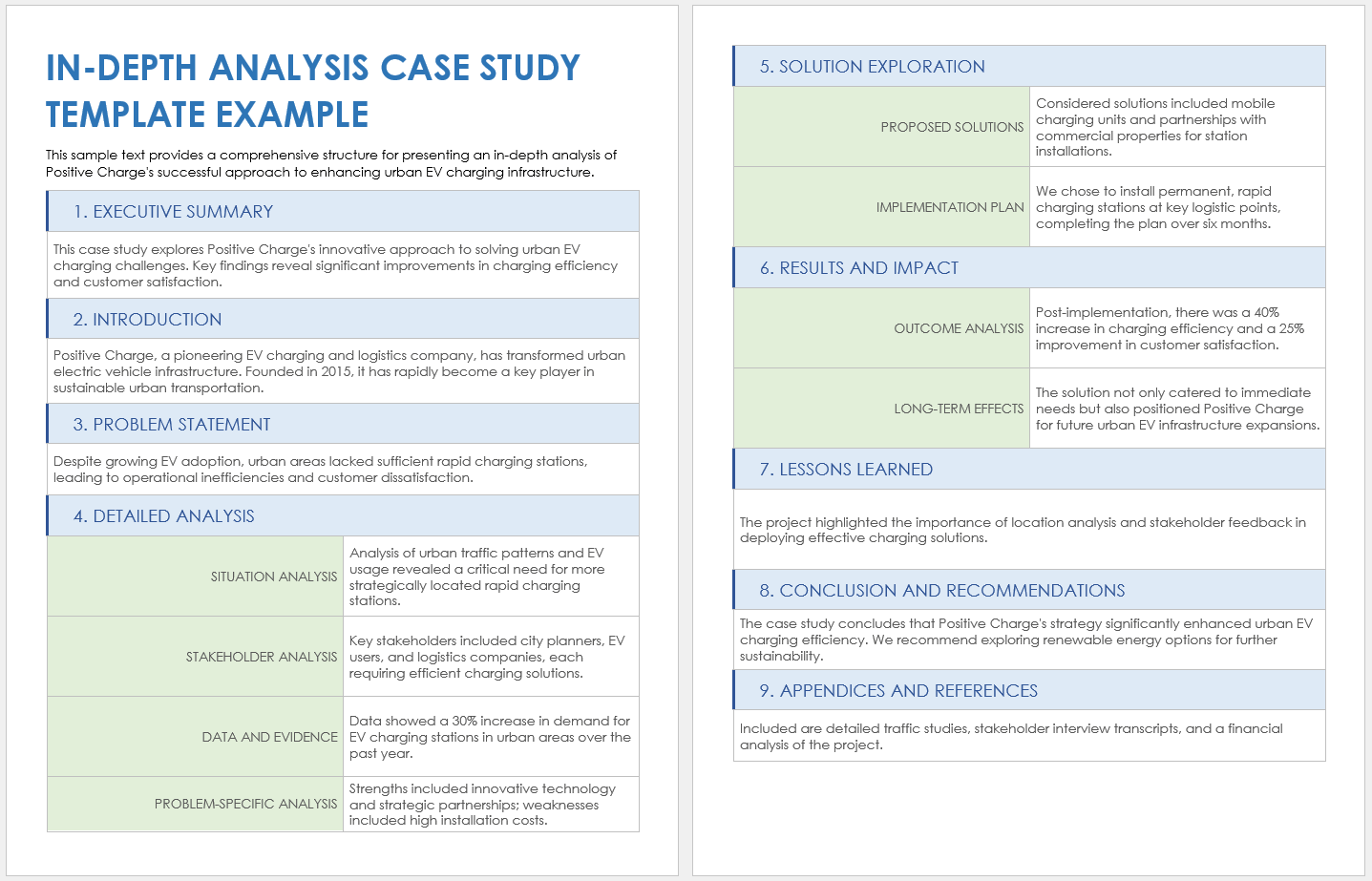
Let's adapt this structure for a set piece coaching case study:
- 1. Executive Summary: A single paragraph at the beginning. State the team you analysed, the specific weakness you found (e.g., "Team X conceded 35% of their corner goals at the near post"), and the solution you designed. This is for the busy Technical Director who might only read one paragraph.
- 2. Introduction / Problem Statement: Introduce the team and the context. Clearly state the problem you are addressing. For example: "This case study analyses Manchester United's defensive vulnerability against outswinging corners during the 2023-24 season."
- 3. Detailed Analysis: This is the core of your evidence.
- Situation & Data: Present the statistical evidence. How many goals have they conceded from this situation? What is their xG against on these set pieces? Use charts and graphs.
- Stakeholder & Problem-Specific Analysis: Show the tactical breakdown using video clips and diagrams. Who is at fault? Is it the zonal marking system, a specific player's error, or a structural issue? This is where you prove you've done your homework.
- 4. Solution Exploration: This is where you showcase your coaching ability.
- Proposed Solution: Present your custom-designed set piece routine to exploit the identified weakness. Use animated diagrams (as we covered in the last lesson) and clear instructions.
- Implementation Plan: Briefly explain how you would coach this routine. (e.g., "Unopposed walkthroughs followed by 8v8 opposed drills.")
- 5. Results and Impact (Projected): Since you aren't with the club, you'll project the impact. "This routine is designed to create a high-quality chance by isolating their weakest defender, potentially increasing our xG per corner from 0.03 to 0.08 in these scenarios."
- 6. Conclusion & Recommendations: A brief summary of the problem and your solution, reinforcing the value you can bring to the coaching staff.
This structure transforms your analysis from a simple observation into a professional consultation document.
2. Selecting Your Subject
The quality of your case study begins with choosing the right subject. Your goal is to find a clear, demonstrable problem that allows you to showcase a tangible solution.
- Find a Niche That Interests You: As football analyst Tom Worville mentioned in the video from our last lesson, you're more willing to put in the effort if you find something you genuinely care about. Pick a team or league you enjoy watching. Your passion will shine through in the quality of your work.
- Follow the Data: Start with data to identify potential targets. Use free resources like FBRef or WhoScored to look for teams that are statistical outliers. Look for teams with:
- A high number of set piece goals conceded.
- A low number of set piece goals scored.
- A large negative difference between their set piece xG for and against.
- Confirm with Video: Once data points you to a team, you must confirm the "why" with video analysis. Watch several of their recent matches, focusing exclusively on set pieces. Is their poor record due to bad luck, or is there a recurring tactical flaw? A repeatable flaw is the perfect subject for a case study.
Remember the advice from the article "Presenting Your Plan": tailor your work. If you are preparing this case study with a specific club in mind, choose them or their direct rival as your subject. This immediately makes your work more relevant.
3. Refining Your Work for Maximum Impact
With your subject chosen and analysis complete, the final step is refinement. This is about presentation and polish—turning a good analysis into a great one. You want your work to be clear, professional, and memorable.
For this, we'll turn to some excellent practical advice from a professional scout.
Creating scout reports that work with Aaron Henworth - Scouta Blog
This blog post, 'Creating scout reports that work with Aaron Henworth,' offers fantastic insights on how to make your analysis stand out. Henworth has scouted for clubs like Wolves and Stoke and shares his tips on presentation.
Read the sections titled 'What changed in your scout reports after that first "feedback"?' and 'How long did it take you to pick up Canva?'. Focus on Henworth's advice for making work stand out, the tools he uses (like Canva), and his specific tip for analysing set pieces.
Here are the key refinement strategies, integrating Henworth's advice and the tools we've discussed previously:
Go Beyond Basic Templates
As Henworth states, standard Microsoft Office templates can be "basic, generic and difficult to make your work stand out." He recommends using a free graphic design tool like Canva to "jazz up reports for your own portfolio." This allows you to create a unique visual style, use club colours, and integrate images and text more dynamically.
Visuals are Everything
Your analysis must be visually compelling.
- High-Quality Diagrams: Use clear, clean diagrams for your analysis and solutions. The goal is clarity. Someone should be able to understand the core concept of a routine from the diagram alone.
- Animations: As we covered in the last lesson with the PowerPoint tutorial (
resource_id: [LINK](https://www.youtube.com/watch?v=14H5nZn2pdk)), animating your routines shows player runs and ball movement dynamically. It proves you understand the timing and triggers of a play, not just the starting positions. - Video Evidence: Embed short video clips directly in your presentation to provide undeniable proof of the weakness you're describing.
The image below is an excellent example of a well-presented piece of analysis, combining clear diagrams with concise text. This is the level of quality to aim for on each page or slide of your case study.

Get Creative with Data Gathering
Henworth provides a brilliant, practical tip for opposition analysis:
"For opposition analysis, take a picture of how the team lines up on set pieces before and after the kick is taken. You can spot the runs and put the pic in the report with an arrow to show the runs taken, and annotate the pic with who is marking who..."
This simple technique is incredibly effective. A side-by-side screenshot of the defensive setup before and after the kick instantly reveals their marking system, player responsibilities, and any vulnerabilities that appear once players start moving.
Conclusion and Your Next Steps
This lesson, and this course, has been about equipping you with the specialised knowledge and practical skills to pursue a career as a set pieces coach. From understanding the four phases of a set piece to designing routines, analysing opponents, and now, packaging your expertise into a compelling case study, you have built a comprehensive toolkit.
Key Takeaways from Today:
- A powerful case study follows a clear Problem-Solution-Impact structure.
- Select a subject where a clear, evidence-based problem allows you to present a tangible solution.
- Refine your presentation using professional design tools, high-quality visuals, and dynamic animations to make your work stand out.
- Your case study is not just an analysis; it is your professional argument for why a club should hire you.
You have reached the end of this structured learning path, but your journey is just beginning. Your portfolio and your flagship case study are living documents. Continuously update them with new analyses and refined ideas. Share your work online to build a reputation. Use what you have created to start conversations and connect with people in the industry.
You have the foundation. Now go and build your career. Good luck.