Welcome to your first lesson in the Chartered Market Technician (CMT) program. Your goal is to pass the CMT Level 1 exam, and this course is designed to give you the foundational knowledge and practical skills to do just that. We will begin our journey by establishing the core of our subject.
This lesson addresses the first learning outcome of the course: defining technical analysis and contrasting it with fundamental analysis. As a trader of XAUUSD, you are already interacting with the concepts we'll discuss, but our goal here is to formalize these ideas, create clear distinctions, and build the solid "ground up" foundation you're looking for. Understanding this distinction is the essential first step before we can explore the tools and theories that make up the technical analyst's toolkit.
The Two Schools of Thought: "Why" vs. "When"
At the highest level, financial market analysis is divided into two broad schools: fundamental and technical. A practical way to distinguish them is by the primary question each seeks to answer.
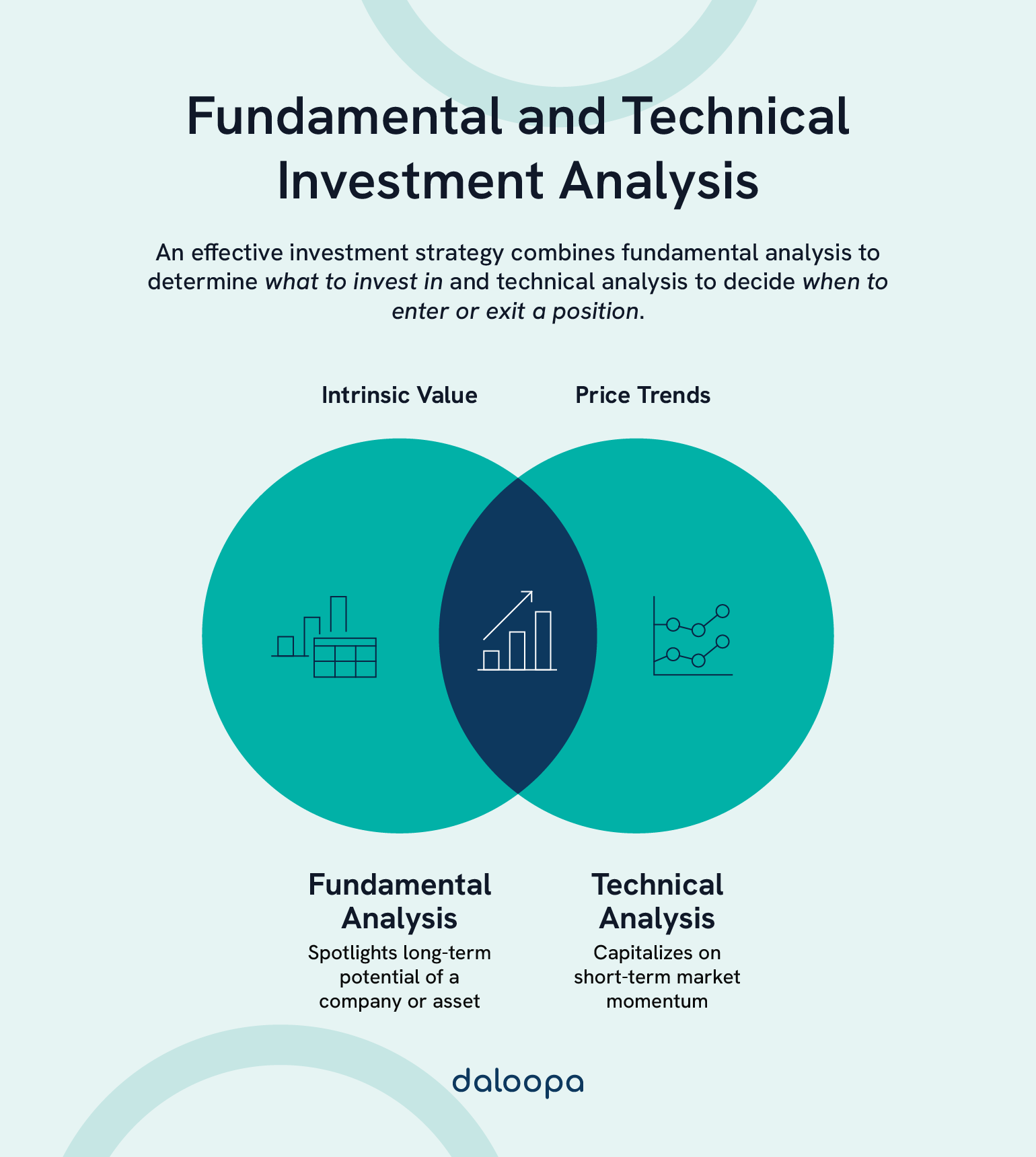
- Fundamental Analysis asks "Why?" It seeks to determine an asset's intrinsic or "fair" value by examining underlying economic, financial, and qualitative factors. If the current market price is below this calculated intrinsic value, the asset is considered undervalued and thus a good buy.
- Technical Analysis asks "When?" It is the study of market action, primarily through the use of charts, for the purpose of forecasting future price trends. Technical analysts are less concerned with why something is happening and more focused on the fact that it is happening, using patterns in price to determine the opportune moment to enter or exit a position.
This image provides a clean visual summary of the two disciplines.
To formalize our definition of technical analysis, let's turn to a video from Optuma, an official CMT test provider, which is based on the CMT curriculum.
Basic Principles of Technical Analysis | Optuma CMT Level 1 Chapter 1
This video introduces the basic principles of technical analysis as defined within the CMT program.
Please watch the section that provides a core definition of technical analysis. Pay attention to the goal of studying history to identify conditions that lead to a statistical edge. Then, continue with the crucial distinction between forecasting and prediction. This is a key mental model for a technical analyst.
As the video highlights, technical analysis is a discipline rooted in probabilities, not certainties. The goal isn't to predict the future with 100% accuracy, but to use historical price data to build forecasts that put the odds in your favor. This aligns well with your comfort in basic statistics. The core belief is that history, while not repeating exactly, often "rhymes," and these recurring patterns of human behavior are visible on a price chart.
Fundamental Analysis in Practice: The Case of Gold (XAUUSD)
Since you specialize in trading gold, let's examine what fundamental analysis means for this specific asset. Unlike a company's stock, gold has no earnings, no balance sheet, and no CEO. Its fundamental drivers are macroeconomic and geopolitical.
Turning fundamental and technical trading strategies into ...
This article from Capital.com gives a concise overview of the key fundamental factors that influence the price of gold.
In the article, please read the section on Fundamental strategies. As you read, focus on the three main drivers discussed: interest rate sensitivity, inflation hedging, and geopolitical events.
To summarize, a fundamental analyst watching gold would focus on questions like:
- What is the Federal Reserve's stance on interest rates? (Lower rates tend to be bullish for gold).
- Is inflation rising or falling? (Rising inflation often increases gold's appeal as a store of value).
- Is there increasing geopolitical instability? (Uncertainty often leads to "safe-haven" buying of gold).
These factors build the narrative or the fundamental reason why gold's price might move over the medium to long term.
Technical Analysis in Practice: Reading the Gold Chart
A technical analyst, in contrast, would look at the XAUUSD chart itself for clues. The core principle, which we will explore in the next lesson, is that all the fundamental information—the market's collective knowledge and expectations about interest rates, inflation, and politics—is already reflected, or "discounted," in the price. The chart, therefore, contains all the information needed to make a trading decision.
Let's look at the same article again, this time focusing on the technical approach.
Turning fundamental and technical trading strategies into ...
Now, let's explore the technical perspective on trading gold.
Please read the section on Technical strategies. This introduces several tools—trend following, support and resistance, momentum indicators, and breakout trading—that we will cover in great detail in upcoming modules.
These tools are how a technician answers the "when" question. For a tangible example, look at the chart below.

Without knowing anything about the news or economy on those dates, a technical analyst can identify the trend structure, note the temporary pause or "correction," and look for evidence that the primary trend is resuming.
Blending the Approaches
While some analysts are purists, many traders—and you may find this reflects your own experience—blend the two approaches. They might use fundamental analysis to form a directional bias (e.g., "The Fed is likely to cut rates, so I want to be looking for opportunities to buy gold") and then use technical analysis to time their entry and manage their risk (e.g., "I will wait for the price to pull back to a key support level and show a bullish signal before entering a long position").
This blended strategy uses fundamentals for the "what" and technicals for the "when."
Trading Gold (XAUUSD): Technical and Fundamental Analysis of the Precious Metal
This short video from Valutrades provides a great, practical example of how a fundamental event can create a technical trading opportunity in XAUUSD.
Watch the segment from this timestamp. Notice how the narrator explains that economic news (a fundamental driver) drove the price to a technical level (a trend line), creating a trading setup. The narrator also briefly mentions how gap trading is a natural combination of both analysis types. A fundamental event causes the gap, but the trading of it is often technical.
Ultimately, the CMT designation is for a Technical Analyst. Therefore, the rest of this course will be dedicated to mastering the principles and tools of technical analysis. However, understanding what it is not is just as important as understanding what it is.
Conclusion
This lesson established the foundational concepts of technical and fundamental analysis, providing a clear framework for your CMT studies.
Key Takeaways:
- Fundamental Analysis focuses on intrinsic value by analyzing economic, financial, and other qualitative and quantitative factors. For gold, this means tracking interest rates, inflation, and geopolitical risk. It answers the question, "Why is the market moving?"
- Technical Analysis is the study of historical price and volume data to forecast future price movements. It uses tools like charts, trendlines, and indicators to answer the question, "When should I act?"
- A core tenet of technical analysis is that the price discounts everything; all known information and expectations are already baked into the current price.
- While they are distinct disciplines, many traders use a blended approach, leveraging fundamental analysis for a strategic outlook and technical analysis for tactical execution.
Next Lesson Preview:
Now that we have a clear definition of technical analysis, our next lesson will dive into its historical and philosophical roots. We'll explore the foundational principles known as Dow Theory, which form the bedrock of much of modern technical analysis.